Preparando el informe

Cargando la información y las referencias disponibles

Consultando el registro arqueológico...

Recopilando registros antiguos

Saltar al contenido principal
Chagyrskaya Neanderthals
Cultura destacada

Chagyrskaya Neanderthals

Three Altai cave individuals who bridge stone-age life and ancient genomes

98050 CE - 48150 BCE
Chagyrskaya Cave, Altai Krai, Russia
Desplázate para empezar
Capítulo I

La historia

Comprender la cultura Chagyrskaya Neanderthals

Chagyrskaya Neanderthals are known from three individuals recovered in Chagyrskaya Cave, Altai Krai, Russia (c. 98,050–48,150 BCE). Archaeology and paleogenomics together hint at regional Neanderthal lifeways and population structure, but the small sample size makes conclusions preliminary.

Time Period

98,050–48,150 BCE

Region

Chagyrskaya Cave, Altai Krai, Russia

Common Y-DNA

Unknown / ND (no consensus)

Common mtDNA

ND (limited data; 1 reported)

Capítulo II

Cronología

Momentos clave de la historia de esta cultura

98050 BCE

Earliest attributed occupation

Sediments and remains at Chagyrskaya Cave date to roughly 98,050 BCE, indicating early Neanderthal presence in the Altai region.

Capítulo III

Origins & Emergence

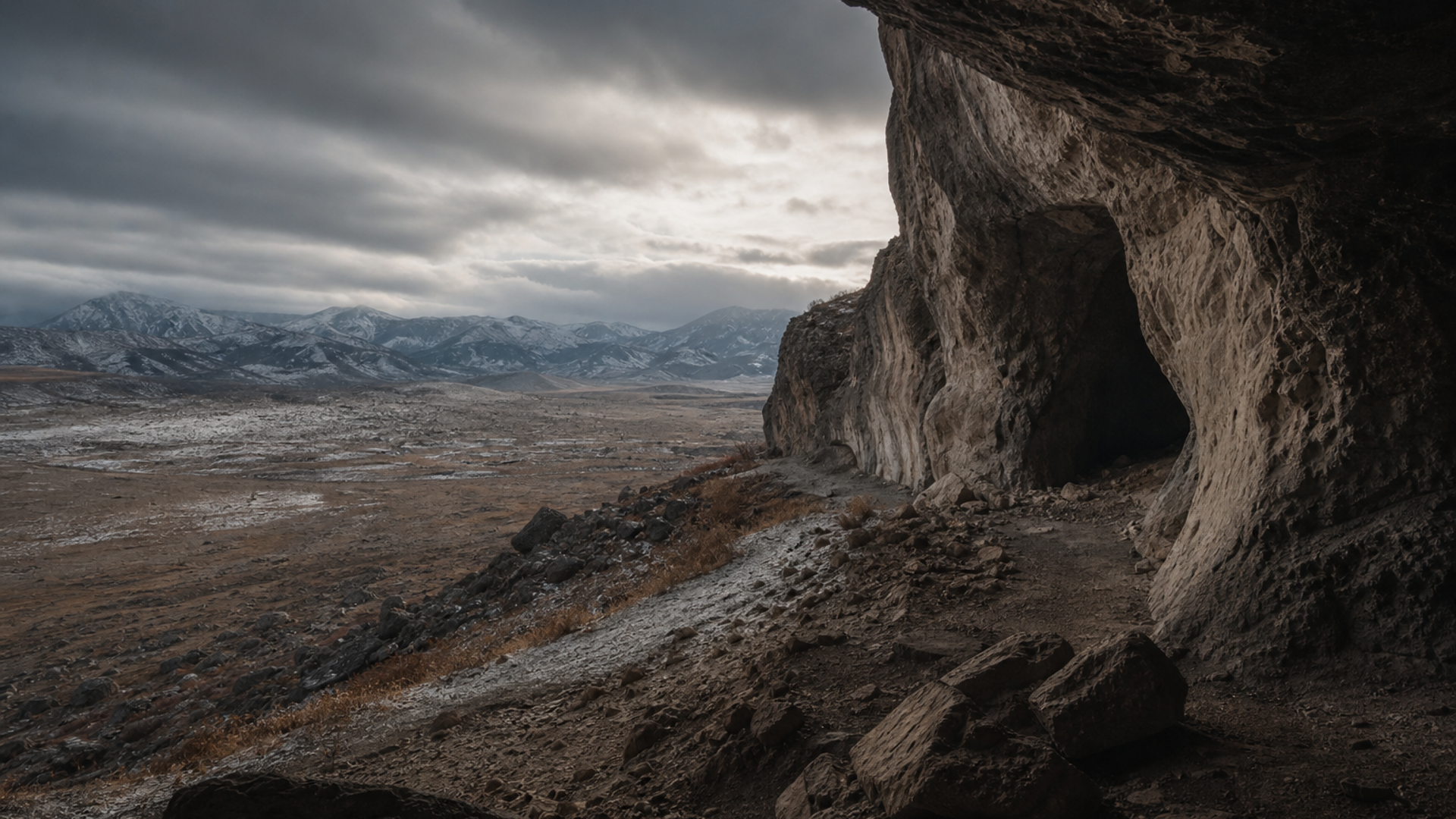
Chagyrskaya Cave (Altai Krai, Krasnoshchyokovsky District) sits like a time capsule on a Siberian slope where cold-steppe landscapes funneled animals and hominins into sheltered spaces. Archaeological data indicates repeated Neanderthal occupation of the cave across a long span—raw dates associated with recovered remains and associated sediments fall between roughly 98,050 and 48,150 BCE. Stratigraphic layers contain lithic debris and faunal remains that align with Middle Paleolithic technologies typically attributed to Neanderthal makers.

The Altai setting places these individuals at the eastern edge of known Neanderthal range. Limited evidence suggests stone tool types and on-site activities overlap with patterns seen across Eurasian Neanderthal sites, hinting at cultural connections or convergent adaptations to cold, seasonal environments. However, the picture is fragmentary: only three human samples are securely attributed to the Chagyrskaya assemblage, and sedimentary and taphonomic complexities mean interpretations of occupation intensity, seasonality, and site function are cautious.

In cinematic terms, Chagyrskaya evokes a shadow landscape where Neanderthals navigated glacial plains and river valleys. From a scientific vantage, the site is invaluable for connecting the material record of life in the Altai with traces of ancient DNA, helping to map how Neanderthal populations were distributed and structured across vast distances.

  • Located in Chagyrskaya Cave, Altai Krai, Russia
  • Dates associated with human remains: ~98,050–48,150 BCE
  • Material culture aligns with Middle Paleolithic / Neanderthal traditions
  • Small sample size limits broad conclusions
Capítulo IV

Daily Life & Society

Archaeological traces from Chagyrskaya Cave suggest lives shaped by the demands of a cold, open landscape: butchered large mammals, clusters of stone flakes, and localized hearth features all point toward hunting, carcass processing, and on-site tool maintenance. Cut marks on bone and patterns of fracture in faunal remains indicate deliberate butchery and marrow exploitation, a hallmark of Neanderthal subsistence strategies across Eurasia.

Socially, the presence of multiple individuals in the cave implies small groups using the shelter episodically. Limited evidence suggests control of fire and recurrent use of particular working areas within the cave, which could reflect task-specific zones—flaking benches, processing spots, and resting spaces. Craftsmanship in flint and local raw-material selection speaks to technological knowledge transmitted within groups and perhaps shared across nearby populations.

But the archaeological record here is not a full screenplay—it's a handful of scenes. With only three human samples and variable preservation, reconstructions of kinship, group size, mobility, and social rituals must remain tentative. Still, when artifacts, bones, and DNA are read together, they create a vivid, if partial, portrait: Neanderthals as adaptive, skilled hunters and toolmakers moving through Altai landscapes and leaving both stone and genetic legacies behind.

  • Evidence for hunting and butchery of large mammals
  • Signs of repeated hearth use and localized activity areas
  • Small-group occupation inferred from archaeological distribution
Capítulo V

Genetic Profile

Chagyrskaya's chief scientific claim is genetic: three individuals yielded ancient DNA that expands the geographic map of Neanderthal genomes into the Altai. Genomic comparisons place these individuals within Neanderthal diversity rather than with modern humans or other hominin lineages. However, because the sample count is only three, all genetic inferences are preliminary and should be treated with caution.

Mitochondrial haplogroup assignments for Chagyrskaya material are currently reported as ND or unresolved in aggregate reporting; published summaries indicate scant concordance on specific haplogroup labels. Y-chromosome haplogroups are similarly not established to a consensus level in public datasets for these remains. What is clearer is the broader genomic signal: Chagyrskaya genomes contribute to a pattern of population structure across Neanderthals in Eurasia, showing that regional groups existed and that the Altai was part of a network of Neanderthal populations.

Importantly, the Altai is a crucible of hominin interaction—Denisova Cave nearby has produced a different hominin lineage (Denisovans) and genomic evidence shows complex interrelationships among archaic groups in this region. Chagyrskaya's DNA therefore helps illuminate population connectivity, isolation, and the mosaic of gene flow that shaped archaic hominins. Yet with fewer than 10 samples, assertions about regional distinctiveness, migration routes, or demographic events remain hypotheses in need of more data.

  • Three genomes recovered—valuable but limited sample size
  • Genomes place individuals within Neanderthal diversity; mtDNA/Y-DNA unresolved
  • Contributes to understanding of population structure and regional interactions
Capítulo VI

Legacy & Modern Connections

Chagyrskaya Neanderthals matter because they extend the genetic and archaeological story of Neanderthals into Siberia, providing a crucial eastern data point. Their remains link material culture—stone tools, butchery patterns, cave use—with molecules preserved across tens of thousands of years. This pairing refines models of how Neanderthal groups were structured, how they moved across Eurasia, and how regional populations might have interacted.

For modern humans, Neanderthals contribute a faint but persistent genetic echo through interbreeding events many tens of thousands of years ago; however, connecting specific introgressed segments in living people to the Chagyrskaya individuals is not currently possible. The cave's greatest legacy is methodological: it shows how combining careful excavation with paleogenomics transforms fragments into narratives. Still, the story remains open-ended—each new genome from the Altai or beyond has the potential to redraw the map of archaic human diversity.

  • Extends Neanderthal genetic record eastward into the Altai
  • Demonstrates value of integrating archaeology with ancient DNA
  • Direct links to modern human genomes are indirect and currently unresolved
Con IA

Asistente de IA

Haz preguntas sobre la cultura Chagyrskaya Neanderthals

Asistente de IA por DNAGENICS

Desbloquear esta función
Pregunta sobre la cultura Chagyrskaya Neanderthals. El asistente con IA puede explicar hallazgos genéticos, contexto histórico, pruebas arqueológicas y conexiones modernas, con sus límites de interpretación.
Ejemplo de análisis con IA

La cultura Chagyrskaya Neanderthals representa un capítulo de la historia humana...

El análisis genético permite estudiar similitudes con poblaciones anteriores y posibles adaptaciones. Las muestras de ADN antiguo aportan información para investigar patrones migratorios y relaciones entre poblaciones, con límites que dependen del estudio y del contexto arqueológico.

Esta es una vista previa del análisis con IA. Accede al asistente completo para explorar información sobre:

  • Composición y similitud genética
  • Patrones migratorios y orígenes
  • Vida cotidiana y prácticas culturales
  • Contexto genético moderno

Explora más culturas antiguas

Descubre la historia de civilizaciones de distintas partes del mundo antiguo