Preparando el informe

Cargando la información y las referencias disponibles

Consultando el registro arqueológico...

Recopilando registros antiguos

Saltar al contenido principal
Coastal Echoes: Chumash & Island Peoples
Cultura destacada

Coastal Echoes: Chumash & Island Peoples

Ancient coastal lifeways on California's Channel Islands revealed by archaeology and DNA

3700 BCE - 1700 CE
California (Channel Islands & mainland), USA
9 Muestras antiguas
Desplázate para empezar
Capítulo I

La historia

Comprender la cultura Coastal Echoes: Chumash & Island Peoples

Archaeological remains from California's coast and islands (3700 BCE–1700 CE) paired with 114 ancient genomes reveal long-term maritime adaptations and genetic continuity among populations linked to the Chumash cultural landscape.

Time Period

3700 BCE – 1700 CE

Region

California (Channel Islands & mainland), USA

Common Y-DNA

Q (44), P (6), CT (2), C (2)

Common mtDNA

A2c (36), C (28), D1t (14), B (14), A2 (12)

Capítulo II

Cronología

Momentos clave de la historia de esta cultura

3700 BCE

Earliest dated coastal occupations

Radiocarbon and stratigraphic data indicate human presence on Channel Islands and nearby mainland sites around 3700 BCE, marking early maritime adaptations.

Capítulo III

Origins & Emergence

From wind-driven surf to inland arroyo, the archaeological record for these coastal peoples unfolds like a film strip of deep time. Sites such as San Cruz Island (Late Santa Cruz Island contexts), San Nicolas Island (Early and Late phases), San Clemente, San Catalina, Carpinteria, Point Sal, and New Cuyama capture recurring human presence from as early as 3700 BCE through the centuries before sustained European contact. Shell middens, dense fish-bone deposits, and hearth features attest to an economy sharply attuned to the sea, while inland sites like New Cuyama document complementary use of terrestrial resources.

Archaeological data indicates repeated occupation, specialized coastal technology, and long-distance exchange in the Late Holocene that culminate in the ethnographically known Chumash cultural complex. Material signatures—marine mammal processing sites, specialized shell-bead production, and watercraft-associated artifacts—map onto a horizon of increasing social complexity in the last millennium before 1700 CE. Limited evidence suggests that island populations were not isolated islands in genetic or cultural terms: artifact styles and raw material flows point toward sustained interaction between islands and the mainland.

While material remains set the stage, ancient DNA from 114 individuals provides an independent line of evidence for population continuity and interaction across these landscapes. Combined, the archaeological and genetic records illuminate emergence as a long, regionally entangled process rather than a single founding event.

  • Earliest occupations span 3700 BCE to 1700 CE across Channel Islands and mainland
  • Shell middens, fish remains, and bead workshops show intensive maritime economy
  • Archaeological and DNA evidence together suggest long-term continuity with episodic interaction
Capítulo IV

Daily Life & Society

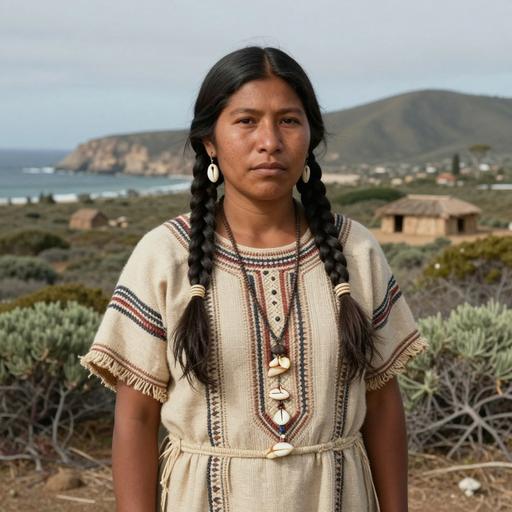
Imagine dawn light on kelp-fringed shores: families hauling seine nets, scraping abalone, and fashioning beads from native shells. Archaeological assemblages from Carpinteria, Point Sal, and the Channel Islands reveal diets dominated by fish, shellfish, and marine mammals, supplemented by terrestrial plants and game—especially at mainland loci such as New Cuyama. Densely stratified midden deposits and hearth features illustrate repeated seasonal camps and long-term residence in favorable coastal niches.

Material culture hints at craft specialization. Shell-bead production sites and distinctive toolkits appear in island contexts and on the nearby mainland, suggesting skilled artisans and exchange networks. By the Late Holocene archaeological indicators point toward increasing social differentiation: larger village sites, craft concentrations, and prestige goods that echo later ethnohistoric descriptions of ranked Chumash communities. However, the archaeological signal is complex; some islands show continuity of small-scale maritime lifeways while others depict intensified regional interaction.

The cinematic tableau of coastal life—canoes cutting through morning mist, workshops ringing with hammer-stone percussion—rests on carefully recovered context: radiocarbon-dated features, faunal quantification, and spatial analysis. Nevertheless, archaeological data indicates variation through time and space, and many aspects of social organization (residence rules, leadership structures) remain best interpreted as hypotheses tested against both material and genetic evidence.

  • Maritime-focused subsistence with complementary inland resource use
  • Evidence for craft specialization (shell beads) and growing social complexity
Capítulo V

Genetic Profile

The genetic dataset of 114 ancient individuals from California coastal and island sites provides a rare, multi-millennial window into population history. Maternal lineages are dominated by A2c (36 samples) and haplogroups C (28), D1t (14), B (14), and A2 (12), a distribution broadly consistent with North American indigenous maternal diversity but with notable enrichment of A2c on island contexts. Paternal markers are led by haplogroup Q (44), the expected predominant Native American Y lineage, with smaller counts of P (6), CT (2), and C (2).

These patterns paint a picture of long-term maternal continuity punctuated by local and regional interactions. The high frequency of A2c—particularly in Channel Islands contexts like San Nicolas, San Cruz, and San Clemente—may reflect enduring maternal lineages in insular communities, though causation (founder effects, drift, or social practices) is not resolvable without larger comparative datasets. Low counts of rarer Y haplogroups (CT, C) should be treated as preliminary signals due to small sample sizes.

Genome-wide analyses, where available, support genetic affinity between island and mainland individuals, consistent with archaeological evidence for maritime mobility and exchange. Importantly, 114 samples constitute a substantial dataset for regional ancient DNA, but spatial and temporal gaps remain; inferring fine-scale demography or social rules (e.g., matrilocality or patrilocality) requires denser time-series and collaborative research with descendant communities. Overall, the genetic data corroborates a scenario of deep local persistence coupled with episodic gene flow across coastal California.

  • 114 ancient genomes show maternal continuity and regional interactions
  • Dominant mtDNA A2c and Y-DNA Q align with broader Native American patterns
Capítulo VI

Legacy & Modern Connections

The archaeological and genetic story emerging from California's coast is not just of bones and beads but of living communities whose descendants carry cultural memory and ongoing stewardship of the landscape. Genetic findings resonate with Chumash oral traditions of deep attachment to islands and shorelines, and they provide a scientific complement—not a replacement—to cultural and historical knowledge.
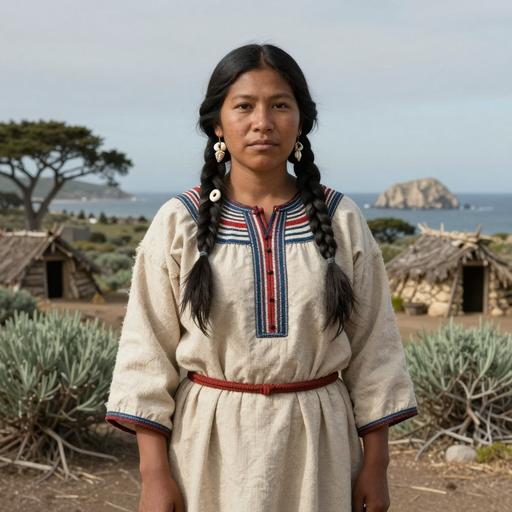
Research in this region increasingly follows ethical best practices: collaborative frameworks with descendant communities, transparent data stewardship, and respect for repatriation laws (e.g., NAGPRA). Genetic results help illuminate population continuity, migration, and contact, but identity and belonging remain rooted in language, ceremony, and community life. Future work—grounded in partnership—will refine the picture of how these coastal peoples navigated ocean and land for millennia, ensuring that scientific narratives reflect both evidence and the priorities of the people most closely connected to these places.

  • Genetic and archaeological data complement Indigenous histories of continuity
  • Ongoing research emphasizes community partnership, ethics, and repatriation
Capítulo VII

Catálogo de muestras

9 muestras de ADN antiguo asociadas con la cultura Coastal Echoes: Chumash & Island Peoples que aportan datos de referencia sobre las poblaciones de este periodo.

9 / 9 muestras
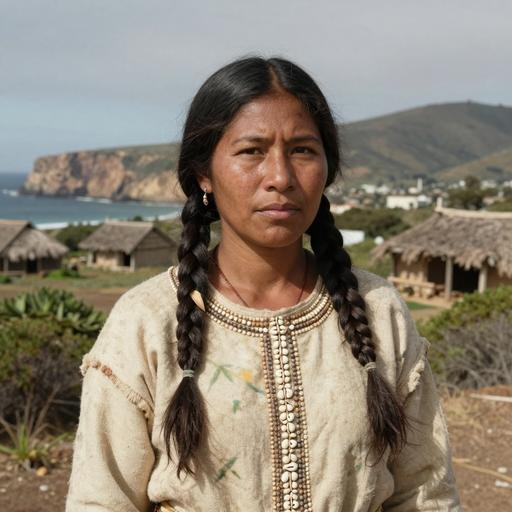
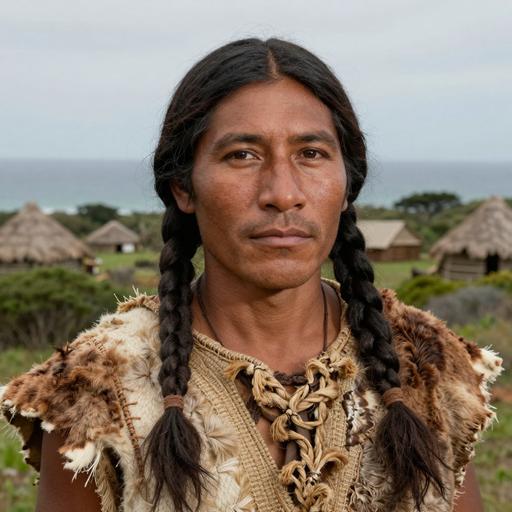
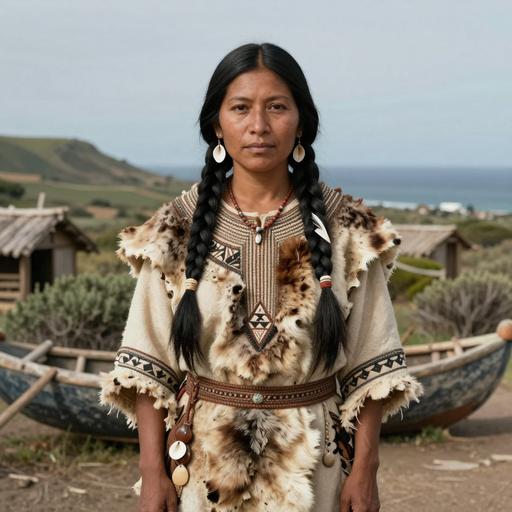
Retrato Muestra País Época Fecha Cultura Sexo ADN-Y ADNmt
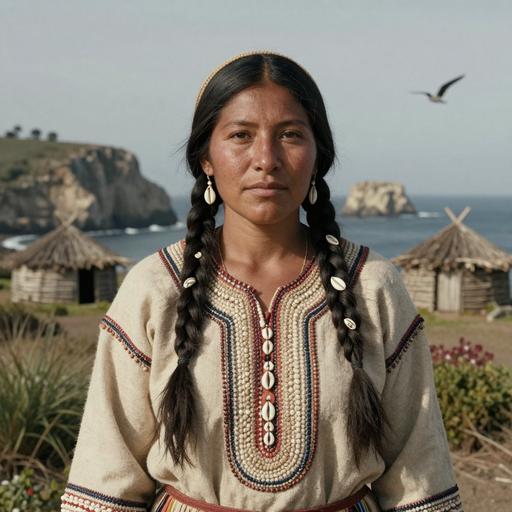
Retrato reconstruido de Native American individual, USA
Native American individual, USA
USA USA_CA_LSCI 775 CE Native American F - C1b41
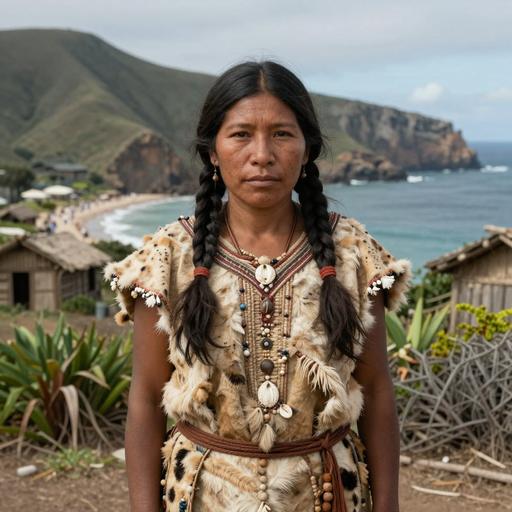
Retrato reconstruido de Native American individual, USA
Native American individual, USA
USA USA_CA_LSCI 1440 CE Native American M Q-M902 C1b45
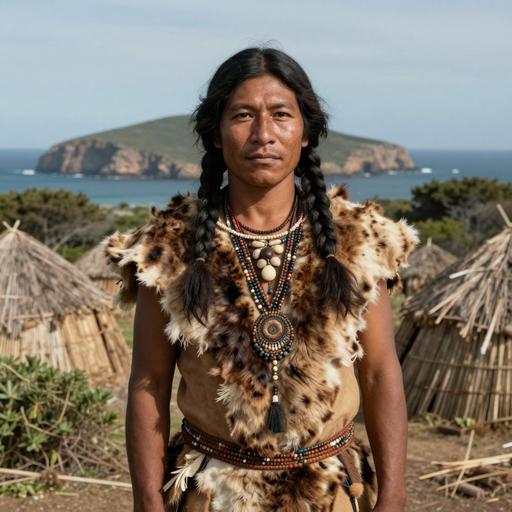
Retrato reconstruido de Native American individual, USA
Native American individual, USA
USA USA_CA_LSCI 700 CE Native American F - C1b41
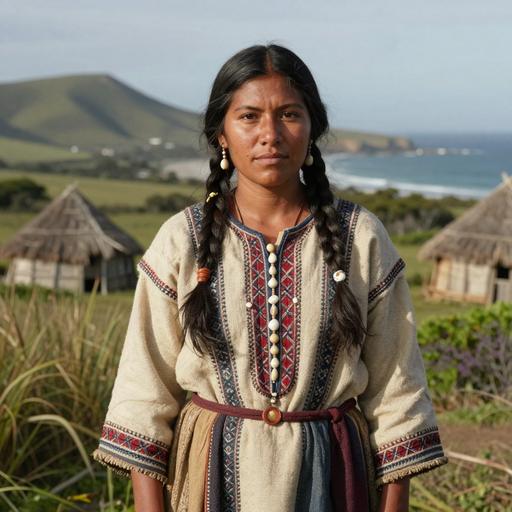
Retrato reconstruido de Native American individual, USA
Native American individual, USA
USA USA_CA_LSCI 1039 CE Native American F - B2a5
Retrato reconstruido de Native American individual, USA
Native American individual, USA
USA USA_CA_LSCI 700 CE Native American F - C1b41
Retrato reconstruido de Native American individual, USA
Native American individual, USA
USA USA_CA_LSCI 700 CE Native American M Q-L53 C1b41
Retrato reconstruido de Native American individual, USA
Native American individual, USA
USA USA_CA_LSCI 890 CE Native American F - C1b41
Retrato reconstruido de Native American individual, USA
Native American individual, USA
USA USA_CA_LSCI 1400 CE Native American F - C1b41
Retrato reconstruido de Native American individual, USA
Native American individual, USA
USA USA_CA_LSCI 700 CE Native American F - -
Con IA

Asistente de IA

Haz preguntas sobre la cultura Coastal Echoes: Chumash & Island Peoples

Asistente de IA por DNAGENICS

Desbloquear esta función
Pregunta sobre la cultura Coastal Echoes: Chumash & Island Peoples. El asistente con IA puede explicar hallazgos genéticos, contexto histórico, pruebas arqueológicas y conexiones modernas, con sus límites de interpretación.
Ejemplo de análisis con IA

La cultura Coastal Echoes: Chumash & Island Peoples representa un capítulo de la historia humana...

El análisis genético permite estudiar similitudes con poblaciones anteriores y posibles adaptaciones. Las muestras de ADN antiguo aportan información para investigar patrones migratorios y relaciones entre poblaciones, con límites que dependen del estudio y del contexto arqueológico.

Esta es una vista previa del análisis con IA. Accede al asistente completo para explorar información sobre:

  • Composición y similitud genética
  • Patrones migratorios y orígenes
  • Vida cotidiana y prácticas culturales
  • Contexto genético moderno

Explora más culturas antiguas

Descubre la historia de civilizaciones de distintas partes del mundo antiguo