Preparando el informe

Cargando la información y las referencias disponibles

Consultando el registro arqueológico...

Recopilando registros antiguos

Saltar al contenido principal
Croatia_MBA: Middle Bronze Age Echoes
Cultura destacada

Croatia_MBA: Middle Bronze Age Echoes

Archaeology and ancient DNA illuminate communities of the Cetina Valley and Dalmatian hinterland.

2000 CE - 1200 BCE
Croatia (Cetina Valley, Dalmatia)
Desplázate para empezar
Capítulo I

La historia

Comprender la cultura Croatia_MBA: Middle Bronze Age Echoes

Middle Bronze Age communities (2000–1200 BCE) from the Cetina Valley and Dalmatian interior—Veliki Vanik, Velim-Kosa, Koprivno and others—are visible in burial mounds and pottery. Eleven samples show predominance of mtDNA J and a single Y-J, linking archaeology with complex maternal continuity and limited paternal signal.

Time Period

2000–1200 BCE

Region

Croatia (Cetina Valley, Dalmatia)

Common Y-DNA

J (observed once among 11)

Common mtDNA

J (4), I (1), W (1), T (1), U (1)

Capítulo II

Cronología

Momentos clave de la historia de esta cultura

2000 BCE

Middle Bronze Age horizons begin

Regional tumulus cemeteries and distinctive pottery styles emerge in Dalmatia and the Cetina Valley, marking the start of the Croatia_MBA horizon.

Capítulo III

Origins & Emergence

The Middle Bronze Age communities in what is now Croatia emerge in the archaeological record as a tapestry of hilltop tumuli, fortified farmsteads and richly furnished graves. Between ca. 2000 and 1200 BCE, sites such as Veliki Vanik, Velim-Kosa, Velika Gomila and settlement traces in the Cetina Valley reveal pottery traditions, bronze tools and burial architecture that link inland Dalmatia with wider Adriatic networks. Excavations at Koprivno and Matkovići have uncovered inhumations and tumulus contexts that show continuity with the earlier Cetina cultural horizon while reflecting new funerary expressions.

Archaeological data indicates intensified mobility along coastal and river routes during this era: trade in bronze, occasional exotic goods, and regional stylistic exchange are visible in ceramics and metalwork. Radiocarbon dates from local tumuli cluster within the 2000–1200 BCE window, situating these communities in the broader Middle Bronze Age dynamics of the central and southern Balkans. Cultural emergence here appears as a local mosaic rather than a sudden replacement—material continuity exists alongside innovations in metallurgy and mortuary display.

Limited genomic sampling (11 individuals) supports cautious statements about population origins: the maternal lineages show persistence of haplogroups associated with post-Neolithic Europe, while the sparse Y-chromosome evidence hints at heterogeneous male ancestry or sampling limits. Ongoing excavations and genome-wide studies will refine these patterns.

  • Sites: Veliki Vanik, Velim-Kosa, Velika Gomila, Koprivno, Matkovići
  • Dates concentrated between 2000–1200 BCE
  • Material continuity with earlier Cetina traditions, plus new metallurgical traits
Capítulo IV

Daily Life & Society

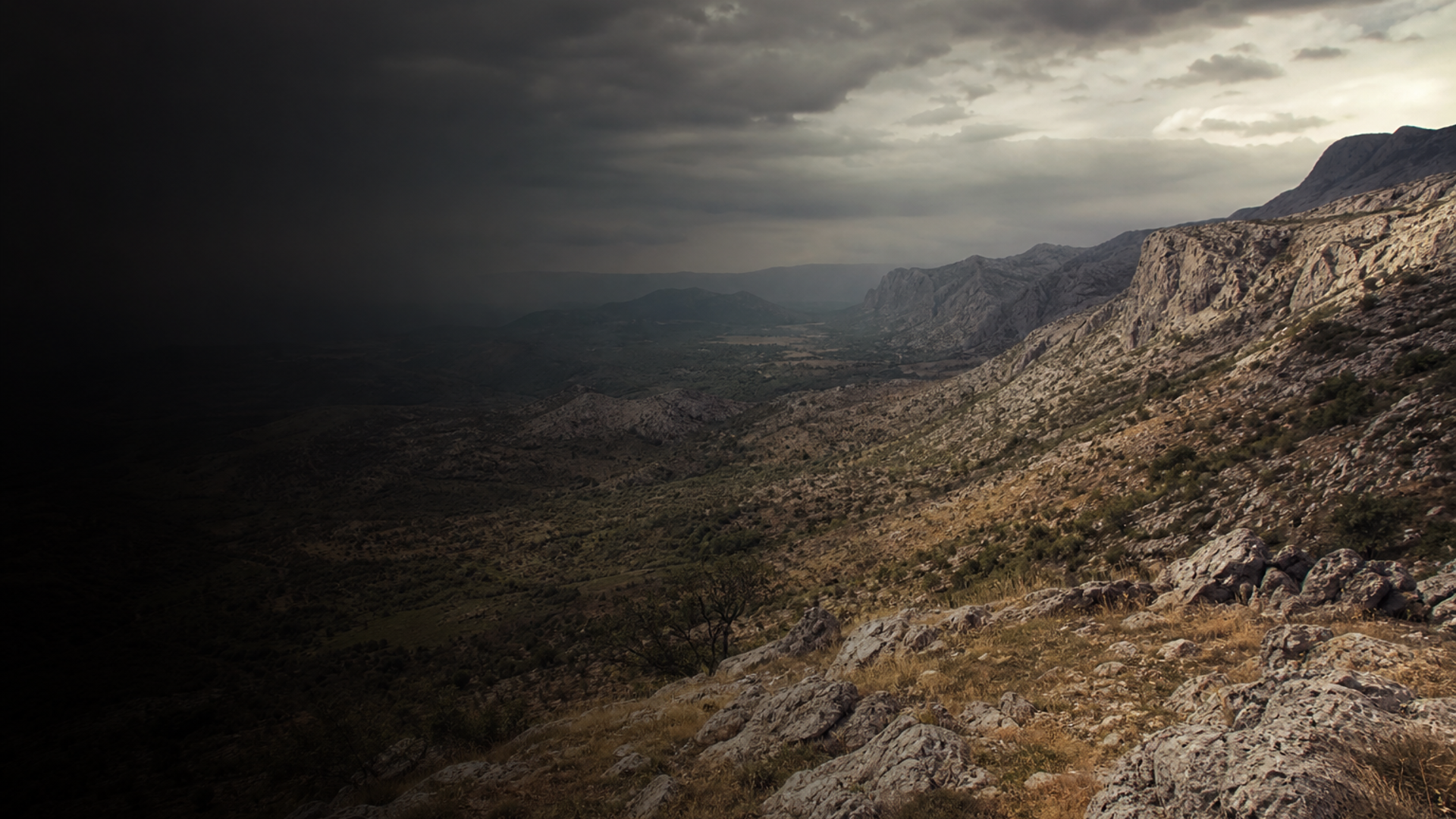
Life in Middle Bronze Age Dalmatia unfolded between the sea breeze and karst hinterlands. Farmers cultivated cereal patches in valleys and grazed herds on limestone slopes; pastoral mobility shaped seasonal rhythms. Archaeology recovers storage pits, querns and hearths at settlement sites, while tumulus graves and grave goods indicate household and kinship investments in commemoration.

Bronze tools—sickles, razors, pins—appear alongside locally made pottery decorated with cord impressions and stamped motifs. Such objects speak to skilled craft traditions and workshop exchange; occasional imported bronze suggests connections to the Adriatic littoral and further afield. Mortuary practice displays social differentiation: some burials are modest, others contain personal ornaments or weapons, hinting at status distinctions or role differentiation within communities. Gendered grave good patterns are visible but not uniform across sites.

Communities likely organized at the level of extended families or small chiefdoms, linked by seasonal cooperation and trade. Defensive features at elevated settlements and the visibility of tumuli on the skyline also suggest social competition and a need to signal territorial claims. Organic materials rarely survive, so reconstructions rely on durable artifacts, spatial patterning and isotopic studies where available. Integrating ancient DNA with isotopes and artifact distributions offers a more textured picture of mobility, diet and social networks in these Bronze Age landscapes.

  • Mixed farming and pastoralism with seasonal mobility
  • Material culture: bronze tools, cord-decorated pottery, tumulus burials
Capítulo V

Genetic Profile

Genetic evidence from 11 Middle Bronze Age individuals from Croatia_MBA provides a preliminary window into ancestry and lineage. Maternal haplogroups are dominated by mtDNA J (4 of 11), with single occurrences of I, W, T and U. A single Y-chromosome sample carries haplogroup J. This pattern—multiple maternal lineages dominated by J and a sparse Y signal—may reflect continuity of post-Neolithic maternal ancestry in the region combined with heterogeneous male inputs, but small sample size constrains firm conclusions.

MtDNA J is known across Europe and the Near East and is often associated with Neolithic and later expansions; its prominence here is consistent with long-term maternal continuity since the Neolithic in many parts of the Balkans. The presence of other maternal lineages (I, W, T, U) underscores genetic diversity at the mitochondrial level. The solitary Y-J observation does not establish population-level paternal structure; Y diversity in Bronze Age Europe is often complex, and a single haplogroup instance can reflect local pedigree or sampling bias.

Genome-wide ancestry data would more clearly partition Anatolian-Neolithic, local hunter–gatherer, and Steppe-derived components observed elsewhere in Bronze Age Europe. Archaeological links to Adriatic trade and the Cetina cultural horizon hint at gene flow routes, but until larger genome-wide datasets are available, interpretations remain provisional. Given 11 samples, the results are informative but preliminary; increasing the number and geographic spread of analyzed genomes will sharpen the genetic picture.

  • mtDNA dominated by J (4/11); other mtDNA: I, W, T, U
  • Y-DNA limited: one J observed — interpret cautiously given sample size
Capítulo VI

Legacy & Modern Connections

The echoes of Middle Bronze Age Croatia resonate in the landscape and in genetic threads that persist into later European populations. Archaeological continuities—tumulus landmarks, ceramic motifs, and metallurgical techniques—feed into cultural traditions that shaped the Iron Age societies of the western Balkans. Maternal haplogroups common in these Bronze Age assemblages, especially mtDNA J, are still present at varying frequencies in modern populations across the Adriatic and Mediterranean, suggesting long-term lineage continuity.

However, genetic landscapes are palimpsests: migrations, cultural shifts and admixture over millennia have layered new ancestries atop older ones. The Croatia_MBA dataset (11 individuals) offers promising clues linking ancient burials to modern genetic variation but remains an initial step. When combined with archaeology, isotopic mobility studies and broader comparative aDNA, these samples contribute to a story of persistence, exchange and change that connects Bronze Age communities to the living populations of Croatia and the wider Balkans.

  • Material and genetic continuity contributes to regional ancestries
  • Findings are preliminary; broader aDNA and isotopic sampling needed
Con IA

Asistente de IA

Haz preguntas sobre la cultura Croatia_MBA: Middle Bronze Age Echoes

Asistente de IA por DNAGENICS

Desbloquear esta función
Pregunta sobre la cultura Croatia_MBA: Middle Bronze Age Echoes. El asistente con IA puede explicar hallazgos genéticos, contexto histórico, pruebas arqueológicas y conexiones modernas, con sus límites de interpretación.
Ejemplo de análisis con IA

La cultura Croatia_MBA: Middle Bronze Age Echoes representa un capítulo de la historia humana...

El análisis genético permite estudiar similitudes con poblaciones anteriores y posibles adaptaciones. Las muestras de ADN antiguo aportan información para investigar patrones migratorios y relaciones entre poblaciones, con límites que dependen del estudio y del contexto arqueológico.

Esta es una vista previa del análisis con IA. Accede al asistente completo para explorar información sobre:

  • Composición y similitud genética
  • Patrones migratorios y orígenes
  • Vida cotidiana y prácticas culturales
  • Contexto genético moderno

Explora más culturas antiguas

Descubre la historia de civilizaciones de distintas partes del mundo antiguo