Preparando el informe

Cargando la información y las referencias disponibles

Consultando el registro arqueológico...

Recopilando registros antiguos

Saltar al contenido principal
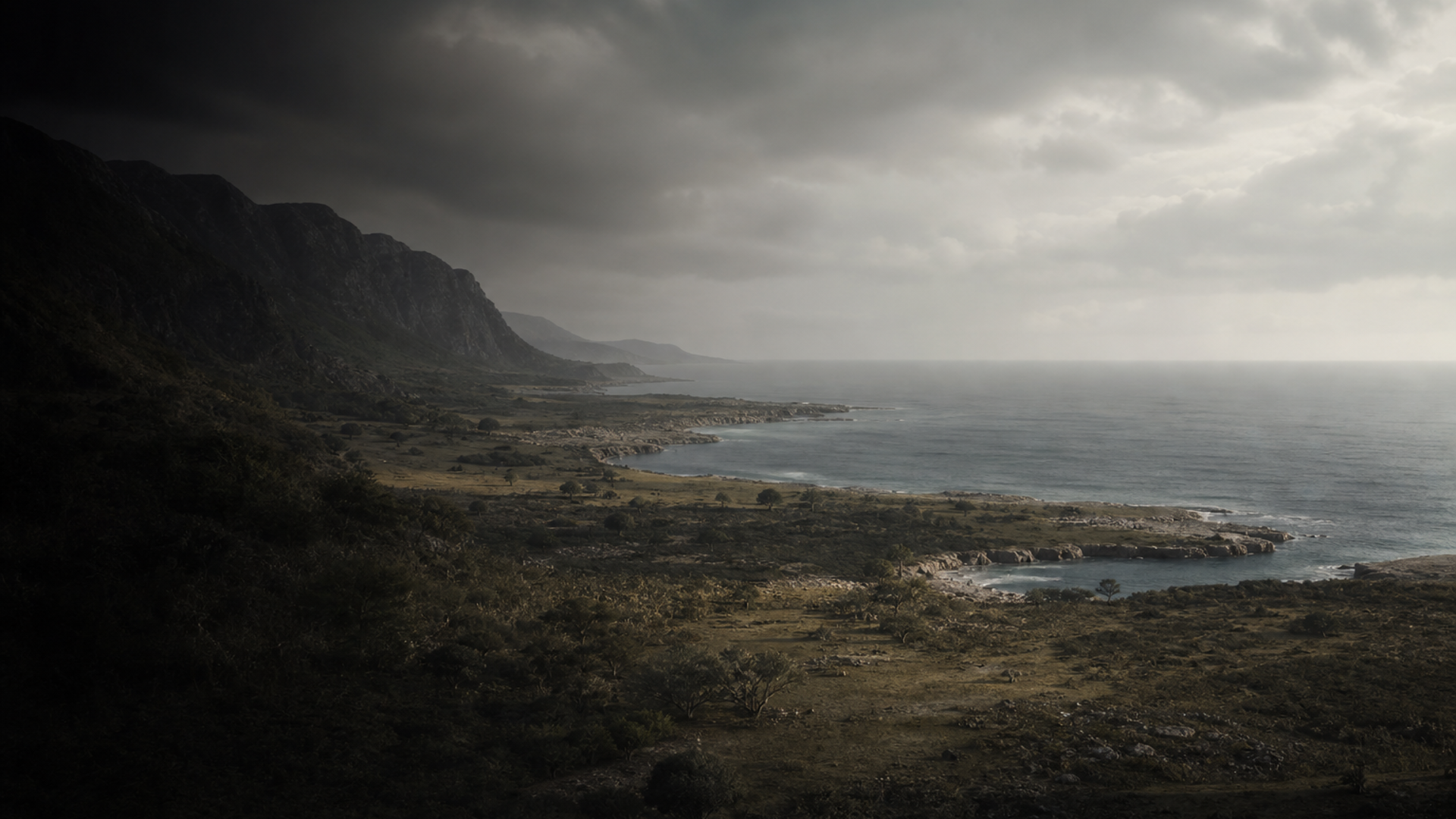
Dominican Ceramic Coastlines
Cultura destacada

Dominican Ceramic Coastlines

Coastal pottery traditions (600–1650 CE) on southeast Dominican Republic, tying archaeology to DNA

600 CE - 1650 CE
Dominican Republic (southeast coast)
Desplázate para empezar
Capítulo I

La historia

Comprender la cultura Dominican Ceramic Coastlines

Archaeological evidence from El Soco, Atajadizo and La Caleta (600–1650 CE) reveals coastal Ceramic-era communities. Ancient DNA (5 samples) shows Native American mtDNA (A, C) and broad Y-lineages; results are preliminary but illuminate indigenous ancestry in the colonial era.

Time Period

600–1650 CE

Region

Dominican Republic (southeast coast)

Common Y-DNA

BT (1), CT (1)

Common mtDNA

A (2), C (1)

Capítulo II

Cronología

Momentos clave de la historia de esta cultura

600 CE

Emergence of Ceramic communities

First clear ceramic assemblages and coastal village occupations in southeast Dominican Republic date to ~600 CE, marking intensification of marine foraging and pottery production.

Capítulo III

Origins & Emergence

The Dominican Ceramic horizon unfolds along sun-bleached shorelines and sheltered lagoons of the southeast Dominican Republic between roughly 600 and 1650 CE. Archaeological strata at El Soco (San Pedro de Macorís), Atajadizo (mouth of the Yuma River, Altagracia) and La Caleta (Santo Domingo) preserve pottery assemblages, shell middens and coastal settlement features that mark a way of life oriented to the sea. Ceramic stylistic links suggest long-distance connections with broader Caribbean Ceramic traditions (often grouped under Saladoid–Ostionoid sequences), but local innovation is evident in vessel forms and decorative motifs recovered in burials and domestic contexts.

Limited evidence suggests these communities intensified marine foraging alongside horticulture of root crops and small-scale domesticates. Archaeological data indicates shifting settlement patterns and ceramic styles across centuries, reflecting social change, trade, and, in the later century, impacts from European contact. The archaeological record is rich in material texture—fired clay, shell, and bone—but sparse in written testimony, so reconstructions depend on careful stratigraphy, radiocarbon dating, and comparative regional frameworks. Where genetic data are available, they add an essential dimension: they can test hypotheses about migration, continuity, and the demographic effects of contact. Because many sequences remain poorly sampled, origins and precise pathways of ceramic traditions in the Dominican Republic should be treated as provisional and subject to refinement with more data.

  • Ceramic-era communities along southeast Dominican coast (600–1650 CE)
  • Sites: El Soco, Atajadizo, La Caleta—pottery, middens, burials
  • Stylistic ties to wider Caribbean Saladoid–Ostionoid traditions, but local variation
Capítulo IV

Daily Life & Society

Life in Dominican Ceramic communities unfolded in rhythms keyed to tide and season. Archaeological layers at coastal sites reveal dense shell middens, fish hooks and net sinkers, and grinding stones—tangible traces of diets heavy in fish, mollusks, and cultivated root crops such as cassava. Pottery shapes—storage jars, serving bowls and intricately decorated necks—speak to food processing, storage and communal consumption. Burials recovered at La Caleta and nearby localities show varied mortuary treatments, sometimes accompanied by ceramic offerings and personal ornaments made from shell and bone, suggesting distinctions in social identity or ritual status.

Settlement patterns point to small nucleated villages located for access to estuaries, mangroves and arable patches. Craft practices included shell tool production and pottery firing in open kilns or pits. Exchange networks—evident from non-local raw materials and shared decorative motifs—connected these communities across coastal corridors. With the arrival of Europeans in the late 15th century, archaeological strata record material change: introduced metals, glass beads and new plant introductions appear in upper layers. This contact catalyzed rapid demographic and cultural transformations; however, skeletal and material remains indicate a period of overlap where indigenous lifeways persisted even as new elements arrived.

  • Marine-focused diet with horticulture; pottery for cooking and storage
  • Burials with ceramic and shell offerings indicate ritual complexity
Capítulo V

Genetic Profile

Genetic sampling from five individuals associated with Dominican Ceramic contexts (El Soco, Atajadizo, La Caleta) yields a preliminary but evocative signal. Maternal lineages include mtDNA haplogroups A (two samples) and C (one sample), both recognized founding Native American lineages found throughout the Americas. These mtDNA results are consistent with an indigenous Caribbean maternal ancestry persisting into the late pre-contact and early colonial periods. On the paternal side, two low-resolution Y-chromosome calls are reported as BT (one) and CT (one). BT and CT are broad, upstream macro-haplogroups; in ancient and modern contexts they can represent diverse downstream branches. Because these calls are not resolved to finer subclades (for example, Q or Cx), their interpretation is limited.

Important caveats: the sample count is small (n=5), and a low sample number (<10) makes population-level inferences provisional. Tropical preservation and low endogenous DNA complicate recovery, and low-resolution Y-chromosome calls can reflect limited data or capture biases. Moreover, the chronological span to 1650 CE overlaps early colonial contact; later samples may include admixture with European and African lineages, which must be distinguished through genome-wide analyses. Future work should prioritize greater sample sizes, improved coverage for autosomal data, and targeted capture to resolve Y-haplogroup subclades. Together with archaeological context, larger and higher-resolution genetic datasets will clarify questions of migration, continuity, and demographic change in Dominican Ceramic communities.

  • mtDNA: A (2), C (1) — supports indigenous maternal ancestry
  • Y-DNA: BT (1), CT (1) — broad upstream calls; require finer resolution
Capítulo VI

Legacy & Modern Connections

The archaeological and genetic traces of Dominican Ceramic communities resonate along modern shorelines and in living memory. Maternal haplogroups A and C echo lineages still documented in some contemporary Caribbean populations, suggesting threads of continuity despite dramatic colonial-era disruption. Archaeological places like La Caleta are both heritage sites and touchstones for community identity, where pottery sherds and shell tools become tangible links to ancestral practices.

At the same time, these findings underscore loss: population collapse, forced movement, and cultural transformation during the colonial centuries reshaped demographic landscapes. Scientific investigation today is most productive when paired with community engagement, respectful curation, and transparent dialogue about repatriation and interpretation. Genetic data can illuminate descent and migration, but it cannot by itself restitute histories of language, ritual, and social life—those are best reconstructed through an integrated approach that blends archaeology, genetics, ethnohistory, and the perspectives of descendant communities.

  • mtDNA continuity hints at indigenous maternal ancestry persisting into the colonial era
  • Integrative research and community collaboration are essential for ethical interpretation
Con IA

Asistente de IA

Haz preguntas sobre la cultura Dominican Ceramic Coastlines

Asistente de IA por DNAGENICS

Desbloquear esta función
Pregunta sobre la cultura Dominican Ceramic Coastlines. El asistente con IA puede explicar hallazgos genéticos, contexto histórico, pruebas arqueológicas y conexiones modernas, con sus límites de interpretación.
Ejemplo de análisis con IA

La cultura Dominican Ceramic Coastlines representa un capítulo de la historia humana...

El análisis genético permite estudiar similitudes con poblaciones anteriores y posibles adaptaciones. Las muestras de ADN antiguo aportan información para investigar patrones migratorios y relaciones entre poblaciones, con límites que dependen del estudio y del contexto arqueológico.

Esta es una vista previa del análisis con IA. Accede al asistente completo para explorar información sobre:

  • Composición y similitud genética
  • Patrones migratorios y orígenes
  • Vida cotidiana y prácticas culturales
  • Contexto genético moderno

Explora más culturas antiguas

Descubre la historia de civilizaciones de distintas partes del mundo antiguo