Preparando el informe

Cargando la información y las referencias disponibles

Consultando el registro arqueológico...

Recopilando registros antiguos

Saltar al contenido principal
Don Eneolithic Echoes
Cultura destacada

Don Eneolithic Echoes

Archaeology and DNA illuminate a steppe horizon from 5473–3531 BCE

5473 CE - 3531 BCE
Russia (Lipetsk Oblast, Don region)
Desplázate para empezar
Capítulo I

La historia

Comprender la cultura Don Eneolithic Echoes

Archaeological remains from Lipetsk Oblast (Vasilyevskiy kordon-17, Ksizovo-6) dated 5473–3531 BCE show a Serednii Stih—Eneolithic—presence on the Don. Ancient DNA (11 samples) reveals strong maternal U lineages and limited Y-lineage diversity, offering preliminary clues about steppe continuity and connections.

Time Period

5473–3531 BCE

Region

Russia (Lipetsk Oblast, Don region)

Common Y-DNA

R (2), J (1)

Common mtDNA

U (10), W6a (1)

Capítulo II

Cronología

Momentos clave de la historia de esta cultura

4500 BCE

Serednii Stih horizon active in Don region

Regional archaeological horizons show occupation along the Don with mixed subsistence and emerging pastoral traits; DNA samples from Lipetsk date to this broad phase.

Capítulo III

Origins & Emergence

The assemblage labelled Russia_Don_Eneolithic_SeredniiStih falls within the broader Serednii Stih horizon, a shifting cultural network across the Pontic–Don steppe during the mid to late 6th–4th millennia BCE. Archaeological data indicates occupation at two Lipetsk Oblast sites—Vasilyevskiy kordon-17 (Dobrovsky District) and Ksizovo-6 (Zadonsky District)—with radiocarbon dates spanning roughly 5473–3531 BCE. These dates place the material and human remains in the Eneolithic (Copper Age) transition, when local hunter–gatherer lifeways intersected with emergent pastoral economies and long-distance exchange.

Material traces attributed to this horizon—ceramic styles, settlement features, and burial practices reported in regional surveys—suggest a mosaic of mobile and semi-sedentary lifeways rather than a single, uniform society. Limited evidence suggests interactions with neighboring groups across the Don and Dnieper corridors, channels that would later become conduits for cultural and genetic exchange. While the archaeological picture is evocative, preservation and sampling biases mean interpretations remain provisional: the current dataset is modest and should be read as a snapshot rather than a full demographic portrait.

  • Sites: Vasilyevskiy kordon-17 and Ksizovo-6 in Lipetsk Oblast
  • Dates: 5473–3531 BCE, Eneolithic / Serednii Stih horizon
  • Evidence for mixed subsistence and regional interactions
Capítulo IV

Daily Life & Society

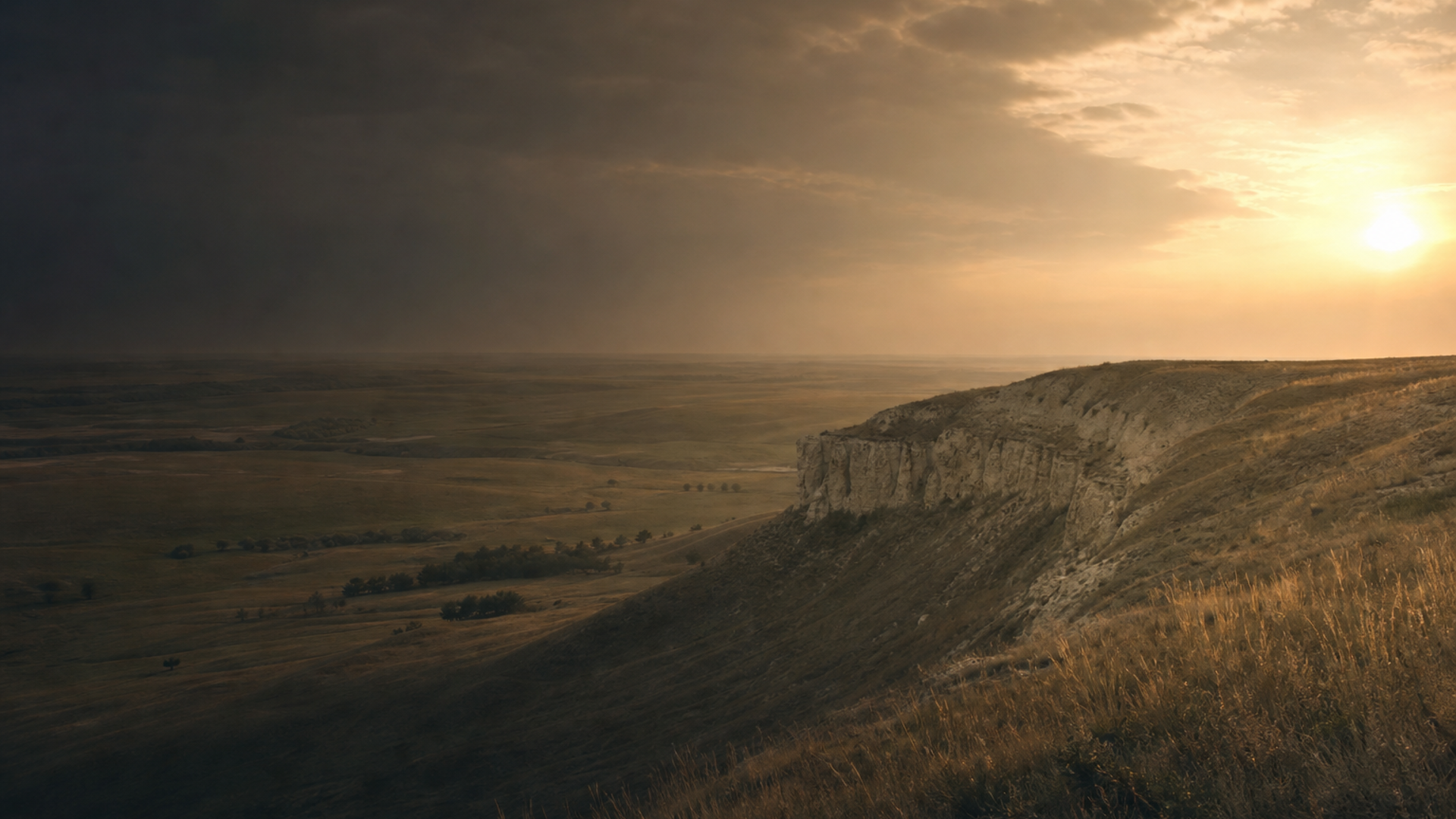
Archaeological remains from Don-region Serednii Stih contexts paint a cinematic landscape of rivers, grasslands, and seasonal camps. Excavations and surface surveys indicate hearth-centered dwellings, pottery shards marked by local temper, and funerary deposits that preserve glimpses of ritual practice. Archaeological data indicates reliance on a diverse subsistence economy: fishing and riverine resources, hunted game, and increasingly visible signs of animal management consistent with early pastoral strategies.

Craft production and exchange likely accompanied these subsistence choices. Pottery fragments and worked bone or stone reflect household-level manufacture, while raw materials not native to the Lipetsk area imply trade or mobility across steppe corridors. Social organization is visible primarily through mortuary treatment: burials preserve the imprint of identity choices—grave goods, body position, and clustering—that suggest kin networks and community memory. Yet many details remain uncertain. Preservation biases, intermittent excavation, and the limited number of dated and analyzed burials constrain firm reconstructions of social hierarchy, gendered labor, or long-distance exchange intensity.

  • Mixed subsistence: river resources, hunting, early animal management
  • Material culture shows local production and regional exchange
Capítulo V

Genetic Profile

Eleven ancient individuals sampled from the Lipetsk Don localities provide a compact but informative genetic picture. Ten of the eleven carry mitochondrial haplogroup U—a lineage often associated with European hunter–gatherer ancestry—while one individual carries W6a, a rarer maternal lineage in this region. On the paternal side, reported Y-lineages are sparse: two individuals assigned to broad haplogroup R, and one to J. The remaining samples either were female or lacked resolvable Y-chromosome calls in the available data.

Archaeological context and these genetic patterns together suggest a strong maternal continuity with pre-Neolithic European lineages persisting into the Eneolithic Don horizon. The prevalence of mtDNA U aligns with a model where local hunter–gatherer maternal lines remained prominent even as cultural practices shifted. The presence of Y-haplogroup R is consistent with steppe-related paternal lineages observed across Eurasia, but the dataset does not specify R subclades (e.g., R1a vs. R1b), so detailed paternal inferences are not possible. The single J call hints at possible connections or gene flow from more southerly or eastern networks, but with only one J and two R among three reported Y-chromosomes (and 11 samples total), such signals are tentative.

Limited sample size—eleven individuals—means genetic inferences remain preliminary. Archaeogenetic modeling benefits from larger, geographically diverse sample sets, so these results should be treated as suggestive evidence of continuity and emerging connectivity rather than definitive demographic history.

  • Dominant maternal signal: mtDNA U (10/11) indicating hunter–gatherer continuity
  • Sparse paternal data: R (2) and J (1); low Y-sample count limits strong conclusions
Capítulo VI

Legacy & Modern Connections

The Don Eneolithic Serednii Stih assemblage stands as a moment when deep European maternal lineages persisted alongside new cultural dynamics on the steppe. MtDNA U remains common in many modern European populations, so finding it repeatedly in these Eneolithic individuals underscores long-term matrilineal continuity in northern and eastern Europe. The recorded Y-lineages (R and J) echo broader patterns that later shape Eurasian genetic landscapes—R becoming widespread in Steppe-associated expansions, and J marking older Near Eastern connections—yet the present sample is too small to map direct ancestry paths.

In museum and research contexts, these individuals humanize processes of slow transformation: mobility, exchange, and selective continuity. They remind us that present-day genetic and cultural mosaics emerged from layered, regionally specific histories. Ongoing and expanded sampling around the Don and adjacent steppe will be essential to test early hypotheses suggested by these 11 genomes and to move from evocative snapshots to robust population histories.

  • Maternal continuity resonates with later European mtDNA distributions
  • Preliminary paternal signals hint at steppe and near‑eastern connections
Con IA

Asistente de IA

Haz preguntas sobre la cultura Don Eneolithic Echoes

Asistente de IA por DNAGENICS

Desbloquear esta función
Pregunta sobre la cultura Don Eneolithic Echoes. El asistente con IA puede explicar hallazgos genéticos, contexto histórico, pruebas arqueológicas y conexiones modernas, con sus límites de interpretación.
Ejemplo de análisis con IA

La cultura Don Eneolithic Echoes representa un capítulo de la historia humana...

El análisis genético permite estudiar similitudes con poblaciones anteriores y posibles adaptaciones. Las muestras de ADN antiguo aportan información para investigar patrones migratorios y relaciones entre poblaciones, con límites que dependen del estudio y del contexto arqueológico.

Esta es una vista previa del análisis con IA. Accede al asistente completo para explorar información sobre:

  • Composición y similitud genética
  • Patrones migratorios y orígenes
  • Vida cotidiana y prácticas culturales
  • Contexto genético moderno

Explora más culturas antiguas

Descubre la historia de civilizaciones de distintas partes del mundo antiguo