Preparando el informe

Cargando la información y las referencias disponibles

Consultando el registro arqueológico...

Recopilando registros antiguos

Saltar al contenido principal
Echoes from Chagyrskaya Cave
Cultura destacada

Echoes from Chagyrskaya Cave

Altai Neanderthals glimpsed through stone, bone, and ancient genomes

98050 CE - 48150 BCE
Chagyrskaya Cave, Altai Krai, Russia
Desplázate para empezar
Capítulo I

La historia

Comprender la cultura Echoes from Chagyrskaya Cave

Chagyrskaya Neanderthals, preserved in Altai cave layers dated ~98,050–48,150 BCE, reveal a compelling intersection of archaeology and ancient DNA. Limited samples (n=3) suggest regional Neanderthal lineages; genetic conclusions remain preliminary.

Time Period

c. 98,050–48,150 BCE

Region

Chagyrskaya Cave, Altai Krai, Russia

Common Y-DNA

Unknown / not determined

Common mtDNA

ND (insufficient data)

Capítulo II

Cronología

Momentos clave de la historia de esta cultura

98050 BCE

Earliest dated occupation

Oldest stratigraphic layers in Chagyrskaya Cave fall near this date, marking early Neanderthal use of the site.

48150 BCE

Latest secure dates

Upper occupation horizons yield radiometric ages around this time, framing the known temporal range.

2000 CE

Modern genetic sampling

Twenty-first-century aDNA techniques enable retrieval of genetic data from a small set of Chagyrskaya specimens.

Capítulo III

Origins & Emergence

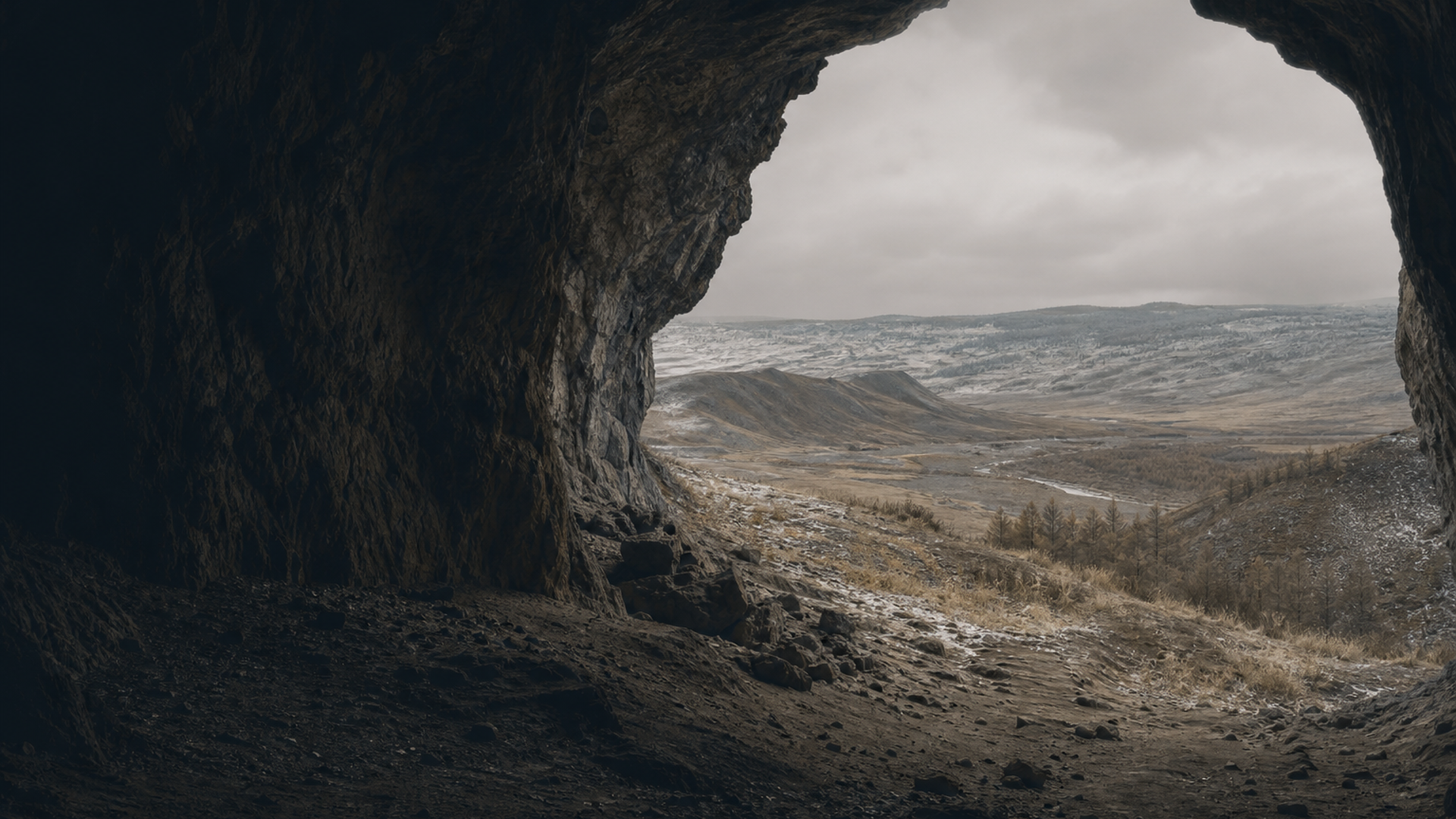
Chagyrskaya Cave sits in the wind-scoured foothills of the Altai Mountains (Krasnoshchyokovsky District, Altai Krai, Russia). The archaeological sequence preserves Neanderthal remains and stone tool assemblages embedded in layers that radiometric and stratigraphic studies place within a broad window from roughly 98,050 to 48,150 BCE. This span embraces dramatic climatic swings of the Late Pleistocene when Neanderthal populations across Eurasia adapted to shrinking refugia and shifting resources.

The material culture at Chagyrskaya shows a blend of classic Middle Paleolithic Levallois reduction alongside local technological choices — an echo of wide-ranging Neanderthal traditions interacting with the unique environmental niche of the Altai. Archaeological data indicate episodic occupation: hearth features, butchered fauna, and curated tools suggest repeated, seasonal use rather than continuous settlement.

Limited evidence suggests these Neanderthals were part of a regional lineage distinct in certain morphological and cultural traits, but the deep time range and small number of securely dated specimens mean models of origin and movement must remain cautious. Ongoing stratigraphic work and additional samples are essential to refine the picture of how Chagyrskaya groups fit into Neanderthal population dynamics across Eurasia.

  • Located in Chagyrskaya Cave, Altai Krai, Russia
  • Occupation layers dated ~98,050–48,150 BCE
  • Tool assemblage reflects regional Middle Paleolithic traditions
Capítulo IV

Daily Life & Society

The cinematic traces of daily life at Chagyrskaya are subtle but telling. Stone tools, fractured long bones, and hearth residues form a patchwork of behaviors: hunting and carcass processing, tool maintenance, and use of localized shelters. Faunal remains indicate exploitation of cold-steppe and montane species consistent with Pleistocene Altai environments. Cut marks and percussion scars reveal skilled but pragmatic subsistence strategies tailored to episodic resource abundance.

Spatial patterns in the cave — concentrations of lithics and burned bone near inferred hearths — suggest small, socially organized groups cooperating in hunting, butchery, and tool production. The archaeological record does not preserve fine-grained evidence of symbolic systems comparable to some contemporaneous sites, yet curated tools and the selective transport of raw materials imply planning and social knowledge transmission across seasons.

Archaeological data indicate mobility strategies adapted to harsh landscapes: seasonal movements between valleys, tactical hunting of ungulates, and reuse of sheltered sites for aggregation. Given the small sample size and incomplete preservation, reconstructions of social structure remain provisional, but the material imprint is consistent with mobile, resilient Neanderthal lifeways in the Altai.

  • Hearths, lithic concentrations, and butchered fauna indicate repeated cave use
  • Evidence favors small-group mobility and coordinated subsistence activities
Capítulo V

Genetic Profile

Ancient DNA recovered from Chagyrskaya Cave provides a rare genetic window into Altai Neanderthals. Only three sampled individuals are currently documented; because the sample count is low (<10), genetic interpretations must be treated as preliminary. Extracted sequences yield mitochondrial data classed as ND in the supplied dataset, indicating that clear assignment to common Neanderthal mtDNA clades is not robust with the available material, or that data reporting is incomplete.

Despite limits, genomic signals from Altai Neanderthals elsewhere have shown that Neanderthal populations in the region had distinct ancestry components and could differ from western European groups. Archaeological patterns at Chagyrskaya—regional tool styles and occupation rhythms—can be cross-referenced with genetic diversity to infer population structure: low genetic sample sizes leave open possibilities of local continuity, short-range gene flow, or episodic dispersals into the Altai.

No consistent Y-DNA haplogroup data are reported for these samples. The absence of clear haplogroup assignment underscores the technical challenges of retrieving nuclear DNA from heavily degraded Pleistocene remains. In sum, genetic data hint at an Altai Neanderthal presence with potentially unique regional traits, but broader conclusions about relationships to other Neanderthal populations or contributions to later hominin gene pools require larger, better-preserved sample sets.

  • Only 3 genetic samples — conclusions are preliminary
  • mtDNA labeled ND; no reliable Y-DNA assignments available
Capítulo VI

Legacy & Modern Connections

The legacy of Chagyrskaya Neanderthals is both local and global. Locally, their traces inform how hominins persist in the face of climatic extremes — a narrative of resilience etched into stone and bone. Globally, Chagyrskaya contributes to the mosaic of Neanderthal diversity that ancient DNA is beginning to reveal: population differentiation across Eurasia, episodes of contact, and complex demography prior to Neanderthal disappearance.

For modern genetics, each well-documented Pleistocene sample sharpens models of human evolutionary history. Even when mtDNA or Y-DNA assignments are not definitive, combining archaeological context with genomic data refines our understanding of population structure, migration corridors, and the timing of genetic exchanges. Given the small number of samples from Chagyrskaya, the strongest legacy is a methodological one: the site demonstrates how careful stratigraphic control and interdisciplinary study can couple material culture with molecular evidence to tell richer stories of our ancient cousins.

  • Illuminates Neanderthal adaptation to Altai environments
  • Highlights the power and limits of combining archaeology with ancient DNA
Con IA

Asistente de IA

Haz preguntas sobre la cultura Echoes from Chagyrskaya Cave

Asistente de IA por DNAGENICS

Desbloquear esta función
Pregunta sobre la cultura Echoes from Chagyrskaya Cave. El asistente con IA puede explicar hallazgos genéticos, contexto histórico, pruebas arqueológicas y conexiones modernas, con sus límites de interpretación.
Ejemplo de análisis con IA

La cultura Echoes from Chagyrskaya Cave representa un capítulo de la historia humana...

El análisis genético permite estudiar similitudes con poblaciones anteriores y posibles adaptaciones. Las muestras de ADN antiguo aportan información para investigar patrones migratorios y relaciones entre poblaciones, con límites que dependen del estudio y del contexto arqueológico.

Esta es una vista previa del análisis con IA. Accede al asistente completo para explorar información sobre:

  • Composición y similitud genética
  • Patrones migratorios y orígenes
  • Vida cotidiana y prácticas culturales
  • Contexto genético moderno

Explora más culturas antiguas

Descubre la historia de civilizaciones de distintas partes del mundo antiguo