Saltar al contenido principal
Cultura destacada

Echoes from Yagshiin Hodoo

Chemurchek barrows of Khovd Province reveal early Bronze Age steppe ties

2574 CE - 2459 BCE
Khovd Province, Mongolia

La historia

Archaeological remains from three Chemurchek barrow burials in Khovd (c. 2574–2459 BCE) combine grave contexts and ancient DNA to suggest steppe-linked male lineages (Y-R) and mixed maternal ancestry (mtDNA T, C). Findings are preliminary due to small sample size.

Time Period

c. 2574–2459 BCE

Region

Khovd Province, Mongolia

Common Y-DNA

R (3 samples)

Common mtDNA

T (2), C (1)

Cronología

2500 BCE

Chemurchek burials at Yagshiin Hodoo

Radiocarbon-dated barrow burials at Yagshiin Hodoo (Khovd) place Chemurchek individuals between 2574–2459 BCE, marking Early Bronze Age activity in western Mongolia.

Origins & Emergence

At the dawn of the third millennium BCE, the Chemurchek phenomenon in western Mongolia crystallized into a striking funerary landscape of earthen mounds and stone cairns. The three samples reported here derive from Barrow 3 and Barrow 1 at Yagshiin Hodoo (Bulgan sum, Khovd Province) and a nearby find at Yagshiin-Khuduu. Radiocarbon dates cluster tightly between 2574 and 2459 BCE, placing these individuals firmly in the Early Bronze Age Chemurchek horizon.

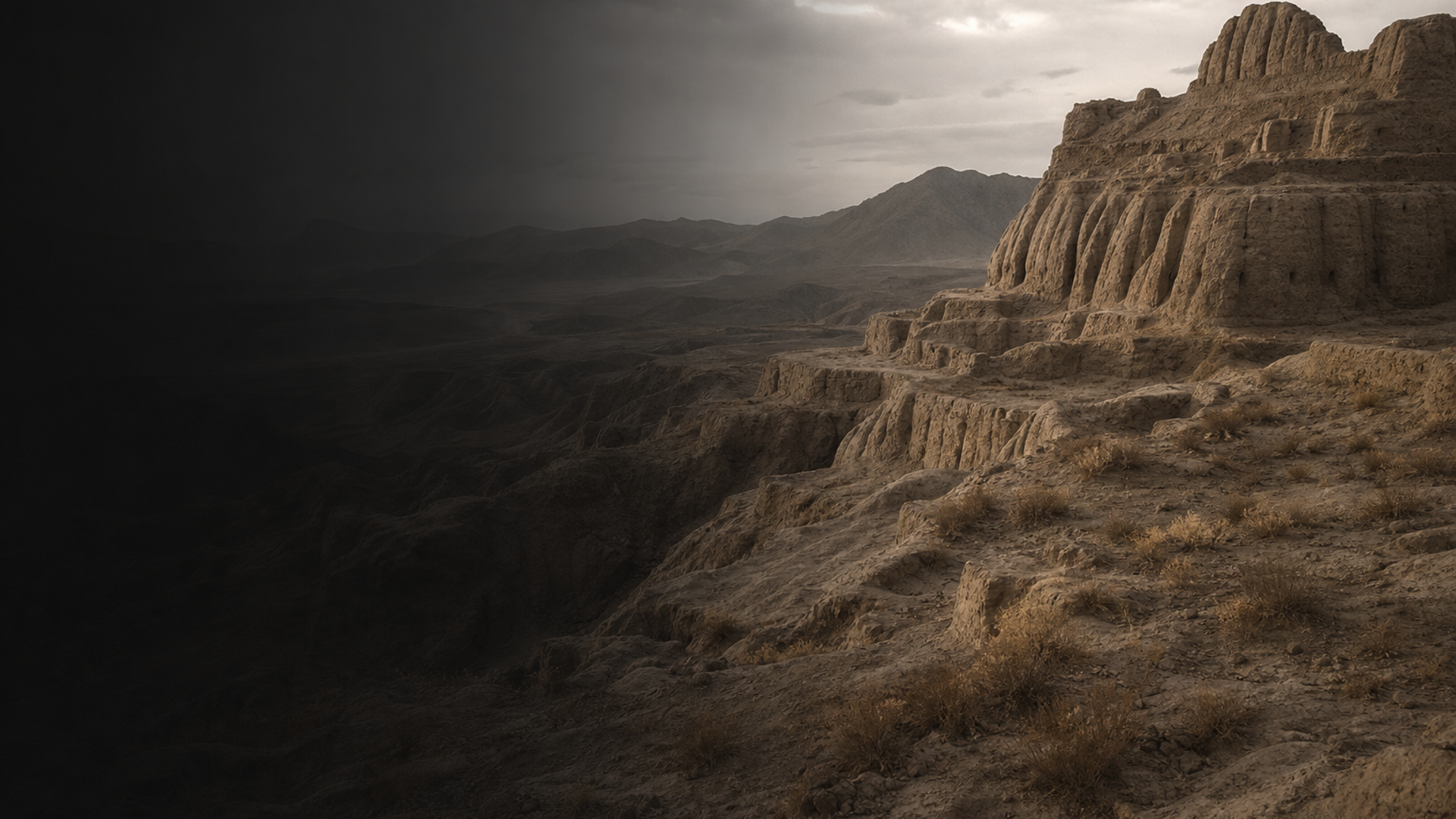
Archaeological data indicates that Chemurchek barrows were focal points of ritual and display: large mounds, stone cists, and occasionally standing stones or slab constructions mark many sites in Khovd and adjacent valleys. Limited evidence suggests these burials often contained high-status goods and may reflect increased social differentiation and long-distance connections across the steppe. The Khovd finds sit on a crossroads of mountain and plain — an environment conducive to mobile pastoralism and interregional exchange.

Caution is essential: with only three genomic samples, inference about population origins remains provisional. Yet the combination of barrow architecture, regional distribution of Chemurchek sites, and the genetic signatures recovered invites hypotheses about the movement of people and cultural practices across Inner Asia during a period of dynamic change.

  • Radiocarbon-dated to 2574–2459 BCE from Yagshiin Hodoo barrows
  • Burials consistent with Early Bronze Age Chemurchek mortuary traditions
  • Evidence points to steppe mobility and interregional connections, but samples are few

Daily Life & Society

Material traces of daily life for Chemurchek communities are often faint, but funerary contexts speak loudly. Barrows in Khovd Province suggest communities that invested labor in conspicuous burial monuments — an emergent elite practice that likely accompanied wealth accumulation, control of grazing territories, or ritual leadership. Archaeological remains from Chemurchek contexts across Mongolia point to a mixed economy dominated by pastoral herding (sheep, goat, horse) with seasonal movement between summer and winter pastures.

Stone slab cists and grave goods imply craft connections and long-distance networks: exotic lithics, metal fragments, and bone implements found elsewhere in Chemurchek sites suggest exchange routes that traversed the Altai corridor. Organic preservation is variable, so direct evidence for textiles, diet, and daily technology at Yagshiin Hodoo is limited; zooarchaeological and isotopic studies at nearby sites, however, document high reliance on ruminants and mobile herding strategies.

Social life likely combined kin-based pastoral households with ceremonial gatherings at burial mounds. Mobility and intermarriage across bands would fit the genetic pattern of distinct paternal continuity amid more varied maternal lineages. Yet archaeological snapshots are incomplete — ongoing surveys and excavation are needed to illuminate the rhythms of daily life behind the barrows.

  • Pastoral economy with seasonal mobility inferred from regional data
  • Barrow construction implies social differentiation and ritual investment

Genetic Profile

Ancient DNA from three individuals associated with the Mongolia_EBA_Chemurchek_2 group yields a clear, if preliminary, genetic signal. All three male samples carry Y-DNA assigned to haplogroup R. This paternal lineage is a major component of many Bronze Age steppe populations; however, the precise R subclades are not specified here, and further sequencing would be required to place these Y chromosomes within the finer phylogeny.

Mitochondrial haplogroups among the three individuals are T (two samples) and C (one sample). Haplogroup T occurs at moderate frequencies across Eurasia and has been observed in some steppe-associated burials, while haplogroup C has deeper roots in eastern Eurasian populations. The combination of uniform Y-lineages and more diverse maternal lines hints at patrilineal continuity with exogamous marriage patterns — a commonly observed pattern in mobile pastoral societies where incoming women introduce mitochondrial diversity.

Because the sample count is small (n = 3), conclusions must remain tentative. The genetic profile is broadly consistent with steppe-related ancestry components seen elsewhere in Early Bronze Age Mongolia and adjacent regions, suggesting the Chemurchek burials at Yagshiin Hodoo participated in wider networks of movement and gene flow across the steppe. Expanded sampling and high-resolution subclade analysis would clarify connections to contemporaneous groups such as Afanasievo and later Bronze Age cultures.

  • All three males belong to Y-DNA haplogroup R — consistent with steppe paternal lineages
  • mtDNA shows T (2) and C (1), suggesting maternal diversity and possible eastern affinities

Legacy & Modern Connections

The Chemurchek barrows of Khovd leave a haunting cultural footprint: stone and earth monuments that puncture the windswept steppe and speak of social complexity emerging with the Early Bronze Age. Genetically, the presence of haplogroup R in all recovered males links these burials to broader steppe ancestries that would shape Eurasian prehistory in subsequent millennia.

Modern genetic landscapes across Mongolia retain echoes of these deep-time movements, but direct lines of descent are complex. The mix of mitochondrial lineages in the Yagshiin Hodoo samples illustrates how mobility, marriage networks, and local continuity intertwined. Given the very small sample size, these results are best read as tantalizing glimpses rather than definitive statements about population replacement or continuity.

Future work — expanding the number of sampled individuals, refining Y-subclade assignments, and integrating isotopic diet/mobility studies — will be essential to trace how Chemurchek communities contributed to the genetic and cultural tapestry of the Eurasian steppe.

  • Y-lineage continuity aligns Chemurchek with broader steppe genetic trends
  • Small sample size makes modern connections tentative; more data needed

Asistente de IA

Asistente de IA por DNAGENICS

Desbloquear esta función
Pregunta sobre la cultura Echoes from Yagshiin Hodoo. El asistente con IA puede explicar hallazgos genéticos, contexto histórico, pruebas arqueológicas y conexiones modernas, con sus límites de interpretación.
Ejemplo de análisis con IA

La cultura Echoes from Yagshiin Hodoo representa un capítulo de la historia humana...

El análisis genético permite estudiar similitudes con poblaciones anteriores y posibles adaptaciones. Las muestras de ADN antiguo aportan información para investigar patrones migratorios y relaciones entre poblaciones, con límites que dependen del estudio y del contexto arqueológico.

Esta es una vista previa del análisis con IA. Accede al asistente completo para explorar información sobre:

  • Composición y similitud genética
  • Patrones migratorios y orígenes
  • Vida cotidiana y prácticas culturales
  • Contexto genético moderno