Preparando el informe

Cargando la información y las referencias disponibles

Consultando el registro arqueológico...

Recopilando registros antiguos

Saltar al contenido principal
Echoes of Bulgaria's Early Iron Age
Cultura destacada

Echoes of Bulgaria's Early Iron Age

Human stories at Rhodope foothills revealed through pottery, graves and ancient DNA.

1100 CE - 500 BCE
Bulgaria (Eastern Rhodopes, Haskovo, Kardzhali)
Desplázate para empezar
Capítulo I

La historia

Comprender la cultura Echoes of Bulgaria's Early Iron Age

Archaeological and genetic evidence from 16 Early Iron Age individuals (1100–500 BCE) in southern Bulgaria (Kapitan Andreevo, Stambolovo, Diamandovo, Svilengrad) suggest a local population shaped by Balkan farmer ancestry, lingering hunter‑gatherer lineages, and incoming influences—interpreted cautiously due to geographic limits.

Time Period

1100–500 BCE

Region

Bulgaria (Eastern Rhodopes, Haskovo, Kardzhali)

Common Y-DNA

Not reported / limited data in this set

Common mtDNA

H (6), U (3), K (2), H+ (1), J1c (1)

Capítulo II

Cronología

Momentos clave de la historia de esta cultura

1100 BCE

Early Iron Age horizon appears locally

Settlement reorganization and changing burial practices mark the region around Kapitan Andreevo and the eastern Rhodopes.

Capítulo III

Origins & Emergence

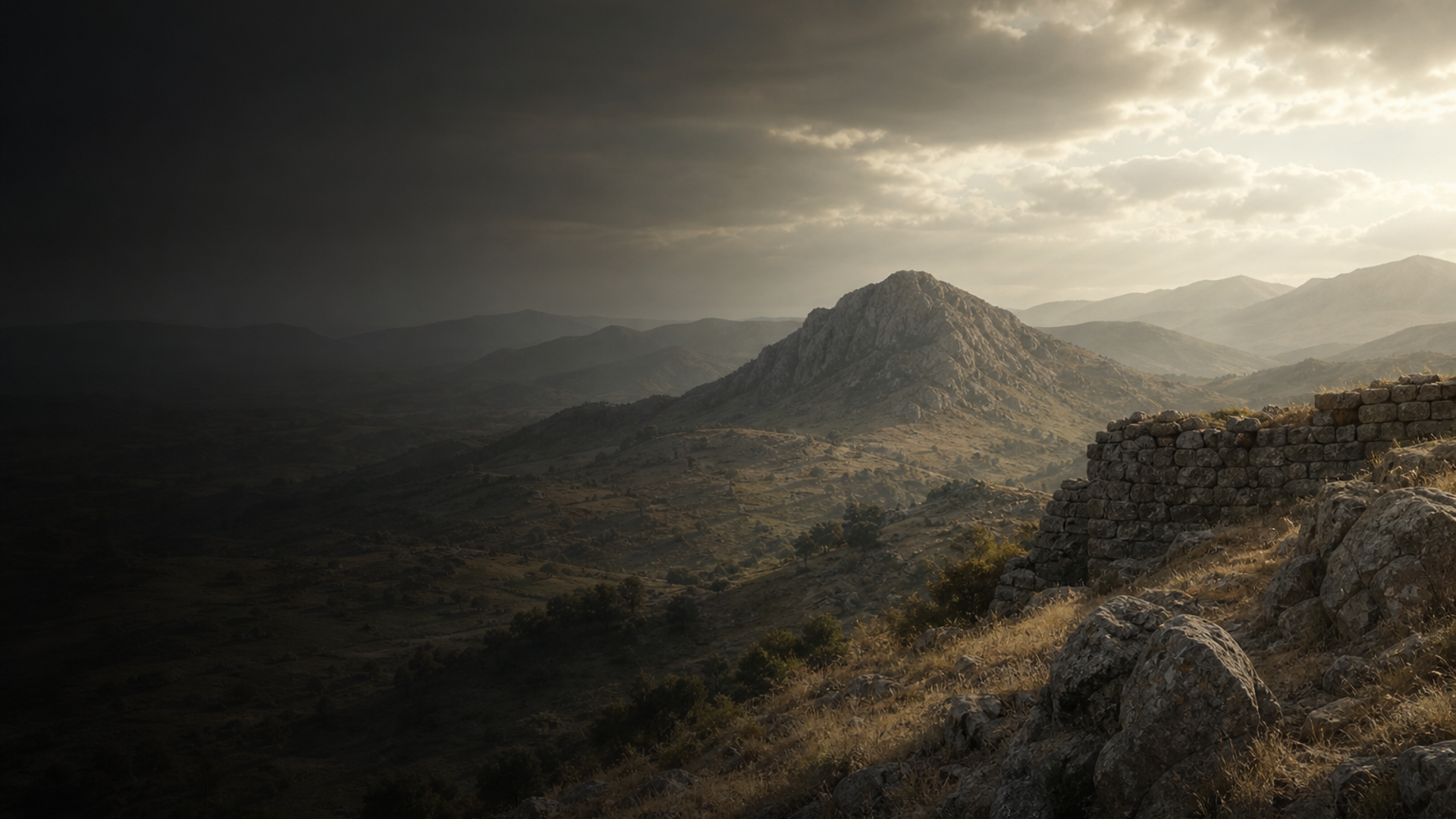
The Early Iron Age horizon in southern Bulgaria unfolds across a landscape of low mountains and river corridors where older Bronze Age communities gave way to new social configurations between roughly 1100 and 500 BCE. Archaeological data indicates settlement reorganization and changing funerary practices at sites such as Kapitan Andreevo (South), Stambolovo (Eastern Rhodopes), Diamandovo (Kardzhali) and Svilengrad (Haskovo). Material culture — pottery styles, metalwork and burial architecture — shows both local continuity with Late Bronze Age traditions and new elements that reflect wider contacts across the Balkans.

Limited evidence suggests interaction with neighboring Thracian groups to the east and with communities along the Aegean and Danubian corridors. This period is cinematic: fortified positions, vibrant artisanry and shifting trade networks that moved metals, crafted goods and ideas. Genetically, Early Iron Age communities in the Balkans are best viewed as palimpsests—layers of Neolithic farmer ancestry, Mesolithic hunter‑gatherer remnants, and mobility from steppe‑derived groups—although the precise balance varies by site and individual. Archaeological context and ancient DNA together provide a multidimensional portrait, but coverage remains regionally focused and interpretive caution is required.

  • Local continuity from Late Bronze Age traditions with new cultural influences
  • Sites: Kapitan Andreevo, Stambolovo, Diamandovo, Svilengrad
  • Evidence for regional interaction across the Balkans and Aegean fringes
Capítulo IV

Daily Life & Society

Daily life in the Early Iron Age Balkans played out in rugged valleys and cultivated terraces. Archaeological remains — house plans, pottery shards, metal tools and burial assemblages — sketch a world of mixed subsistence: cereal agriculture and stock herding supplemented by hunting, foraging and local craft production. Iron and bronze objects appear alongside organic technologies, signaling both continuity and technological change.

Burial contexts from the region suggest social differentiation: richly furnished graves contrast with more modest interments, implying varied access to metal goods and perhaps emergent hierarchies. Craft specialization, visible in fine portable objects and evidence for metalworking debris at some sites, points to workshop activity and exchanges of prestige items over distance. Ceramic styles and ornamentation display local aesthetics even as they incorporate motifs from neighboring cultural spheres.

Archaeological data indicates that mobility—seasonal movement, exogamous marriage networks and long‑distance exchange—was a routine part of life. Material culture conveys a people rooted in place but connected to wider corridors of movement; ancient DNA adds a second layer, revealing biological connections that mirror these archaeological links.

  • Mixed economy: agriculture, herding, hunting and craft production
  • Burial variability suggests social differentiation and long‑distance exchange
Capítulo V

Genetic Profile

Sixteen individuals from southern Bulgaria (1100–500 BCE) provide a preliminary genetic window into Early Iron Age populations of the region. Among these, 13 yielded assignable mitochondrial haplogroups: H (6), U (3), K (2), H+ (1) and J1c (1). The predominance of haplogroup H among maternal lineages is consistent with broad Eurasian European continuity from the Neolithic onward; K and J1c are often associated with Neolithic farmer expansions, while U lineages can reflect older hunter‑gatherer ancestry persisting in the gene pool.

Y‑chromosome data for this dataset are not reported or are limited, so paternal lineage patterns remain unresolved here. Nonetheless, broader ancient DNA studies across the Balkans show that Early Iron Age populations frequently carry mixed ancestries: Anatolian‑Neolithic farmer heritage, Western hunter‑gatherer legacy, and varying proportions of steppe‑related input associated with Bronze Age migrations. Archaeological evidence of cultural change in Kapitan Andreevo, Stambolovo, Diamandovo and Svilengrad is therefore plausibly echoed by a genetic tapestry of continuity plus incoming elements.

Interpretation should be cautious: geographic sampling is focused in southern Bulgaria and the sample size, while larger than many initial studies, remains limited for capturing fine‑scale structure. Further Y‑DNA results and broader regional sampling are needed to clarify male‑line dynamics, migration routes and social practices affecting gene flow such as marriage patterns and mobility.

  • Maternal haplogroups indicate predominance of European lineages (H), with Neolithic (K, J1c) and hunter‑gatherer (U) signals
  • Y‑DNA not well represented in this set; autosomal patterns likely reflect farmer‑hunter‑gatherer‑steppe admixture
Capítulo VI

Legacy & Modern Connections

The human stories recovered from the Rhodopes leave a complex legacy. Genetic threads seen in these Early Iron Age individuals—Neolithic farmer markers, surviving hunter‑gatherer lineages and traces of later mobility—are components in the broader ancestry of modern Southeastern Europe. Archaeological continuity in settlement locations and craft traditions underscores long‑term occupation of the landscape.

However, continuity is partial and layered: centuries of migration, cultural turnover and population movement after 500 BCE mean that direct one‑to‑one links between these ancient individuals and any single modern group are not straightforward. Ancient DNA helps quantify ancestral contributions and demonstrates that many modern Bulgarians carry mixtures of the same deep ancestries identified in the Early Iron Age, but patterns of local continuity vary by region. In short, these remains are both ancestors and actors in a long tapestry of human change—threads that connect past and present without reducing either to a simple story.

  • Components of Early Iron Age ancestry persist in modern Balkan gene pools but in complex mixtures
  • Archaeological and genetic data together reveal long‑term occupation and repeated interactions
Con IA

Asistente de IA

Haz preguntas sobre la cultura Echoes of Bulgaria's Early Iron Age

Asistente de IA por DNAGENICS

Desbloquear esta función
Pregunta sobre la cultura Echoes of Bulgaria's Early Iron Age. El asistente con IA puede explicar hallazgos genéticos, contexto histórico, pruebas arqueológicas y conexiones modernas, con sus límites de interpretación.
Ejemplo de análisis con IA

La cultura Echoes of Bulgaria's Early Iron Age representa un capítulo de la historia humana...

El análisis genético permite estudiar similitudes con poblaciones anteriores y posibles adaptaciones. Las muestras de ADN antiguo aportan información para investigar patrones migratorios y relaciones entre poblaciones, con límites que dependen del estudio y del contexto arqueológico.

Esta es una vista previa del análisis con IA. Accede al asistente completo para explorar información sobre:

  • Composición y similitud genética
  • Patrones migratorios y orígenes
  • Vida cotidiana y prácticas culturales
  • Contexto genético moderno

Explora más culturas antiguas

Descubre la historia de civilizaciones de distintas partes del mundo antiguo