Preparando el informe

Cargando la información y las referencias disponibles

Consultando el registro arqueológico...

Recopilando registros antiguos

Saltar al contenido principal
Echoes of Roman Spain
Cultura destacada

Echoes of Roman Spain

Genetic and archaeological traces from 44 BCE to 676 CE in Iberia

44 BCE - 676 CE
Spain (Andalusia, Catalonia)
Desplázate para empezar
Capítulo I

La historia

Comprender la cultura Echoes of Roman Spain

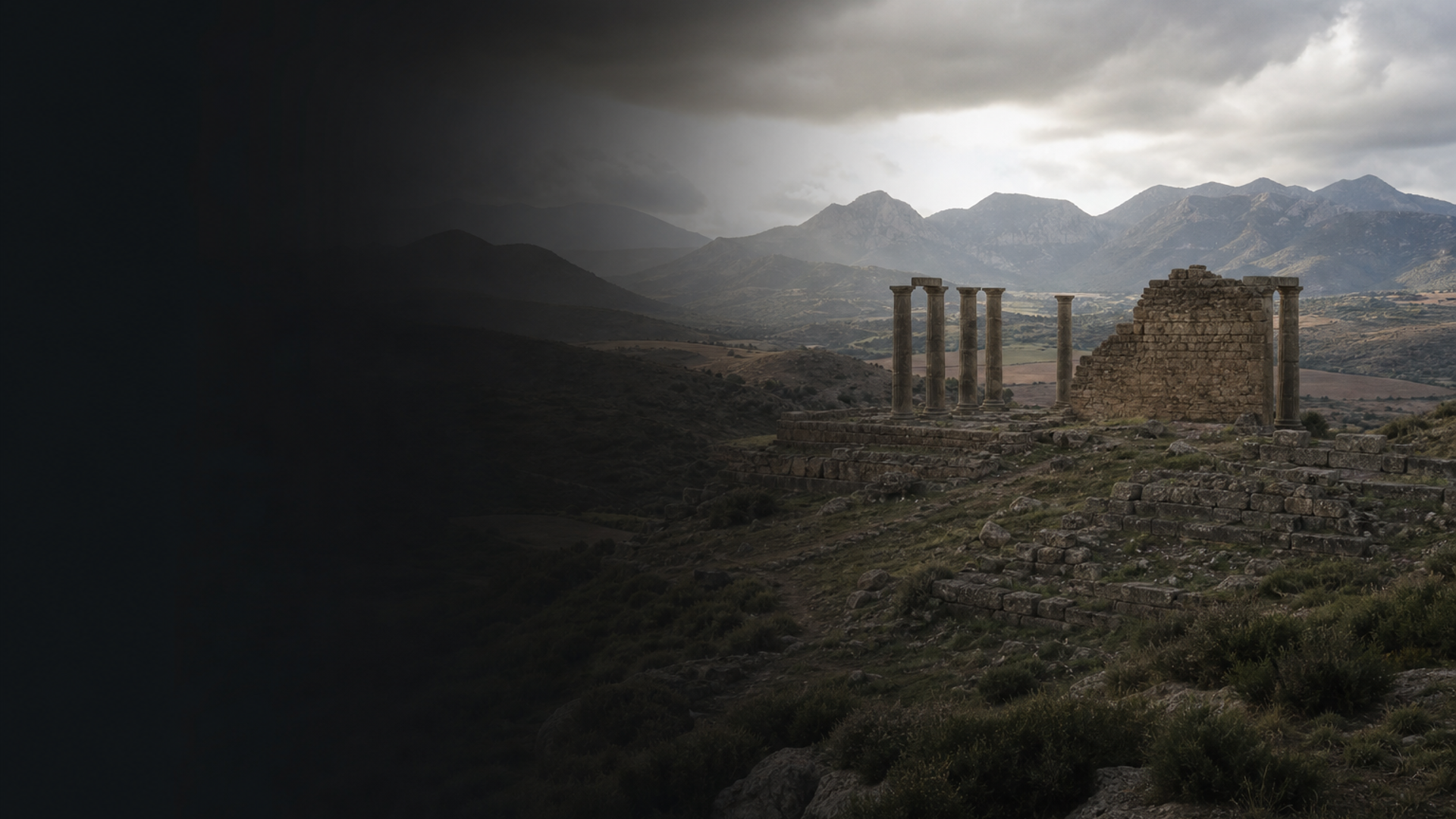
Nineteen individuals from Roman-period Spain (44 BCE–676 CE) reveal a Mediterranean genetic mosaic shaped by Roman mobility, local Iberian roots, and long-distance connections. Archaeology and DNA together illuminate life across Granada, Tarragona, and Empúries.

Time Period

44 BCE – 676 CE

Region

Spain (Andalusia, Catalonia)

Common Y-DNA

R (4), J (3), E, L, T

Common mtDNA

H (4), K (4), T (3), U (3), HV (2)

Capítulo II

Cronología

Momentos clave de la historia de esta cultura

2500 BCE

Bronze Age foundations in Iberia

Bronze Age social networks and coastal trade set demographic foundations that shaped later Roman-period populations in Iberia.

Capítulo III

Origins & Emergence

The Roman presence in Hispania unfolded on a landscape already layered with millennia of human history. Archaeological evidence from sites sampled here — Paseíllos universitarios-Fuentenueva and Plaza Einstein (Granada), Mas Gassol, Alcover (Tarragona), and the necropolis at Empúries (Girona) — spans from the late Republic through the early medieval Visigothic transition (44 BCE–676 CE). Material culture shows the spread of Roman urban forms, road networks, and port-linked commerce.

Genetically, these individuals reflect that same palimpsest: local Iberian ancestry persists alongside signals consistent with wider Mediterranean exchange. Limited evidence points to increased mobility during the Imperial period, when soldiers, merchants and administrators moved along maritime and overland routes. Archaeology indicates continuity in local burial practices in some cemeteries and clear Roman influence in others, suggesting varied degrees of acculturation.

Because samples come from a modest, regionally clustered set of cemeteries (19 individuals total), interpretations must be cautious: the data illuminate local population dynamics but cannot alone represent all of Roman Hispania. Ongoing excavations and broader genomic sampling will refine where local continuity ends and immigrant influxes become prominent.

  • Sites sampled: Granada (Fuentenueva, Plaza Einstein), Tarragona (Mas Gassol), Girona (Empúries)
  • Period covers late Republic to early medieval Visigothic era (44 BCE–676 CE)
  • Archaeology and DNA show local continuity with Mediterranean connections
Capítulo IV

Daily Life & Society

Roman-period towns and coastal settlements in Iberia were places of sensory richness: salted fish, amphorae stacked in shipyards, mosaic-paved houses, and market stalls with goods from across the Mediterranean. Archaeological excavations at Empúries reveal layered occupation: Greek and Roman city planning, harbor use, and necropoleis that preserve daily life traces. In inland and urban Granada, funerary contexts reflect social differences — some burials accompanied by grave goods, others by simple interments.

Material culture documents trade in olive oil, wine, ceramics and metalwork; roads and maritime routes facilitated movement of people and genes. Osteological evidence from cemeteries can show workload stress, healed injuries, and diet-driven isotopic signatures, while DNA adds the human biographies behind bones. Combined, the records suggest mixed communities: locals maintaining Iberian traditions, Roman settlers and veterans establishing households, and merchants whose mobility introduced new cultural and genetic threads.

Archaeological data indicates shifts in settlement patterns toward fortified towns in the late period, reflecting political changes as Roman authority waned and Visigothic elites rose. These social shifts likely influenced marriage networks and the genetic makeup of local populations.

  • Material culture shows trade, urban life, and maritime commerce
  • Burial diversity reflects social status and cultural mixing
Capítulo V

Genetic Profile

The genetic snapshot from 19 individuals paints a Mediterranean mosaic shaped by local continuity and long-distance connections. Y-DNA haplogroups observed among typed males include R (4), J (3), and single occurrences of E, L, and T. These patterns suggest a predominance of typically West Eurasian lineages (R), substantial Near Eastern/Mediterranean links (J), and occasional lineages that may reflect broader Afro-Eurasian interactions (E, L, T). It is important to note that only a subset of the 19 individuals yielded Y-chromosome calls, and the counts above reflect typed males rather than the full sample.

Mitochondrial DNA (maternal lineages) shows H (4), K (4), T (3), U (3), and HV (2) among the samples — a distribution consistent with common European and Mediterranean maternal ancestries. These mtDNA haplogroups align with archaeological expectations for coastal and inland Iberian populations, reflecting both deep local roots and connectivity with Mediterranean gene pools.

Archaeogenetic interpretation must emphasize caution: the sample set is regionally focused and modest in size. While 19 individuals provide valuable, direct glimpses into population composition, broader claims about all of Roman Hispania require larger, geographically diverse datasets. Nevertheless, the combined presence of R and J haplogroups, plus sporadic E and L, supports historical models of Roman-era mobility, recruitment of soldiers from diverse provinces, and maritime trade that brought people and genes into Iberia.

  • Y-DNA: predominance of R and notable J; single E, L, T suggest long-distance contacts
  • mtDNA: H, K, T, U, HV indicate common European/Mediterranean maternal lineages
Capítulo VI

Legacy & Modern Connections

The people of Roman Spain left a layered legacy visible in language, law, roads, and genes. Archaeological landscapes — ruined villas, port installations, and cemeteries — preserve the imprint of mobility and mixture that DNA begins to quantify. Modern Iberian populations carry many of the same mitochondrial and Y-chromosome lineages found in these Roman-era samples, although later episodes (Visigothic, Islamic, medieval and modern migrations) further reshaped the gene pool.

Genetic continuity of common mtDNA haplogroups (H, K, T, U) suggests maternal lineages persisted locally, while Y-chromosome diversity indicates male-mediated mobility that fits historical records of military recruitment and merchant networks. Limited sample size and regional focus mean these results are part of an emerging story rather than a final portrait. Future comparative datasets across Spain will clarify how Roman-period demographic processes contributed to the modern genetic landscape.

  • Modern Iberians retain many maternal lineages seen in Roman-period samples
  • Y-chromosome diversity echoes Roman-era mobility and long-distance recruitment
Con IA

Asistente de IA

Haz preguntas sobre la cultura Echoes of Roman Spain

Asistente de IA por DNAGENICS

Desbloquear esta función
Pregunta sobre la cultura Echoes of Roman Spain. El asistente con IA puede explicar hallazgos genéticos, contexto histórico, pruebas arqueológicas y conexiones modernas, con sus límites de interpretación.
Ejemplo de análisis con IA

La cultura Echoes of Roman Spain representa un capítulo de la historia humana...

El análisis genético permite estudiar similitudes con poblaciones anteriores y posibles adaptaciones. Las muestras de ADN antiguo aportan información para investigar patrones migratorios y relaciones entre poblaciones, con límites que dependen del estudio y del contexto arqueológico.

Esta es una vista previa del análisis con IA. Accede al asistente completo para explorar información sobre:

  • Composición y similitud genética
  • Patrones migratorios y orígenes
  • Vida cotidiana y prácticas culturales
  • Contexto genético moderno

Explora más culturas antiguas

Descubre la historia de civilizaciones de distintas partes del mundo antiguo