Preparando el informe

Cargando la información y las referencias disponibles

Consultando el registro arqueológico...

Recopilando registros antiguos

Saltar al contenido principal
Echoes of the Botocudo
Cultura destacada

Echoes of the Botocudo

Late pre-contact and historic people of Brazil’s Rio Doce Valley, read through bones and genes

1479 CE - 1842 CE
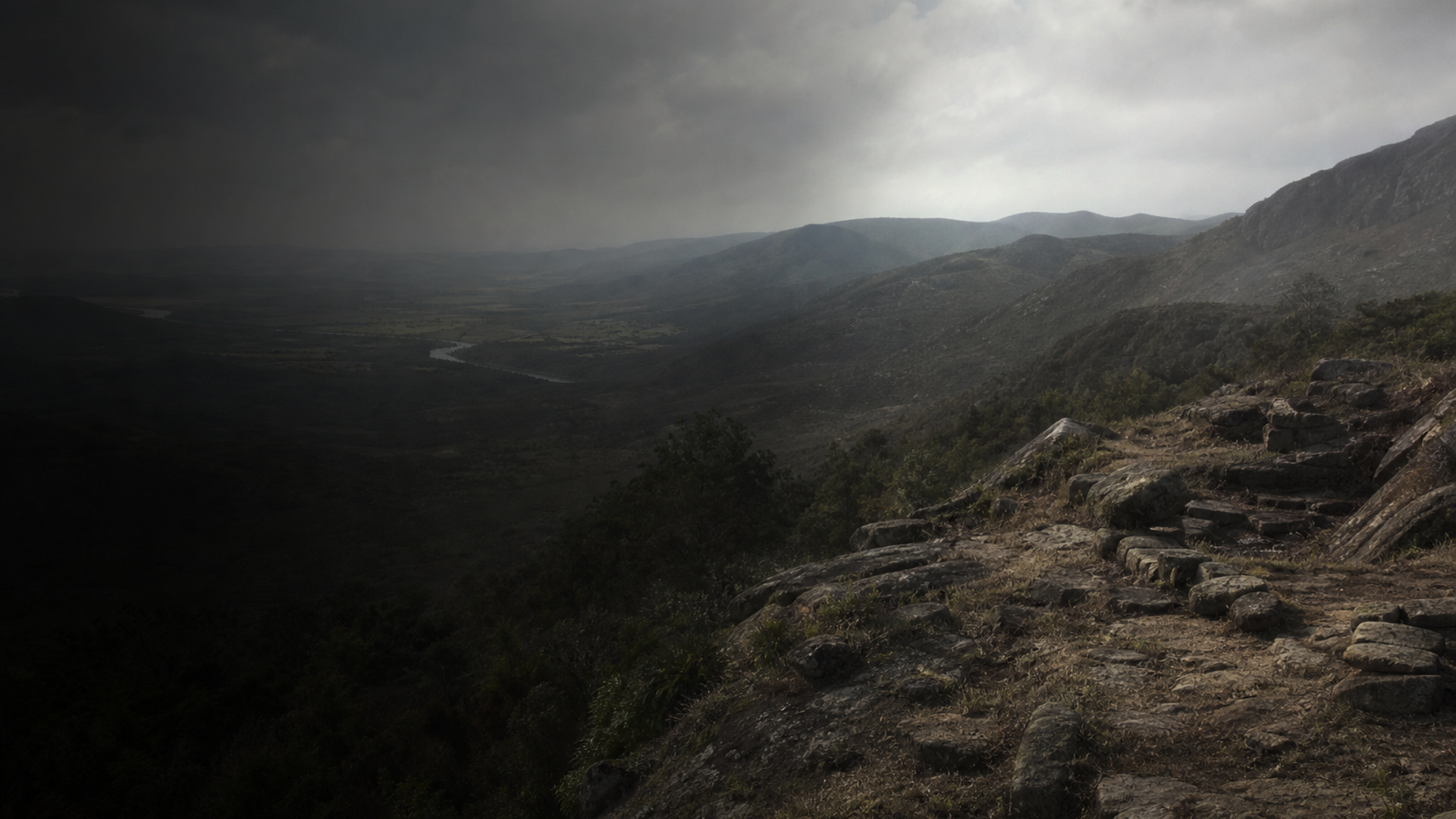
Rio Doce Valley, Brazil
Desplázate para empezar
Capítulo I

La historia

Comprender la cultura Echoes of the Botocudo

Archaeological remains from the Rio Doce Valley (dated 1479–1842 CE) shed light on Botocudo lifeways. Limited ancient DNA from three individuals shows Indigenous-lineage markers (Y haplogroup C, mtDNA B), but small sample size makes conclusions preliminary.

Time Period

1479–1842 CE (direct dates)

Region

Rio Doce Valley, Brazil

Common Y-DNA

C (observed in 1 of 3 samples)

Common mtDNA

B (observed in 1 of 3 samples)

Capítulo II

Cronología

Momentos clave de la historia de esta cultura

1479 CE

Earliest directly dated individual

A radiocarbon date near 1479 CE ties one sampled burial in the Rio Doce Valley to the late pre-contact/early-contact era.

1500 CE

European arrival on Brazilian coast

Arrival of Portuguese expeditions to Brazil begins a period of coastal contact that would reshape interior dynamics over centuries.

1800 CE

Colonial-era encounters recorded

19th-century colonial accounts describe interior groups labeled as 'Botocudo', though such labels blur internal diversity.

1842 CE

Latest directly dated individual

The most recent sampled burial from the Rio Doce Valley dates to 1842 CE, within sustained historic contact periods.

Capítulo III

Origins & Emergence

The bones recovered from burial contexts in the Rio Doce Valley evoke a long human presence along eastern Brazil’s forest-savanna mosaic. Radiocarbon dates for the sampled individuals fall between 1479 and 1842 CE, placing them at the cusp of intensified colonial contact. Archaeological data indicates continuity of Indigenous occupation of interior valleys even as coastal contact accelerated after 1500 CE. Ethnohistoric accounts from colonial travelers and missionaries later referred to groups collectively labeled by outsiders as “Botocudo” (an exonym tied to distinctive lip ornaments), but that label likely encompassed diverse, neighbouring communities rather than a single unified polity.

Limited archaeological evidence from the Rio Doce region suggests adaptation to mixed environments: riverine resources, forest game, and seasonal plant foraging. Material traces—stone tools, faunal remains, and burial treatments—hint at long-standing local traditions that persisted into the historic period. However, because the available genetic sample set is small (three individuals), any story of population continuity, migration, or demographic change must be treated as provisional. Ongoing excavations and respectful collaboration with descendant communities are essential to expand the dataset and refine origin narratives.

  • Radiocarbon dates: 1479–1842 CE from Rio Doce Valley contexts
  • ‘Botocudo’ is an external label; likely multiple neighboring groups were included
  • Evidence points to long-term Indigenous occupation through early colonial times
Capítulo IV

Daily Life & Society

Archaeological traces from the Rio Doce Valley paint a portrait of adaptive, mobile lifeways lived at the interface of rivers, gallery forest, and open landscapes. Subsistence strategies likely combined hunting of medium-sized mammals, fishing in tributaries of the Rio Doce, and gathering of seasonally available tubers and fruits. Tools fashioned from local stone and bone would have supported processing, hunting, and daily crafts. Burial practices preserved in the valley—individual interments with modest grave goods—offer glimpses of social identity and ritual across generations.

Ethnohistoric descriptions from the colonial era emphasize social markers such as body ornamentation and distinctive cultural practices; these records must be read critically because they were produced by outsiders. The archaeological record complements these accounts by revealing diet through faunal remains and by showing how communities organized space and material culture. Nevertheless, the small number of directly sampled individuals limits inferences about social structure, kinship systems, or population size. Future multidisciplinary work combining archaeology, stable isotopes, and expanded ancient DNA sampling will better illuminate daily life in Botocudo-associated communities.

  • Mixed subsistence: hunting, fishing, and plant gathering inferred from site assemblages
  • Burials in the valley show continuity of local mortuary practice into the 19th century
Capítulo V

Genetic Profile

Ancient DNA recovered from three individuals from the Rio Doce Valley provides a tantalizing, but very limited, genetic window into late pre-contact and historic populations often grouped under the Botocudo label. Within this tiny sample set: one male carried a Y-chromosome lineage classified as haplogroup C, and one individual carried mitochondrial haplogroup B. Both haplogroups are known in Indigenous American populations—mtDNA B is a widespread maternal lineage across the Americas, while Y haplogroup C appears in some Indigenous South American paternal lineages and has deeper connections to Asian branches that contributed to the peopling of the Americas.

Crucially, the sample count is low (<10), so patterns of population structure, sex-biased migration, and admixture cannot be robustly inferred. No strong, reproducible signal of widespread European or African admixture can be asserted from these three samples alone; detecting such admixture and estimating its timing requires larger autosomal datasets and comparative sampling from contemporaneous coastal and inland sites. Archaeogenetics here functions best as an initial probe: it confirms Indigenous-lineage markers within Rio Doce burials and highlights the need for expanded, ethically guided sampling to resolve demographic histories and connections to living descendant communities.

  • Small sample set (3 individuals) — conclusions are preliminary
  • Observed markers: Y haplogroup C (1 individual), mtDNA B (1 individual)
Capítulo VI

Legacy & Modern Connections

The echoes of the Botocudo reach into the present as both cultural memory and genetic heritage. Descendant communities and neighbouring Indigenous groups today carry the continuity of lifeways shaped by riverine forests and interior plains. Archaeological and genetic research from the Rio Doce Valley can illuminate these continuities, but only if pursued with transparent collaboration and respect for Indigenous sovereignty over ancestral remains and data. Given the small number of ancient samples, genetic results should be presented as preliminary contributions to broader conversations rather than definitive statements about identity.

Scientific narratives that bridge bones and genomes must be paired with Indigenous knowledge and oral histories. Together, these perspectives can recover lives obscured by colonial upheaval: hunters at river margins, families practicing ritual burial, and communities adapting to centuries of change. Ethical research and expanded sampling—conducted in partnership with descendant communities—offer the best path to transform preliminary genetic signals into meaningful histories that honor both the living and the dead.

  • Results are preliminary; further sampling and Indigenous collaboration are essential
  • Archaeogenetics can complement, not replace, descendant communities’ own histories
Con IA

Asistente de IA

Haz preguntas sobre la cultura Echoes of the Botocudo

Asistente de IA por DNAGENICS

Desbloquear esta función
Pregunta sobre la cultura Echoes of the Botocudo. El asistente con IA puede explicar hallazgos genéticos, contexto histórico, pruebas arqueológicas y conexiones modernas, con sus límites de interpretación.
Ejemplo de análisis con IA

La cultura Echoes of the Botocudo representa un capítulo de la historia humana...

El análisis genético permite estudiar similitudes con poblaciones anteriores y posibles adaptaciones. Las muestras de ADN antiguo aportan información para investigar patrones migratorios y relaciones entre poblaciones, con límites que dependen del estudio y del contexto arqueológico.

Esta es una vista previa del análisis con IA. Accede al asistente completo para explorar información sobre:

  • Composición y similitud genética
  • Patrones migratorios y orígenes
  • Vida cotidiana y prácticas culturales
  • Contexto genético moderno

Explora más culturas antiguas

Descubre la historia de civilizaciones de distintas partes del mundo antiguo