Preparando el informe

Cargando la información y las referencias disponibles

Consultando el registro arqueológico...

Recopilando registros antiguos

Saltar al contenido principal
Echoes of Viking-Age Ukraine
Cultura destacada

Echoes of Viking-Age Ukraine

Genetic and archaeological traces from Chernihiv-region burials that illuminate Viking Age networks

900 CE - 1200 CE
Ukraine (Chernihiv / Chernigov)
Desplázate para empezar
Capítulo I

La historia

Comprender la cultura Echoes of Viking-Age Ukraine

Preliminary ancient-DNA and archaeological evidence (3 samples, 900–1200 CE) from Shestovitsa and Chernigov, Ukraine, suggests links between local communities and broader Viking Age networks. Low sample count makes conclusions tentative.

Time Period

900–1200 CE

Region

Ukraine (Chernihiv / Chernigov)

Common Y-DNA

I1, I

Common mtDNA

V (x2), H (x1)

Capítulo II

Cronología

Momentos clave de la historia de esta cultura

800 CE

Viking Age connectivity rises

Beginning of intensified Baltic–Black Sea networks; river routes like the Dnieper become major conduits for trade and movement (context for later samples).

950 CE

Samples dated to 900–1200 CE

Three ancient-DNA samples from Shestovitsa and Chernigov provide a small genetic snapshot of the period; interpretations are tentative.

988 CE

Christianization of Kievan Rus' (contextual)

A major socio-political turning point in the region that reshaped urban centers and networks in which sampled individuals lived.

Capítulo III

Origins & Emergence

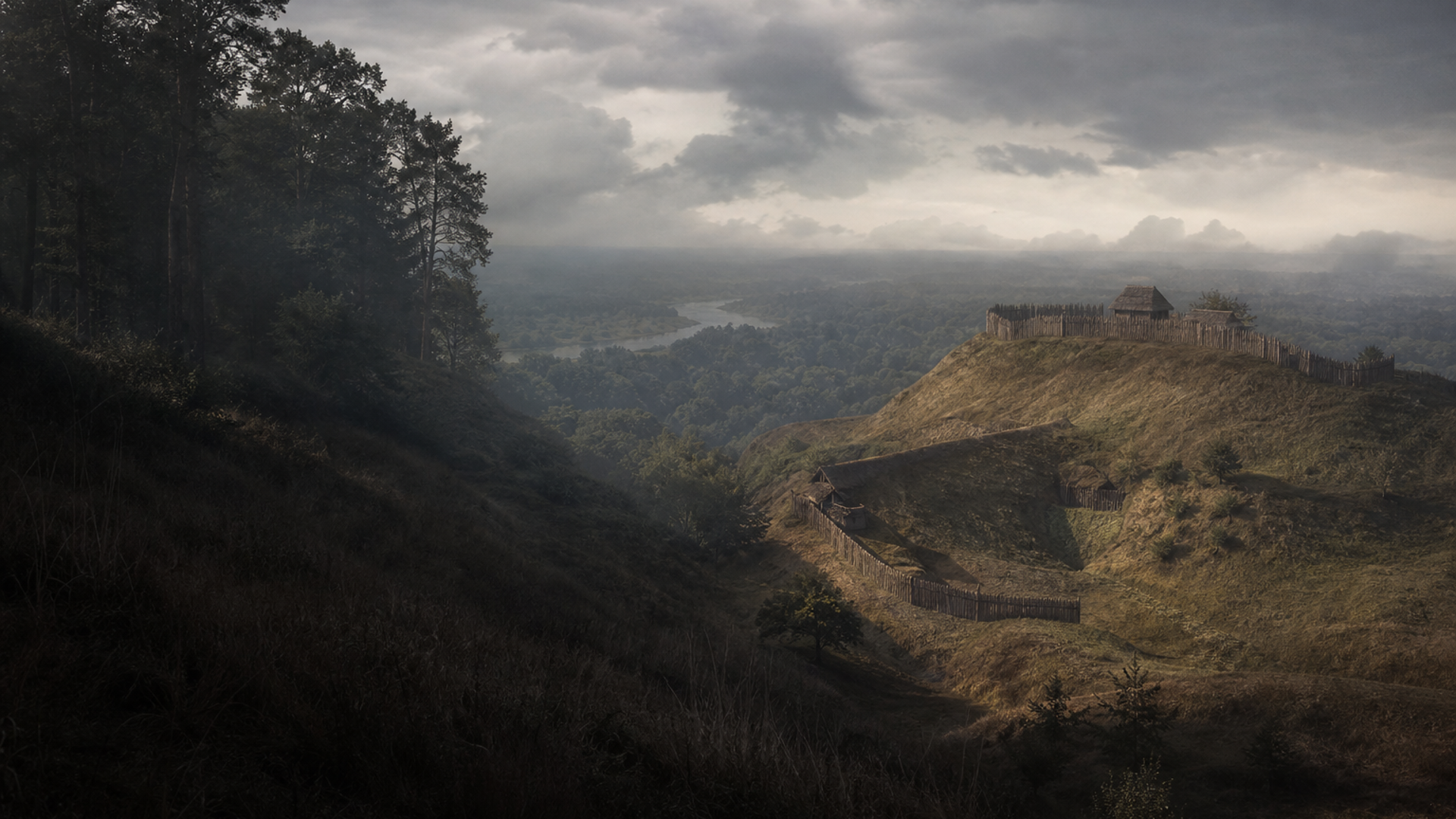
Archaeological data indicates that the Chernihiv region—anchored by sites such as Shestovitsa and medieval Chernigov—lay along vital Dnieper waterways that linked the Baltic to the Black Sea during the Viking Age. Material culture and settlement patterns across Ukraine suggest a palimpsest of local Slavic communities interacting with long-distance traders, raiders, and settlers often grouped under the historical label "Varangians."

Limited evidence from the sampled burials (900–1200 CE) aligns with this picture of connectivity: objects and grave placements hint at participation in regional exchange networks rather than wholesale population replacement. It is important to stress that the current dataset is very small (three genetic samples), so archaeological interpretations remain cautious. New excavations and broader sampling across cemeteries, river ports, and urban centers are needed to clarify whether the individuals reflect transient visitors, immigrant families, or locally acculturated groups.

  • Sites: Shestovitsa and Chernigov (Chernihiv region)
  • Context: Dnieper trade routes connecting Baltic and Black Sea
  • Caveat: Small archaeological and DNA samples make patterns provisional
Capítulo IV

Daily Life & Society

Archaeological remains from the wider Viking Age Ukraine show towns and riverine settlements where craft production, trade, and seasonal movement shaped daily experience. In Chernihiv-region sites, evidence for metalworking, imported small finds, and storage pits suggests households engaged in both local agrarian tasks and wider exchange. The cinematic image of longships threading rivers complements the more mundane reality of mixed farming, craft specialization, and market exchange that tied inland communities into pan-Baltic and Black Sea economies.

Social life in these borderlands was likely fluid: kin networks, guest-friend ties, and mercantile partnerships could bring Scandinavians, Slavs, and other groups into prolonged contact. Mortuary variability at local cemeteries—differences in grave goods, orientation, and burial architecture—reflects social diversity rather than a single ethnic identity. Again, archaeological data indicates complexity but cannot yet resolve how many newcomers settled permanently versus how many were seasonal or episodic participants in trade and warfare.

  • Mixed economy: farming, craft production, and long-distance trade
  • Socially diverse communities with varying burial practices
Capítulo V

Genetic Profile

Three ancient-DNA samples dated to 900–1200 CE from Shestovitsa and Chernigov yield a small but informative snapshot. Y-chromosome results show haplogroups I1 (1 sample) and I (1 sample). I1 is one lineage strongly associated in modern and many ancient datasets with northern and Scandinavian populations; however, a single I1 individual cannot alone prove large-scale Scandinavian settlement. The other Y-lineage, recorded as I, is broad and found across Europe, and may reflect long-standing regional diversity.

Mitochondrial DNA is dominated in this tiny set by haplogroup V (2 samples) with one H. Both V and H are widespread in European maternal lineages and point to western Eurasian ancestry on the maternal side. The combination—male lineages including a Scandinavian-linked I1 alongside common European maternal types—may suggest male-biased mobility or the integration of incoming men into local female networks, a pattern observed in other Viking-related contexts. Crucially, with only three samples (<10), all genetic interpretations are preliminary: broader sampling and population-scale analyses are required to test patterns of migration, admixture, and continuity.

  • Small dataset: 3 samples — conclusions are preliminary
  • Y-DNA includes I1 (Scandinavian-associated) and broader I; mtDNA mainly V and H
Capítulo VI

Legacy & Modern Connections

The archaeological and genetic traces from Chernihiv-region burials are strands in a larger tapestry: Viking Age mobility left cultural and biological imprints across Eastern Europe. While the present samples hint at links to Scandinavian networks, they do not establish direct lines to specific modern populations. Modern inhabitants of northern and eastern Europe do retain Y-lineages such as I1 and maternal types like V and H, but continuity must be demonstrated with far larger comparative datasets.

These preliminary finds nonetheless illuminate how rivers like the Dnieper functioned as arteries of movement and mixture. They remind us that medieval borderlands were dynamic contact zones—places where identities were negotiated through trade, alliance, and family. Continued archaeological excavation and expanded ancient-DNA sampling will be necessary to move beyond evocative possibilities toward robust stories of ancestry and cultural entanglement.

  • Possible male-mediated links to Scandinavian networks, but data is limited
  • Modern continuity cannot be assumed without broader comparative datasets
Con IA

Asistente de IA

Haz preguntas sobre la cultura Echoes of Viking-Age Ukraine

Asistente de IA por DNAGENICS

Desbloquear esta función
Pregunta sobre la cultura Echoes of Viking-Age Ukraine. El asistente con IA puede explicar hallazgos genéticos, contexto histórico, pruebas arqueológicas y conexiones modernas, con sus límites de interpretación.

Ejemplo de análisis con IA

La cultura Echoes of Viking-Age Ukraine representa un capítulo de la historia humana...

El análisis genético permite estudiar similitudes con poblaciones anteriores y posibles adaptaciones. Las muestras de ADN antiguo aportan información para investigar patrones migratorios y relaciones entre poblaciones, con límites que dependen del estudio y del contexto arqueológico.

Esta es una vista previa del análisis con IA. Accede al asistente completo para explorar información sobre:

  • Composición y similitud genética
  • Patrones migratorios y orígenes
  • Vida cotidiana y prácticas culturales
  • Contexto genético moderno

Explora más culturas antiguas

Descubre la historia de civilizaciones de distintas partes del mundo antiguo