Preparando el informe

Cargando la información y las referencias disponibles

Consultando el registro arqueológico...

Recopilando registros antiguos

Saltar al contenido principal
Elunino Echoes
Cultura destacada

Elunino Echoes

Bronze Age communities on the Pavlodar steppe, seen through graves and genomes

2404 CE - 1981 BCE
Pavlodar Region, Kazakhstan
Desplázate para empezar
Capítulo I

La historia

Comprender la cultura Elunino Echoes

Middle–Late Bronze Age Elunino people (2404–1981 BCE) from Pavlodar, Kazakhstan: archaeological traces from three sites and preliminary DNA (N, U, C) suggest a frontier of steppe and Siberian ancestries.

Time Period

2404–1981 BCE (MLBA)

Region

Pavlodar Region, Kazakhstan

Common Y-DNA

N (observed in 1 of 3 samples)

Common mtDNA

U (2), C (1)

Capítulo II

Cronología

Momentos clave de la historia de esta cultura

2404 BCE

Earliest dated Elunino sample

Radiocarbon dating places an Elunino individual at Grigor'yevka-1 around 2404 BCE, anchoring the community in the late third millennium BCE.

Capítulo III

Origins & Emergence

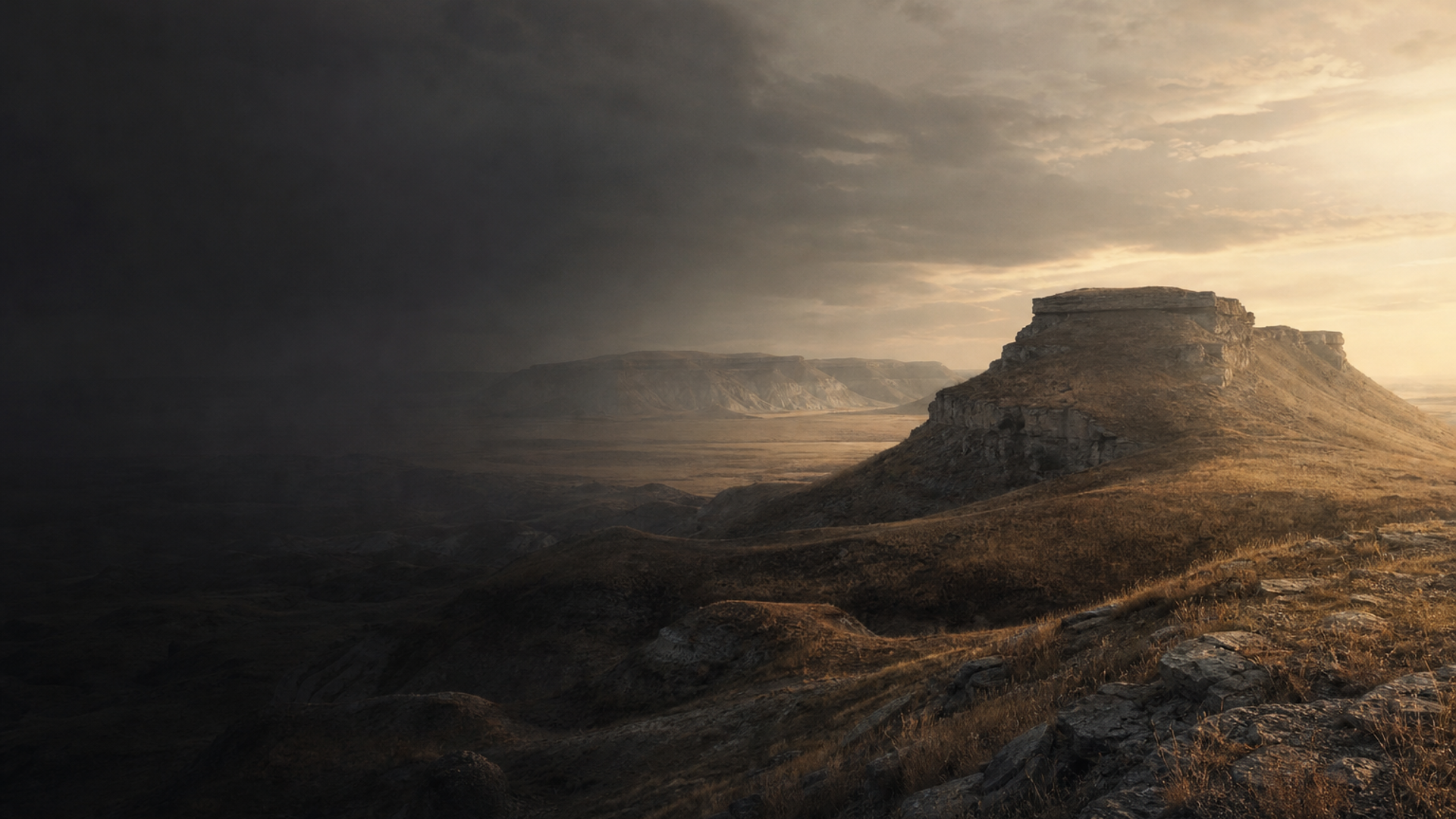
Wind, river and steppe shape the story of the Elunino horizon. Archaeological data indicates the Middle–Late Bronze Age Elunino cultural expression occupied the forest-steppe fringe of northeastern Kazakhstan during the late third and early second millennia BCE (samples dated 2404–1981 BCE). The principal skeletal material for this profile comes from three Pavlodar Region localities — Grigor'yevka-1, Sjauke and Sjiderti-10 — whose funerary contexts anchor the chronology and landscape. Material traces are sparse but suggest a community adapting to a mosaic of grassland and riverine resources: pottery fragments, scattered metalwork and burial structures point to regional variants of Bronze Age funerary practice. Limited evidence suggests influences from both steppe pastoral traditions and northeastern forest-steppe groups, giving rise to a cultural expression that scholars classify within the broader Middle–Late Bronze Age Elunino tradition.

The cinematic sweep of migration and exchange across the Eurasian steppe likely shaped Elunino emergence. Genetic data (see below) hint at a meeting of western and eastern maternal lineages and a northern-associated paternal lineage, consistent with archaeological impressions of a frontier society receiving multiple streams of contact. Given the small number of excavated and analyzed burials, however, these inferences remain provisional: more stratified excavation and a larger DNA sample are needed to resolve whether Elunino communities represent a local development, a demographic admixture zone, or a mobile cultural network linking Siberia and the steppe.

  • Occupation on the forest–steppe edge of Pavlodar (2404–1981 BCE)
  • Key sites: Grigor'yevka-1, Sjauke, Sjiderti-10
  • Evidence suggests blended influences from steppe and northeastern groups
Capítulo IV

Daily Life & Society

Archaeological data paints a picture of resilient, mobile lifeways adapted to rivers and grasslands. While extensive settlement layers are rare for Elunino contexts, funerary deposits and associated finds imply an economy based on mixed pastoralism with seasonal mobility. Animal bone assemblages from neighboring regional Bronze Age sites indicate sheep, cattle and horses were important across the steppe during this period; limited evidence from the Elunino sequence is consistent with reliance on herd animals supplemented by hunting, fishing and small-scale cultivation in river valleys.

Material culture recovered in the region — pottery sherds, metal fragments and personal ornaments — suggests craftspeople working within broad Bronze Age technological repertoires rather than strikingly novel industry. Burial variability at Grigor'yevka-1, Sjauke and Sjiderti-10 hints at social differentiation: some graves contain more grave goods than others, indicating differential status or age/sex roles, but sample sizes are small and patterns are tentative. The emergent image is of small, interconnected communities: households and kin groups moving seasonally, exchanging goods and marriage partners across a landscape of rivers and steppe. The archaeological silence in other parts of the region cautions against broad generalizations — many aspects of daily life, ritual practice and social organization await fuller excavation and analysis.

  • Likely mixed pastoralism with seasonal mobility
  • Burial variation hints at social differentiation but remains tentative
Capítulo V

Genetic Profile

Genetic sampling for Kazakhstan_MLBA_Elunino is currently limited (3 individuals), so conclusions are preliminary. Among these three genomes: one male carries Y‑DNA haplogroup N; mitochondrial haplogroups include U in two individuals and C in one. This sparse but evocative combination points to a genetic mosaic at the forest–steppe margin.

Haplogroup N is today and in the past often associated with northern and northeastern Eurasian lineages (present in Siberia, parts of northeastern Europe and among some Uralic-speaking groups). Its presence in an Elunino male suggests paternal connections or gene flow from northerly or Siberian-adjacent populations into the Pavlodar region during or before the Middle–Late Bronze Age. Mitochondrial U is broadly distributed across western Eurasia and common in many steppe and European hunter-gatherer-descended maternal lineages; its occurrence in two Elunino individuals aligns with western or steppe maternal ancestry. Conversely, mtDNA C is typically associated with eastern Eurasian and Siberian maternal lineages, signaling an eastern component as well.

Taken together, the genetic signal is consistent with a frontier population where western/steppe and eastern/Siberian maternal ancestries meet, and where at least one paternal lineage with northern affinity is present. However, with only three samples, statistical power is low: the observed haplogroups might not capture the full diversity of the Elunino population. Larger and chronologically varied sampling, combined with autosomal analyses, is required to test for admixture proportions, sex-biased gene flow, and continuity with neighboring Bronze Age groups.

  • Small sample (n=3): conclusions are provisional
  • Y‑DNA N suggests northern/Siberian paternal link; mtDNA U and C indicate mixed maternal ancestries
Capítulo VI

Legacy & Modern Connections

The Elunino horizon occupies a liminal chapter in the prehistory of northeastern Kazakhstan. Genetically and archaeologically, it appears as part of a long-running tapestry of interaction across the Eurasian steppe: movements of people, exchange of goods and marriage ties created patterns that would be reworked by later Bronze Age and Iron Age horizons. Some haplogroups observed (N, U, C) persist in varying frequencies in modern Central Asian and Siberian populations, but direct, exclusive descent is difficult to prove with three ancient genomes. Continuities more reliably emerge at the level of subsistence strategy and landscape use — seasonal herding and riverine resource exploitation — which remain central to pastoral lifeways in the region.

For modern genetic ancestry platforms, Elunino samples are valuable as early, localized snapshots of diversity on the forest–steppe fringe. They suggest that populations ancestral to some contemporary groups in northern Kazakhstan carried a mixture of western and eastern maternal lineages alongside northern-associated paternal markers. Yet any narrative of direct ancestry must be cautious: centuries of mobility, population turnover and admixture have reshaped the genetic map since 2000 BCE. Expanding excavation and DNA sampling will clarify which threads from the Elunino weave into later regional populations and which represent transient frontiers of Bronze Age exchange.

  • Echoes of Elunino haplogroups appear in modern Central Asian and Siberian gene pools, but continuity is not proven
  • Archaeological and genetic signals highlight a long-term pattern of steppe–Siberia interaction
Con IA

Asistente de IA

Haz preguntas sobre la cultura Elunino Echoes

Asistente de IA por DNAGENICS

Desbloquear esta función
Pregunta sobre la cultura Elunino Echoes. El asistente con IA puede explicar hallazgos genéticos, contexto histórico, pruebas arqueológicas y conexiones modernas, con sus límites de interpretación.
Ejemplo de análisis con IA

La cultura Elunino Echoes representa un capítulo de la historia humana...

El análisis genético permite estudiar similitudes con poblaciones anteriores y posibles adaptaciones. Las muestras de ADN antiguo aportan información para investigar patrones migratorios y relaciones entre poblaciones, con límites que dependen del estudio y del contexto arqueológico.

Esta es una vista previa del análisis con IA. Accede al asistente completo para explorar información sobre:

  • Composición y similitud genética
  • Patrones migratorios y orígenes
  • Vida cotidiana y prácticas culturales
  • Contexto genético moderno

Explora más culturas antiguas

Descubre la historia de civilizaciones de distintas partes del mundo antiguo