Preparando el informe

Cargando la información y las referencias disponibles

Consultando el registro arqueológico...

Recopilando registros antiguos

Saltar al contenido principal
Gold at Dawn: Varna Chalcolithic Voices
Cultura destacada

Gold at Dawn: Varna Chalcolithic Voices

A coastal necropolis where early metallurgy, social rank, and DNA whisper of complex beginnings

4714 CE - 4368 BCE
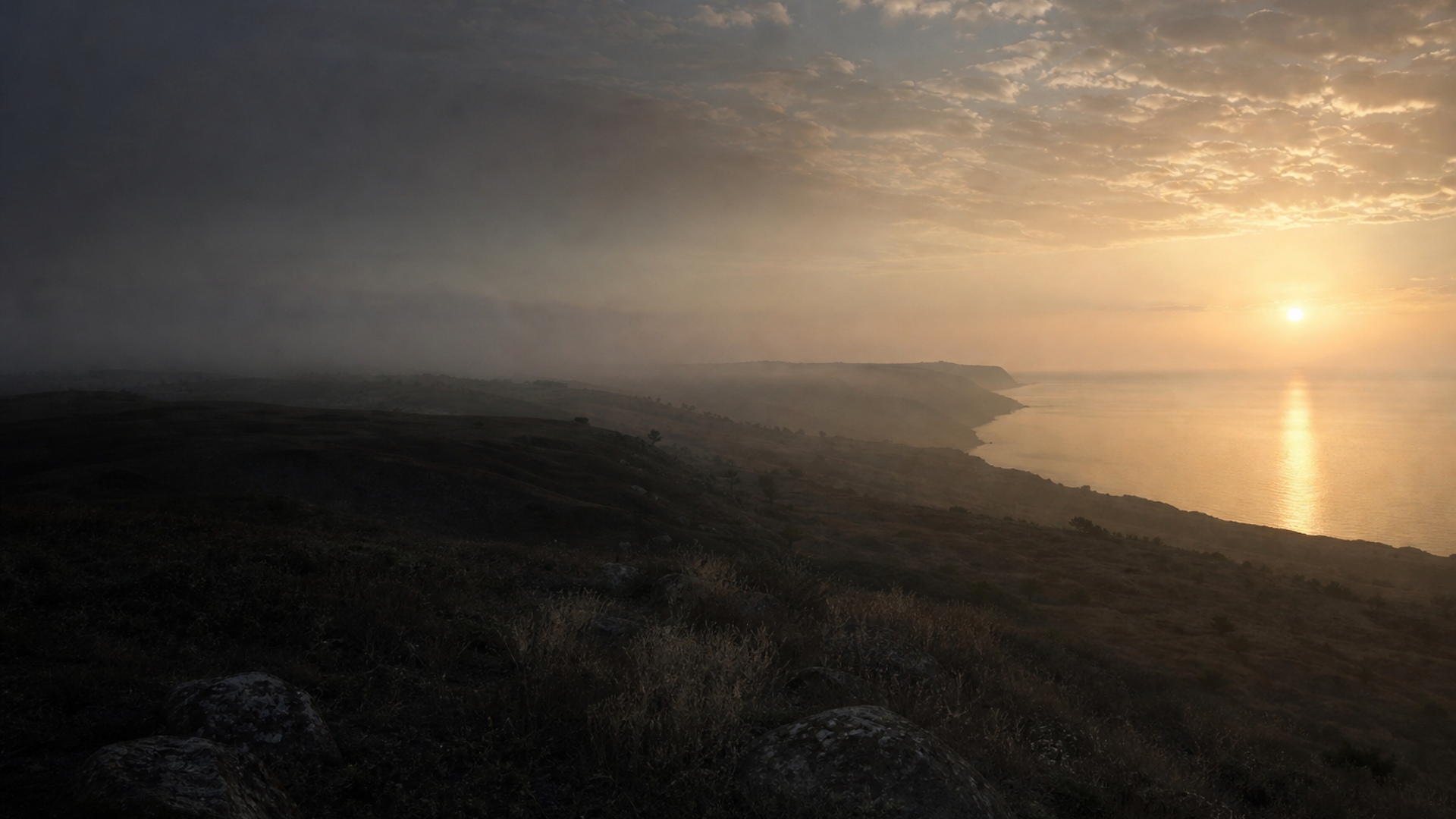
Varna, Bulgaria (Black Sea coast)
Desplázate para empezar
Capítulo I

La historia

Comprender la cultura Gold at Dawn: Varna Chalcolithic Voices

Archaeological and ancient-DNA evidence from Varna (4714–4368 BCE) reveals a Chalcolithic community marked by rich burials, early metalwork, and mixed ancestry. Small sample sizes make genetic conclusions preliminary, but observed Y and mtDNA suggest farmer and hunter-gatherer contributions.

Time Period

4714–4368 BCE

Region

Varna, Bulgaria (Black Sea coast)

Common Y-DNA

G (2), T (1), R (1)

Common mtDNA

H (2), U2 (1), U4 (1), T (1)

Capítulo II

Cronología

Momentos clave de la historia de esta cultura

4600 BCE

Active use of Varna necropolis

The Varna cemetery was in use, producing richly furnished burials and early large-scale gold artifacts, reflecting social complexity.

Capítulo III

Origins & Emergence

Between roughly 4714 and 4368 BCE the coastal landscape around modern Varna witnessed striking social and technological innovation. The Varna necropolis (discovered in the 1970s) preserves monumental burials and the oldest known extensive gold assemblage in Europe, signaling wealth concentration and long-distance exchange by the later fifth millennium BCE. Archaeological data indicates metallurgical skill, specialized craft production, and ritualized burial practice concentrated in this area of the north Bulgarian littoral.

Genetically, a very small set of human remains sampled from this context show a mosaic of ancestries consistent with the broader Balkans Chalcolithic: lineages associated with early Anatolian/Neolithic farmers alongside maternal lineages tracing deeper European hunter-gatherer roots. Limited evidence suggests movement of people and ideas across the Black Sea and inland routes, but the scale and directionality of those movements remain uncertain. The material opulence at Varna likely reflects emerging social differentiation; however, whether that differentiation arose from long-distance migration, local accretion of wealth, or changing social institutions cannot be resolved without larger, contextualized DNA and isotopic datasets.

Because only five samples inform the genetic picture presented here, conclusions about population dynamics and cultural origins must be treated as preliminary and subject to revision by future sampling.

  • Varna necropolis: monumental burials and earliest large-scale goldworking in Europe
  • Dates: 4714–4368 BCE, Chalcolithic/Copper Age in the northern Black Sea region
  • Evidence for craft specialization and interregional exchange, but origins remain debated
Capítulo IV

Daily Life & Society

Archaeological traces from Varna and surrounding settlements suggest an economy combining local agriculture, animal husbandry, and specialized craft—particularly copper working and sophisticated ornament production. The necropolis burials include finely made metal and shell objects, ornaments in gold and copper, and personal paraphernalia that imply artisan skill and access to raw materials through networks extending beyond the immediate coast.

Social life appears highly stratified in mortuary expression: some graves contain extraordinary wealth while many others are modest or unadorned. Burial assemblies, body placement, and grave goods indicate a community attentive to status, identity, and ritual. Mobility and exchange—maritime and overland—likely brought exotic raw materials and stylistic influences to Varna, shaping day-to-day craft and trade. Diet and residence patterns are best reconstructed through future isotope and aDNA sampling; current archaeological data indicate variation in access to prestige goods and differential burial rites, hinting at emerging elites or corporate groups controlling wealth and exchange.

Domestic architecture is less visible than burial wealth in the necropolis record, but nearby settlements show household production zones and storage features consistent with surplus management and craft specialization.

  • Economy: agriculture, herding, and specialized metal and ornament production
  • Marked social differentiation shown by contrasts in grave wealth and funerary treatment
Capítulo V

Genetic Profile

Five analyzed individuals from Varna (dated 4714–4368 BCE) yield a snapshot of paternal and maternal lineages: Y-haplogroups observed include G (2 individuals), T (1), and R (1); mitochondrial haplogroups include H (2), U2 (1), U4 (1), and T (1). These markers hint at a mixed ancestry profile common in the Balkans Chalcolithic but must be interpreted with caution because the sample count is very small (<10).

Interpretative notes: Haplogroup G and haplogroup T are often associated with Neolithic farmer expansions from Anatolia and the broader Near East and may reflect continuity with earlier farming populations in southeastern Europe. Maternal lineages U2 and U4 are frequently linked in other studies to deeper European hunter-gatherer ancestries, while mtDNA H and T are widespread across later European populations and can derive from multiple source populations. The single R lineage on the paternal side could indicate contact with groups carrying branches of R-associated ancestry, but without subclade resolution or more sampling we cannot determine whether this reflects steppe-related input or a different regional trajectory.

The diversity of Y and mtDNA haplogroups in this tiny dataset suggests that Varna’s population was not genetically homogeneous. However, the sample size precludes robust statements about kinship organization, sex-biased migration, or population turnover. Larger, well-dated genomic series combined with isotopic mobility studies are required to test models of elite formation and demographic change at Varna.

  • Observed diversity: Y (G, T, R) and mtDNA (H, U2, U4, T) point to mixed farmer and hunter-gatherer ancestry
  • Low sample count (5) makes lineage frequency estimates and demographic inferences preliminary
Capítulo VI

Legacy & Modern Connections

The Varna horizon stands as a luminous chapter in European prehistory: an early expression of concentrated wealth, long-distance exchange, and metallurgical creativity. Its archaeological signature—most famously the gold—has shaped narratives about social complexity well before the Bronze Age. Genetically, the Varna individuals contribute to a growing picture of the Balkans as a crossroads where Neolithic farmer descent, enduring hunter-gatherer lineages, and later inputs intersect.

Modern populations of the Balkans retain some of the same broad haplogroup categories observed at Varna, but direct continuity should not be assumed without dense time transects. The story that emerges is one of layered ancestry: local communities adapting new technologies, accumulating prestige goods, and interacting through networks that left traces in both material culture and genomes. Continued ancient DNA sampling across sites and time will refine how Varna fits into long-term demographic transformations in southeastern Europe.

  • Varna exemplifies early social stratification and advanced metallurgy in pre-Bronze Europe
  • Genetic signals suggest layered ancestry; direct links to modern populations require more data
Con IA

Asistente de IA

Haz preguntas sobre la cultura Gold at Dawn: Varna Chalcolithic Voices

Asistente de IA por DNAGENICS

Desbloquear esta función
Pregunta sobre la cultura Gold at Dawn: Varna Chalcolithic Voices. El asistente con IA puede explicar hallazgos genéticos, contexto histórico, pruebas arqueológicas y conexiones modernas, con sus límites de interpretación.
Ejemplo de análisis con IA

La cultura Gold at Dawn: Varna Chalcolithic Voices representa un capítulo de la historia humana...

El análisis genético permite estudiar similitudes con poblaciones anteriores y posibles adaptaciones. Las muestras de ADN antiguo aportan información para investigar patrones migratorios y relaciones entre poblaciones, con límites que dependen del estudio y del contexto arqueológico.

Esta es una vista previa del análisis con IA. Accede al asistente completo para explorar información sobre:

  • Composición y similitud genética
  • Patrones migratorios y orígenes
  • Vida cotidiana y prácticas culturales
  • Contexto genético moderno

Explora más culturas antiguas

Descubre la historia de civilizaciones de distintas partes del mundo antiguo