Preparando el informe

Cargando la información y las referencias disponibles

Consultando el registro arqueológico...

Recopilando registros antiguos

Saltar al contenido principal
Gonur: Oasis of the Bronze Age
Cultura destacada

Gonur: Oasis of the Bronze Age

Archaeology and ancient DNA from Gonur (2500–1600 BCE) illuminate a center of the Bactria–Margiana complex

2500 CE - 1600 BCE
Gonur (Mary Province), Turkmenistan
Desplázate para empezar
Capítulo I

La historia

Comprender la cultura Gonur: Oasis of the Bronze Age

Archaeological and genetic data from 45 Gonur individuals (2500–1600 BCE, Turkmenistan) reveal a diverse Bronze Age oasis society. Y- and mtDNA haplogroups point to Near Eastern, West Eurasian, and South/Central Asian connections within the Bactria–Margiana sphere.

Time Period

2500–1600 BCE

Region

Gonur (Mary Province), Turkmenistan

Common Y-DNA

J, R, T, P, E (reported counts)

Common mtDNA

HV, T, U, R2, N (reported counts)

Capítulo II

Cronología

Momentos clave de la historia de esta cultura

2500 BCE

Gonur rises as a BMAC center

Gonur Tepe expands into a major fortified oasis center with monumental architecture, craft production, and richly furnished burials.

Capítulo III

Origins & Emergence

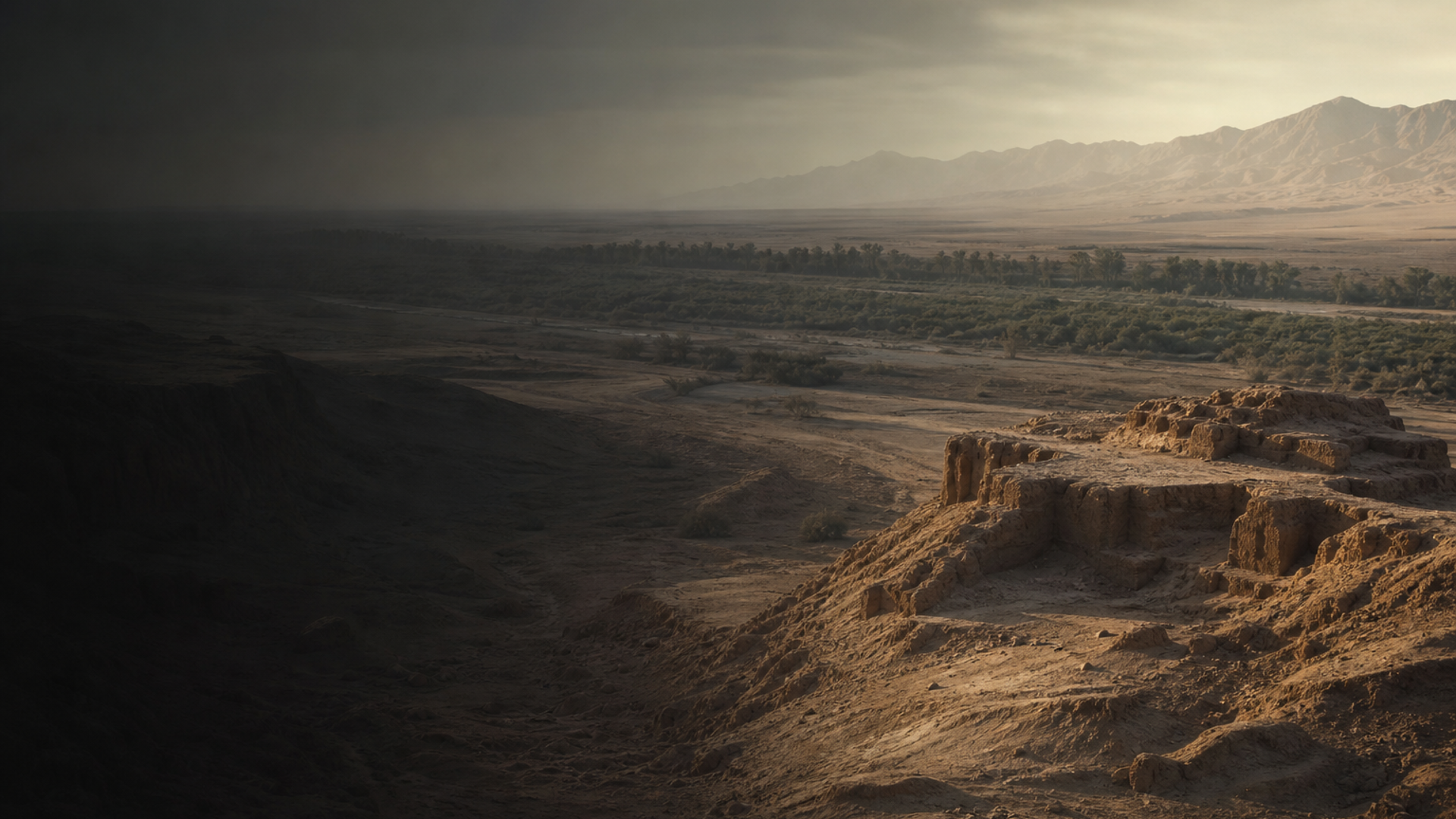
Gonur Tepe, the largest site of the Bactria–Margiana Archaeological Complex (BMAC), rises from the alluvial oases of the Murghab plain. From ca. 2500 BCE the site develops monumental mudbrick architecture, fortified compounds, ritual platforms, and reservoirs that reflect a deliberate program of oasis urbanism. Archaeological data indicate intensive irrigation, craft specialization, and long-distance exchange — a cultural heartland linking the Iranian plateau, the inner steppe, and southern Central Asia.

Genetic evidence from 45 recovered individuals provides a biological dimension to this picture. Haplogroups observed among Y-chromosome calls include J (6), R (4), T (1), P (1), and E (1), while mitochondrial lineages show HV (7), T (6), U (4), R2 (3), and N (2). These markers suggest multiple regional affinities rather than a single immigrant population: J and T often point toward Near Eastern connections, R and U reflect broader West Eurasian ties, and R2 is known from South/Central Asia. Archaeological continuity at Gonur indicates local development augmented by periodic influxes of people and goods.

Limited evidence cautions against simple migration narratives. The genetic picture is heterogeneous: it supports the archaeological image of Gonur as a crossroads where local communities absorbed and reworked incoming cultural and biological influences rather than being wholly replaced.

  • Major BMAC urban center from ~2500 BCE
  • Monumental mudbrick architecture and reservoirs at Gonur Tepe
  • Genetic diversity indicates multiple regional connections
Capítulo IV

Daily Life & Society

At Gonur life unfolded amid canals, courtyards, and workshop complexes. Excavations reveal craft neighborhoods for bronze working, bead production, textile tools, and specialized storage — an economy built on irrigated grain, herding, and artisan exchange. Rich funerary contexts and platform temples imply hierarchical social organization; some burials contain exotic goods that reflect far-reaching trade networks.

Dietary and craft remains show a blended subsistence economy. Charred grains and animal bones attest to wheat, barley, sheep, and cattle; artisans fashioned bronze, shell, and faience objects likely traded across southern Central Asia. Ceremonial spaces and elaborate burial offerings suggest ritual leaders or elite households that managed redistribution and long-distance contacts.

Genetic data complement this social reading: mitochondrial diversity (HV, T, U, R2, N) implies that women in the population came from a range of maternal backgrounds, consistent with exogamic marriage networks or mobility of family units. Y-DNA heterogeneity (J, R, T, P, E) hints that male lineages were likewise varied. Together, archaeological and genetic traces paint Gonur as a mosaic city where daily economics, ritual life, and kinship were entwined across regional networks.

Archaeological interpretations remain under active study; isotopic and more extensive aDNA sampling will refine models of residence, mobility, and social organization.

  • Irrigation-based agriculture, herding, and craft specialization
  • Material wealth and burial variation indicate social hierarchy
Capítulo V

Genetic Profile

The Gonur dataset (45 individuals) offers one of the clearer genetic windows into the BMAC core. Among individuals with resolvable Y-chromosome calls the reported counts are J (6), R (4), T (1), P (1), and E (1). Mitochondrial haplogroups reported include HV (7), T (6), U (4), R2 (3), and N (2). These counts reflect only the individuals with usable uniparental calls and should not be taken as exhaustive for the entire population.

Interpretation: Haplogroup J is frequently associated with Near Eastern lineages and may reflect gene flow or ancestry components tied to Iran and the Fertile Crescent; R (unspecified subclades) is broad but can signal West Eurasian or steppe-related contributions depending on downstream branches. mtDNA HV, T, and U are common in West Eurasia and neighboring regions, while R2 has stronger representation in South and Central Asia, hinting at southern connections. The mixed uniparental picture aligns with archaeological evidence for Gonur as a hub where people and ideas from multiple directions intersected.

Caveats: Uniparental markers provide only part of the story. Autosomal data (when available at scale) better resolves ancestry components and admixture timing. Because many uniparental calls derive from a subset of the 45 samples, these results are preliminary and should be integrated with genome-wide analyses, isotopes, and stratigraphic context to build robust migration and kinship models.

  • Uniparental diversity reflects Near Eastern, West Eurasian, and South/Central Asian links
  • Counts are from samples with usable Y/mtDNA calls; genome-wide data needed for detailed admixture models
Capítulo VI

Legacy & Modern Connections

Gonur's legacy is both architectural and genetic: the city exemplifies Bronze Age oasis urbanism that shaped later settlement patterns across Central Asia. Archaeological traditions of irrigation, craft specialization, and monumental ritual continued in subsequent millennia, influencing social landscapes far beyond the Murghab plain.

Genetically, the heterogeneous uniparental profile from Gonur suggests that modern populations of Turkmenistan and neighboring regions may inherit fragments of the BMAC mosaic, but direct lines of descent are complex. Centuries of mobility, later Bronze Age and Iron Age movements, and historic interactions have reshaped genetic landscapes. Therefore, any claim of direct continuity requires careful genome-wide comparison and chronological sampling.

In museum galleries and genomic atlases, Gonur stands as a cinematic crossroads: a place where rivers and routes converged, where artisans and ritual specialists met traders and migrants, and where layered ancestries were written into bone. Continued archaeogenetic work will deepen our understanding of how Bronze Age oasis societies contributed to the genetic and cultural fabric of Eurasia.

  • Cultural influence on later Central Asian settlement and irrigation traditions
  • Genetic ties to regional populations are plausible but require genome-wide, temporal sampling for confirmation
Con IA

Asistente de IA

Haz preguntas sobre la cultura Gonur: Oasis of the Bronze Age

Asistente de IA por DNAGENICS

Desbloquear esta función
Pregunta sobre la cultura Gonur: Oasis of the Bronze Age. El asistente con IA puede explicar hallazgos genéticos, contexto histórico, pruebas arqueológicas y conexiones modernas, con sus límites de interpretación.
Ejemplo de análisis con IA

La cultura Gonur: Oasis of the Bronze Age representa un capítulo de la historia humana...

El análisis genético permite estudiar similitudes con poblaciones anteriores y posibles adaptaciones. Las muestras de ADN antiguo aportan información para investigar patrones migratorios y relaciones entre poblaciones, con límites que dependen del estudio y del contexto arqueológico.

Esta es una vista previa del análisis con IA. Accede al asistente completo para explorar información sobre:

  • Composición y similitud genética
  • Patrones migratorios y orígenes
  • Vida cotidiana y prácticas culturales
  • Contexto genético moderno

Explora más culturas antiguas

Descubre la historia de civilizaciones de distintas partes del mundo antiguo