Preparando el informe

Cargando la información y las referencias disponibles

Consultando el registro arqueológico...

Recopilando registros antiguos

Saltar al contenido principal
Goyet Gravettian Echoes
Cultura destacada

Goyet Gravettian Echoes

Ice‑edge hunters of Wallonia whose bones whisper links between art, stone and genes

26300 CE - 24000 BCE
Belgium (Wallonia — Goyet Cave, Namur)
Desplázate para empezar
Capítulo I

La historia

Comprender la cultura Goyet Gravettian Echoes

Late Upper Paleolithic occupants of Goyet Cave (c. 26.3–24.0 kya) associated with the Gravettian cultural horizon. Four ancient genomes offer preliminary genetic windows into seasonal mobility, material culture, and Europe’s Ice‑age populations.

Time Period

c. 26,300–24,000 BCE

Region

Belgium (Wallonia — Goyet Cave, Namur)

Common Y-DNA

Undetermined (limited samples)

Common mtDNA

Undetermined (limited samples)

Capítulo II

Cronología

Momentos clave de la historia de esta cultura

25150 BCE

Goyet Gravettian occupation (approx.)

Repeated Gravettian occupations at Goyet Cave around 25,150 BCE with toolmaking, hunting, and symbolic objects.

Capítulo III

Origins & Emergence

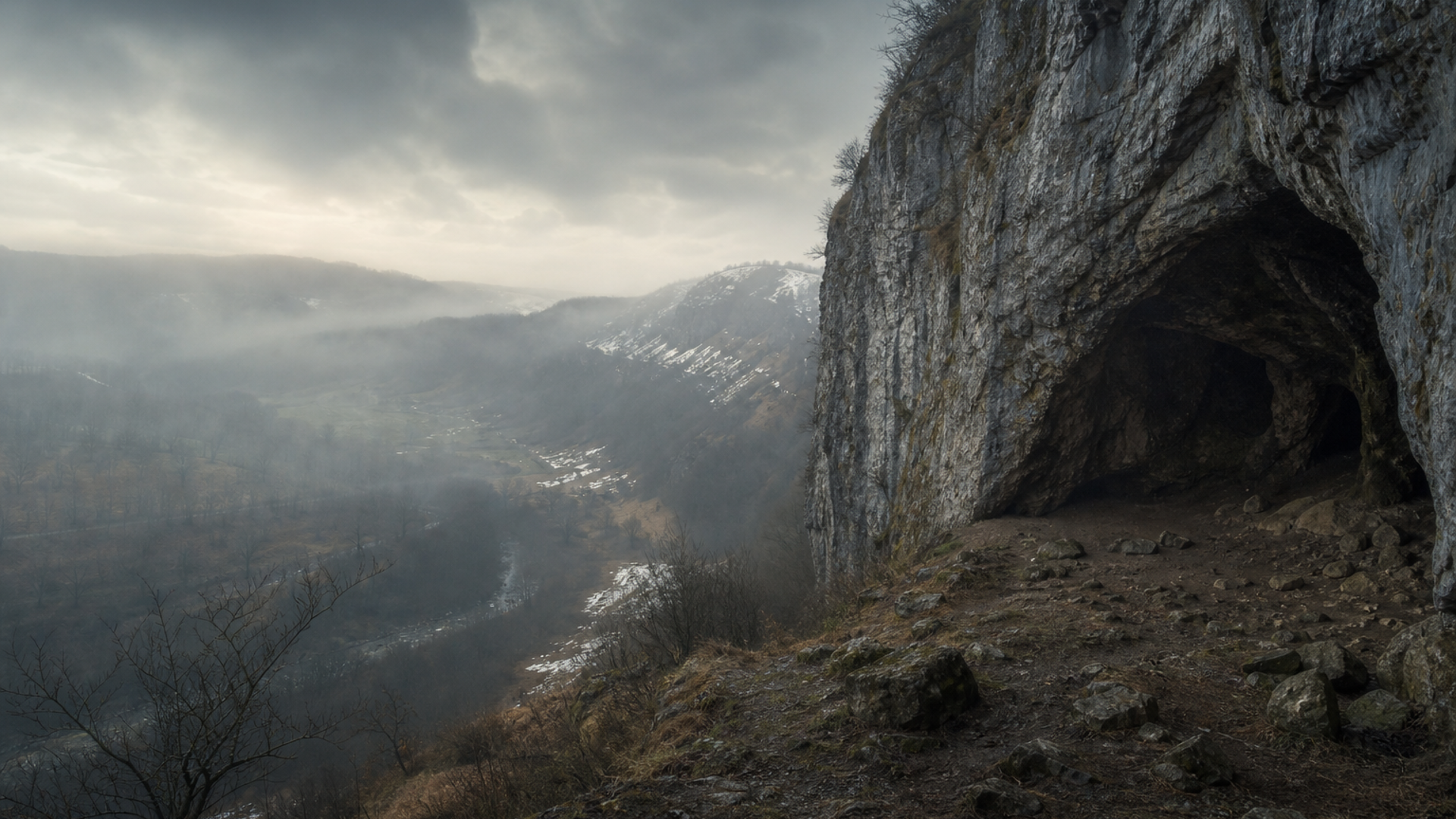
Across the frozen foothills of what is today Wallonia, human groups of the Gravettian tradition carved a presence into the rock of Goyet Cave (Troisième caverne, Gesves, Namur). Radiocarbon-calibrated material associated with these deposits spans approximately 26,307–23,994 BCE, placing these occupations at the opening phases of the Last Glacial Maximum. Archaeological data indicates repeated use of Goyet as a focal place for processing game, knapping distinctive Gravettian points, and producing personal ornaments.

Material culture—broad-based backed bladelets, osseous tools, and fragments of portable art—ties the site culturally to the broader Gravettian network that stretched across Central and Western Europe. Stratigraphic sequences and refitting studies at Goyet suggest episodic re‑occupation, likely driven by seasonal movements of both people and prey in response to shifting ice‑age ecologies. Limited evidence suggests local groups maintained long-distance connections: exotic raw materials and stylistic links show ties beyond the Meuse valley.

Because only four ancient genomes are available from the Gravettian layers at Goyet, genetic conclusions remain preliminary. Still, when combined with the rich archaeological record, these skeletal and genetic remains offer a cinematic glimpse of resilient communities negotiating a cold, changing world.

  • Occupation dated c. 26,307–23,994 BCE at Goyet Cave (Troisième caverne).
  • Associated with Gravettian lithic and osseous industries and portable art.
  • Evidence of seasonal reuse and regional connections across Upper Paleolithic Europe.
Capítulo IV

Daily Life & Society

The daily rhythms of Goyet’s Gravettian occupants can be reconstructed from stone, bone, and the residues of hearths. Skilled flint knapping produced heat‑retouched backed bladelets and pointed blades suited to hunting reindeer and horse on cold plains. Bone awls, needles, and perforated beads point to textile or leather working and the production of personal adornment—small acts of identity against a vast frozen landscape.

Zooarchaeological remains indicate a focus on large herd animals; but the presence of small game and fish remains suggests dietary flexibility. Spatial organization within the cave—task‑specific loci for butchery, tool production, and living surfaces—evokes communities that shared labor and knowledge across generations. Artistic expression, though fragmentary at Goyet, fits the Gravettian pattern of portable sculpture and engravings, gestures that likely bound people through shared symbolism.

Seasonal mobility probably structured social life: archaeological indicators support repeated autumn-winter occupations, with groups moving across predictable animal migration routes. Camp life, then, blended high-skilled craftsmanship, cooperative hunting, and symbolic practices that together sustained communities in an extreme climate.

Because preservation and sampling are uneven, aspects of household structure and population size at Goyet remain open questions.

  • Hunting of large herd mammals with bladelet-based technology.
  • Evidence for ornament production, sewing, and task‑specific activity areas.
Capítulo V

Genetic Profile

Ancient DNA from Goyet’s Gravettian layers derives from four individuals—an important but small dataset. From a genetic perspective, these genomes provide preliminary glimpses into the biological ancestry of late Upper Paleolithic Western Europe. Population genomic analyses (when integrated with regional datasets) suggest these individuals fit within the broader variability observed among Gravettian-associated groups across Europe: genetically distinct from earlier Magdalenian and later post‑glacial hunter‑gatherers, yet sharing affinities with contemporaneous Central European Gravettian populations.

However, because only four samples are available, conclusions must remain cautious. No consistent Y‑DNA or mtDNA pattern is recoverable from this tiny set; preservation and coverage vary, and some haplotypes common in other Gravettian contexts (for example, several sublineages of mitochondrial haplogroup U observed elsewhere) are represented in the broader Upper Paleolithic but cannot be asserted confidently for these specific individuals without larger sample sizes.

Genetic signals do enable statements about continental-scale ancestry: they reinforce a picture of Late Pleistocene Europe as a mosaic of related groups with regional interactions and periodic gene flow. For Goyet, the combination of archaeological ties and genomic affinities supports the idea of Gravettian networks linking communities across ecological zones—even if the local genetic portrait is still sketchy.

Limited sample count (<10) makes all inferences preliminary and highlights the need for more genomic sampling from Goyet and nearby sites.

  • Four genomes available—valuable but small; findings are preliminary.
  • Genetic affinities are consistent with broader Gravettian population structure, but no definitive haplogroup pattern from these samples.
Capítulo VI

Legacy & Modern Connections

The people of Goyet left a faint but powerful legacy: stone scars on flint, beads threaded through time, and genomes that echo across millennia. Archaeological continuity and genetic links to other Gravettian groups remind us that Ice‑age Europe was not isolated pockets but a network of mobile, interacting communities. These connections likely contributed to the transmission of tool traditions, artistic styles, and social practices that shaped later European hunter‑gatherer diversity.

For modern researchers and the public, Goyet offers a cinematic storyline—of survival, creativity, and movement—that complements genetic narratives of ancestry. Yet the scientific message is clear: with only four genomes from this horizon, claims about direct descent or fine‑scale population structure must remain tentative. Future excavations and careful aDNA sampling will determine how these individuals fit into the grander tapestry of prehistoric Europe.

  • Goyet contributes to understanding pan‑European Gravettian networks of exchange and culture.
  • Current genetic evidence is suggestive but preliminary; more samples are needed to clarify continuity with later populations.

Con IA

Asistente de IA

Haz preguntas sobre la cultura Goyet Gravettian Echoes

Asistente de IA por DNAGENICS

Desbloquear esta función
Pregunta sobre la cultura Goyet Gravettian Echoes. El asistente con IA puede explicar hallazgos genéticos, contexto histórico, pruebas arqueológicas y conexiones modernas, con sus límites de interpretación.

Ejemplo de análisis con IA

La cultura Goyet Gravettian Echoes representa un capítulo de la historia humana...

El análisis genético permite estudiar similitudes con poblaciones anteriores y posibles adaptaciones. Las muestras de ADN antiguo aportan información para investigar patrones migratorios y relaciones entre poblaciones, con límites que dependen del estudio y del contexto arqueológico.

Esta es una vista previa del análisis con IA. Accede al asistente completo para explorar información sobre:

  • Composición y similitud genética
  • Patrones migratorios y orígenes
  • Vida cotidiana y prácticas culturales
  • Contexto genético moderno

Explora más culturas antiguas

Descubre la historia de civilizaciones de distintas partes del mundo antiguo