Preparando el informe

Cargando la información y las referencias disponibles

Consultando el registro arqueológico...

Recopilando registros antiguos

Saltar al contenido principal
Goyet Q56-16: A Paleolithic Voice
Cultura destacada

Goyet Q56-16: A Paleolithic Voice

A single Upper Paleolithic individual from Goyet cave illuminates deep European hunter‑gatherer history

24847 CE - 24025 BCE
Goyet cave, Namur province, Belgium
Desplázate para empezar
Capítulo I

La historia

Comprender la cultura Goyet Q56-16: A Paleolithic Voice

A lone genome from the Troisième caverne of Goyet (c. 24,800–24,000 BCE) carries mtDNA U2. Archaeological context at Goyet and genetic data together hint at complex Late Pleistocene population dynamics in northwestern Europe—interpretations are preliminary due to a single sample.

Time Period

≈24,847–24,025 BCE (Upper Paleolithic)

Region

Goyet cave, Namur province, Belgium

Common Y-DNA

Undetermined (no Y data available)

Common mtDNA

U2 (1 sample)

Capítulo II

Cronología

Momentos clave de la historia de esta cultura

24500 BCE

Occupation and deposition at Goyet

The individual associated with GoyetQ56-16 lived and was deposited in the Troisième caverne of Goyet during the Upper Paleolithic (≈24,847–24,025 BCE).

Capítulo III

Origins & Emergence

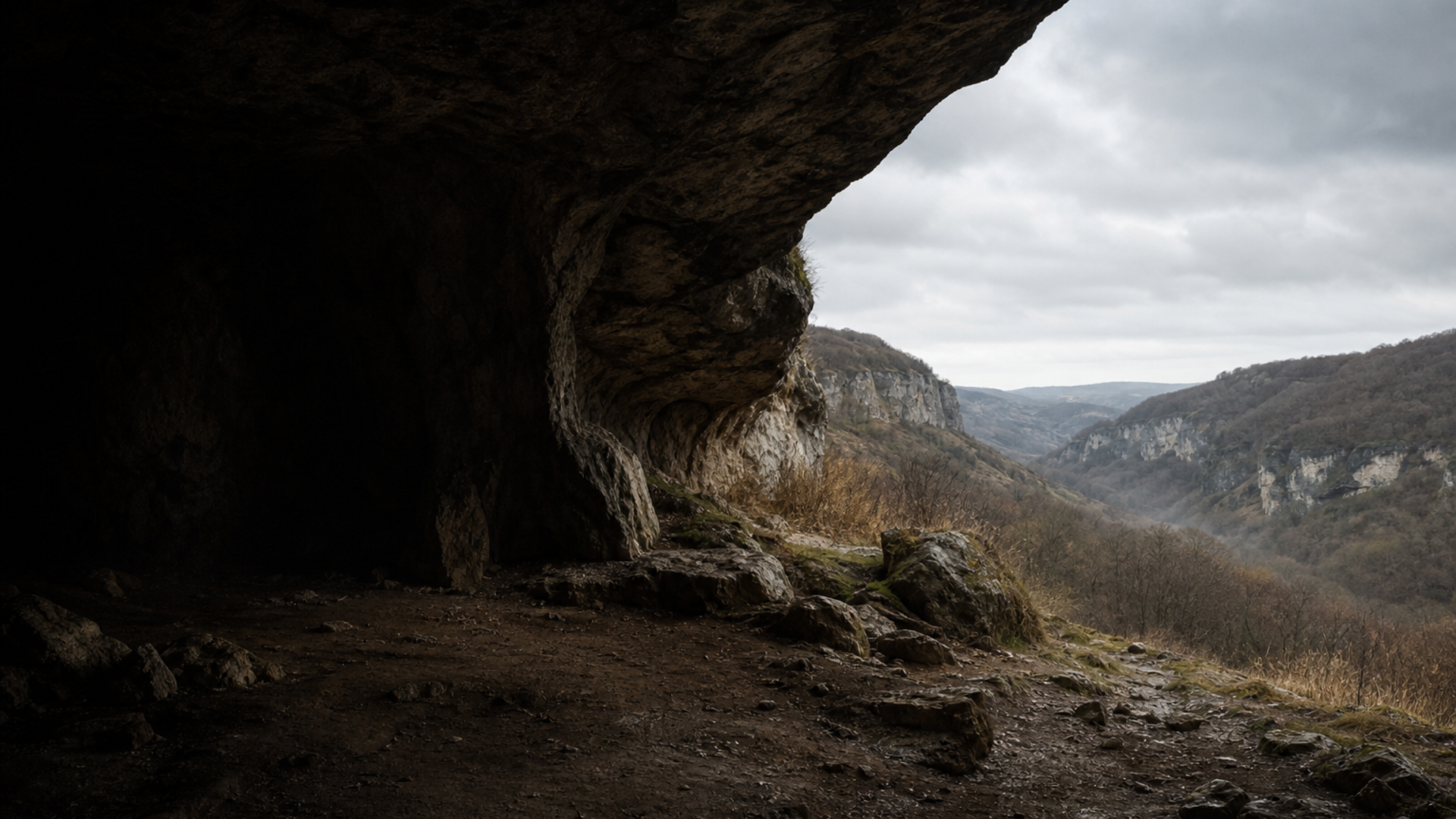
In the dim limestone chambers of the Troisième caverne of Goyet, archaeologists have recovered layers that capture the rhythms of Late Pleistocene life. The specimen labeled GoyetQ56-16 dates to roughly 24,847–24,025 BCE and sits within the broad Upper Paleolithic sequence preserved at Goyet. Archaeological data indicate repeated human occupation of the cave across climatic oscillations, with deposits preserving flint tools, faunal remains, and traces of hearth use.

Limited evidence suggests that individuals occupying Goyet at this time belonged to mobile hunter‑gatherer networks that ranged across the river valleys and uplands of northwest Europe. The site's long stratigraphic record makes it a cinematic archive of shifting subsistence and social strategies as cold stadials and milder intervals reshaped the landscape. While cultural labels (for example Gravettian or related Upper Paleolithic technocomplexes) are useful heuristics, direct ties between a single human genome and specific archaeological industry are tentative.

Because this entry is based on one genomic sample, its emergence story is necessarily cautious: genetic and archaeological strands together hint at population continuity and interchange across Late Pleistocene Europe, but further samples are required to map the full demographic picture.

  • Sample from Troisième caverne of Goyet cave, Namur, Belgium
  • Dated ≈24,847–24,025 BCE, within the Upper Paleolithic
  • Interpretations are provisional due to a single individual
Capítulo IV

Daily Life & Society

Archaeological layers at Goyet capture material traces of daily survival under a Paleolithic sky. Excavations reveal dense concentrations of stone tools, butchered faunal bones, and hearth features that suggest repeated use as a living place and processing station. These remains paint a picture of small, mobile groups exploiting seasonal resources—hunting ungulates, scavenging, and collecting raw materials for toolmaking and personal ornamentation.

Social life would have been organized around cooperative hunting, raw material exchange, and knowledge transmission: lithic technology (carefully fashioned blades and backed tools) implies skilled knappers who shared technical knowledge across camps. Ornamentation and symbolic objects recovered elsewhere at Goyet and comparable sites hint at social signaling and group identity in cold climates. The cave setting itself, with sheltered chambers and natural acoustics, could have hosted ritual acts, storytelling, and the maintenance of social bonds during long winters.

Archaeological data indicate adaptability: toolkits and subsistence remains shift with changing environments. Yet many behavioral details—kinship rules, residence patterns, and the extent of long‑distance networks—remain invisible without more genetic and isotopic samples.

  • Stone tools, hearths, and faunal remains indicate repeated occupational use
  • Evidence points to mobile hunter‑gatherer lifeways and social exchange
Capítulo V

Genetic Profile

The genetic signal from Belgium_UP_GoyetQ56_16 is limited but informative: mitochondrial DNA falls in haplogroup U2. Haplogroup U2 is one of several maternal lineages observed in Upper Paleolithic Europe and may reflect deep Pleistocene maternal ancestries that were widespread among hunter‑gatherers. Because only a single individual is available (sample count = 1), conclusions about population structure, continuity, or migration must be framed as preliminary.

No Y‑chromosome haplogroup is reported for this sample, so male‑line inferences are not possible here. Nonetheless, the presence of mtDNA U2 contributes to a growing mosaic: regional and temporal comparisons show that Upper Paleolithic maternal lineages included U2, U4, U5 and related branches, suggesting multiple maternal lineages coexisted across Eurasia.

When combined with archaeological context, this mtDNA signal hints at maternal ancestries that persisted through climatic stressors and may have been part of expansive hunter‑gatherer networks. Genetic affinities to other contemporaneous individuals in northwestern and central Europe remain to be rigorously tested; with n<10 comparative samples in many Paleolithic datasets, any population‑level claims should be stated with caution. Future genomic recovery from Goyet and surrounding sites could reveal whether this mtDNA reflects local continuity or wider mobility across Late Pleistocene Europe.

  • mtDNA haplogroup U2 identified (1 individual)
  • Y‑DNA undetermined; population conclusions are preliminary
Capítulo VI

Legacy & Modern Connections

The human story preserved at Goyet extends its reach into the present through the language of DNA. Although a single mtDNA U2 lineage does not map directly onto modern population distributions, it aligns with a pattern in which Upper Paleolithic maternal lineages contributed to the genetic substrate of later European hunter‑gatherers and, indirectly, to subsequent populations.

Archaeological continuity at Goyet underscores the deep time depth of human occupation in northwest Europe and invites modern audiences to imagine connections—biological and cultural—across tens of millennia. However, any linkage between this sample and specific contemporary groups is highly speculative: genetic drift, later population replacements, and admixture events have overwritten much of the Paleolithic genetic landscape. Continued sampling and integrated archaeological–genetic analysis are the keys to clarifying the legacy of Goyet's ancient inhabitants.

  • Contributes to understanding of Paleolithic maternal lineages in Europe
  • Direct links to modern populations remain speculative; more data needed
Con IA

Asistente de IA

Haz preguntas sobre la cultura Goyet Q56-16: A Paleolithic Voice

Asistente de IA por DNAGENICS

Desbloquear esta función
Pregunta sobre la cultura Goyet Q56-16: A Paleolithic Voice. El asistente con IA puede explicar hallazgos genéticos, contexto histórico, pruebas arqueológicas y conexiones modernas, con sus límites de interpretación.
Ejemplo de análisis con IA

La cultura Goyet Q56-16: A Paleolithic Voice representa un capítulo de la historia humana...

El análisis genético permite estudiar similitudes con poblaciones anteriores y posibles adaptaciones. Las muestras de ADN antiguo aportan información para investigar patrones migratorios y relaciones entre poblaciones, con límites que dependen del estudio y del contexto arqueológico.

Esta es una vista previa del análisis con IA. Accede al asistente completo para explorar información sobre:

  • Composición y similitud genética
  • Patrones migratorios y orígenes
  • Vida cotidiana y prácticas culturales
  • Contexto genético moderno

Explora más culturas antiguas

Descubre la historia de civilizaciones de distintas partes del mundo antiguo