Preparando el informe

Cargando la información y las referencias disponibles

Consultando el registro arqueológico...

Recopilando registros antiguos

Saltar al contenido principal
Haputo Echoes: Late Latte Guam
Cultura destacada

Haputo Echoes: Late Latte Guam

Island pillars, cave lives, and a maternal signal tying Haputo to broader Pacific movements

1000 CE - 1668 CE
Guam (Haputo)
Desplázate para empezar
Capítulo I

La historia

Comprender la cultura Haputo Echoes: Late Latte Guam

Archaeological and genetic glimpses from Haputo, Guam (1000–1668 CE) reveal Late Latte lifeways. Four ancient genomes show uniform mitochondrial E2a, suggesting island-region maternal continuity; small sample size makes conclusions preliminary.

Time Period

1000–1668 CE

Region

Guam (Haputo)

Common Y-DNA

Not reported / no Y-DNA data (4 samples)

Common mtDNA

E2a (4)

Capítulo II

Cronología

Momentos clave de la historia de esta cultura

1000 CE

Late Latte cultural horizon emerges

Latte architecture, shell midden intensification, and coastal village life become archaeologically prominent in Guam, including Haputo.

Capítulo III

Origins & Emergence

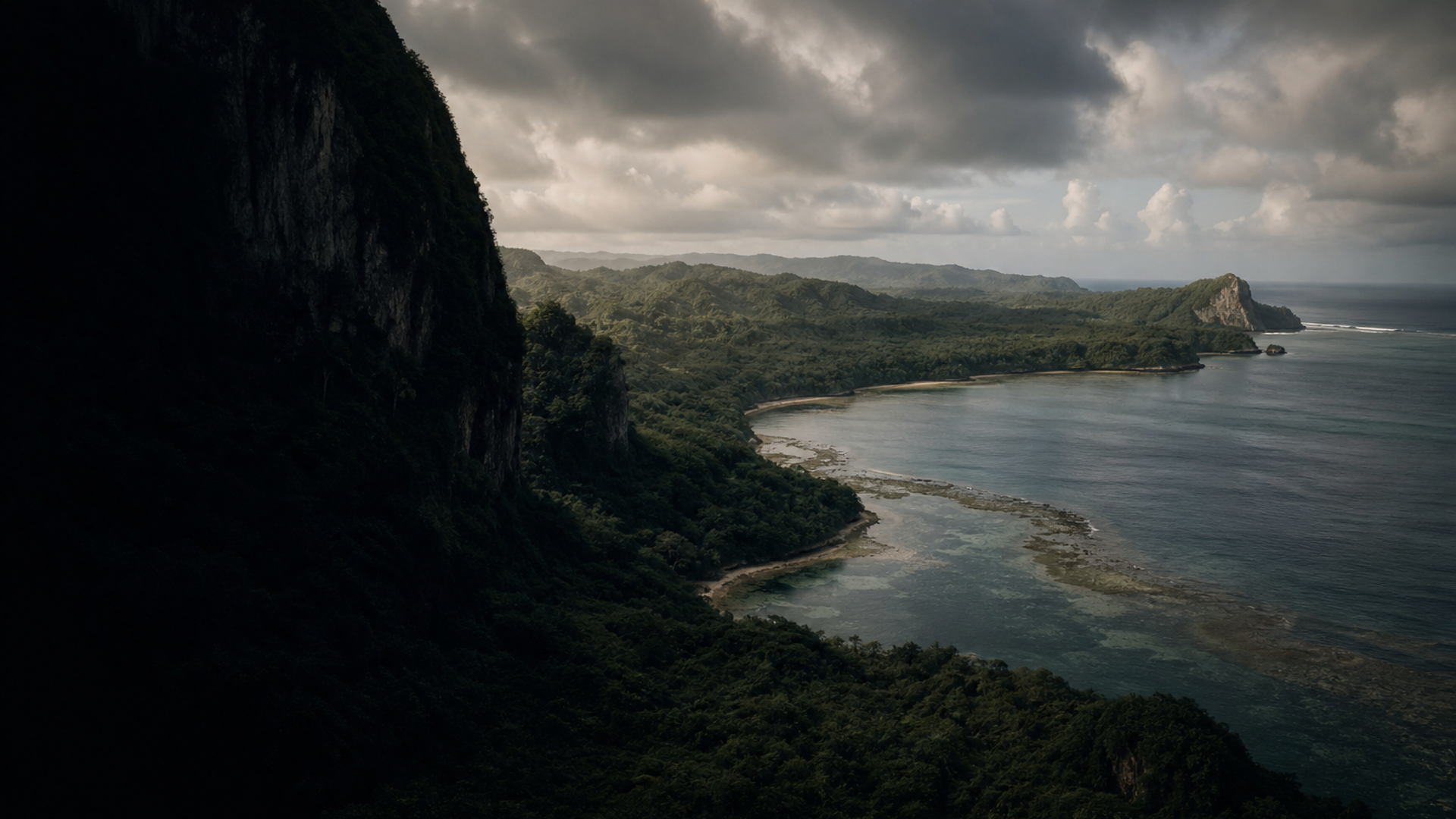
The Late Latte period on Guam is an island drama written in stone and sand. Archaeological deposits at Haputo and other coastal localities record the appearance and elaboration of latte architecture — paired stone columns (haligi) and capstones (tasa) — that anchor social memory across the Marianas. Radiocarbon contexts and stratified midden layers place the Late Latte horizon roughly between 1000 and the 17th century CE, a time when seafaring networks across Island Southeast Asia and Remote Oceania continued to ripple cultural innovations and people.

Archaeological data indicate that Haputo functioned as a coastal village and ritual landscape: cave deposits, shell middens, and latte house sites preserve faunal remains, worked shell, and ground stone tools. Material culture demonstrates continuity from earlier Mariana occupations but with distinct Late Latte elaborations in architecture and mortuary practice.

Genetically, the small set of four ancient individuals from Haputo offers a fragile but vivid thread: all four sampled individuals carry mitochondrial haplogroup E2a, a maternal lineage documented in parts of Island Southeast Asia and the Pacific. Limited evidence suggests maternal continuity within the island chain during the Late Latte era, but the few samples (n = 4) mean population-level patterns remain provisional. Ongoing excavations and a larger ancient DNA sample will be required to robustly map migration, admixture, and demographic change across the Marianas.

  • Late Latte pottery, house sites, and latte stones define the cultural horizon
  • Haputo preserves cave deposits, middens, and ritual spaces linking shore and sea
  • All four ancient samples share mtDNA E2a—promising but preliminary
Capítulo IV

Daily Life & Society

Imagine dawn over Haputo: canoes landing among reef channels, the smell of roasted breadfruit and fish smoke, and the silhouette of paired latte pillars marking family compounds. Archaeological remains — fish bones, shellfish middens, plant macrofossils, and toolkits — reconstruct a mixed maritime and horticultural economy. Taro, breadfruit, and coconut gardens would have complemented reef and pelagic fishing, while traded obsidian or shell ornaments hint at inter-island exchange.

Households organized around latte foundations likely reflected lineage compounds; the labor required to quarry and erect haligi suggests cooperative social organization and status differentiation. Burial practices in the Late Latte period show variation: extended and flexed interments, sometimes placed in cave settings like those at Haputo, suggest a landscape of domestic, ritual, and ancestral places. Spanish-era records and material changes after sustained contact in the 16th–17th centuries point to disruption — introduced diseases, missionization, and colonial reorganization — layered onto long-standing local traditions.

Archaeological data indicate a resilient island lifeway shaped by reef knowledge, garden cultivation, and social ties visible in house architecture and curated objects. Yet many aspects of daily social organization — marriage rules, precise craft specialization, and the role of voyaging in identity — remain only partially illuminated by the material record.

  • Mixed reef fishing and horticulture sustained Late Latte communities
  • Latte foundations signal cooperative labor, lineage compounds, and social distinction
Capítulo V

Genetic Profile

The genetic portrait from Haputo is cautiously compelling. Four ancient individuals dated to the Late Latte interval (1000–1668 CE) were analyzed for mitochondrial DNA: every sample carried haplogroup E2a. Mitochondrial E2a is a maternal lineage observed in Island Southeast Asia and parts of Remote Oceania, which is consistent with archaeological models that tie the Marianas into wider Austronesian-linked dispersals and sustained island-region networks.

However, the sample set is small (n = 4). With fewer than ten genomes, any inference about population structure, continuity, or migration must be framed as provisional. The uniformity of mtDNA in this set could reflect a local matrilineal continuity, founder effects, or simply biased preservation and recovery; alternative explanations are equally plausible. Notably, Y-chromosome assignments are not reported from these samples, so paternal lineages and sex-specific admixture patterns remain unknown. Nuclear genome data — if recovered and compared with contemporaneous Island Southeast Asian and Pacific ancient genomes — could test whether Haputo individuals show local continuity, admixture with Near Oceanian groups, or connections to Philippine and eastern Indonesian source populations.

In short: mtDNA E2a across four Haputo individuals suggests a shared maternal signal linking Guam to broader Pacific maternal lineages, but the tiny sample size and absence of Y-DNA/nuclear analyses mean genetic narratives must stay tentative pending further sampling.

  • All four Haputo individuals carry mtDNA haplogroup E2a
  • Small sample size (n = 4) requires caution; Y-DNA not reported
Capítulo VI

Legacy & Modern Connections

The stones of latte and the maternal trace of E2a stitch the past of Haputo to the present peoples of the Marianas and the wider Pacific. Modern Chamorro communities carry languages, place-names, and oral histories that resonate with Late Latte material culture; genetic continuity hinted at by E2a supports a narrative of deep island roots, even as centuries of contact have reshaped demography.

Archaeological conservation at Haputo and other Marianas sites preserves not only ruins but living heritage: the interplay of reef stewardship, canoe traditions, and ancestral sites continues to inform cultural revival and identity. From a scientific perspective, ancient DNA from Haputo opens pathways to ask how migration, exogamy, and colonial disruptions altered island genomes. Because the current genetic sample is small, future collaboration with descendant communities and expanded sampling will be essential to responsibly connect genomic patterns with Chamorro history and lived memory.

  • E2a supports a story of maternal continuity that may link ancient Haputo to modern island populations
  • Preservation and community collaboration are vital for expanding genetic and archaeological knowledge
Con IA

Asistente de IA

Haz preguntas sobre la cultura Haputo Echoes: Late Latte Guam

Asistente de IA por DNAGENICS

Desbloquear esta función
Pregunta sobre la cultura Haputo Echoes: Late Latte Guam. El asistente con IA puede explicar hallazgos genéticos, contexto histórico, pruebas arqueológicas y conexiones modernas, con sus límites de interpretación.
Ejemplo de análisis con IA

La cultura Haputo Echoes: Late Latte Guam representa un capítulo de la historia humana...

El análisis genético permite estudiar similitudes con poblaciones anteriores y posibles adaptaciones. Las muestras de ADN antiguo aportan información para investigar patrones migratorios y relaciones entre poblaciones, con límites que dependen del estudio y del contexto arqueológico.

Esta es una vista previa del análisis con IA. Accede al asistente completo para explorar información sobre:

  • Composición y similitud genética
  • Patrones migratorios y orígenes
  • Vida cotidiana y prácticas culturales
  • Contexto genético moderno

Explora más culturas antiguas

Descubre la historia de civilizaciones de distintas partes del mundo antiguo