Preparando el informe

Cargando la información y las referencias disponibles

Consultando el registro arqueológico...

Recopilando registros antiguos

Saltar al contenido principal
Herdonia's Daunians: Voices from Ordona
Cultura destacada

Herdonia's Daunians: Voices from Ordona

Murmurs of Iron Age Apulia revealed through graves, pottery, and four ancient mitochondrial genomes.

800 BCE - 1200 CE
Apulia (Ordona / Herdonia), Italy
Desplázate para empezar
Capítulo I

La historia

Comprender la cultura Herdonia's Daunians: Voices from Ordona

Archaeological and genetic glimpses from Ordona (Herdonia), Apulia. Four mitochondrial genomes (H+, H5c, I, T2e) illuminate Daunian lifeways between 800 BCE and 1200 CE; interpretations remain preliminary due to small sample size.

Time Period

800 BCE – 1200 CE

Region

Apulia (Ordona / Herdonia), Italy

Common Y-DNA

Not reported (no consistent Y-haplogroup in dataset)

Common mtDNA

H+, H5c, I, T2e

Capítulo II

Cronología

Momentos clave de la historia de esta cultura

800 BCE

Daunian establishment at Ordona (Herdonia)

Archaeological evidence places Daunian occupation and funerary activity at Ordona around 800 BCE, marking the site's Iron Age presence in Apulia.

Capítulo III

Origins & Emergence

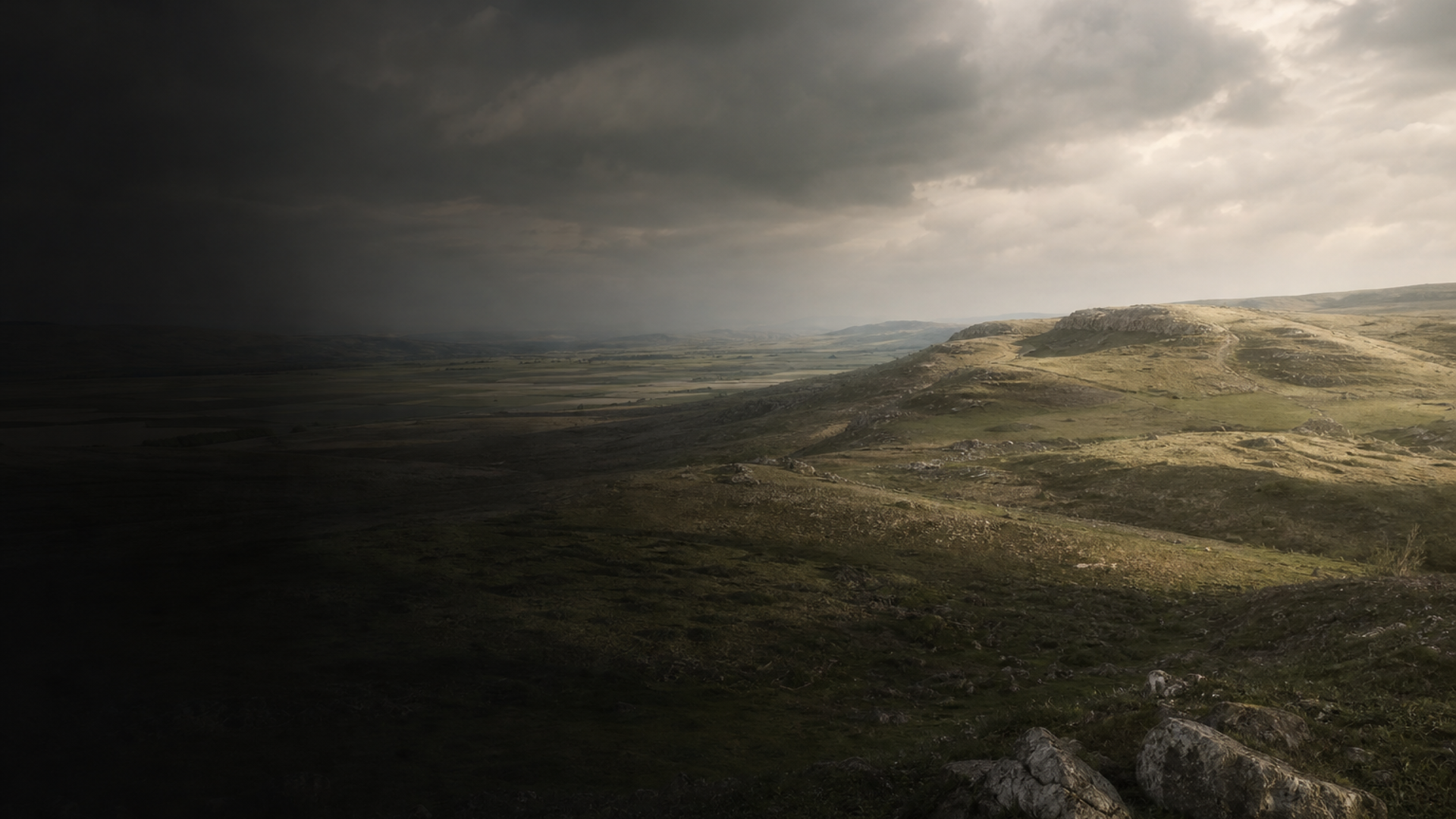
On the windswept mesa above the Tavoliere plain, Ordona—known in antiquity as Herdonia—stands as a cinematic sentinel of Apulia's Iron Age world. Archaeological data indicates a Daunian presence in and around Ordona beginning in the early 1st millennium BCE, with material culture dated to ca. 800–400 BCE characterized by stamped and incised pottery, funeral stelae, and settlement traces. Excavations at the site reveal stratified occupation layers that suggest continuity, episodic abandonment, and later reoccupation into the Roman and medieval periods (hence the long date range through 1200 CE).

The Daunians were one of several indigenous Italic groups along the Adriatic coast whose material forms show local innovation alongside Mediterranean connections. Ceramic styles, imported finewares, and burial assemblages testify to trade and cultural contact across the Adriatic and with Greek colonies of southern Italy. Limited evidence suggests that Ordona functioned as both a local center of ritual and a node in wider exchange networks rather than an isolated hilltop fortress.

Because the genetic sample count for this dataset is small (n=4), conclusions about origins remain provisional. Archaeological signals of continuity at Ordona align with a narrative of local development punctuated by external influences, but ancient DNA offers a new, still tentative window into the maternal lineages that once lived here.

  • Daunian occupation at Ordona attested from ca. 800 BCE
  • Material culture shows local traditions plus Mediterranean exchange
  • Stratigraphy records later Roman and medieval reuses up to 1200 CE
Capítulo IV

Daily Life & Society

The daily world of Ordona's inhabitants can be sketched from pottery shards, burial rites, and the layout of domestic and funerary space. Archaeological contexts—house floors, storage pits, and cemeteries—indicate a mixed economy of agriculture on the fertile Tavoliere plain, pastoralism, and artisan production. Textured ceramics and stamped motifs suggest workshops and local tastes; imported amphora fragments point to exchange in oil, wine, and luxury goods.

Daunian funerary practice at Ordona often involved chambered graves or flat graves accompanied by personal items. Grave goods reveal gendered patterns of adornment and craft, implying specialized roles within households and communities. Public rituals and stelae carved with geometric designs or iconography acted as social markers, anchoring family memory to place. The cinematic image is of a populated limestone ridge at dawn, smoke rising from hearths, and processions moving to cemeteries—societies rooted deeply in landscape yet open to maritime currents of influence.

Archaeological data indicates resilience through changing political landscapes: Ordona experienced phases of decline and revival, visible in the material record and in reworked architecture. These shifts set the stage for genetic continuity or change, questions now being probed by ancient DNA.

  • Mixed agrarian-pastoral economy tied to the Tavoliere plain
  • Funerary assemblages show local craft, gendered practices, and imported goods
Capítulo V

Genetic Profile

The genetic snapshot from Ordona in this dataset is modest but evocative: four mitochondrial genomes recovered from human remains dated within the broad range 800 BCE–1200 CE. The matrilineal haplogroups observed are H+ (1), H5c (1), I (1), and T2e (1). These maternal lineages are broadly common across Europe and the Mediterranean and are consistent with a population possessing local European maternal ancestry with potential long-distance connections.

Because no consistent Y-DNA haplogroup is reported for these samples, and the male lineages are absent from this dataset, we cannot comment on paternal ancestry or sex-biased mobility. The low sample count (n=4) limits statistical inference: when sample numbers are below ten, patterns must be treated as preliminary. Nevertheless, the diversity of mtDNA types in this tiny sample hints at a heterogeneous maternal pool—compatible with archaeological evidence of trade, mobility, and interaction.

Genetic data, taken together with archaeology, suggests continuity of local maternal lines alongside contacts that could introduce new lineages. Future, larger-scale sampling and retrieval of nuclear genomes (which reveal ancestry components, admixture, and kinship) would be necessary to test hypotheses about migration, social structure, or population turnover at Ordona.

  • mtDNA haplogroups: H+, H5c, I, T2e (each observed once)
  • Small sample size (n=4) — conclusions are preliminary and require more data
Capítulo VI

Legacy & Modern Connections

Ordona's long human story—etched in stones, ceramics, and now fragments of DNA—reverberates into the present. Archaeological continuity and the presence of broadly European mtDNA lineages suggest that modern populations of Apulia may retain partial genetic echoes of their Iron Age predecessors, although centuries of migration, Romanization, and medieval transformations have reshaped the genetic landscape.

Limited ancient DNA from Ordona cannot be read as direct ancestry for living individuals, but it frames hypotheses: cultural persistence in material forms may pair with genetic continuity along maternal lines, while contacts seen archaeologically may correspond to genetic diversity. For museum and public audiences, Ordona offers a cinematic story: an Adriatic community whose graves and genomes together tell of local lives woven into wider Mediterranean currents. Continued archaeological excavation and expanded genetic sampling will sharpen these connections and allow more precise statements about how ancient Daunian threads entered today’s tapestry.

  • Archaeology and mtDNA hint at maternal continuity into the historic period
  • Expanded DNA sampling and nuclear genome data are needed to connect ancient Ordona to modern populations
Con IA

Asistente de IA

Haz preguntas sobre la cultura Herdonia's Daunians: Voices from Ordona

Asistente de IA por DNAGENICS

Desbloquear esta función
Pregunta sobre la cultura Herdonia's Daunians: Voices from Ordona. El asistente con IA puede explicar hallazgos genéticos, contexto histórico, pruebas arqueológicas y conexiones modernas, con sus límites de interpretación.
Ejemplo de análisis con IA

La cultura Herdonia's Daunians: Voices from Ordona representa un capítulo de la historia humana...

El análisis genético permite estudiar similitudes con poblaciones anteriores y posibles adaptaciones. Las muestras de ADN antiguo aportan información para investigar patrones migratorios y relaciones entre poblaciones, con límites que dependen del estudio y del contexto arqueológico.

Esta es una vista previa del análisis con IA. Accede al asistente completo para explorar información sobre:

  • Composición y similitud genética
  • Patrones migratorios y orígenes
  • Vida cotidiana y prácticas culturales
  • Contexto genético moderno

Explora más culturas antiguas

Descubre la historia de civilizaciones de distintas partes del mundo antiguo





