Preparando el informe

Cargando la información y las referencias disponibles

Consultando el registro arqueológico...

Recopilando registros antiguos

Saltar al contenido principal
Iroco: Titicaca Basin Echoes
Cultura destacada

Iroco: Titicaca Basin Echoes

A single Middle Horizon individual linking highland life and ancient DNA in Bolivia

775 CE - 1155 CE
Titicaca Basin, Bolivia
1 Muestras antiguas
Desplázate para empezar
Capítulo I

La historia

Comprender la cultura Iroco: Titicaca Basin Echoes

Archaeological and genetic evidence from a single individual (775–1155 CE) in the Titicaca Basin suggests continuity of Andean highland ancestry. Limited sample size makes conclusions preliminary, but Y-DNA Q and mtDNA B2 link this person to broader Native American lineages in the region.

Time Period

775–1155 CE (Middle Horizon / post-Middle Horizon)

Region

Titicaca Basin, Bolivia

Common Y-DNA

Q (observed in 1 sample; preliminary)

Common mtDNA

B2 (observed in 1 sample; preliminary)

Capítulo II

Cronología

Momentos clave de la historia de esta cultura

1000 CE

Iroco-period individual dated in Titicaca Basin

A single ancient DNA sample dated to 775–1155 CE carries Y-DNA Q and mtDNA B2, linking an individual to regional Native American lineages; conclusions are preliminary due to sample size.

Capítulo III

Origins & Emergence

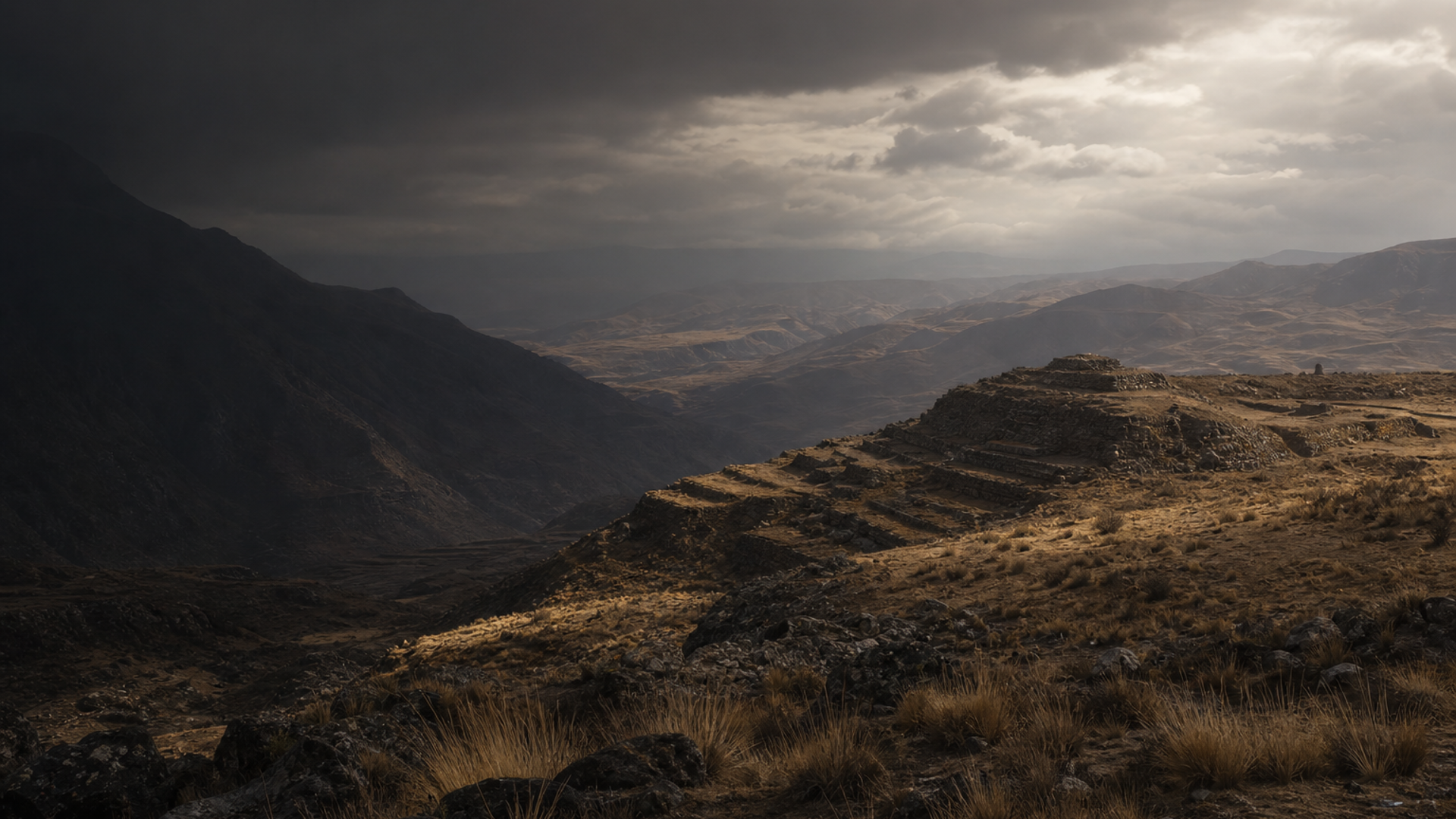
The Iroco designation sits within the tapestry of the Titicaca Basin during the Middle Horizon and its aftermath. Archaeological data indicate that between roughly 775 and 1155 CE communities in the high Andes negotiated a vivid landscape of lake shores, raised fields, and terraced slopes. Regional centers such as Tiwanaku projected artistic and ritual influences across the basin; Iroco-era occupants likely participated in these networks of exchange and belief.

Material signals — pottery styles, stone architecture, and engineered agricultural features seen across the basin — suggest a culturally interconnected world. Yet the genetic evidence from the Iroco context is extremely limited: only one sampled individual underlies the genetic snapshot we have. Limited evidence suggests that this person lived in a community oriented toward highland agro-pastoralism and long-distance exchange, but it remains uncertain whether the sampled individual represents a local, an immigrant, or a person of mixed ancestry.

Archaeologists therefore link material culture and landscape engineering to broader Middle Horizon processes while treating biological data as a promising but provisional line of evidence. Additional excavations and samples are required to move from evocative hypothesis to robust regional narrative.

  • Located in the Titicaca Basin during the Middle Horizon/post-Middle Horizon period
  • Material culture aligns with basin-wide Tiwanaku influences
  • Genetic evidence is based on a single, preliminary sample
Capítulo IV

Daily Life & Society

Archaeological traces across the highlands paint a cinematic picture of daily life: frost-resistant tubers like potatoes and resilient grains such as quinoa; llamas as beasts of burden and sources of wool; and engineered landscapes — terraces and raised fields — that turned thin soils and cold air into reliable yields. Ritual life and social organization likely revolved around ritual plazas, ancestor veneration, and control of irrigation and agricultural infrastructure.

Archaeological data indicates that settlements in the Titicaca Basin combined domestic compounds with communal storage and craft production. Ceramic styles and weaving suggest specialized artisanship, while exchange networks connected lakeshore communities to upland and lowland corridors. Mortuary practice varied across the region, and where preservation allows, burials often reveal dietary signatures and isotopic indicators of mobility — though for Iroco we must be cautious: the genetic dataset consists of a single sample, so inferences about population structure, social stratification, or patterns of migration remain provisional.

Viewed through the archaeological record, Iroco-era inhabitants lived in a world of adaptive innovation, balancing intensive agriculture, pastoralism, and ritual life around one of South America's most dramatic landscapes.

  • Agriculture focused on tubers, quinoa, and engineered fields
  • Communal and ritual life integrated with production and exchange
Capítulo V

Genetic Profile

The genetic profile from the labeled Bolivia_MH_Iroco_1050BP dataset is based on one individual dated between 775 and 1155 CE, recovered from the Titicaca Basin. This person carries Y-chromosome haplogroup Q and mitochondrial haplogroup B2. Both haplogroups are well-established components of Native American genetic diversity: haplogroup Q is a major paternal lineage observed widely across the Americas, and mtDNA B2 is a common maternal lineage in Andean and broader Native American populations.

These markers suggest continuity with longstanding highland and continental ancestries rather than clear evidence of recent external gene flow. However, because the sample count is one (well below a robust threshold), any interpretation is preliminary. Limited evidence suggests local Andean ancestry for this individual, but it cannot reveal population-level structure, sex-biased migration, or fine-scale kinship patterns on its own.

Future aDNA work with larger sample sizes across household, community, and cemetery contexts in the Titicaca Basin would allow researchers to test whether haplogroup frequencies mirror those observed here, identify potential mobility or admixture events, and link biological kinship to archaeological patterns of residence and inheritance. For now, genetics offers a single, powerful thread connecting an individual life to the deep genetic tapestry of the Americas.

  • Y-DNA Q observed — aligns with major Native American paternal lineages
  • mtDNA B2 observed — common maternal lineage in Andean populations
Capítulo VI

Legacy & Modern Connections

The echoes of Iroco-era life persist in the living cultures of the Andean highlands. Modern Indigenous communities around Lake Titicaca retain agricultural practices, textile traditions, and ritual forms that resonate with archaeological patterns from the Middle Horizon and later periods. Genetically, haplogroups Q and B2 continue to be present among many contemporary Indigenous populations—an observation consistent with long-term biological continuity in the region.


Caution is essential: one ancient sample cannot map the full complexity of ancestry or cultural transmission. Nonetheless, the convergence of archaeology and genetics—when expanded through larger, well-contextualized datasets—can illuminate how highland communities adapted, migrated, and maintained identity through centuries of environmental and social change. The Iroco individual thus stands as a tentative bridge between past and present, inviting deeper sampling and collaborative research with descendant communities to tell a fuller story.

  • Modern Andean groups share genetic lineages observed in the Iroco sample
  • Archaeology and aDNA together can reveal long-term cultural and biological continuity
Capítulo VII

Catálogo de muestras

1 muestras de ADN antiguo asociadas con la cultura Iroco: Titicaca Basin Echoes que aportan datos de referencia sobre las poblaciones de este periodo.

1 / 1 muestras
Retrato Muestra País Época Fecha Cultura Sexo ADN-Y ADNmt
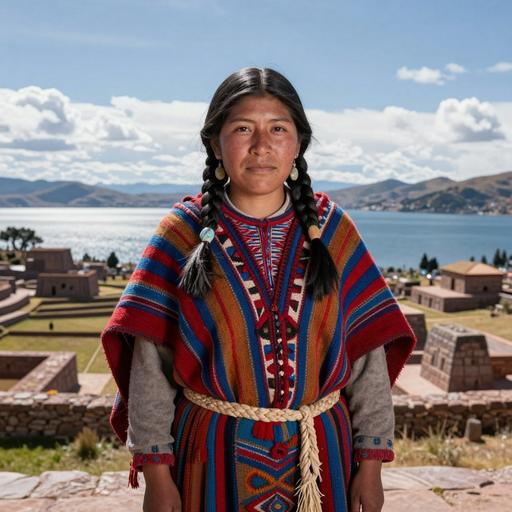
Retrato reconstruido de Andean Civilizations individual, Bolivia
Andean Civilizations individual, Bolivia
Bolivia Bolivia_MH_Iroco_1050BP 775-1155 calCE (1060±62 BP, AA84155) Andean Civilizations U Q-Z780 B2
Con IA

Asistente de IA

Haz preguntas sobre la cultura Iroco: Titicaca Basin Echoes

Asistente de IA por DNAGENICS

Desbloquear esta función
Pregunta sobre la cultura Iroco: Titicaca Basin Echoes. El asistente con IA puede explicar hallazgos genéticos, contexto histórico, pruebas arqueológicas y conexiones modernas, con sus límites de interpretación.
Ejemplo de análisis con IA

La cultura Iroco: Titicaca Basin Echoes representa un capítulo de la historia humana...

El análisis genético permite estudiar similitudes con poblaciones anteriores y posibles adaptaciones. Las muestras de ADN antiguo aportan información para investigar patrones migratorios y relaciones entre poblaciones, con límites que dependen del estudio y del contexto arqueológico.

Esta es una vista previa del análisis con IA. Accede al asistente completo para explorar información sobre:

  • Composición y similitud genética
  • Patrones migratorios y orígenes
  • Vida cotidiana y prácticas culturales
  • Contexto genético moderno

Explora más culturas antiguas

Descubre la historia de civilizaciones de distintas partes del mundo antiguo