Preparando el informe

Cargando la información y las referencias disponibles

Consultando el registro arqueológico...

Recopilando registros antiguos

Saltar al contenido principal
Kamchatka Coastal Ancestors
Cultura destacada

Kamchatka Coastal Ancestors

Fragments of maritime life on Kamchatka, 404–1013 CE, linking archaeology and ancient DNA

404 CE - 1013 CE
Kamchatka Krai, Russia (Milkovsky District)
Desplázate para empezar
Capítulo I

La historia

Comprender la cultura Kamchatka Coastal Ancestors

Archaeological and genetic evidence from three samples in Milkovsky District (Kamchatka Krai, Russia) dated 404–1013 CE suggest a coastal hunter-gatherer lifeway with East Eurasian maternal lineage G1b and Y-haplogroup C. Conclusions are preliminary due to small sample size.

Time Period

404–1013 CE

Region

Kamchatka Krai, Russia (Milkovsky District)

Common Y-DNA

C (2 of 3 samples)

Common mtDNA

G1b (3 of 3 samples)

Capítulo II

Cronología

Momentos clave de la historia de esta cultura

404 CE

Earliest sampled burial

One of the three ancient individuals dates to 404 CE, marking the earliest genomic data point in this set.

450 CE

Regional Itelmen horizon

Chronological frameworks place an emergent Itelmen cultural presence in Kamchatka around 450 CE, a possible cultural context for coastal sites.

1013 CE

Latest sampled burial

The most recent of the three samples dates to 1013 CE, spanning several centuries of coastal occupation.

Capítulo III

Origins & Emergence

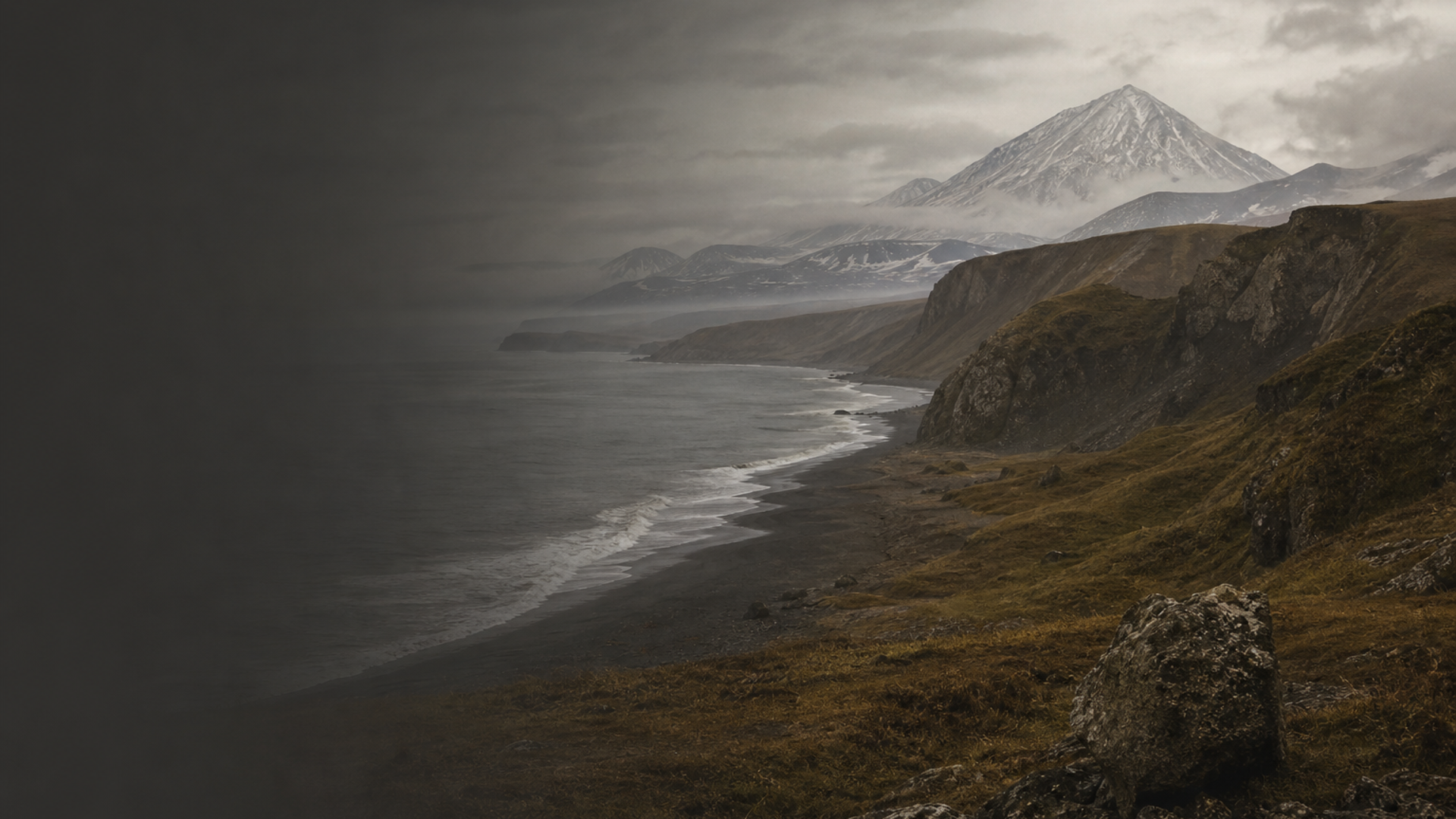
The three ancient individuals recovered from the Milkovsky District of Kamchatka Krai (dated between 404 and 1013 CE) appear within a long tradition of coastal occupation on the northeastern edge of Asia. Archaeological data indicates recurring seasonal use of littoral zones, river mouths and sheltered bays on the Kamchatka Peninsula, landscapes rich in salmon, shellfish and sea mammals.

Limited evidence suggests these people were part of a broader set of Pacific and Beringian coastal communities that adapted to postglacial environments. The horizon overlaps temporally with historical descriptions and later ethnographic records of the Itelmen peoples (references to an Itelmen presence circa 450 CE exist in the regional chronological framework), but direct cultural attribution for these specific burials is tentative.

Material remains in the region commonly include bone and antler implements, carved woodworking and fish-processing features; however, preservation and excavation scope vary. Given only three sampled individuals, any reconstruction of origins must remain cautious: these remains contribute data points to a patchwork of sites that together reveal long-term coastal resilience and mobility on Kamchatka's rugged shorelines.

  • Samples dated 404–1013 CE from Milkovsky District, Kamchatka Krai
  • Archaeological data indicates coastal, marine-centered lifeways
  • Possible continuity with regional Itelmen traditions, but attribution remains tentative
Capítulo IV

Daily Life & Society

Archaeological traces from Kamchatka coastal contexts paint a cinematic scene of smoke-lit bays and rhythmic tides shaping human routine. Fish — especially salmon — would have been a keystone resource, supplemented by shellfish gathering and hunting of seals and small sea mammals. Archaeobotanical and faunal assemblages from the peninsula generally show seasonal rounds: spring and summer fishing camps, autumn storage and winter inland shelters.

Stone and bone tools, worked wood, and hide-based technologies dominate the material repertoire in comparable sites across Kamchatka, implying skilled craft traditions adapted to a maritime setting. Storage pits, hearths and refuse concentrations suggest community coordination around resource processing and preservation. Social groups were likely small to medium-sized kin networks, mobile across coastal and riverine circuits but returning to favored loci of food abundance.

Ritual and symbolic life is more elusive in the current dataset: petroglyphs and portable art elsewhere on Kamchatka indicate rich expressive traditions, but direct associations with these three individuals are unknown. Archaeological data indicates a resilient, flexible subsistence strategy finely tuned to seasonal pulses of the North Pacific.

  • Marine resources (salmon, shellfish, seals) were central to diet and economy
  • Material culture emphasizes bone, wood and hide technologies adapted to coastal life
Capítulo V

Genetic Profile

Ancient DNA from the three Kamchatka individuals shows a strikingly consistent maternal signal: all three samples belong to mitochondrial haplogroup G1b. This lineage is characteristic of northeastern Eurasia and has been observed in modern and ancient populations across Siberia and adjacent Pacific regions. On the paternal side, two of the three male individuals carry Y-chromosome haplogroup C, a widely distributed lineage in northern and eastern Eurasia and among many coastal and inland Siberian groups.

These genetic markers, taken together, suggest strong East Eurasian affinities in both maternal and paternal lines. However, the sample count is extremely small (n=3); therefore, any population-level inference is preliminary. The uniformity of mtDNA G1b across all three individuals could reflect maternal continuity, a closely related burial group, or simple sampling bias. Likewise, the presence of haplogroup C in two samples hints at regional paternal continuity but cannot characterize population structure or admixture dynamics on its own.

Archaeogenetic interpretation must also consider post-depositional factors, potential kinship among the sampled individuals, and the broader genomic landscape of Kamchatka and neighboring Siberia. Future dense sampling and genome-wide data will be needed to test hypotheses about continuity with later Itelmen groups and wider Northeast Asian migrations.

  • All three samples share mtDNA haplogroup G1b, indicating East Eurasian maternal affinity
  • Two of three males carry Y-DNA haplogroup C; interpretations are preliminary due to low sample count
Capítulo VI

Legacy & Modern Connections

These Kamchatka individuals provide a paleogenetic glimpse into the deep roots of coastal communities that shaped the ethnography of the peninsula. Modern Itelmen and other indigenous Kamchatkan groups carry genetic lineages that overlap the broader East Eurasian spectrum; however, direct descent from these three samples cannot be asserted given the small dataset.

Archaeological continuity in coastal subsistence strategies and regional material traditions suggests cultural threads that persisted through the first millennium CE into later historical periods. The genetic signals found here—particularly mtDNA G1b—align with wider patterns in Siberia, implying long-term connections along the North Pacific rim. These remains thus function as early chapters in a longer story of adaptation, movement and cultural resilience on Kamchatka. Ongoing collaboration between archaeologists, geneticists and indigenous communities will be essential to deepen and responsibly interpret that story.

  • Genetic affinities align with broader East Eurasian and Siberian patterns
  • Small sample size limits claims of direct continuity with modern Itelmen populations
Con IA

Asistente de IA

Haz preguntas sobre la cultura Kamchatka Coastal Ancestors

Asistente de IA por DNAGENICS

Desbloquear esta función
Pregunta sobre la cultura Kamchatka Coastal Ancestors. El asistente con IA puede explicar hallazgos genéticos, contexto histórico, pruebas arqueológicas y conexiones modernas, con sus límites de interpretación.
Ejemplo de análisis con IA

La cultura Kamchatka Coastal Ancestors representa un capítulo de la historia humana...

El análisis genético permite estudiar similitudes con poblaciones anteriores y posibles adaptaciones. Las muestras de ADN antiguo aportan información para investigar patrones migratorios y relaciones entre poblaciones, con límites que dependen del estudio y del contexto arqueológico.

Esta es una vista previa del análisis con IA. Accede al asistente completo para explorar información sobre:

  • Composición y similitud genética
  • Patrones migratorios y orígenes
  • Vida cotidiana y prácticas culturales
  • Contexto genético moderno

Explora más culturas antiguas

Descubre la historia de civilizaciones de distintas partes del mundo antiguo