Preparando el informe

Cargando la información y las referencias disponibles

Consultando el registro arqueológico...

Recopilando registros antiguos

Saltar al contenido principal
Kaweskar of the Western Archipelago
Cultura destacada

Kaweskar of the Western Archipelago

A glimpse into maritime foragers of the Strait of Magellan via one mtDNA C1b sample

1024 CE - 1155800 CE
Strait of Magellan, Punta Santa María, Chile
Desplázate para empezar
Capítulo I

La historia

Comprender la cultura Kaweskar of the Western Archipelago

Archaeological and genetic evidence from Punta Santa María (Strait of Magellan, Chile) offers a narrow but vivid window into the Kaweskar maritime world around 1024–1155 CE. Limited ancient DNA (mtDNA C1b) suggests maternal ties to broader southern Native American lineages; conclusions remain preliminary.

Time Period

1024–1155 CE (≈800 BP)

Region

Strait of Magellan, Punta Santa María, Chile

Common Y-DNA

Unknown / not recovered

Common mtDNA

C1b (1 sample)

Capítulo II

Cronología

Momentos clave de la historia de esta cultura

15000 BCE

Initial peopling of the Americas

Broad-scale migrations bring founding Native American lineages (including precursors of C1b) into South America over millennia.

1090 CE

Punta Santa María occupation (sample date)

Single ancient DNA individual from Punta Santa María dated to 1024–1155 CE provides mtDNA C1b evidence of maternal lineage in the Western Archipelago.

Capítulo III

Origins & Emergence

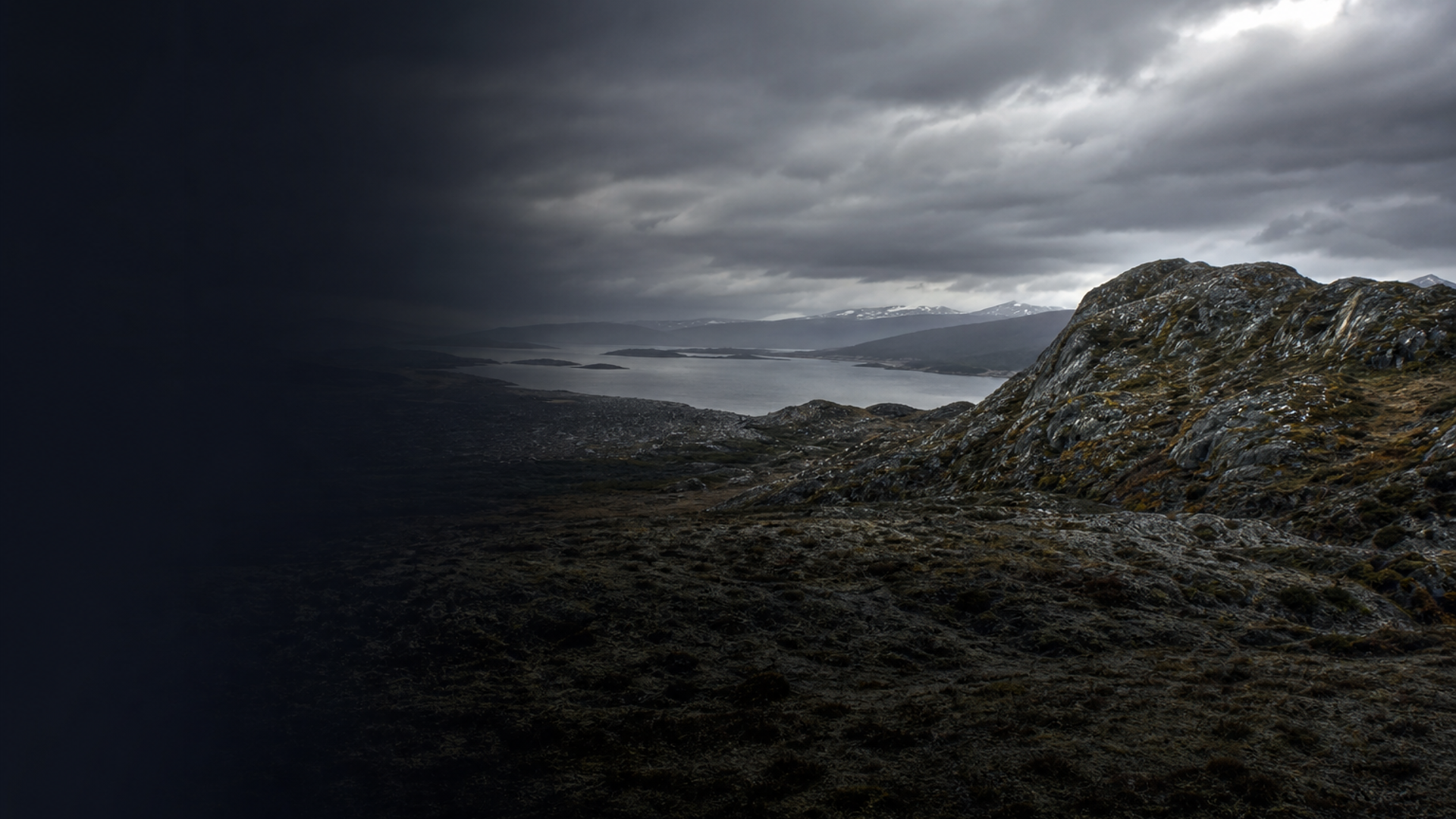
The Kaweskar of the Western Archipelago are part of a long tradition of maritime adaptation along southern Chile’s ragged coastline. Archaeological data from the Strait of Magellan, including deposits at Punta Santa María, place human activity in this landscape during the late first and early second millennium CE (1024–1155 CE for the sample discussed here). These peoples exploited a mosaic of channels, islands, and sheltered bays, developing technologies and lifeways tuned to cold seas and shifting tides.

Limited evidence suggests cultural continuity with earlier Patagonian coastal foragers, but the picture remains fragmentary. Environmental reconstructions indicate a cool, wind-swept maritime climate that favored mobility by canoe and seasonal use of resources such as fish, seabirds, shellfish, and marine mammals. The archaeological record—middens, hearths, tool fragments, and occasional burial contexts—points to resilient, highly skilled hunter-gatherer groups whose territorial knowledge knitted islands and channels into living landscapes.

Because the genetic dataset for this specific Western Archipelago Kaweskar identifier is a single sample, any claims about origins or population movements must be cautious. Archaeological patterns combined with growing ancient DNA evidence across southern South America hint at deep maternal lineages and long-term regional persistence, but more samples are required to move from portrait to population history.

  • Occupation attested at Punta Santa María in the Strait of Magellan (1024–1155 CE)
  • Maritime adaptation to islands, channels, and coastal resources
  • Continuity with broader Patagonian coastal foragers is suggested but not proven
Capítulo IV

Daily Life & Society

Imagine narrow channels sliced by wind and spray, fragile wooden craft gliding between rocky skerries. Archaeological data indicates that daily life for Kaweskar groups centered on intimate knowledge of the sea: seasonal rounds that followed fish runs, seabird colonies, and pinniped haul-outs. Shell middens and hearth features recovered from nearby sites reveal repeated coastal use and culinary focus on marine protein and shellfish. Bone, stone, and bone-point technology—designed for hunting, processing, and hide working—reflects practical craftsmanship adapted to a watery environment.

Social groups were likely small and highly mobile, with flexible camp locations and long-established knowledge transmission across generations. Material culture emphasis on lightweight, repairable gear and intimate landscape memory suggests networks of kinship and exchange across islands. Ceremonial life and belief systems are only faintly visible in the record, but ethnographic analogy with historically recorded Kaweskar groups points to rich maritime cosmologies, canoe-built social worlds, and responsive seasonal scheduling.

Archaeological deposits at Punta Santa María offer a snapshot of this daily rhythm, yet they represent moments in an extended history. As with many coastal forager records, preservation biases and limited excavations mean our reconstructions remain partly conjectural.

  • Diet focused on fish, shellfish, seabirds, and marine mammals
  • Small, mobile groups with specialized maritime technology
Capítulo V

Genetic Profile

The ancient DNA result tied to the Chile_WesternArchipelago_Kaweskar_800BP identifier is a single individual dated between 1024 and 1155 CE from Punta Santa María. Mitochondrial DNA places this person in haplogroup C1b, one of the founding Native American maternal lineages with a documented presence across the southern cone. This signal aligns with broader patterns in which C1b appears in ancient and modern populations of southern South America, suggesting maternal continuity across long timescales in some coastal areas.

No Y-chromosome haplogroup was reported for this sample, so paternal affiliations remain unknown. Because the dataset contains only one high-quality mtDNA result, population-level inferences are highly preliminary. Single-sample findings can indicate local continuity or the presence of widespread maternal haplogroups but cannot resolve admixture, migration rates, or sex-biased processes on their own.

When integrated with archaeological context, even a solitary ancient genome can anchor hypotheses: it corroborates that individuals occupying Punta Santa María were part of the Native American maternal phylogeny, and it invites targeted sampling to test whether C1b persistence reflects local inheritance, wider regional networks, or episodic movement. Future comparative genomic work with more samples from Patagonia and neighboring Tierra del Fuego will be essential to move from plausible narratives to robust demographic models.

  • mtDNA C1b found in the single Punta Santa María sample
  • Y-DNA not recovered — conclusions remain preliminary with n=1
Capítulo VI

Legacy & Modern Connections

The Kaweskar and other maritime indigenous peoples of southern Chile left an imprint of survival strategies and knowledge adapted to one of the planet’s harshest coastal environments. Ethnographic records from historic periods document Kaweskar canoe technology, seasonal mobility, and rich oral traditions; ancient DNA complements these records by testing lines of biological continuity over centuries.

Because this identifier is based on a single sample, genetic ties to contemporary groups should be stated cautiously: the mtDNA C1b result suggests maternal links to broader southern Native American lineages, but it cannot alone demonstrate direct ancestry to any particular modern community. Nonetheless, the convergence of archaeology and genetics deepens respect for the longevity of human presence in the Western Archipelago and underscores the value of collaborative work with indigenous communities to expand both scientific knowledge and cultural stewardship.

  • Suggests maternal continuity with southern Native American lineages
  • Highlights need for more samples and community-engaged research
Con IA

Asistente de IA

Haz preguntas sobre la cultura Kaweskar of the Western Archipelago

Asistente de IA por DNAGENICS

Desbloquear esta función
Pregunta sobre la cultura Kaweskar of the Western Archipelago. El asistente con IA puede explicar hallazgos genéticos, contexto histórico, pruebas arqueológicas y conexiones modernas, con sus límites de interpretación.
Ejemplo de análisis con IA

La cultura Kaweskar of the Western Archipelago representa un capítulo de la historia humana...

El análisis genético permite estudiar similitudes con poblaciones anteriores y posibles adaptaciones. Las muestras de ADN antiguo aportan información para investigar patrones migratorios y relaciones entre poblaciones, con límites que dependen del estudio y del contexto arqueológico.

Esta es una vista previa del análisis con IA. Accede al asistente completo para explorar información sobre:

  • Composición y similitud genética
  • Patrones migratorios y orígenes
  • Vida cotidiana y prácticas culturales
  • Contexto genético moderno

Explora más culturas antiguas

Descubre la historia de civilizaciones de distintas partes del mundo antiguo