Preparando el informe

Cargando la información y las referencias disponibles

Consultando el registro arqueológico...

Recopilando registros antiguos

Saltar al contenido principal
Khvalynsk: Voices of the Volga
Cultura destacada

Khvalynsk: Voices of the Volga

Eneolithic graves on the Volga reveal an emergent steppe world, now seen through ancient genomes

5198 CE - 4539 BCE
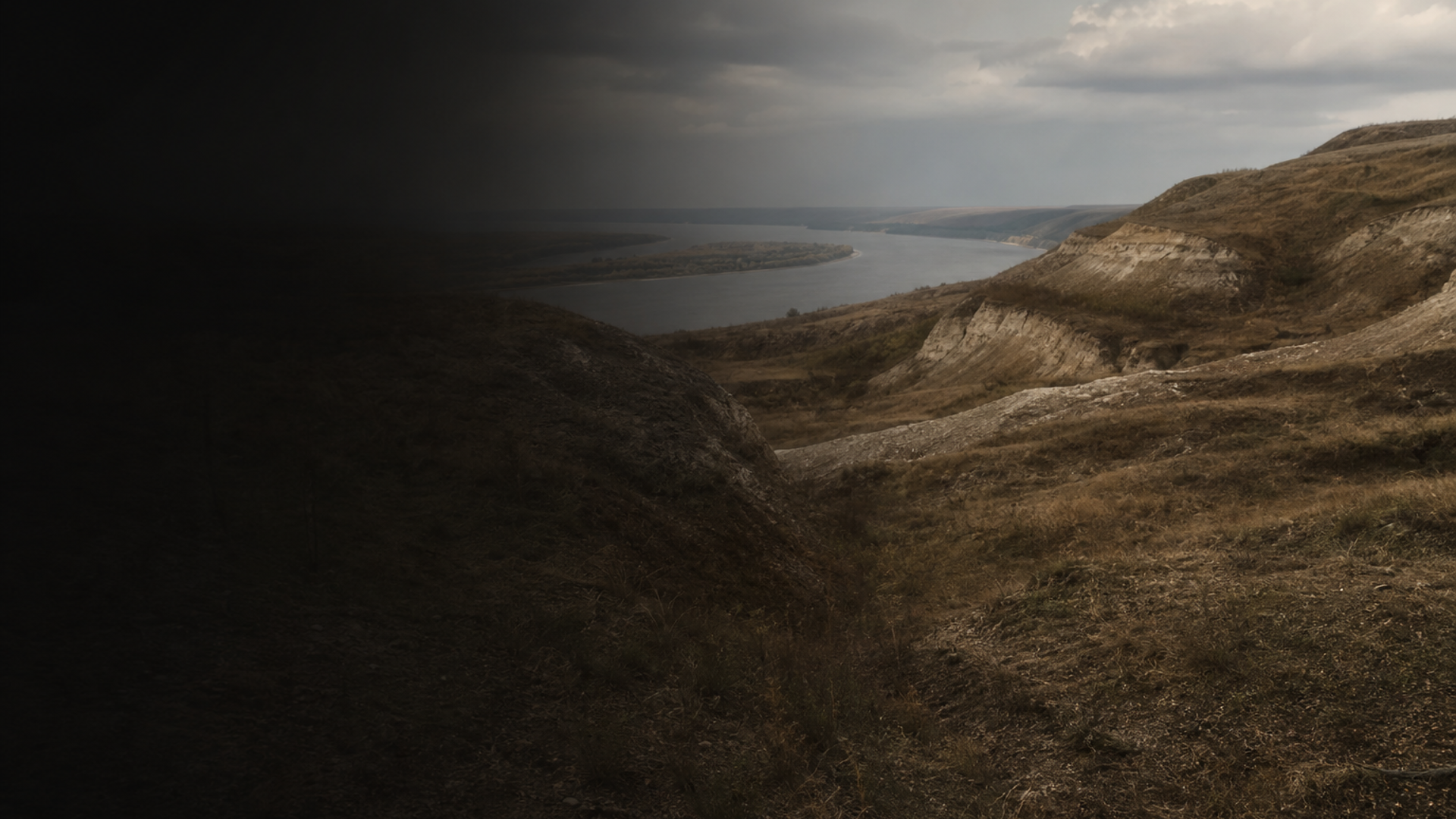
Volga River Valley, Samara Oblast, Russia
Desplázate para empezar
Capítulo I

La historia

Comprender la cultura Khvalynsk: Voices of the Volga

Khvalynsk II (Samara Oblast) — an Eneolithic horizon (5198–4539 BCE) in the middle Volga whose burials, ornaments, and early metal use illuminate the making of the steppe. Limited genomic data (n=3) hint at a mix of R and Q paternal lines and U/H maternal lineages consistent with hunter‑herder continuity.

Time Period

5198–4539 BCE

Region

Volga River Valley, Samara Oblast, Russia

Common Y-DNA

R (2), Q (1)

Common mtDNA

U4d, U, H

Capítulo II

Cronología

Momentos clave de la historia de esta cultura

5200 BCE

Khvalynsk emergence in the middle Volga

Early Eneolithic communities at Khvalynsk II establish mound burials, developing mixed pastoral‑riverine economies and early metal use.

Capítulo III

Origins & Emergence

The Khvalynsk horizon emerges along the middle Volga in the fifth millennium BCE, anchored archaeologically at sites such as Khvalynsk II in Samara Oblast. Radiocarbon dates from the assemblage included here span roughly 5198–4539 BCE, placing these communities in the early Eneolithic — a time when river corridors became theatres of social change. Archaeological data indicates a lifeway oriented to mixed pastoralism, fishing, and seasonal mobility, with burial mounds and rich grave offerings that signal growing social differentiation. Copper objects and worked bone appear alongside clay ceramics, suggesting a widening web of exchange across the steppe and forest‑steppe ecotones.

Cinematic as it sounds, Khvalynsk is not a single frozen scene but a palimpsest of shifting lifeways. Limited evidence suggests that these communities were forming cultural practices later visible in classical ‘steppe’ groups: mound burial forms, mobile pastoral strategies, and long‑distance connections. Yet much remains uncertain; preservation biases and the small number of well‑sampled burials mean that narratives of origin must remain provisional. Ongoing excavation and more genomic sampling are essential to clarify how Khvalynsk sits between Mesolithic hunter‑gatherers and the more expansive Bronze Age steppe cultures that followed.

  • Located at Khvalynsk II, middle Volga (Samara Oblast)
  • Dates: 5198–4539 BCE (early Eneolithic)
  • Archaeological signs of early pastoralism, metal use, and mound burials
Capítulo IV

Daily Life & Society

Life along the Volga for Khvalynsk communities likely unfolded at the interface of water and steppe. Archaeological assemblages from Khvalynsk II show ceramics, personal ornaments, and worked bone fragments that speak to a seasonal round of fishing, herding, and hunting. Burial contexts — sometimes placed in kurgan‑like mounds and accompanied by grave goods — suggest households or kin groups practicing distinct mortuary rites that emphasized social identity and memory.

Material traces imply craft specialization: debitage, polished bone tools, and copper items indicate skilled workmanship and access to raw materials beyond the immediate river valley. The presence of animal bones in burial contexts points to the symbolic and economic role of livestock. Yet many inferences must be cautious. Preservation varies, and the small number of analyzed graves (n=3 in the current genetic dataset) constrains our ability to generalize about social structure, gendered roles, or the scale of long‑distance trade.

Viewed through a cinematic lens, Khvalynsk life was a choreography of river seasons and grassland horizons — communities negotiating resources, forging social ties, and experimenting with new technologies that would shape later steppe societies.

  • Economy: mixed pastoralism, fishing, and hunting
  • Material culture: ceramics, worked bone, early copper objects
Capítulo V

Genetic Profile

The genetic snapshot from Khvalynsk II is tantalizing but preliminary. The dataset here comprises three individuals (sample count = 3), dated between 5198 and 4539 BCE. Paternal markers are recorded as R in two individuals and Q in one; maternally, haplogroups observed include U4d, U (unspecified), and H.

Y‑lineages labeled as R are notable because later steppe populations (e.g., Bronze Age groups) often show high frequencies of certain R subclades; however, the present data do not specify subclades, so direct lineage continuity cannot be assumed. The presence of haplogroup Q — while less typical for later Pontic‑Caspian steppe assemblages — indicates that multiple paternal lineages coexisted in the Eneolithic Volga. On the mitochondrial side, U4d and other U lineages are commonly associated with Mesolithic and Neolithic hunter‑gatherer ancestry in northern Eurasia, while H is widespread in European contexts; their co‑occurrence suggests maternal continuity with earlier forager populations alongside incoming or locally evolving elements.

Genomic ancestry analyses from broader regional studies associate Khvalynsk‑like groups with an amalgam of local hunter‑gatherer and incoming farmer or pastoral genetic components that later contribute to the genetic makeup of Bronze Age steppe populations. Given the very small sample size (n=3), these genetic indications should be treated as hypotheses: additional genomes and higher coverage data are needed to resolve population structure, sex‑biased admixture, and links to later Yamnaya and other steppe horizons.

  • Sample size is small (n=3); conclusions are preliminary
  • Observed Y: R (2), Q (1); mtDNA: U4d, U, H — suggesting hunter‑forager maternal continuity
Capítulo VI

Legacy & Modern Connections

Khvalynsk’s real legacy is less a direct line to a single modern population and more a role as an ancestral palette for later steppe formations. Archaeological and genetic signals from the middle Volga feed into narratives about the rise of mobile pastoralist cultures that later spread across the Pontic‑Caspian steppe and into Europe and Central Asia. Certain maternal haplogroups (U types) echo Mesolithic lineages that persist in northern Eurasia, while paternal R‑lineages appear in many later steppe contexts — a pattern suggestive of demographic continuity mixed with change.

Caution is essential: with only three sequenced individuals, any links to modern populations or linguistic groups (including Indo‑European dispersals) remain speculative. What Khvalynsk offers most powerfully is a cinematic image — river mounds, copper gleams, and small kin networks — that, when combined with growing ancient DNA datasets, helps trace how the human tapestry of the steppe was woven over millennia. Future sampling across Khvalynsk cemeteries and neighboring sites will refine these connections and reveal how local communities contributed to broad prehistoric transformations.

  • Contributes to ancestry of later steppe pastoralists, but direct links are tentative
  • Highlights hunter‑forager maternal continuity and diverse paternal lineages
Con IA

Asistente de IA

Haz preguntas sobre la cultura Khvalynsk: Voices of the Volga

Asistente de IA por DNAGENICS

Desbloquear esta función
Pregunta sobre la cultura Khvalynsk: Voices of the Volga. El asistente con IA puede explicar hallazgos genéticos, contexto histórico, pruebas arqueológicas y conexiones modernas, con sus límites de interpretación.
Ejemplo de análisis con IA

La cultura Khvalynsk: Voices of the Volga representa un capítulo de la historia humana...

El análisis genético permite estudiar similitudes con poblaciones anteriores y posibles adaptaciones. Las muestras de ADN antiguo aportan información para investigar patrones migratorios y relaciones entre poblaciones, con límites que dependen del estudio y del contexto arqueológico.

Esta es una vista previa del análisis con IA. Accede al asistente completo para explorar información sobre:

  • Composición y similitud genética
  • Patrones migratorios y orígenes
  • Vida cotidiana y prácticas culturales
  • Contexto genético moderno

Explora más culturas antiguas

Descubre la historia de civilizaciones de distintas partes del mundo antiguo