Saltar al contenido principal
Cultura destacada

La Bastida: Voices of the Argar

Fortified hilltop life in Murcia, seen through archaeology and ancient DNA

2192 CE - 1550 BCE
La Bastida, Totana, Murcia (SE Spain)

La historia

La Bastida (Totana, Murcia) was a key Argaric stronghold c.2192–1550 BCE. Archaeological remains and six ancient genomes hint at a mixed population—Y haplogroups R and E, and diverse mtDNA—offering preliminary genetic windows into Bronze Age southeast Iberia.

Time Period

c. 2192–1550 BCE

Region

La Bastida, Totana, Murcia (SE Spain)

Common Y-DNA

R (3 samples), E (1 sample)

Common mtDNA

K (2), H1, U, H, V3a

Cronología

2192 BCE

Earliest sequenced samples from La Bastida

Radiocarbon-anchored genomes from La Bastida date to around 2192 BCE, placing these individuals in the core Argaric horizon (preliminary evidence).

Origins & Emergence

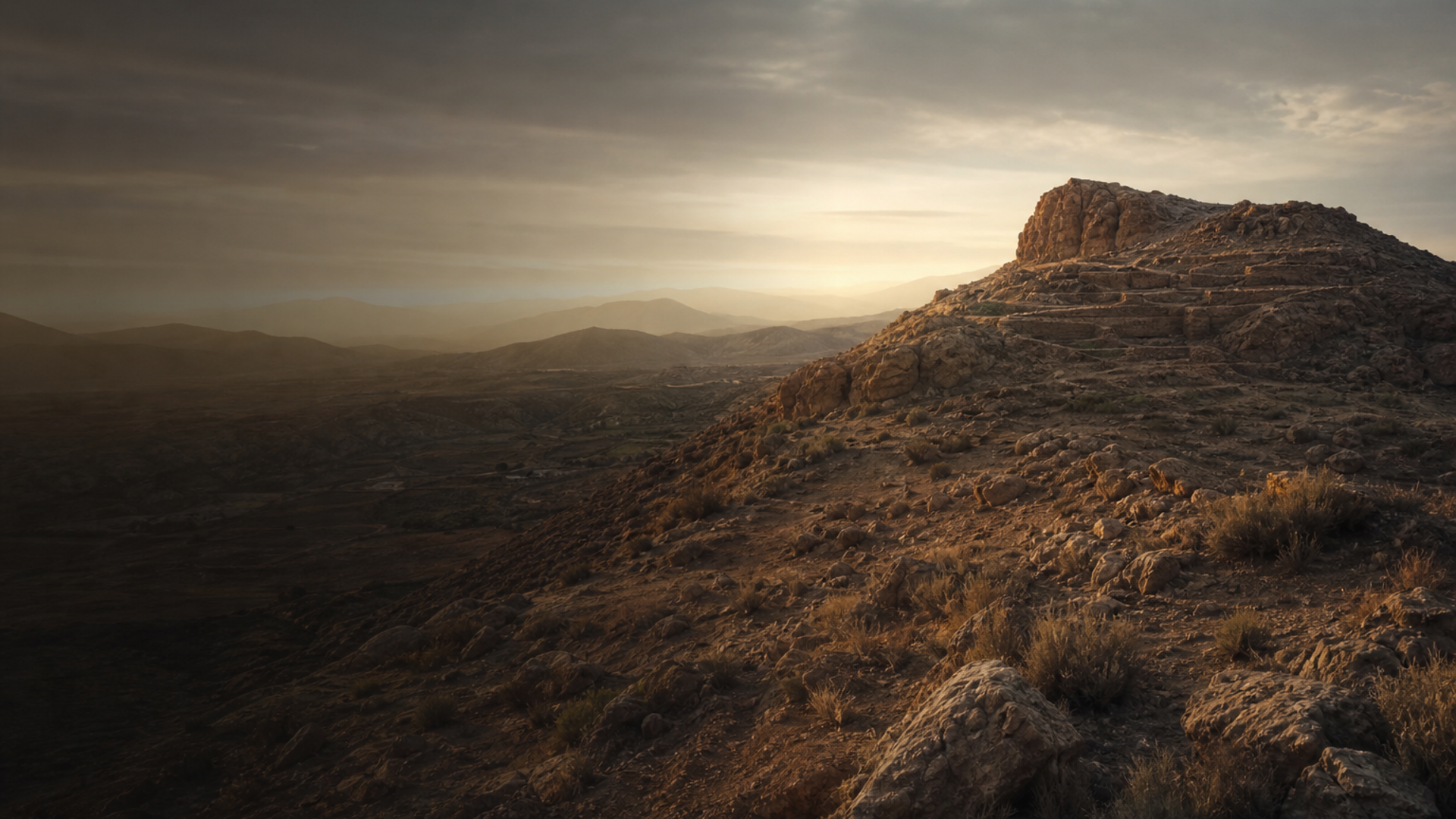
La Bastida, perched above the valley at Totana in Murcia, is one of the most evocative nuclei of the Argaric world. Archaeological excavations have revealed a densely built, terraced hillfort with monumental retaining walls, tightly packed houses, and evidence for rapid social centralization. Radiocarbon dates from associated contexts fall within the broader Argaric horizon; the genetic samples discussed here span roughly 2192–1550 BCE, placing them squarely within the Bronze Age transformations of southeast Iberia.

Archaeological data indicates that La Bastida functioned as a regional center for storage, craft production, and possibly political authority. Its emergence aligns with intensified metallurgy and new burial practices across the Iberian southeast. Material culture—bronze tools, decorated ceramics, and fortified architecture—speaks to increased social complexity and interregional exchange. Limited evidence suggests maritime and overland contacts with other Mediterranean communities, although the precise networks remain debated.

While archaeology provides the stage—fortifications, houses, and hoards—ancient DNA begins to illuminate the cast of people who inhabited it. Genetic data must be read alongside stratigraphy and artifacts; together they sketch a textured, though still tentative, portrait of origins within the Argaric mosaic.

  • La Bastida is a fortified Argaric hilltop in Totana, Murcia
  • Key radiocarbon span for samples: c. 2192–1550 BCE
  • Site shows signs of centralized storage, metallurgy, and social hierarchy

Daily Life & Society

Life at La Bastida could have been both intimate and intense: narrow streets and terraced houses imply dense urban living, while defensive walls and lookout positions suggest concern for conflict or competition. Domestic assemblages include pottery for cooking and storage, bone tools, and traces of metallurgical working—indicative of specialized crafts practiced within the settlement.

Osteological and burial evidence from Argaric cemeteries show differential treatment of the dead, with some individuals interred under house floors or in walled tombs—patterns archaeologists interpret as markers of social differentiation. Botanical and faunal remains imply a mixed agrarian economy: cereal cultivation, pulses, and herded sheep/goats, complemented by hunting and coastal resources accessed through regional exchange.

Material signs—bronze artifacts, standardized weights, and fine tableware—point to long-distance trade and the emergence of local elites who could control production and redistribution. Archaeological data indicates a society negotiating resource control, craft specialization, and dynamic connections across Iberia and the western Mediterranean.

  • Dense habitation with fortifications and terraced architecture
  • Evidence for craft specialization (metallurgy) and agricultural economy

Genetic Profile

Six ancient genomes from La Bastida (Totana, Murcia) provide an intriguing, though preliminary, genetic snapshot of an Argaric community. Among these small sample numbers there are three individuals carrying Y-chromosome lineages classified broadly as R, and one carrying an E lineage. Mitochondrial diversity includes K (two individuals), H1, U, H, and V3a.

The presence of Y-lineage R is notable because R sublineages are often associated, in broader Eurasian contexts, with populations carrying steppe-derived ancestry introduced into Europe during the Bronze Age. In Iberia this signal can reflect complex admixture dynamics between earlier Neolithic farmers, incoming pastoralist-derived groups, and local hunter-gatherer legacies. The single E lineage hints at Mediterranean or North African connections reported elsewhere in later prehistoric Iberia, but with only one sample this remains speculative.

Mitochondrial lineages such as K, H1, and U are commonly observed across Neolithic and Bronze Age Europe and may reflect continuity of matrilineal ancestry from earlier farming populations with later inputs. V3a is less common and could indicate localized variation or small-scale migration.

Crucially, the small sample count (n=6) limits strong inferences. Archaeological context combined with additional genomes from La Bastida and surrounding Argaric sites will be necessary to test whether the observed haplogroup mix represents long-term local continuity, recent influxes, or social selection in burial practices. Current genetic results are best read as suggestive snapshots that complement the material record.

  • Three Y-lineages R and one E suggest mixed paternal ancestries
  • mtDNA shows K, H, U, and V-lineages consistent with European farmer heritage

Legacy & Modern Connections

La Bastida and the Argaric world left a deep imprint on southeastern Iberia's cultural landscape: intensified metallurgy, new social hierarchies, and architectural forms that shaped later settlement patterns. Genetic ties are plausible between Bronze Age inhabitants and later Iberian populations, but the picture is complex. Modern genetic diversity in Spain reflects millennia of layered migrations—Neolithic farmers, Bronze Age movements, Mediterranean contacts, and historic influences—so direct lines of descent from La Bastida are hard to draw without larger datasets.

Archaeogenetics is changing this narrative by linking material culture to people, revealing mobility and interaction invisible in artifacts alone. For museums and the public, La Bastida offers a cinematic tableau: a fortified town whose stones and genomes together whisper of networks, conflict, and everyday lives at the dawn of Iberian Bronze Age society. Yet every genetic inference must be couched in caution until more samples and comparative datasets expand the view.

  • Argaric cultural innovations influenced later regional development
  • Genetic links to modern populations remain tentative pending more data

Asistente de IA

Asistente de IA por DNAGENICS

Desbloquear esta función
Pregunta sobre la cultura La Bastida: Voices of the Argar. El asistente con IA puede explicar hallazgos genéticos, contexto histórico, pruebas arqueológicas y conexiones modernas, con sus límites de interpretación.
Ejemplo de análisis con IA

La cultura La Bastida: Voices of the Argar representa un capítulo de la historia humana...

El análisis genético permite estudiar similitudes con poblaciones anteriores y posibles adaptaciones. Las muestras de ADN antiguo aportan información para investigar patrones migratorios y relaciones entre poblaciones, con límites que dependen del estudio y del contexto arqueológico.

Esta es una vista previa del análisis con IA. Accede al asistente completo para explorar información sobre:

  • Composición y similitud genética
  • Patrones migratorios y orígenes
  • Vida cotidiana y prácticas culturales
  • Contexto genético moderno