Preparando el informe

Cargando la información y las referencias disponibles

Consultando el registro arqueológico...

Recopilando registros antiguos

Saltar al contenido principal
Lada Cave: A Guangxi Voice from Sui–Tang
Cultura destacada

Lada Cave: A Guangxi Voice from Sui–Tang

A single maternal genome from Hechi illuminates life on the southeastern frontier during dynastic transition.

484 CE - 644 CE
Guangxi (Hechi City, Lada Cave)
Desplázate para empezar
Capítulo I

La historia

Comprender la cultura Lada Cave: A Guangxi Voice from Sui–Tang

Archaeological and genetic data from one burial in Lada Cave (Guangxi; 484–644 CE) offer a tentative glimpse into population dynamics during the Northern–Southern Dynasties through early Tang. Limited evidence suggests regional continuity of East Asian maternal lineages (mtDNA D4a).

Time Period

484–644 CE

Region

Guangxi (Hechi City, Lada Cave)

Common Y-DNA

unknown (no Y data from sample)

Common mtDNA

D4a (1 sample)

Capítulo II

Cronología

Momentos clave de la historia de esta cultura

520 CE

Probable burial at Lada Cave

An individual buried at Lada Cave dating within 484–644 CE provides the single genetic sample for this profile.

Capítulo III

Origins & Emergence

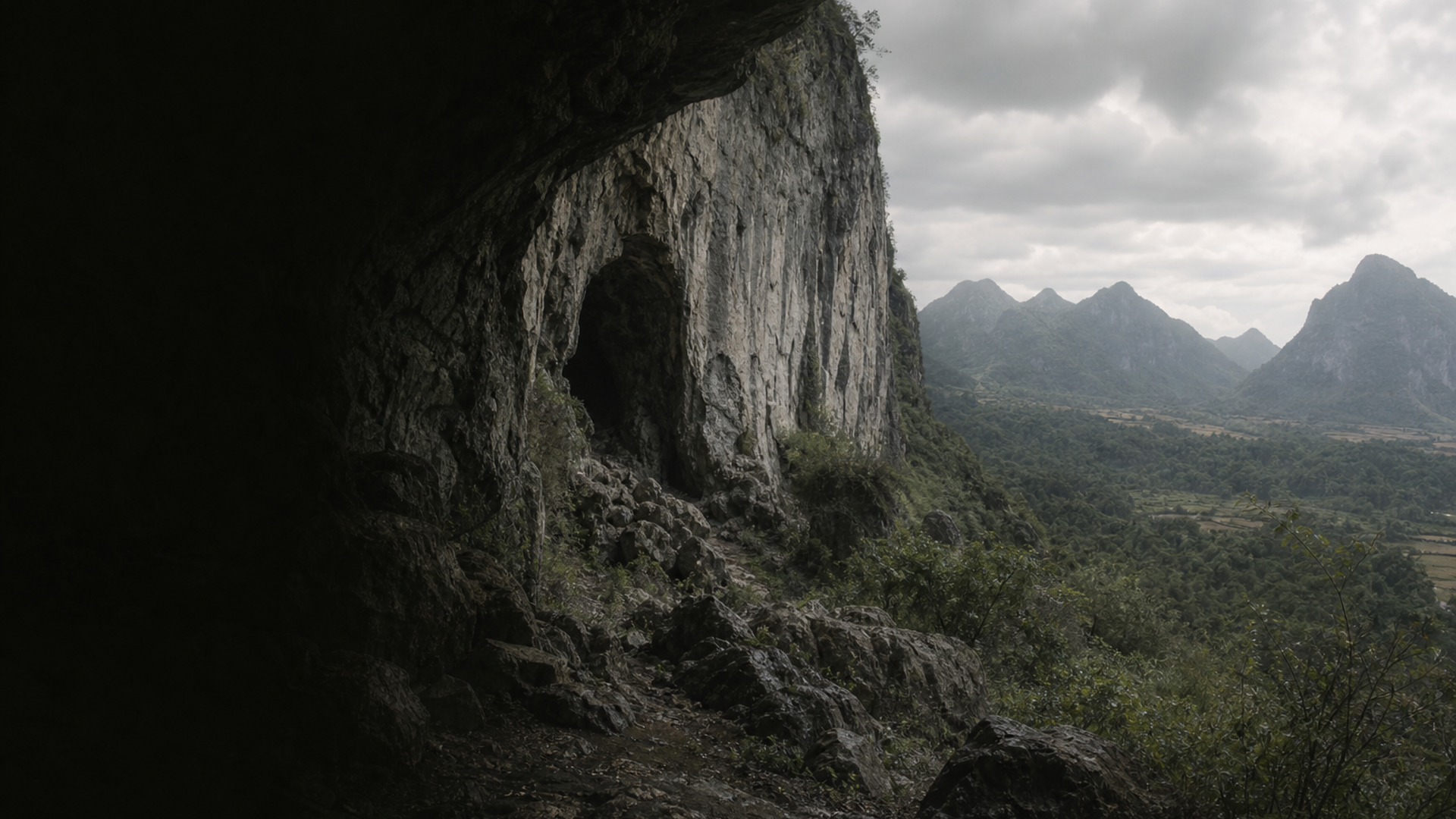
The human remains from Lada Cave sit within the complex historical horizon that spans the late Northern–Southern Dynasties and the early Sui–Tang transition (circa 484–644 CE). Lada Cave is located in Jinchengjiang District, Hechi City, Guangxi — a karst landscape where caves and river valleys have long preserved human activity. Archaeological data indicates a burial context dated to this era, but the overall assemblage is limited: only one individual has yielded genome-scale data.

Culturally, this period in southern China was marked by fluid interactions between local Baiyue-associated communities and waves of court-directed migration, military resettlement, and trade networks extending inland from the coast. Material culture in the broader Lingnan region shows both indigenous continuities and incremental adoption of northern Chinese administrative and ritual practices as Sui and Tang polities expanded.

Limited evidence suggests the Lada individual represents a local inhabitant of the Guangxi frontier rather than an elite envoy; however, with a single sample, population-level inferences are preliminary. Future excavation and direct dating of associated features would clarify whether the burial reflects long-term local continuity, recent mobility, or a mixture of both.

  • Single individual dated to 484–644 CE from Lada Cave, Hechi, Guangxi
  • Site lies in Lingnan karst landscape with long human use
  • Evidence hints at local Baiyue-related communities interacting with north–south contacts
Capítulo IV

Daily Life & Society

Life in Guangxi during the late 5th to mid-7th centuries unfolded in a humid subtropical environment of rivers, terraces, and limestone caves. Archaeological research across Lingnan suggests subsistence based on wet-rice agriculture, riverine fishing, foraging, and regional craft production. Karst caves such as Lada could serve as temporary shelters, ritual spaces, or burial places; the specific function at Lada is inferred from the burial context rather than monumental architecture.

Social organization in this frontier landscape was likely heterogeneous: small farming communities, local chiefs, and mobile households interacting through marriage, trade, and seasonal movement. The period encompassed political disruptions and administrative reforms as Sui–Tang structures extended into southern commanderies; these processes often brought new goods, technologies, and kinship ties but did not erase longstanding local lifeways.

Archaeological indicators from nearby Guangxi sites show ceramics, iron tools, and textile production at village scales. While Lada itself has yielded only one genetic sample so far, the burial invites questions about daily health, diet, and mobility that are best addressed by stable isotope and broader archaeological sampling. Any reconstruction remains tentative until more samples and contextual data are available.

  • Subsistence likely centered on wet-rice agriculture, fishing, and local crafts
  • Frontier society blended indigenous practices with increasing Sui–Tang influences
Capítulo V

Genetic Profile

The genomic evidence from Lada Cave is currently limited to one sequenced individual whose mitochondrial haplogroup is D4a. Haplogroup D4 is widespread across East Asia and is commonly observed in both ancient and modern populations from northern and eastern regions; D4a is one subclade within this diverse family. The presence of D4a in a Guangxi burial dated 484–644 CE is consistent with maternal lineages found throughout China, reflecting deep regional matrilineal continuity and long-distance connections across East Asia.

No Y-chromosome haplogroup has been reported from this individual, so paternal affiliations remain unknown. With a sample count of one, population-level interpretations are speculative: the finding cannot by itself resolve questions about migration, admixture, or the demographic impact of political change. However, when integrated with broader ancient DNA datasets from southern China and neighboring regions, the Lada mtDNA contributes a point of comparison for maternal lineage diversity during the Sui–Tang transition.

Future work—additional genomes from Lada Cave and surrounding sites, plus isotopic mobility studies—could test whether this mtDNA signature reflects local maternal continuity, incoming lineages, or admixture. For now, conclusions are preliminary and framed by the caveat that n=1 limits statistical inference.

  • mtDNA haplogroup D4a identified (1 individual)
  • No Y-DNA reported; population-level conclusions remain preliminary
Capítulo VI

Legacy & Modern Connections

The Lada Cave individual offers a cinematic, if cautious, bridge between ancient lifeways in Guangxi and the genetic tapestry of modern East Asia. Archaeological context and the mtDNA clue together hint at maternal lineages that persisted across centuries in southern China. This continuity aligns with broader patterns observed in the region: deep-rooted maternal haplogroups recurrently appear across time in both coastal and interior Southeast China.

For communities and scientists today, Lada is a reminder that every sampled genome refines our map of past human movement and mixture. Though the evidence from Lada is limited, it encourages targeted fieldwork in Guangxi to reveal how local populations navigated political shifts from the Northern–Southern Dynasties into the Sui and Tang periods. Integrating archaeology, paleogenetics, and isotopic chemistry will build a more nuanced picture of identity, mobility, and cultural change along China's southern frontier.

  • mtDNA result suggests maternal line continuity in the region
  • Adds impetus for expanded sampling to clarify population history in Guangxi
Con IA

Asistente de IA

Haz preguntas sobre la cultura Lada Cave: A Guangxi Voice from Sui–Tang

Asistente de IA por DNAGENICS

Desbloquear esta función
Pregunta sobre la cultura Lada Cave: A Guangxi Voice from Sui–Tang. El asistente con IA puede explicar hallazgos genéticos, contexto histórico, pruebas arqueológicas y conexiones modernas, con sus límites de interpretación.
Ejemplo de análisis con IA

La cultura Lada Cave: A Guangxi Voice from Sui–Tang representa un capítulo de la historia humana...

El análisis genético permite estudiar similitudes con poblaciones anteriores y posibles adaptaciones. Las muestras de ADN antiguo aportan información para investigar patrones migratorios y relaciones entre poblaciones, con límites que dependen del estudio y del contexto arqueológico.

Esta es una vista previa del análisis con IA. Accede al asistente completo para explorar información sobre:

  • Composición y similitud genética
  • Patrones migratorios y orígenes
  • Vida cotidiana y prácticas culturales
  • Contexto genético moderno

Explora más culturas antiguas

Descubre la historia de civilizaciones de distintas partes del mundo antiguo