Preparando el informe

Cargando la información y las referencias disponibles

Consultando el registro arqueológico...

Recopilando registros antiguos

Saltar al contenido principal
Lapa do Santo — Early Holocene Brazil
Cultura destacada

Lapa do Santo — Early Holocene Brazil

A portrait of Lagoa Santa’s hunter-gatherers told by bones, rituals, and ancient DNA.

8250 CE - 7140 BCE
Lapa do Santo, Lagoa Santa, Brazil
Desplázate para empezar
Capítulo I

La historia

Comprender la cultura Lapa do Santo — Early Holocene Brazil

Archaeological and genetic data from seven individuals at Lapa do Santo (8250–7140 BCE) reveal Early Holocene lifeways in central-eastern Brazil. Findings show Native American founding maternal lineages (A2, B2, C, D) and paternal Q/C signals; interpretations remain preliminary.

Time Period

8250–7140 BCE

Region

Lapa do Santo, Lagoa Santa, Brazil

Common Y-DNA

Q (3), C (1)

Common mtDNA

A2 (3), B2 (2), C (1), D (1)

Capítulo II

Cronología

Momentos clave de la historia de esta cultura

8250 BCE

Early burial activity at Lapa do Santo

Archaeological strata record mortuary activity and human remains dated to the start of the site's sampled range, indicating established use of rock shelters in Lagoa Santa.

Capítulo III

Origins & Emergence

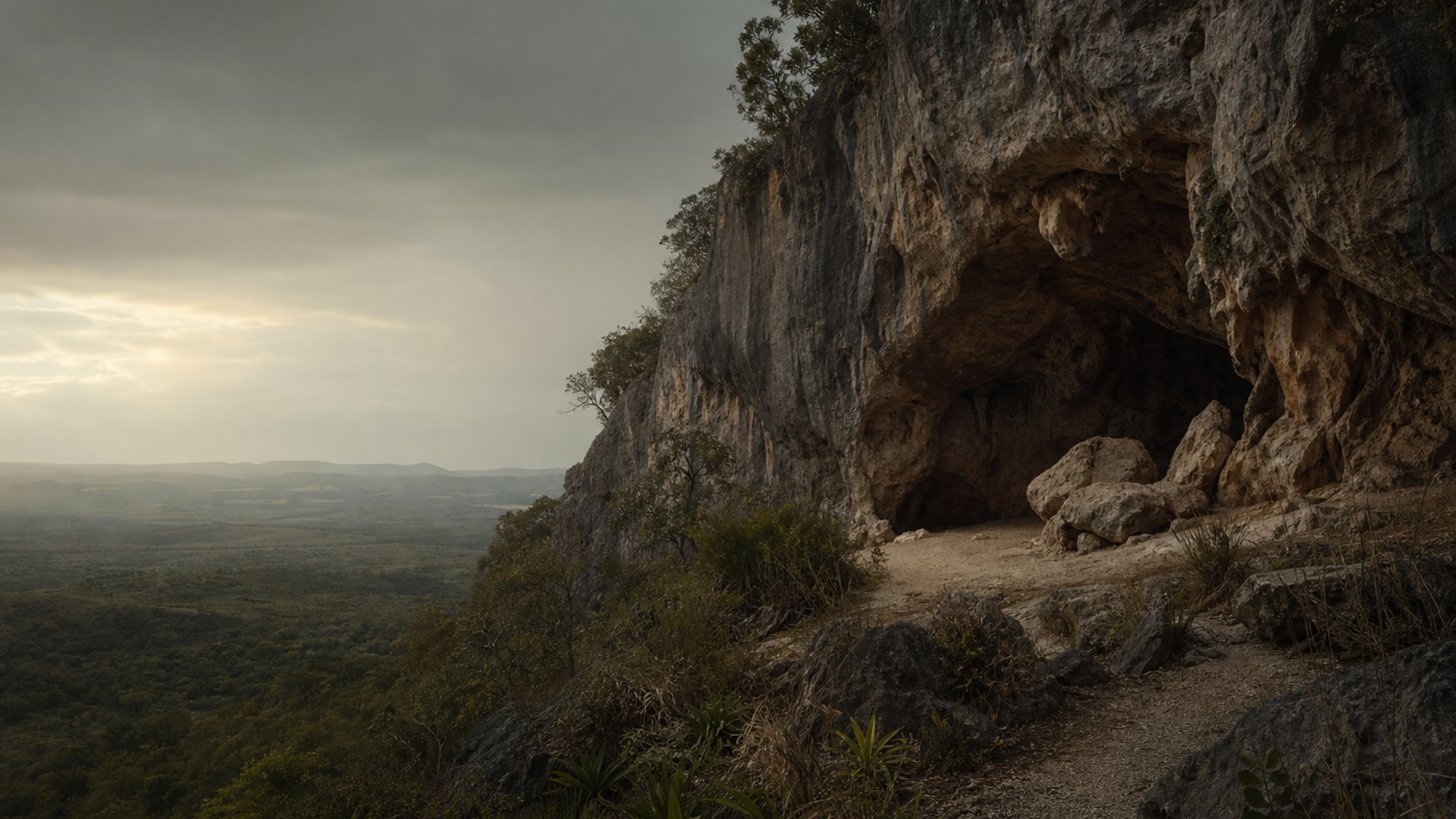
Beneath the limestone shelters of Lapa do Santo, in the Lagoa Santa karst of central-eastern Brazil, archaeological strata preserve a human story unfolding during the Early Holocene. Radiocarbon and stratigraphic evidence place the sampled individuals between roughly 8250 and 7140 BCE. The site sits within a region that witnessed climatic shifts after the Last Glacial Maximum, and archaeological data indicate a continuity of hunter-gatherer occupation as environments stabilized.

Material remains from the site — stone tools, faunal bones, and hearths — suggest seasonal mobility tied to riverine and forest resources. Mortuary deposits at Lapa do Santo show diverse treatments; archaeological interpretations propose that the community practiced complex funerary behaviors, though the full range and meaning remain debated. Limited evidence suggests episodic aggregation of groups at rock shelters, perhaps connected by kin networks.

Genetically, the individuals sampled here belong to lineages that fit into broader Native American ancestry patterns, but with only seven genomes the picture is incomplete. Archaeology frames these people as local Early Holocene foragers whose lifeways emerged from long-term regional adaptations rather than sudden replacement. Ongoing excavation and additional ancient DNA will refine models of emergence and interaction in prehistoric Brazil.

  • Occupation dated to 8250–7140 BCE in Lagoa Santa karst
  • Archaeological evidence for hunter-gatherer subsistence and seasonality
  • Mortuary variability suggests complex social behaviors
Capítulo IV

Daily Life & Society

Imagine small bands moving between rock shelters and riverine foraging grounds, the scrape of stone tools against raw hide and the smoke of small hearths at dusk. Archaeological assemblages from Lapa do Santo include chipped-stone implements and processed animal remains that indicate hunting of medium-sized fauna and use of plant resources. Microstratigraphy and hearth residues point to localized, repeated occupation events rather than a single long-term village.

Social life likely revolved around kin ties and flexible group sizes. Burial contexts imply attention to the dead and the presence of social markers beyond mere subsistence. Skeletal remains show variation in treatment that archaeologists interpret as ritual choices, though the specific beliefs are not preserved. Mobility patterns inferred from raw material sourcing suggest links to nearby valleys and plains, reinforcing a landscape of seasonal rounds rather than permanent sedentism.

Because the sample set is small and excavation is ongoing, reconstructions of daily life remain provisional. Nevertheless, the material culture paints a cinematic scene of resilient foragers adapting to Early Holocene landscapes.

  • Stone tools and faunal remains indicate mixed hunting and plant use
  • Burial diversity suggests social complexity beyond simple subsistence
Capítulo V

Genetic Profile

Ancient DNA from seven individuals at Lapa do Santo provides a valuable, but preliminary, window into Early Holocene ancestry in eastern central Brazil. On the paternal side, three individuals carry Y-DNA haplogroup Q and one carries C. Haplogroup Q is widespread among Native American male lineages and is often interpreted as part of the founding paternal diversity of the Americas; haplogroup C also appears in some early American contexts and can reflect early dispersal branches. These signals align Lapa do Santo men with pan-American paternal lineages, though the small count warrants caution.

Mitochondrial DNA is represented by A2 (3 individuals), B2 (2), C (1), and D (1) — four haplogroups that are recognized among founding Native American maternal lineages. The diversity of mtDNA types within seven people suggests that multiple maternal lineages were present in this local population. Archaeogenetic patterns here are consistent with broader models in which early South American groups derive from the same deep ancestral source populations that peopled the continent, followed by regional diversification.

Because the dataset comprises only seven genomes, any population-level inference is tentative. Additional sampling from Lagoa Santa and neighboring regions is necessary to test hypotheses about migration routes, population structure, and kinship practices at burial events.

  • Paternal haplogroups: Q (3) and C (1) — consistent with early Native American lineages
  • Maternal haplogroups: A2, B2, C, D — multiple founding maternal lineages present
Capítulo VI

Legacy & Modern Connections

The genetic signatures preserved at Lapa do Santo connect deep time to living Indigenous peoples of the Americas by reflecting the same foundational maternal and paternal lineages found across the continents. Archaeological continuity in the Lagoa Santa region underscores long-term adaptation to diverse tropical and seasonally variable environments.


It is important to treat these links with care: seven samples cannot capture the full genetic diversity of past populations, and present-day communities are the result of many millennia of demographic processes, including migrations and cultural changes. Nonetheless, the site contributes a poignant chapter to the human story in Brazil — a scene of skilled foragers, ritual attention to the dead, and genetic ties to the broader tapestry of Native American ancestry. Future collaborative research with descendant communities and larger ancient DNA datasets will enrich and refine these connections.

  • Genetic lineages align with pan-American founding ancestries
  • Small sample size means connections are suggestive, not definitive
Con IA

Asistente de IA

Haz preguntas sobre la cultura Lapa do Santo — Early Holocene Brazil

Asistente de IA por DNAGENICS

Desbloquear esta función
Pregunta sobre la cultura Lapa do Santo — Early Holocene Brazil. El asistente con IA puede explicar hallazgos genéticos, contexto histórico, pruebas arqueológicas y conexiones modernas, con sus límites de interpretación.
Ejemplo de análisis con IA

La cultura Lapa do Santo — Early Holocene Brazil representa un capítulo de la historia humana...

El análisis genético permite estudiar similitudes con poblaciones anteriores y posibles adaptaciones. Las muestras de ADN antiguo aportan información para investigar patrones migratorios y relaciones entre poblaciones, con límites que dependen del estudio y del contexto arqueológico.

Esta es una vista previa del análisis con IA. Accede al asistente completo para explorar información sobre:

  • Composición y similitud genética
  • Patrones migratorios y orígenes
  • Vida cotidiana y prácticas culturales
  • Contexto genético moderno

Explora más culturas antiguas

Descubre la historia de civilizaciones de distintas partes del mundo antiguo