Preparando el informe

Cargando la información y las referencias disponibles

Consultando el registro arqueológico...

Recopilando registros antiguos

Saltar al contenido principal
Latte Age Saipan: Stones and Seafarers
Cultura destacada

Latte Age Saipan: Stones and Seafarers

Archaeology and DNA illuminate late precontact Chamorro communities at Garapan.

1250 CE - 1800 CE
Northern Mariana Islands — Saipan (Garapan)
Desplázate para empezar
Capítulo I

La historia

Comprender la cultura Latte Age Saipan: Stones and Seafarers

Late precontact communities of Saipan (c.1250–1800 CE) left monumental latte stones and a maternal genetic signature dominated by mtDNA E lineages. Archaeology at Garapan's Best Sunshine Casino site and ancient DNA from 46 individuals reveal islander roots with Austronesian connections and complex colonial-era transformations.

Time Period

c.1250–1800 CE (Latte Period)

Region

Northern Mariana Islands — Saipan (Garapan)

Common Y-DNA

Undetermined / not reported

Common mtDNA

E2a (27), E (13), E2 (5), B (1)

Capítulo II

Cronología

Momentos clave de la historia de esta cultura

1250 CE

Emergence of Latte architecture

Latte stone house foundations become prominent across Saipan, marking household and territorial organization.

1521 CE

First recorded European contact era

European voyages enter Mariana Islands' historical record in the early 16th century, initiating intermittent contacts.

1668 CE

Intensified colonial mission activity

Missionization and colonial projects in the Marianas accelerate, reshaping social landscapes into the late 18th century.

Capítulo III

Origins & Emergence

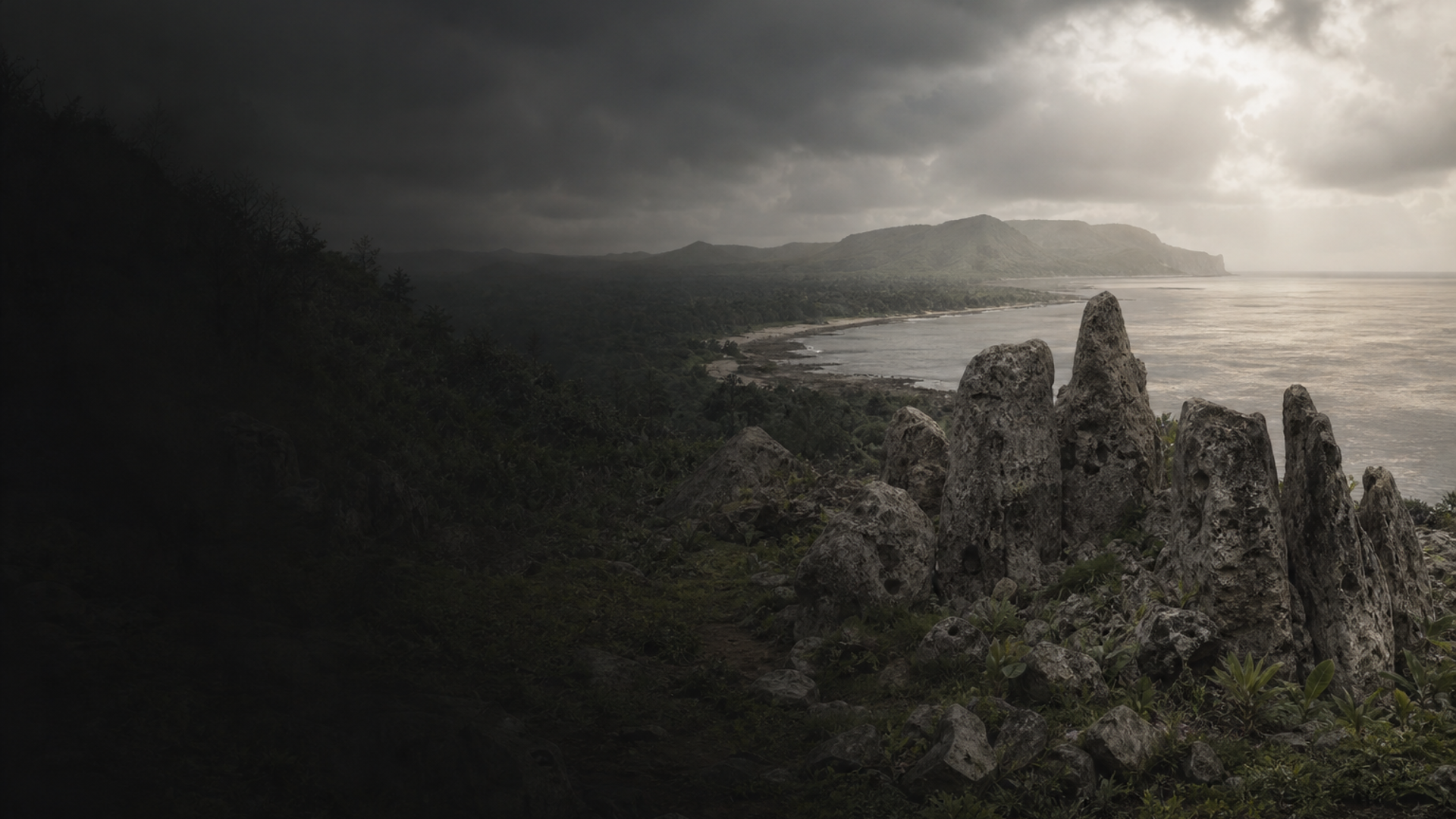
Rising from the coral shores and volcanic ridges of the Mariana archipelago, the Latte Period communities of Saipan crafted a landscape of memory in stone. From around 1250 CE, builders raised paired latte pillars — upright megalithic supports — and arranged them into house platforms that anchored family groups to place. Archaeological excavations at Garapan, including the Best Sunshine Casino site, reveal dense midden deposits, stone-working debris, and house-floor traces that mark continuous occupation through the late precontact centuries.

These monumental forms are part of a longer story of Oceanic voyaging and settlement that links the Marianas with Island Southeast Asia and Near Oceania. Radiocarbon dates from charcoal and shell place intensive latte construction and occupation between the 13th and 18th centuries CE. Limited evidence suggests regional interaction in pottery styles, exotic tool materials, and botanical remains, but the full networks of exchange remain incompletely mapped. The dramatic appearance of latte architecture signals social investment in lineage houses and territorial markers — an island choreography of kinship, labor, and seafaring memory.

  • Latte pillars and house platforms define the period (c.1250 CE onward)
  • Key site: Best Sunshine Casino site, Garapan, Saipan
  • Radiocarbon and stratigraphy indicate occupation into the colonial era
Capítulo IV

Daily Life & Society

Daily life in Latte communities unfolded along reef and garden. Subsistence focused on marine resources — reef fishing, shellfish gathering, and seabird use — complemented by cultivated crops such as taro, breadfruit, and yam grown in coastal terraces and small plots. Material culture retained local traditions: worked shell, stone adzes, and carved wooden implements appear in excavation contexts; weaving and plant-fiber crafts are inferred from preserved botanical assemblages and toolkits.

Households clustered around latte platforms, where domestic and ritual activities likely overlapped. The monumental stones created both practical raised floors and visible statements of ancestry and place. Ethnographic analogy with historic Chamorro practices suggests complex kinship, hereditary land rights, and communal labor for stone construction. European contact in the 16th century and intensified missionization in the 17th century altered lifeways, but archaeological deposits in Garapan show continuity of older practices into the contact period. Archaeological data indicates resilience and adaptation rather than simple replacement.

  • Marine-focused diet plus cultivated taro, breadfruit, yams
  • Latte platforms as household, ritual, and territorial anchors
Capítulo V

Genetic Profile

Ancient DNA from 46 individuals associated with the Latte context at Garapan provides one of the clearer genetic windows into late precontact Mariana Island populations. The maternal lineages are dominated by haplogroup E subclades: E2a (27 individuals), E (13), E2 (5), and a single B lineage. This distribution suggests strong matrilineal continuity with broader Austronesian-derived populations of Island Southeast Asia and parts of Near Oceania, where mtDNA E variants are known to occur. The presence of a B lineage is not unexpected given regional mtDNA diversity and possible interactions across ocean networks.

Crucially, common Y-chromosome haplogroups were not reported for these samples, so paternal ancestry patterns remain unresolved; without Y-DNA or genome-wide autosomal summaries, inferences about sex-biased migration, admixture, or later colonial-era male-mediated gene flow are limited. With 46 samples, these mtDNA patterns are statistically informative compared with very small series, but interpretation still requires caution: sampling is concentrated at Garapan, temporal spans cover several centuries, and post-contact demographic disruptions could have reshaped genetic landscapes. Archaeogenetic evidence aligns with archaeological signals of Austronesian cultural roots while leaving open questions about the timing and directionality of specific gene flow events.

  • Maternal DNA dominated by mtDNA E subclades (E2a most frequent)
  • Absence of reported Y-DNA limits conclusions about paternal ancestry
Capítulo VI

Legacy & Modern Connections

The latte stones still stand in outline across Saipan as reminders of sustained island lifeways. Modern Chamorro communities carry cultural memories, place names, and practices that echo Latte-period social structures; linguistic and cultural continuity supports archaeological and genetic signals of deep island residence. Ancient mtDNA affinities to Island Southeast Asia underscore connections forged by canoe voyaging and shared subsistence strategies across the Pacific.

At the same time, centuries of colonial contact introduced population movements, disease, and cultural change that complicate a straight line of ancestry. Ancient DNA from Garapan provides a critical baseline for comparison with modern Chamorro genomes, helping to quantify continuity, admixture, and the demographic impacts of the contact era. Archaeology and genetics together illuminate a past of resilient island communities, while also highlighting gaps that future, wider sampling and genome-wide analyses should address.

  • Genetic continuity with modern Chamorro is suggested but requires comparative studies
  • Archaeology + aDNA provide baselines to measure colonial-era demographic change
Con IA

Asistente de IA

Haz preguntas sobre la cultura Latte Age Saipan: Stones and Seafarers

Asistente de IA por DNAGENICS

Desbloquear esta función
Pregunta sobre la cultura Latte Age Saipan: Stones and Seafarers. El asistente con IA puede explicar hallazgos genéticos, contexto histórico, pruebas arqueológicas y conexiones modernas, con sus límites de interpretación.
Ejemplo de análisis con IA

La cultura Latte Age Saipan: Stones and Seafarers representa un capítulo de la historia humana...

El análisis genético permite estudiar similitudes con poblaciones anteriores y posibles adaptaciones. Las muestras de ADN antiguo aportan información para investigar patrones migratorios y relaciones entre poblaciones, con límites que dependen del estudio y del contexto arqueológico.

Esta es una vista previa del análisis con IA. Accede al asistente completo para explorar información sobre:

  • Composición y similitud genética
  • Patrones migratorios y orígenes
  • Vida cotidiana y prácticas culturales
  • Contexto genético moderno

Explora más culturas antiguas

Descubre la historia de civilizaciones de distintas partes del mundo antiguo