Preparando el informe

Cargando la información y las referencias disponibles

Consultando el registro arqueológico...

Recopilando registros antiguos

Saltar al contenido principal
Legowo Heritage: Voices from Łęgowo
Cultura destacada

Legowo Heritage: Voices from Łęgowo

Medieval burials at Łęgowo reveal a complex archaeological and genetic tapestry

1000 CE - 1200 CE
Łęgowo, Greater Poland (Wągrowiec), Poland
Desplázate para empezar
Capítulo I

La historia

Comprender la cultura Legowo Heritage: Voices from Łęgowo

Archaeological finds from Łęgowo (Greater Poland) dated 1000–1200 CE, analyzed with ancient DNA, hint at a mostly European Y-DNA R signature with a rare L lineage and predominantly H maternal lineages. Small sample size makes conclusions preliminary.

Time Period

1000–1200 CE

Region

Łęgowo, Greater Poland (Wągrowiec), Poland

Common Y-DNA

R (3), L (1)

Common mtDNA

H (2), T2b (1), H1c (1)

Capítulo II

Cronología

Momentos clave de la historia de esta cultura

1000 CE

High Medieval Occupation

Radiocarbon dates place human remains at Łęgowo within the High Middle Ages, around 1000 CE, marking local medieval use of the landscape.

2020 CE

Archaeogenetic Analysis

Four individuals from Łęgowo underwent ancient DNA sequencing, revealing primarily Y haplogroup R and mtDNA H lineages; results are preliminary.

Capítulo III

Origins & Emergence

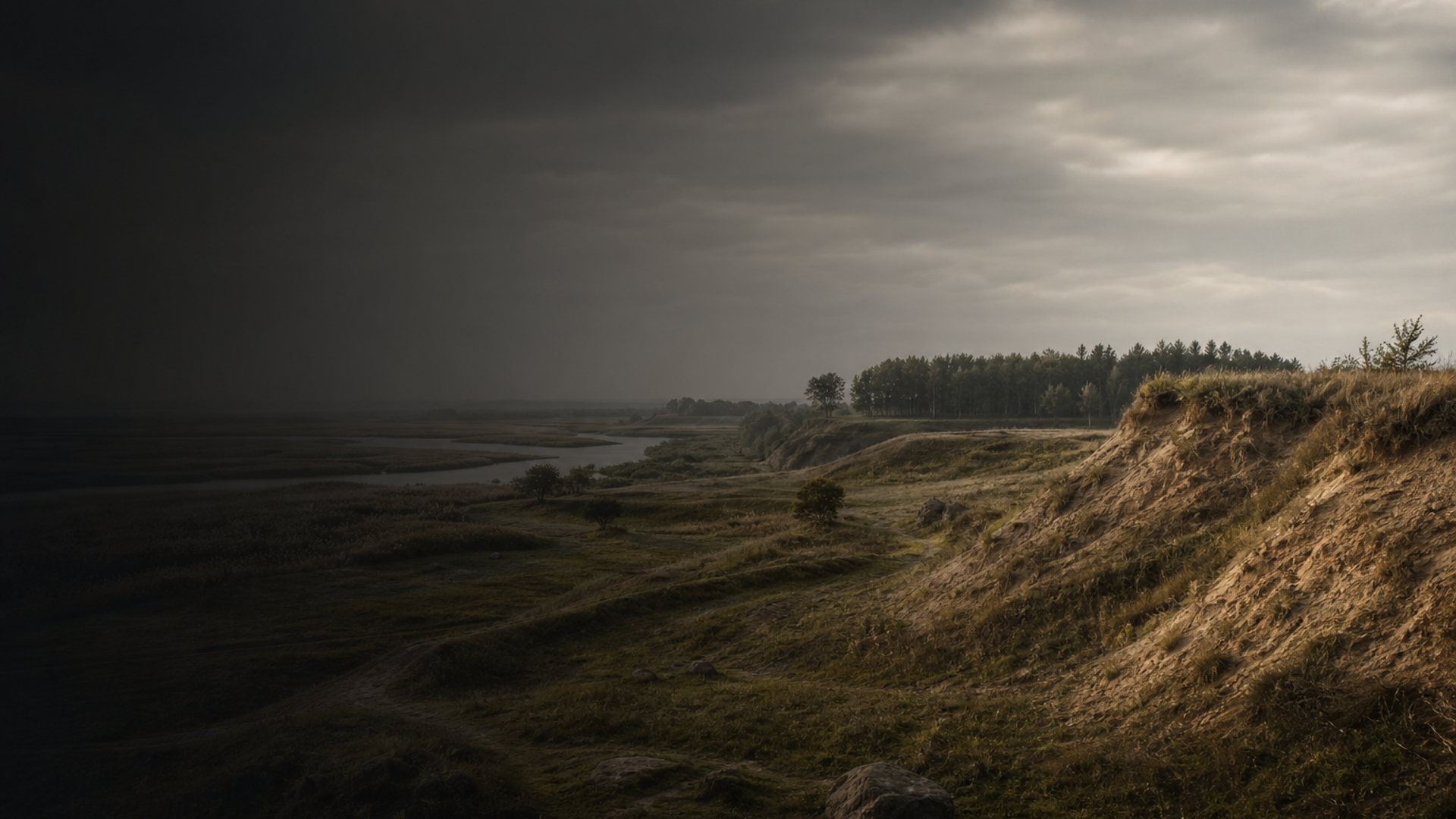
The assemblage from Łęgowo (Greater Poland Province, Wągrowiec) sits at an archaeological crossroads. Excavations at the site have produced human remains dated by radiocarbon to roughly 1000–1200 CE, placing these individuals in the High Middle Ages. Archaeological data indicates that the locale was occupied during a period of dynamic cultural interaction in Central Europe: settlement shifts, trade along river corridors, and reuse of older ritual landscapes. The site label "Legowo" echoes an earlier Iron Age lithic and settlement tradition in the region (often referred to in literature as the Legowo cultural horizon), but in this case the recovered burials are medieval in date. This suggests either continuity of place use across millennia or the reoccupation of a landscape with deep symbolic resonance.

Limited evidence suggests local agrarian lifeways blended with wider regional influences: pottery fragments, ironwork, and burial orientation reflect common medieval practices in Poland while also showing idiosyncratic local traits. Because only four genetic samples are available, interpretations of population origin or migration must remain tentative. Archaeological context, however, anchors the genetic data to a specific time and place, allowing us to explore how these individuals connected to both earlier local traditions and broader medieval networks in Central Europe.

  • Radiocarbon dates place remains at 1000–1200 CE.
  • Site: Łęgowo, Greater Poland (Wągrowiec); medieval occupation layers present.
  • Labeling as "Legowo" references earlier Iron Age traditions but the burials are medieval, implying reuse of landscape.
Capítulo IV

Daily Life & Society

Stone and metal finds from Łęgowo paint an evocative portrait of lives shaped by agronomy, craft, and regional exchange. Archaeological features—shallow graves, iron knives, fragments of pottery, and traces of wooden structures—are consistent with small rural communities in medieval Greater Poland. Skeletal wear patterns indicate habitual activities: robust lower limbs consistent with walking and field labor, and joint changes that suggest repetitive manual tasks such as grinding or weaving. The burial treatment shows modest grave goods and orientations in line with Christianizing trends of the era, though some burial practices retain local variants that hint at lingering pre-Christian habits or regional ritual diversity.

Archaeobotanical remains from nearby contexts (charred cereal grains, nutshells) indicate mixed farming—rye, barley, and pulses—while faunal bone fragments reflect a mixed economy of cattle, pig, and sheep. Settlement layout and material culture align with a community integrated into local husbandry and craft networks rather than elite political centers. Social organization was likely household-based, with extended family units forming the core economic group. As always with small cemeteries, social and status variability can be hard to gauge: limited samples mean that the visible burials may not represent the full social spectrum of the community.

  • Material culture consistent with rural medieval agrarian life.
  • Skeletal and ecofactual evidence indicates mixed farming and craft labor.
Capítulo V

Genetic Profile

Ancient DNA from four individuals at Łęgowo provides a narrow but informative genetic snapshot. Y-chromosome profiles show three individuals assigned to haplogroup R and one to haplogroup L. Haplogroup R is common across Europe in the medieval period (encompassing sublineages often associated with R1a and R1b), so its dominance here aligns with broader regional patterns. The single L Y-chromosome is noteworthy: haplogroup L is uncommon in medieval Central Europe and today is found at higher frequencies in South Asia and parts of Southwest Asia. Its presence at Łęgowo could reflect individual mobility, a recent migrant ancestor, or a cryptic local lineage; with only one occurrence among four samples, this remains speculative and warrants further sampling.

Mitochondrial DNA is dominated by haplogroup H (two individuals, including an H1c sublineage) with one T2b. Haplogroup H is the most frequent maternal lineage in Europe since the Neolithic and its presence here is consistent with long-term maternal continuity. T2b also occurs widely in Europe and the Near East and can reflect Neolithic and later population movements. Taken together, the uniparental markers suggest a primarily European genetic background with at least one unusual paternal lineage that highlights the complexity of medieval mobility.


Importantly, conclusions are preliminary: four samples are below standard thresholds for population-wide inference (<10 samples). Future targeted sampling and genome-wide data would clarify ancestry proportions, potential kin relationships among the burials, and whether the Y-L signal recurs in the region.

  • Y-DNA: predominantly haplogroup R (3 of 4), with one rare L lineage—interpret cautiously.

  • mtDNA: H (including H1c) and T2b—consistent with common European maternal lineages.
Capítulo VI

Legacy & Modern Connections

The Łęgowo assemblage links a small medieval community to long-standing patterns in Central European history: agrarian economies, regional mobility, and layered ritual landscapes. Genetic signatures—largely European maternal and paternal lineages with a single uncommon paternal outlier—mirror the archaeological impression of a community both rooted in place and touched by wider connections. Contemporary inhabitants of Greater Poland may carry echoes of these genetic lineages, but direct descent claims should be made cautiously; four samples cannot map the full population history.

Archaeologically, the reuse of a landscape associated with an older "Legowo" tradition underscores how places accrue memory. Genetically, the findings emphasize the mosaic nature of medieval populations: predominant regional ancestries interspersed with rare lineages that testify to individual journeys, trade ties, or social networks. Continued interdisciplinary work—combining more extensive aDNA sampling, isotopic mobility studies, and careful excavation—will illuminate how the people of Łęgowo fit into the broader human story of Central Europe.

  • Small dataset implies preliminary connections between medieval Łęgowo and modern populations.
  • Reuse of an older Legowo landscape highlights long-term cultural landscapes.
Con IA

Asistente de IA

Haz preguntas sobre la cultura Legowo Heritage: Voices from Łęgowo

Asistente de IA por DNAGENICS

Desbloquear esta función
Pregunta sobre la cultura Legowo Heritage: Voices from Łęgowo. El asistente con IA puede explicar hallazgos genéticos, contexto histórico, pruebas arqueológicas y conexiones modernas, con sus límites de interpretación.
Ejemplo de análisis con IA

La cultura Legowo Heritage: Voices from Łęgowo representa un capítulo de la historia humana...

El análisis genético permite estudiar similitudes con poblaciones anteriores y posibles adaptaciones. Las muestras de ADN antiguo aportan información para investigar patrones migratorios y relaciones entre poblaciones, con límites que dependen del estudio y del contexto arqueológico.

Esta es una vista previa del análisis con IA. Accede al asistente completo para explorar información sobre:

  • Composición y similitud genética
  • Patrones migratorios y orígenes
  • Vida cotidiana y prácticas culturales
  • Contexto genético moderno

Explora más culturas antiguas

Descubre la historia de civilizaciones de distintas partes del mundo antiguo