Preparando el informe

Cargando la información y las referencias disponibles

Consultando el registro arqueológico...

Recopilando registros antiguos

Saltar al contenido principal
Liang Island Neolithic Seafarers
Cultura destacada

Liang Island Neolithic Seafarers

Early Neolithic island occupants off Fujian linking coastal archaeology and ancient DNA

6370 CE - 5610 BCE
Liang Island, Matsu (Fujian), China
Desplázate para empezar
Capítulo I

La historia

Comprender la cultura Liang Island Neolithic Seafarers

Archaeological remains from Liang Island (Matsu, China) dated 6370–5610 BCE reveal a coastal Neolithic lifeway. Limited ancient DNA from two individuals shows Y-DNA O and mtDNA E1 and R9, offering preliminary links to coastal East Asian and Island Southeast Asian populations.

Time Period

6370–5610 BCE

Region

Liang Island, Matsu (Fujian), China

Common Y-DNA

O (observed, n=1)

Common mtDNA

E1, R9 (observed, n=1 each)

Capítulo II

Cronología

Momentos clave de la historia de esta cultura

6200 BCE

Early coastal occupations on Liang Island

Radiocarbon dates indicate human activity on Liang Island around 6370–5610 BCE, marking early maritime adaptation in the Matsu archipelago.

Capítulo III

Origins & Emergence

The earliest evidence on Liang Island (Matsu archipelago, Fujian coast) presents a picture of human settlement emerging in the Early Holocene shoreline environment. Radiocarbon determinations cluster between ca. 6370 and 5610 BCE, a time when rising seas and rich coastal ecosystems shaped human mobility. Archaeological data indicates shell middens, worked shell and bone, and simple lithic tools — traces of a maritime-adapted community exploiting rocky intertidal zones and nearshore fisheries.

Limited evidence suggests these island occupants were part of broader coastal networks that stretched along South China’s shoreline and into Island Southeast Asia. The material culture displays affinities with Early Neolithic coastal assemblages: emphasis on marine resources, lightweight expedient tools, and probable use of simple watercraft. Yet the archaeological record on Liang Island is thin, and interpretation depends on a small suite of sites and finds.

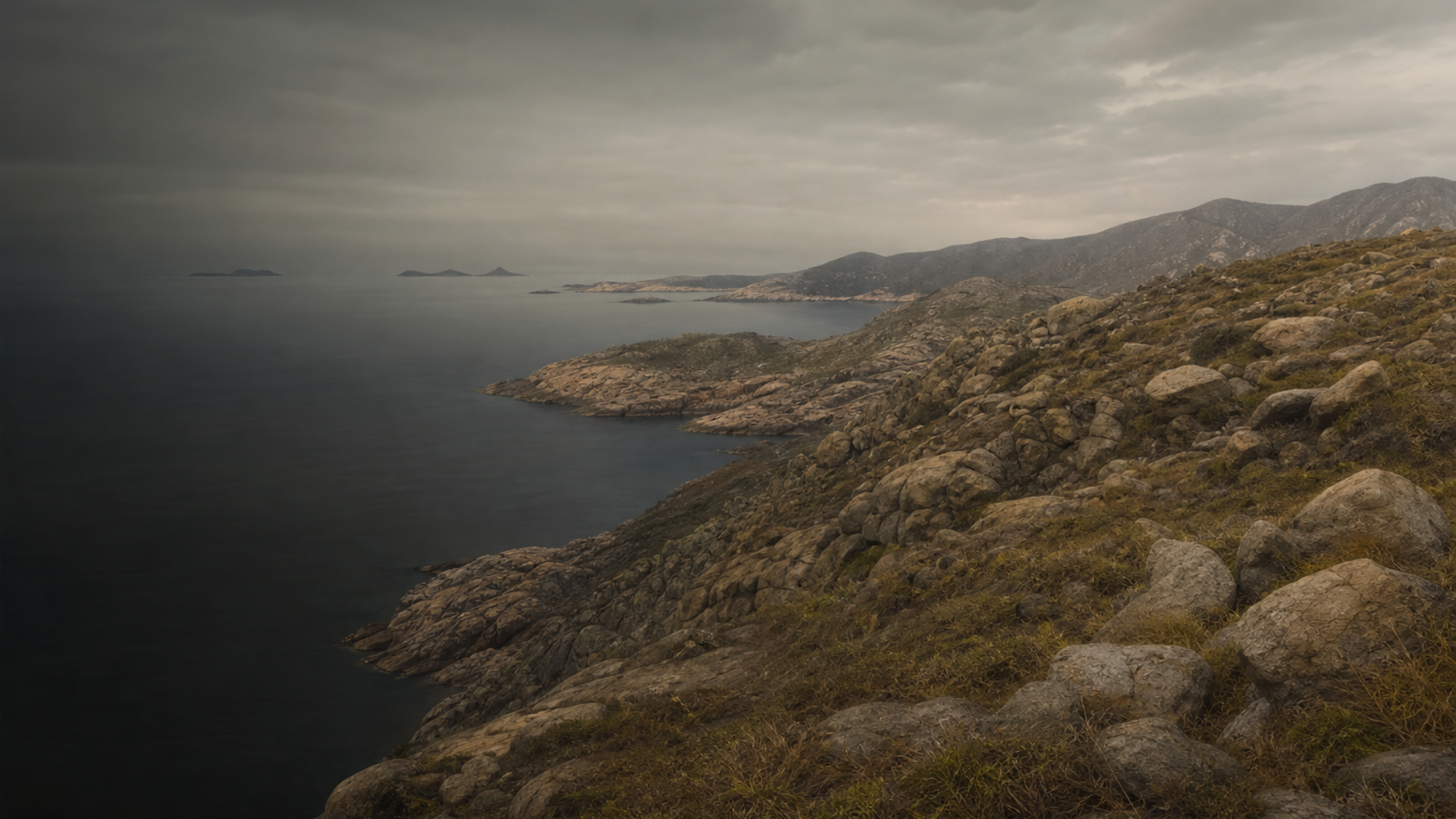
Cinematic, wind-scoured cliffs and midden terraces speak to seasonal rhythms and a knowledge of tides and currents. Archaeological data indicates these were not isolated castaways but participants in a shifting coastal frontier, where technology and social connections followed the tides. Given the limited dataset, claims about population origins remain tentative but point toward continuity with coastal East Asian foragers transitioning into early Neolithic lifeways.

  • Dates: calibrated radiocarbon ~6370–5610 BCE from Liang Island contexts
  • Coastal adaptation: shell middens, fishhooks/harpoons implied by bone work
  • Regional links: material affinities with South China coast and Island Southeast Asia
Capítulo IV

Daily Life & Society

Life on Liang Island would have been shaped by salt, wind and the sea’s seasonal abundance. Archaeological data indicates diets dominated by shellfish, fish and marine mammals supplemented by coastal plants and possibly limited terrestrial resources brought from nearby mainland. Shell middens preserve a granular record of meals and tool production: shells, fish vertebrae, and fragments of worked bone and shell suggest routine processing and communal consumption.

Settlement traces are modest — ephemeral house floors or postholes are rarely preserved in exposed island soils — implying lightweight dwellings and mobile or semi-sedentary occupation. Craft activities likely took place near sheltered coves: the manufacture of shell tools, bone points, and small stone implements for fishing and processing. Social life would have revolved around cooperative marine foraging, knowledge of currents, and shared technologies for harvesting and preserving food. Trade or exchange of goods, such as distinctive shell ornaments or specific stone raw materials, may have linked Liang Islanders to neighboring coastal groups, though direct evidence remains limited.

Archaeological data indicates a society organized at the household or small-community scale rather than large, permanent villages. Environmental exposure means the archaeological picture is fragmentary; reconstructions emphasize plausible patterns rather than definitive social structures.

  • Marine-focused diet: shellfish, fish bones, and processed marine resource debris
  • Lightweight settlements: ephemeral architecture and coastal craft production
Capítulo V

Genetic Profile

Ancient DNA from Liang Island is extremely limited: only two sampled individuals currently inform genetic interpretation, so conclusions must be regarded as preliminary. Both samples date within the Early Neolithic range for the site (ca. 6370–5610 BCE). One individual carried Y-chromosome lineage O (observed once), a haplogroup widespread in modern East and Southeast Asian populations and often associated with later agricultural expansions in the region. Mitochondrial lineages observed include E1 and R9 (one individual each), haplogroups with modern distributions along coastal East Asia and into Island Southeast Asia.

These mitochondrial signals are intriguing because mtDNA E lineages are commonly observed among island and coastal populations, suggesting maternal ancestry connections with maritime-adapted groups. R9 also has coastal associations in Holocene East Asia. Archaeological data indicates maritime lifeways on Liang Island, and the genetic profile — albeit from n=2 — is consistent with continuity or gene flow among coastal populations across South China and the northern fringe of Island Southeast Asia.

However, with such a small sample count (<10), statements about demographic patterns, migration routes, or population continuity are highly tentative. Future sampling from Liang Island and comparative coastal sites (mainland Fujian, Taiwan, and northern Island Southeast Asia) will be essential to move from suggestive patterns to robust models of genetic ancestry and mobility.

  • Very small sample size (n=2): conclusions are preliminary and tentative
  • Observed lineages: Y-DNA O (1); mtDNA E1 (1) and R9 (1), aligning with coastal East Asian connections
Capítulo VI

Legacy & Modern Connections

The archaeological and genetic echoes from Liang Island offer a window into coastal threads that likely contributed to the deep prehistory of East and Southeast Asian maritime populations. Archaeological data indicates that early coastal adaptations and seafaring knowledge laid groundwork for later movements of people, ideas and genes along the shorelines. The mtDNA and Y-DNA lineages observed, while preliminary, resonate with haplogroups found today among coastal communities across southern China and Island Southeast Asia, suggesting long-term regional connectivity.

Heritage from these island communities is not a single line but a braided story: seasonal mobility, specialized marine knowledge, and exchange networks that would later be woven into the complex tapestry of Neolithic and post-Neolithic population shifts. As ancient DNA sampling increases, Liang Island may help clarify how coastal foragers contributed to the genetic and cultural foundations of modern coastal East Asian societies.

Limited evidence makes definitive links speculative, but the island’s sand-whipped middens and the fragile strands of ancient DNA together form a compelling invitation for further research.

  • Preliminary genetic links to modern coastal East and Southeast Asian populations
  • Archaeological importance as a potential node in early maritime exchange networks
Con IA

Asistente de IA

Haz preguntas sobre la cultura Liang Island Neolithic Seafarers

Asistente de IA por DNAGENICS

Desbloquear esta función
Pregunta sobre la cultura Liang Island Neolithic Seafarers. El asistente con IA puede explicar hallazgos genéticos, contexto histórico, pruebas arqueológicas y conexiones modernas, con sus límites de interpretación.
Ejemplo de análisis con IA

La cultura Liang Island Neolithic Seafarers representa un capítulo de la historia humana...

El análisis genético permite estudiar similitudes con poblaciones anteriores y posibles adaptaciones. Las muestras de ADN antiguo aportan información para investigar patrones migratorios y relaciones entre poblaciones, con límites que dependen del estudio y del contexto arqueológico.

Esta es una vista previa del análisis con IA. Accede al asistente completo para explorar información sobre:

  • Composición y similitud genética
  • Patrones migratorios y orígenes
  • Vida cotidiana y prácticas culturales
  • Contexto genético moderno

Explora más culturas antiguas

Descubre la historia de civilizaciones de distintas partes del mundo antiguo