Preparando el informe

Cargando la información y las referencias disponibles

Consultando el registro arqueológico...

Recopilando registros antiguos

Saltar al contenido principal
Limão Sambaqui: Coastal Voices, 2700 BP
Cultura destacada

Limão Sambaqui: Coastal Voices, 2700 BP

One ancient genome from Sambaqui do Limão illuminates coastal life on Brazil’s southeast shore.

811 CE - 5712700 BCE
Southeast coast, Brazil — Sambaqui do Limão
Desplázate para empezar
Capítulo I

La historia

Comprender la cultura Limão Sambaqui: Coastal Voices, 2700 BP

Single ancient DNA from Sambaqui do Limão (811–571 BCE) links shell-mound builders on Brazil’s southeast coast to widespread Native American lineages (Y‑Q, mtDNA D). Archaeological data and DNA together suggest specialized coastal foraging; conclusions remain preliminary.

Time Period

811–571 BCE (≈2700 BP)

Region

Southeast coast, Brazil — Sambaqui do Limão

Common Y-DNA

Q (1 sample)

Common mtDNA

D (1 sample)

Capítulo II

Cronología

Momentos clave de la historia de esta cultura

700 BCE

Sambaqui activity at Limão

Archaeological layers indicate intensive coastal foraging and mound-building activity at Sambaqui do Limão around 811–571 BCE.

Capítulo III

Origins & Emergence

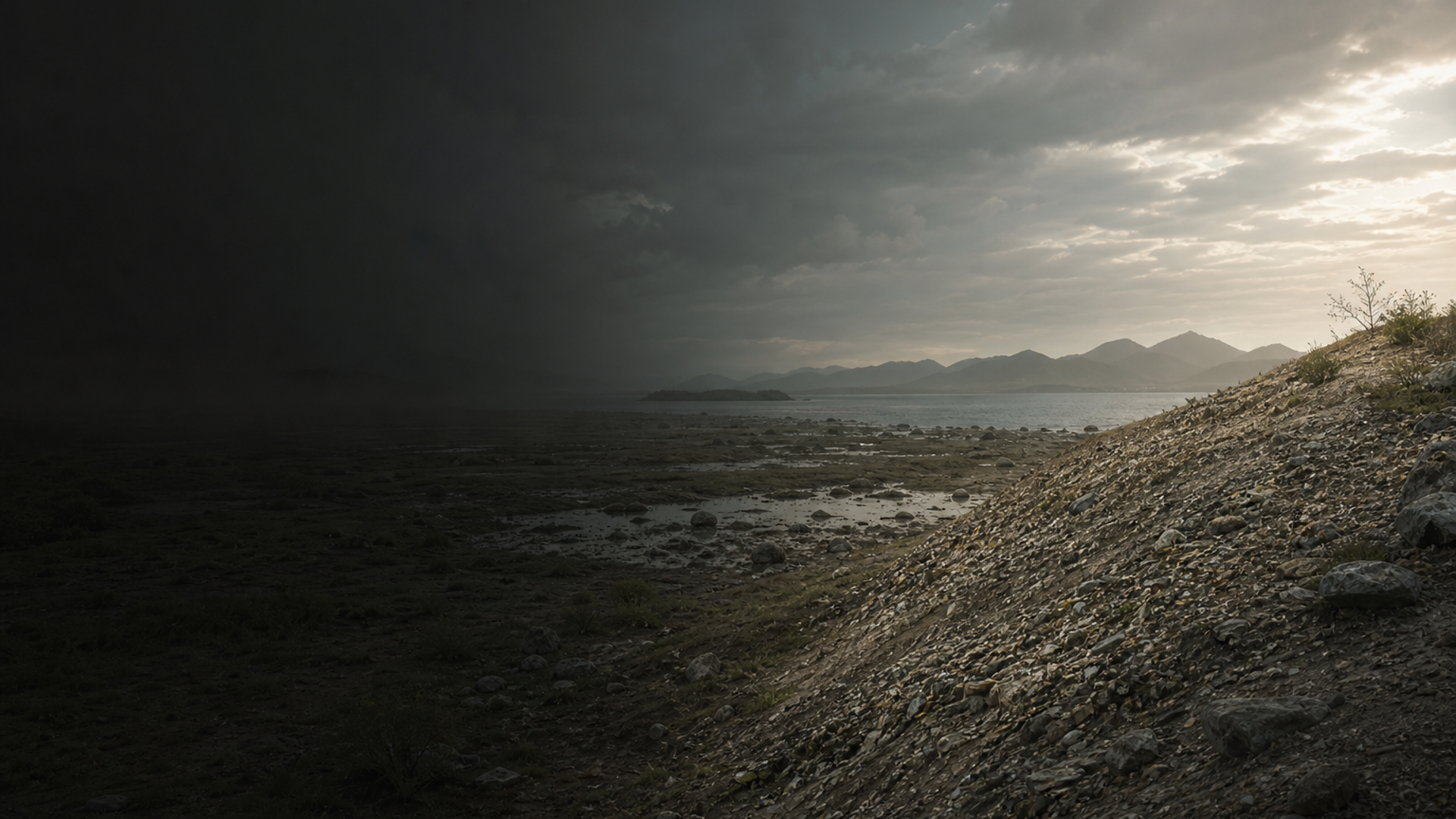
Archaeological data indicates that the sambaquis — monumental shell-mound sites — along Brazil’s southeast coast were created by generations of coastal foragers who reshaped shorelines with the detritus of daily life. Sambaqui do Limão, the sampled site, sits on a rocky promontory where layered deposits of shells, fish bone, and refuse formed durable mounds. Radiocarbon ranges for the sampled individual place human activity at Limão between 811 and 571 BCE, a moment when coastal economies were rich with marine resources and local craft traditions.

Limited evidence suggests these mounds functioned as multi‑purpose loci: habitational terraces, refuse heaps that became cultural foundations, and loci for funerary practice. Shell architecture at Limão preserves the vertical history of repeated occupation, with interleaved living floors and burial pits. While the broader Sambaqui Culture extends across many centuries and hundreds of sites, the material record at Limão captures a late phase in which communities intensified shoreline use.

This birthplace of layered shells and bones is both a physical archive and a stage for centuries of seasonal rhythms — fishing, shellfish collection, and the social acts of depositing food waste and the dead. The archaeological picture is vivid but localized: with only a single ancient genome from Limão, patterns of population movement and cultural transmission must still be treated as provisional.

  • Sambaqui do Limão: shell-mound site on Brazil’s southeast coast
  • Occupation dated to 811–571 BCE (≈2700 BP)
  • Mounds served as living spaces, refuse deposits, and burial loci
Capítulo IV

Daily Life & Society

The sambaqui landscape was a living theatre of wind, salt, and the daily harvest of the sea. Archaeological remains from shell-mound sites like Limão show dense middens of bivalves and gastropods, abundant fish bone, and occasional stone tools — a material signature of specialized coastal foraging. Faunal assemblages indicate year-round use of marine resources with seasonal peaks in shellfish and schooling fish exploitation.

Burials found within sambaquis suggest that these were not just places of subsistence but also of memory. Human interments, sometimes accompanied by grave goods or particular shell placements, indicate social gestures of care and commemoration. The stratigraphy at Limão preserves successive occupation layers, implying repeated returns by related groups or continuing local residency. Social organization can be inferred from differential burial treatments and the labor investment required to build substantial mounds, hinting at coordinated activities beyond immediate family bands.

Material culture at Limão appears austere and focused on coastal tasks: tools for fishing and processing, shell ornaments, and the architectural logic of mound-building. Archaeological interpretation emphasizes adaptation — people shaping the shore and being shaped by it — a theme made palpable in the layers of shells and the single ancient genome recovered from the site.

  • Diet dominated by shellfish and fish, evident in midden composition
  • Mounds contain burials and repeated occupation layers
Capítulo V

Genetic Profile

Genetic data from Sambaqui do Limão currently rests on a single ancient individual, producing a preliminary but informative snapshot. The Y‑chromosome falls into haplogroup Q and the mitochondrial lineage into haplogroup D — both lineages are common among Indigenous peoples of the Americas and are widely interpreted as descendants of the original migratory groups that crossed from Beringia into the continents.

These assignments align the Limão individual with deep Pan‑American genetic patterns rather than with later transoceanic contacts. However, a single sample cannot resolve internal population structure, local continuity, or fine‑scale kinship patterns. With only one genome, claims about demographic processes (for example, patrilineal vs. matrilineal residence, population size, or admixture events) are necessarily tentative.

Ancient DNA from coastal sambaqui sites can powerfully test archaeological models: do shell-mound builders represent long-term regional continuity, waves of newcomers, or fluid networks of kin and exchange? The Limão genome points toward continuity with broader Native American genetic diversity, but future sampling — especially multiple individuals from different mound layers and nearby sites — is required to move from suggestive alignment to robust inference.

In sum, the genetic signal is consistent with Indigenous American ancestries (Q and D) but remains preliminary pending larger sample sizes and comparative analyses.

  • Y‑DNA: Q; mtDNA: D — lineages common in Indigenous Americas
  • Single-sample status means genetic conclusions are highly provisional
Capítulo VI

Legacy & Modern Connections

Sambaqui do Limão stands as a layered testament to coastal lifeways that still resonate along Brazil’s shores. The archaeological record preserves practical knowledge — marine harvesting strategies, shell architecture, and mortuary practice — that shaped local landscapes and cultural memory. The single ancient genome ties the site into the broader genetic tapestry of the Americas, hinting at relationships between past coastal communities and present Indigenous populations.


Caution is essential: direct lines of descent cannot be asserted from one sample. Nonetheless, when archaeology and genetics are combined, a richer picture emerges — one in which material traces and DNA data together illuminate mobility, adaptation, and belonging. Future ancient DNA from neighboring sambaquis and modern comparative datasets will refine how Limão’s people fit into long-term histories of the South Atlantic coast.

What remains indelible is the image of human communities anchored to the sea, shaping and being shaped by its abundance — a legacy written in shell, bone, and the genetic echoes preserved in a single ancient individual.

  • Material and genetic evidence suggest connections to wider Indigenous American lineages
  • More samples needed to establish direct continuity with modern communities
Con IA

Asistente de IA

Haz preguntas sobre la cultura Limão Sambaqui: Coastal Voices, 2700 BP

Asistente de IA por DNAGENICS

Desbloquear esta función
Pregunta sobre la cultura Limão Sambaqui: Coastal Voices, 2700 BP. El asistente con IA puede explicar hallazgos genéticos, contexto histórico, pruebas arqueológicas y conexiones modernas, con sus límites de interpretación.
Ejemplo de análisis con IA

La cultura Limão Sambaqui: Coastal Voices, 2700 BP representa un capítulo de la historia humana...

El análisis genético permite estudiar similitudes con poblaciones anteriores y posibles adaptaciones. Las muestras de ADN antiguo aportan información para investigar patrones migratorios y relaciones entre poblaciones, con límites que dependen del estudio y del contexto arqueológico.

Esta es una vista previa del análisis con IA. Accede al asistente completo para explorar información sobre:

  • Composición y similitud genética
  • Patrones migratorios y orígenes
  • Vida cotidiana y prácticas culturales
  • Contexto genético moderno

Explora más culturas antiguas

Descubre la historia de civilizaciones de distintas partes del mundo antiguo