Preparando el informe

Cargando la información y las referencias disponibles

Consultando el registro arqueológico...

Recopilando registros antiguos

Saltar al contenido principal
Lithuania Mesolithic Echoes
Cultura destacada

Lithuania Mesolithic Echoes

Hunter-gatherer lifeways on Lithuanian lakeshores, revealed by archaeology and ancient DNA

6464 CE - 5736 BCE
Lithuania (Baltic)
Desplázate para empezar
Capítulo I

La historia

Comprender la cultura Lithuania Mesolithic Echoes

Early Mesolithic communities in Lithuania (6464–5736 BCE) left stone tools, lakeside dwellings and three ancient genomes. Archaeology and DNA hint at continuity with European hunter-gatherers, but the small sample size makes conclusions provisional.

Time Period

6464–5736 BCE

Region

Lithuania (Baltic)

Common Y-DNA

I (1 of 3)

Common mtDNA

U (3 of 3)

Capítulo II

Cronología

Momentos clave de la historia de esta cultura

6200 BCE

Mesolithic occupations at Donkalnis

Archaeological deposits and human remains at Donkalnis indicate lakeshore occupations and burials around 6200 BCE, within the site's dated range.

Capítulo III

Origins & Emergence

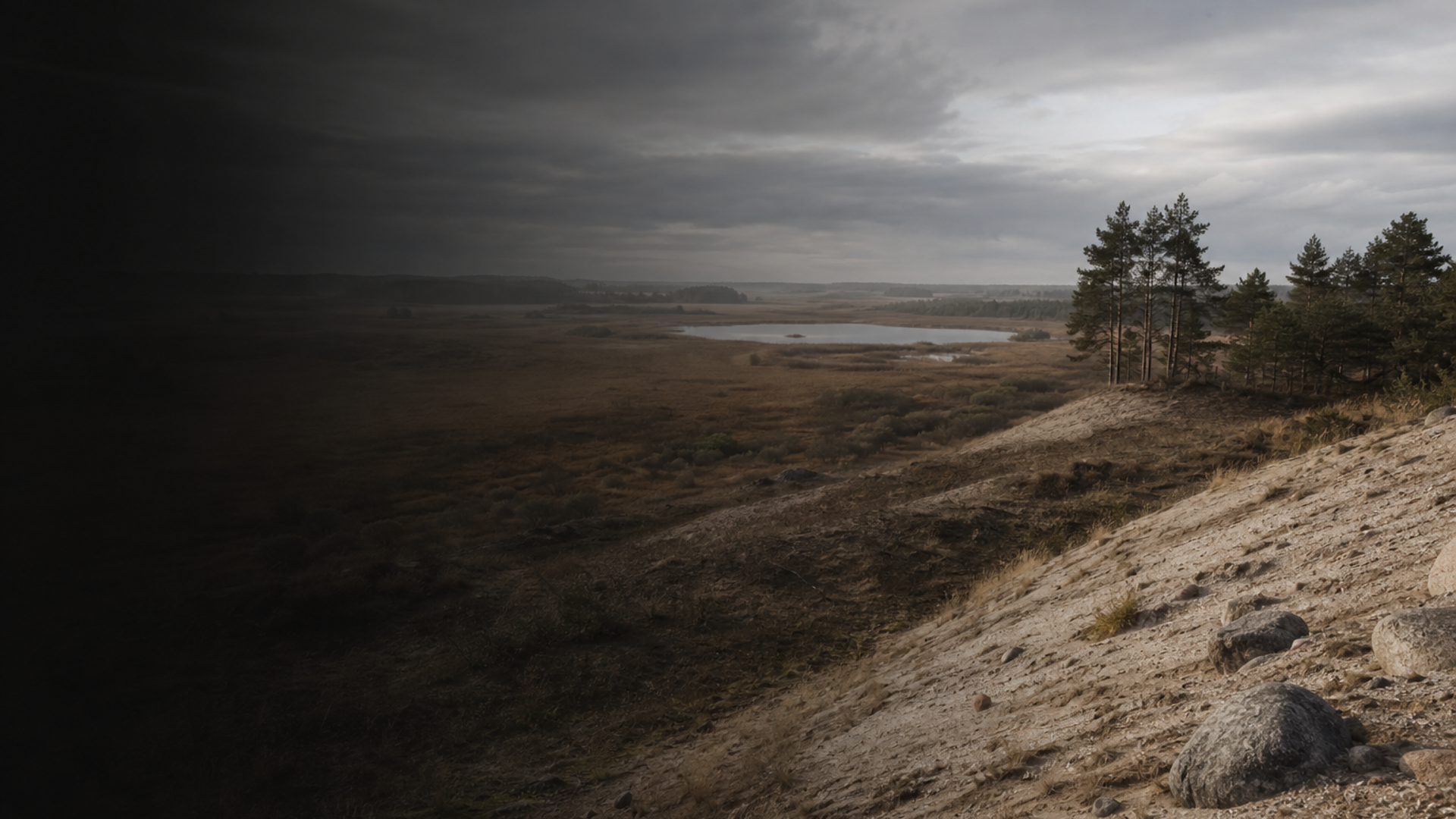
Along the pale shores and reed-fringed lakes of prehistoric Lithuania, small bands of post-glacial hunter-gatherers reshaped the landscape. Radiocarbon dates from human remains at Donkalnis and Spiginas fall between 6464 and 5736 BCE, placing these people firmly in the Mesolithic era when forests expanded and freshwater resources abounded. Archaeological deposits at Donkalnis (Telsiai County, Telšių rajono savivaldybė) preserve flaked stone tools, fish bones and hearths that suggest repeated seasonal occupation.

Limited evidence indicates these communities were part of a broader network of northern European hunter-gatherers moving across the Baltic region after the last Ice Age. Material culture shows continuity with neighboring Mesolithic sites in the eastern Baltic and southern Scandinavia, while local adaptations reflect wetland and riverine economies. Because only three ancient genomes are available, interpretations about population origins and movements remain provisional; archaeological data indicates connection and continuity, but the genetic picture is still emerging.

  • Occupation dated 6464–5736 BCE at Donkalnis and Spiginas
  • Lake- and river-focused subsistence with stone tools and hearths
  • Evidence of regional Mesolithic networks, but data are limited
Capítulo IV

Daily Life & Society

Life for Lithuania's Mesolithic people was intimately tied to water. Fishing, fowling and seasonal hunting of elk and deer would have dominated subsistence, supplemented by gathered plants and freshwater molluscs recovered at sites. The artifact assemblage includes bladelets, burins and microliths suited to composite tools and hunting gear. Hearth concentrations and midden deposits imply repeated occupation episodes, perhaps by small kin groups who returned seasonally to exploit fish runs and nesting birds.

Settlement traces suggest mobile lifeways rather than dense permanent villages: ephemeral structures and dispersed hearths point to flexible social organization oriented around kin networks and seasonal resource schedules. Decorative or symbolic behavior is sparsely represented in the record, but personal items and modified bone hints at cultural expression beyond mere subsistence. Archaeological data indicates a resilient adaptation to a shifting post-glacial environment, though many behavioral inferences remain tentative given the limited number of excavated burials and contexts.

  • Fishing and seasonal hunting dominated subsistence
  • Mobile, kin-based groups with repeated lakeshore occupations
Capítulo V

Genetic Profile

Three ancient genomes from Donkalnis and Spiginas provide the first direct genetic window into Lithuania's Mesolithic people. All three carry mitochondrial haplogroup U, a lineage commonly found among European hunter-gatherers, suggesting matrilineal continuity with broader Mesolithic populations. One male individual carries Y-chromosome haplogroup I, a lineage frequently associated with Mesolithic male lineages across northwestern and central Europe.

Genetic signatures appear broadly consistent with the Western and Baltic hunter-gatherer spectrum known from other parts of Europe, but with only three samples the resolution is low. Limited evidence suggests affinities to regional hunter-gatherer populations rather than later incoming farmers. Because the sample count is under 10, population-level conclusions should be treated as preliminary: expanding the dataset could reveal additional lineages, substructure, or gene flow from neighboring groups during the Mesolithic to Neolithic transition. Archaeology and DNA together portray a people rooted in local landscapes yet connected to wider hunter-gatherer networks across the Baltic and northern Europe.

  • mtDNA U in all three samples, matching European hunter-gatherer patterns
  • Single Y-DNA I detected; larger sample sizes needed for population claims
Capítulo VI

Legacy & Modern Connections

The DNA and artifacts from Lithuania's Mesolithic sites are a faint but evocative whisper from deep time. Mitochondrial U lineages and Y haplogroup I link these individuals to the broader tapestry of European hunter-gatherers, whose genetic legacy persists at low levels in later populations. Archaeological continuity in tool forms and subsistence strategies hints that cultural knowledge passed through generations even as climates and coastlines shifted.

Modern Baltic populations carry a complex mixture of ancestries from Mesolithic hunter-gatherers, Neolithic farmers and later Bronze Age and Iron Age groups. While the three Mesolithic genomes provide a crucial anchor point, their small number means they cannot by themselves map the full ancestral contribution to present-day Lithuanians. Ongoing sampling and integrated archaeological study will refine how these early lakeshore communities fit into the long story of human occupation in the Baltic.

  • Genetic links to broader European hunter-gatherers, but contribution to modern genomes is complex
  • Small sample size means connections to modern populations are tentative
Con IA

Asistente de IA

Haz preguntas sobre la cultura Lithuania Mesolithic Echoes

Asistente de IA por DNAGENICS

Desbloquear esta función
Pregunta sobre la cultura Lithuania Mesolithic Echoes. El asistente con IA puede explicar hallazgos genéticos, contexto histórico, pruebas arqueológicas y conexiones modernas, con sus límites de interpretación.
Ejemplo de análisis con IA

La cultura Lithuania Mesolithic Echoes representa un capítulo de la historia humana...

El análisis genético permite estudiar similitudes con poblaciones anteriores y posibles adaptaciones. Las muestras de ADN antiguo aportan información para investigar patrones migratorios y relaciones entre poblaciones, con límites que dependen del estudio y del contexto arqueológico.

Esta es una vista previa del análisis con IA. Accede al asistente completo para explorar información sobre:

  • Composición y similitud genética
  • Patrones migratorios y orígenes
  • Vida cotidiana y prácticas culturales
  • Contexto genético moderno

Explora más culturas antiguas

Descubre la historia de civilizaciones de distintas partes del mundo antiguo