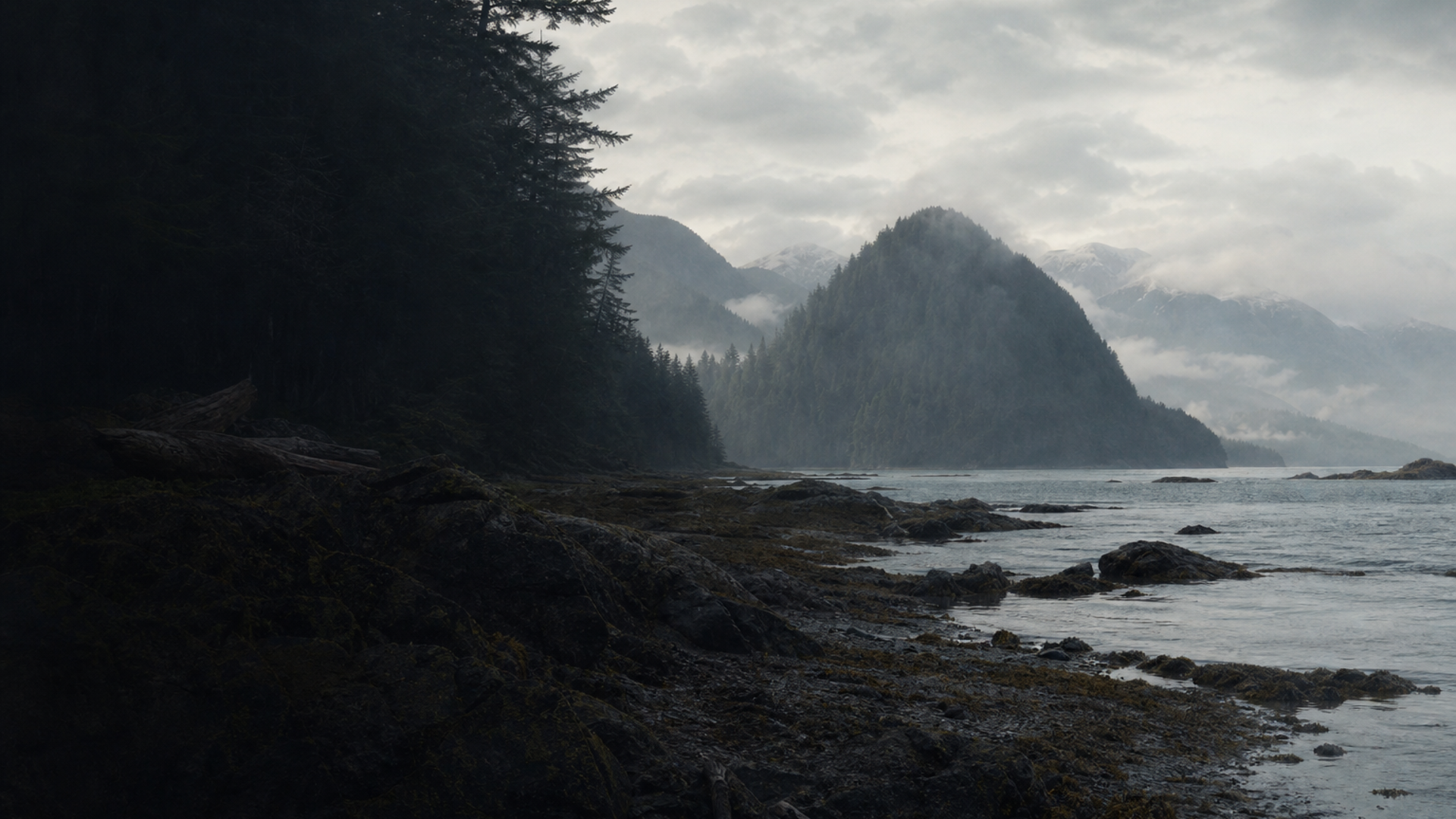
The Lucy Islands individual lived during the late Holocene along the rugged shores of Chatham Sound (modern British Columbia) between 4678 and 4453 BCE. Archaeological data indicates this stretch of coast supported rich intertidal and nearshore resources — shellfish, fish, sea mammals and seabirds — enabling dense, mobile maritime occupations. Limited evidence from nearby coastal sites dated to this era hints at repeated seasonal use of small offshore islands and headlands for harvesting and processing marine foods.
Genetically, the preserved mitochondrial lineage (mtDNA D) connects this person to maternal lineages widespread among ancient and modern First Nations in the Pacific Northwest and across northern Asia and the Americas. While this single ancient genome offers a window into one individual life, it does not by itself define a population. Archaeological patterns suggest continuity of coastal lifeways across centuries, but questions remain about migratory pulses, local adaptation, and social networks connecting islands, fjords and interior valleys. Interpreting emergence requires combining artefacts, faunal assemblages, and more ancient DNA to test whether islands like Lucy were seasonal processing stations, long‑term camps, or nodes in wider maritime exchange.