Preparando el informe

Cargando la información y las referencias disponibles

Consultando el registro arqueológico...

Recopilando registros antiguos

Saltar al contenido principal
Miaozigou: Voices from Inner Mongolia
Cultura destacada

Miaozigou: Voices from Inner Mongolia

Three Middle Neolithic genomes illuminating a northerly tapestry of pottery, settlement, and ancestry

3550 CE - 3050 BCE
Inner Mongolia, China (Qahar Youyi Qianqi, Uraharura)
Desplázate para empezar
Capítulo I

La historia

Comprender la cultura Miaozigou: Voices from Inner Mongolia

Middle Neolithic community at Miaozigou (3550–3050 BCE) in Inner Mongolia. Three ancient genomes (Y-hg C common; mtDNA A14, C, D) point to northeastern Asian ancestry. Archaeology and DNA together offer promising but preliminary insight into regional continuity.

Time Period

3550–3050 BCE (Middle Neolithic)

Region

Inner Mongolia, China (Qahar Youyi Qianqi, Uraharura)

Common Y-DNA

C (2/3 samples)

Common mtDNA

A14, C, D (1 each)

Capítulo II

Cronología

Momentos clave de la historia de esta cultura

2500 BCE

Peak occupation at Miaozigou (approx.)

Archaeological layers and radiometric dates place active settlement and material culture production near this midpoint of the site's range.

Capítulo III

Origins & Emergence

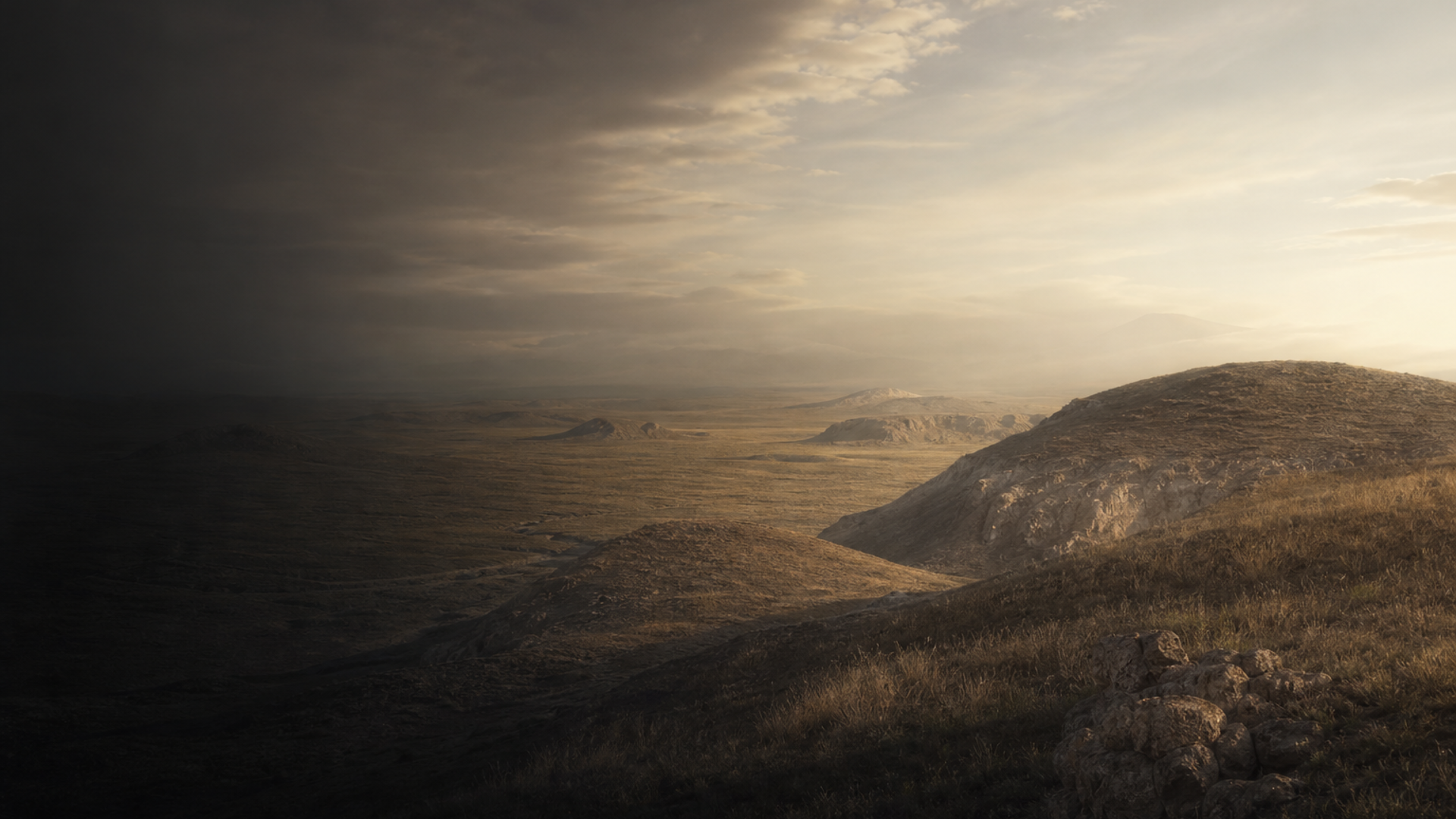
The Miaozigou assemblage sits on the windswept plains of present-day Inner Mongolia (Miaozigou site, Uraharura, Qahar Youyi Qianqi) and belongs to the Middle Neolithic horizon broadly labeled Miaozigou. Archaeological data indicates permanent or seasonal settlements dated between ca. 3550 and 3050 BCE. House foundations, ceramic fragments, and chipped-stone tools recovered in the region paint a landscape of settled life rather than transient foraging.

Cinematic images of low clay walls and steaming ceramic vessels are supported by sterile, scientific layers: stratified deposits, radiocarbon dates from nearby contexts, and material links to other northeastern Chinese Neolithic localities. Limited evidence suggests cultivation and animal management were part of subsistence strategies across the region, although direct archaeobotanical or zooarchaeological records from this exact site remain sparse.

Archaeological connections tie Miaozigou to broader exchanges across the northeast, where pottery styles and lithic traditions echo through river valleys and upland steppes. The emerging picture is of a community rooted in local landscapes but in dialogue with neighboring groups. Given the small number of genomic samples available, this narrative remains provisional, inviting further excavation and ancient DNA sampling to clarify the community’s true origins and external links.

  • Middle Neolithic settlement evidence (3550–3050 BCE)
  • Artifacts: ceramics and stone tools indicate sedentism
  • Regional links across northeastern China
Capítulo IV

Daily Life & Society

Archaeological traces from Miaozigou evoke routine—shaping pottery, tending plots, and repairing tools—yet the specifics require careful qualification. Excavated contexts in related Miaozigou sites show domestic architecture, storage pits, and discard zones consistent with household-based economies. At the Miaozigou site in Uraharura, fragments of coarse-ware pottery and ground stone tools suggest food processing activities.

If millet and other domesticated plants were part of the diet here, as archaeological models for northeast China suggest, then seasonal cycles of planting and harvest would have shaped social rhythms: labor organization, storage strategies, and perhaps emerging social differentiation. Faunal remains are rarely abundant in published descriptions of the immediate site, so the balance between hunting, herding, and farming remains partially unresolved.

Social life may have been organized around extended households. Material culture variation hints at networks of exchange—raw materials for stone tools and stylistic motifs on pottery traveling between settlements. These impressions are evocative but not definitive: future excavation and targeted sampling for plant and animal remains would strengthen inferences about foodways, craft, and residence patterns at Miaozigou.

  • Household-focused activities implied by ceramics and grinding tools
  • Possible millet cultivation, but direct plant evidence limited
Capítulo V

Genetic Profile

Three published genomes from Miaozigou (sample count = 3) provide a preliminary window into biological ancestry during the Middle Neolithic. Two of the three male individuals carry Y-chromosome haplogroup C; mitochondrial haplogroups observed are A14, C, and D (one each). Haplogroup C is widely associated with northern and northeastern Asian paternal lineages, while mtDNA lineages A, C, and D are common across East Asia and Siberia and appear in multiple ancient and modern northern populations.

These genetic signatures align with an expectation of deep East Eurasian ancestry in northeastern China during the Neolithic, supporting archaeological impressions of local continuity rather than wholesale replacement by distant groups. However, with only three genomes, any inference about demographic processes—migration, admixture, or sex-biased continuity—must be cautious. Limited sample size makes it impossible to determine population structure, temporal changes, or the frequency of these haplogroups in the broader Miaozigou population.

Integration of genome-wide autosomal data, greater spatial sampling across Miaozigou-phase sites, and comparison with contemporaneous populations across northern China and Siberia would be required to resolve questions about mobility, kinship, and the genetic landscape of early northeastern agriculturalists.

  • Y-DNA: predominant haplogroup C (2/3), suggesting northern paternal links
  • mtDNA: A14, C, D present; patterns are consistent with Northeast Asian maternal lineages
Capítulo VI

Legacy & Modern Connections

Archaeology and ancient DNA together place Miaozigou within the deep story of northern East Asia. The modest genetic profile recovered so far suggests continuity with the pool of lineages that later contribute to modern northern East Asian populations, but this is a sketch, not a portrait. The site’s material culture and genetic traces link it to wider Neolithic transformations—sedentism, craft specialization, and regional interaction—that helped shape later Bronze Age societies.

For present-day individuals exploring ancestry, Miaozigou provides a tangible anchor: some genetic components seen in the site’s small sample set match haplogroups still found in northern China and nearby regions. Yet any direct lines of descent should be presented carefully. The current dataset is tiny, and population histories across millennia are complex, involving admixture and movement. Continued sampling and interdisciplinary study will refine how Miaozigou’s people contributed to the living genetic and cultural landscapes of East Asia.

  • Genetic ties hint at continuity with modern northern East Asians, but evidence is preliminary
  • Contributes to broader understanding of Neolithic shifts in northeastern China
Con IA

Asistente de IA

Haz preguntas sobre la cultura Miaozigou: Voices from Inner Mongolia

Asistente de IA por DNAGENICS

Desbloquear esta función
Pregunta sobre la cultura Miaozigou: Voices from Inner Mongolia. El asistente con IA puede explicar hallazgos genéticos, contexto histórico, pruebas arqueológicas y conexiones modernas, con sus límites de interpretación.
Ejemplo de análisis con IA

La cultura Miaozigou: Voices from Inner Mongolia representa un capítulo de la historia humana...

El análisis genético permite estudiar similitudes con poblaciones anteriores y posibles adaptaciones. Las muestras de ADN antiguo aportan información para investigar patrones migratorios y relaciones entre poblaciones, con límites que dependen del estudio y del contexto arqueológico.

Esta es una vista previa del análisis con IA. Accede al asistente completo para explorar información sobre:

  • Composición y similitud genética
  • Patrones migratorios y orígenes
  • Vida cotidiana y prácticas culturales
  • Contexto genético moderno

Explora más culturas antiguas

Descubre la historia de civilizaciones de distintas partes del mundo antiguo