Preparando el informe

Cargando la información y las referencias disponibles

Consultando el registro arqueológico...

Recopilando registros antiguos

Saltar al contenido principal
Mid‑Avar Hungary: Voices from the Mounds
Cultura destacada

Mid‑Avar Hungary: Voices from the Mounds

Archaeology and ancient DNA from 6th–9th century Avar communities across Hungary

415 CE - 877 CE
Carpathian Basin (modern Hungary)
Desplázate para empezar
Capítulo I

La historia

Comprender la cultura Mid‑Avar Hungary: Voices from the Mounds

Thirty Middle Avar period individuals (415–877 CE) from cemeteries across modern Hungary reveal predominantly West Eurasian maternal lineages alongside archaeological evidence of steppe-influenced burial customs. Genomic signals indicate a complex blend of local and incoming ancestries.

Time Period

415–877 CE (Middle Avar Period)

Region

Carpathian Basin (modern Hungary)

Common Y-DNA

Limited or variable — Y‑DNA data sparse in this set

Common mtDNA

H (9), T (3), J (3), K (3), U (3) — predominantly West Eurasian

Capítulo II

Cronología

Momentos clave de la historia de esta cultura

568 CE

Avar establishment in the Carpathian Basin

Historical and archaeological evidence places Avar political consolidation in the late 6th century CE, initiating centuries of influence across the Hungarian plain.

Capítulo III

Origins & Emergence

The Mid‑Avar horizon in the Carpathian Basin is a tapestry woven from migration, local integration, and steppe-derived cultural forms. Archaeological sites sampled for this project — including Tiszafüred-Majoros-halom (Jász-Nagykun-Szolnok), Kiskőrös-Pohibuj Mackódűlő (Bács‑Kiskun), Szeged-Makkoserdő and Szeged-Kundomb (Csongrád‑Csaná d), Homokmégy-Halom, Madaras-Téglavető, Sükösd-Ságod, Kiskundorozsma-Daruhalom-dűlő, Csólyospálos-Felsőpálos, and Kaba-Dögös — span a swath of lowland Hungary.

Archaeological data indicates settlement and burial continuity from earlier Late Antique communities, punctuated by new elite forms attributed to Avar political structures in the 6th century CE. Common markers in the cemetery record include earthen mounds (halom) and assemblages with horse gear and belt fittings that point to steppe-style mobility and symbolic language. At the same time, local ceramic traditions and burial orientations show continuity with Carpathian Basin practices.

Genetically, the dataset of 30 individuals captures a community in process rather than a single invading population. Limited evidence suggests admixture between incoming steppe groups and resident European farmers. This mixed origin narrative fits a cinematic image: newcomers arriving as élites and cavalry networks, gradually interweaving with local families and material culture. Uncertainties remain about precise source regions and the timing of admixture events; larger genome-wide sampling is needed to refine the chronology.

  • Sites sampled across central and southern Hungary (10+ cemeteries listed).
  • Material culture shows steppe-influenced elite markers alongside local traditions.
  • Evidence consistent with admixture between incoming Avar groups and resident populations.
Capítulo IV

Daily Life & Society

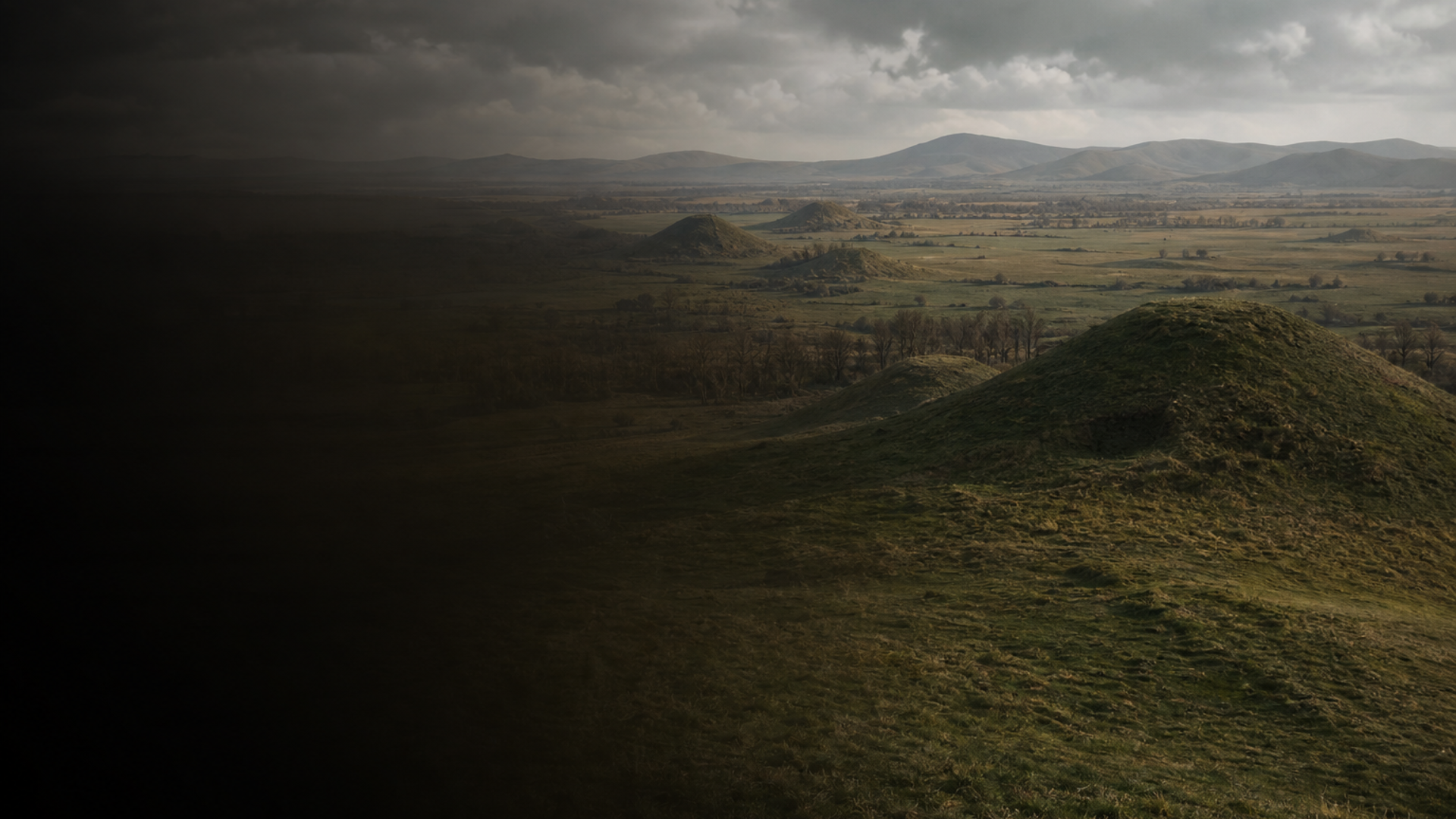
Burial data and household remains give a textured portrait of Mid‑Avar lifeways. Graves cluster in small cemeteries often associated with low mounds (halom); some burials include personal equipment such as belt sets, small weapons, and horse-related objects, suggesting a society where mounted status and artisan-produced metalwork signaled rank. Everyday life for the majority likely resembled that of contemporary rural communities in the Carpathian Basin: mixed agro-pastoral economies, seasonal mobility, and household craft production.

Children and women are well represented in graves, indicating family-based burial grounds rather than exclusively military camps. The presence of diverse grave goods and variations in burial investment point to social differentiation: a small elite with access to prestige goods, and larger numbers of commoners burying with simpler attire and equipment. Archaeobotanical and zooarchaeological data from the region (outside this specific dataset) suggest cereal cultivation, animal husbandry, and exploitation of wetlands — a pragmatic economy adapted to the Great Hungarian Plain.

Archaeology cannot fully reconstruct language or identity, but material culture and burial practices suggest communities negotiating new political realities while maintaining long-standing rural rhythms.

  • Cemeteries show family‑based burial practices with some elite assemblages.
  • Economy likely agro‑pastoral with craft specialization and seasonal mobility.

Capítulo V

Genetic Profile

The genetic portrait of the Hungary_MidAvar group combines mitochondrial data with more limited Y‑chromosome information. Among 30 sampled individuals, mitochondrial haplogroups are dominated by H (9 individuals), with smaller counts of T (3), J (3), K (3), and U (3). These maternal lineages are broadly characteristic of West Eurasian populations and are commonly found across Europe from the Neolithic through the early medieval period.

While mtDNA emphasizes maternal ancestry, genome-wide data (where available in broader Avar studies) often reveal a mosaic: predominant European farmer-related ancestry mixed with variable proportions of steppe-derived and East Eurasian components introduced during earlier migrations. In this dataset Y‑chromosome results are sparse and not sufficiently numerous to define a dominant paternal lineage; therefore conclusions about male-mediated migration should be cautious. Limited evidence suggests that some male lineages in Avar contexts elsewhere show steppe and East Eurasian affinities, but whether that pattern holds across all sampled Hungarian cemeteries requires more Y‑chromosome sampling and autosomal genomes.

Importantly, the mitochondrial distribution here implies substantial local maternal continuity or assimilation of local women into Avar-associated groups. This pattern—steppe-associated male arrival combined with local maternal lines—is one plausible scenario but not the only one; additional high-coverage genomes and larger sample sizes would clarify the timing and routes of admixture.

  • mtDNA dominated by West Eurasian haplogroup H (9/30); other types present in smaller numbers.
  • Y‑DNA in this set is limited—paternal origins remain uncertain and require more sampling.
Capítulo VI

Legacy & Modern Connections

The Avar period left enduring traces in the cultural and genetic mosaic of the Carpathian Basin. Archaeologically, Avar burial rites and elite material culture influenced later medieval forms in Hungary; linguistically and politically, the Avar polities were absorbed into the shifting landscape of early medieval Central Europe.

Genetically, signals of the Avar era are diluted but detectable in regional genomes: admixture events associated with steppe migrations contributed to the deep ancestry of later populations, while substantial continuity with local farmer-descended lineages persisted. The mtDNA profile in this dataset underlines maternal continuity, suggesting many residents of the Middle Avar communities were drawn from long-standing local lineages. However, direct lines to specific modern populations are complex: centuries of subsequent migrations, population turnovers, and gene flow make simple direct ancestry claims inappropriate without broader comparative sampling.

In museum galleries the Mid‑Avar world offers a cinematic tableau—mounted riders, artisans’ gleam, and the quiet persistence of village life—anchored by DNA that tells of encounters, unions, and slow cultural fusion.

  • Avar material culture influenced later medieval Hungarian forms.
  • mtDNA suggests substantial local maternal continuity; modern links are complex.
Con IA

Asistente de IA

Haz preguntas sobre la cultura Mid‑Avar Hungary: Voices from the Mounds

Asistente de IA por DNAGENICS

Desbloquear esta función
Pregunta sobre la cultura Mid‑Avar Hungary: Voices from the Mounds. El asistente con IA puede explicar hallazgos genéticos, contexto histórico, pruebas arqueológicas y conexiones modernas, con sus límites de interpretación.
Ejemplo de análisis con IA

La cultura Mid‑Avar Hungary: Voices from the Mounds representa un capítulo de la historia humana...

El análisis genético permite estudiar similitudes con poblaciones anteriores y posibles adaptaciones. Las muestras de ADN antiguo aportan información para investigar patrones migratorios y relaciones entre poblaciones, con límites que dependen del estudio y del contexto arqueológico.

Esta es una vista previa del análisis con IA. Accede al asistente completo para explorar información sobre:

  • Composición y similitud genética
  • Patrones migratorios y orígenes
  • Vida cotidiana y prácticas culturales
  • Contexto genético moderno

Explora más culturas antiguas

Descubre la historia de civilizaciones de distintas partes del mundo antiguo