Saltar al contenido principal
Cultura destacada

Milicz Echoes

A compact genetic and archaeological portrait of Milicz, Poland (1000–1200 CE)

1000 CE - 1200 CE
Milicz, Lower Silesian Province, Poland

La historia

Archaeogenetic results from 12 individuals excavated at Milicz (Lower Silesia) illuminate a small medieval community. Maternal U lineages dominate while unexpected Y-haplogroup L appears in multiple males — a preliminary signal that invites cautious interpretation and further sampling.

Time Period

1000–1200 CE (High Middle Ages)

Region

Milicz, Lower Silesian Province, Poland

Common Y-DNA

L (4), P (1), CTS (1), YP (1)

Common mtDNA

U (5), H (1), H48 (1), W6a (1), T (1)

Cronología

1000 CE

Community occupation at Milicz

Archaeological and genetic data place the sampled community at Milicz in the High Middle Ages (circa 1000–1200 CE).

Origins & Emergence

The Poland_Milicz_IA assemblage comes from burials and settlement-related contexts excavated in and around Milicz (Lower Silesian Province) dated to roughly 1000–1200 CE. Archaeological data indicates continuity of local Iron-Age and early medieval traditions in material culture and mortuary practice; at the same time, the turn of the first and second millennia CE was a period of shifting political horizons across Silesia.

Genetically, the dataset is small (12 individuals) but informative. Maternal lineages are dominated by haplogroup U variants (5/12), a pattern that often marks persistence of older European maternal ancestries. The Y-chromosome results are strikingly heterogeneous: four males carry haplogroup L — uncommon in present-day northern Europe — while single samples show P, CTS and YP-class markers. This pattern may reflect low-level long-distance connections, mobility, or sampling quirks; limited evidence suggests caution before assigning broad population movements to these findings.

Archaeological stratigraphy and radiocarbon ranges constrain the community to the High Middle Ages in Lower Silesia. Combining material culture context with DNA reveals a picture of a locally rooted population that also participated, to an uncertain degree, in the wider networks of medieval Europe.

  • Samples excavated from Milicz, Lower Silesia, dated 1000–1200 CE
  • Maternal dominance of haplogroup U suggests continuity with older European lineages
  • Unusual frequency of Y-haplogroup L requires cautious interpretation

Daily Life & Society

Archaeological contexts associated with the Poland_Milicz_IA samples include graves and settlement debris typical of small medieval communities in Silesia. Material traces — pottery fragments, metalwork residues and burial orientations — hint at a community engaged in mixed agriculture, animal husbandry, craft production and participation in regional exchange. Archaeological data indicates household-scale lifeways rather than large urban density.

Burial practice provides the physical substrate for DNA recovery. Osteological and contextual observations (where preserved) reveal interments of both sexes and a range of ages, permitting a glimpse of family structure and social composition. Skeletal indicators are often fragmentary; thus, reconstructions of diet and workload rely on limited evidence and should be seen as provisional.

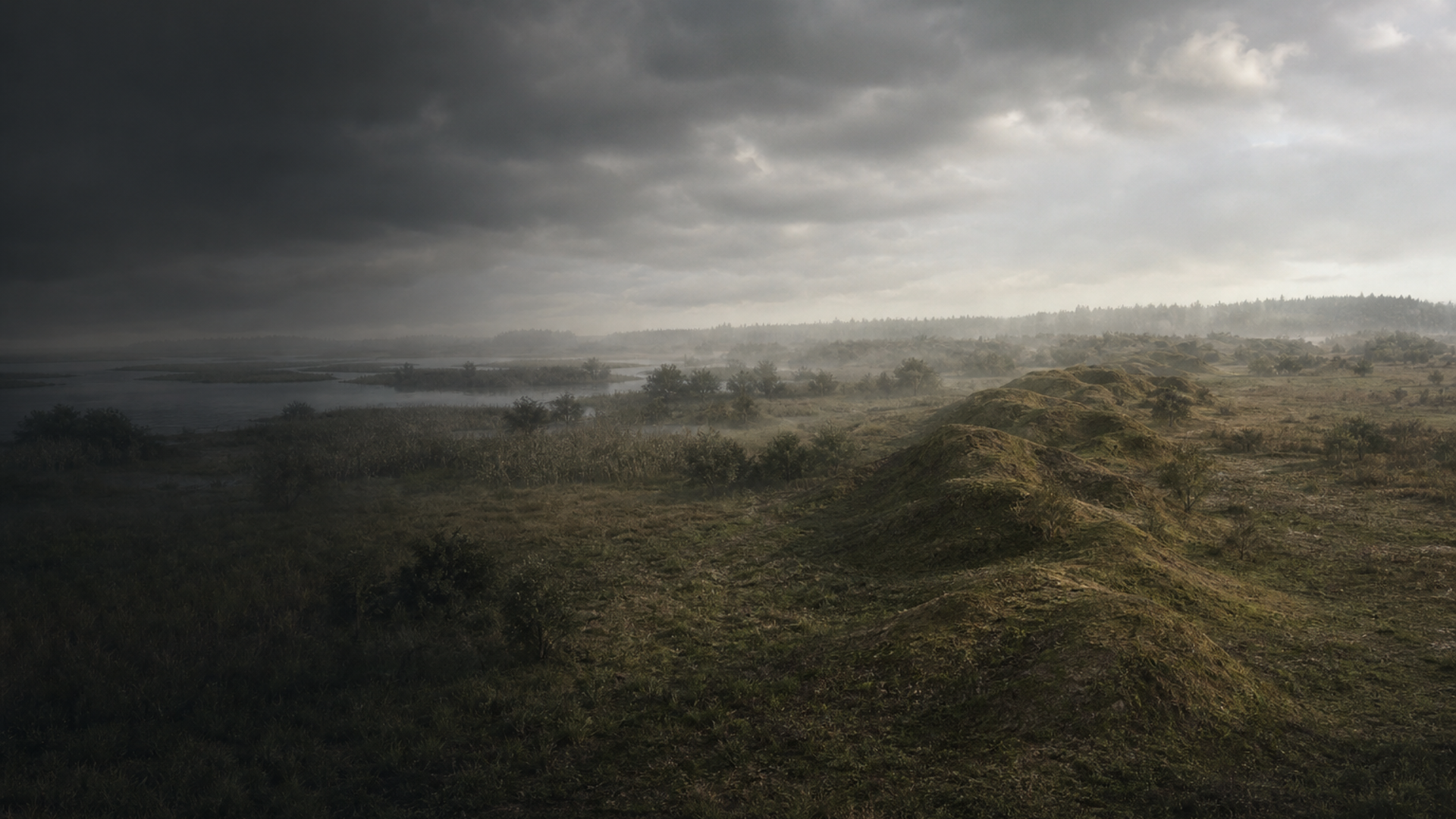
Cinematically, one can imagine a patchwork landscape of fields and ponds around Milicz where seasonal rhythms and local traditions shaped lives. The genetic signals recovered from these remains are the silent echoes of those routines — maternal lineages carried through generations, and paternal markers that may record episodes of mobility or contact beyond the immediate region.

  • Evidence for household agriculture, craft, and regional trade
  • Burials include both sexes and multiple age groups, enabling family-level inferences

Genetic Profile

The genetic profile of Poland_Milicz_IA (12 samples) is compact but revealing. Mitochondrial DNA is dominated by haplogroup U (5/12), with single instances of H, H48, W6a and T. Haplogroup U lineages are commonly associated with long-standing European maternal ancestries — in some regions tracing to Mesolithic and Neolithic substrate populations — suggesting maternal continuity in this Silesian community.

On the paternal side the dataset is unconventional for northern-central Europe: four males carry Y-haplogroup L, while single samples belong to P, CTS and YP-associated branches. Haplogroup L is today more frequent in South and Central Asia; its presence here, if confirmed by broader sampling and robust phylogenetic placement, could indicate localized male-mediated gene flow, rare migration events, or complexities in paternal lineage survival. Given the modest sample size, alternative explanations (such as ancestral substructure, post-depositional issues, or statistical fluctuation) cannot be excluded. Further sequencing, expanded sampling from nearby sites, and direct comparison to contemporaneous populations in Silesia and neighboring regions are needed to assess the significance of L's frequency.

Genetic diversity within the group implies a community shaped by both deep local maternal roots and a more variegated paternal history. Archaeogenomic integration — pairing radiocarbon, archaeological context and genome-wide data — will be essential to move from intriguing signals to robust narratives.

  • mtDNA dominated by U lineages (5/12), suggesting long-term maternal continuity
  • High incidence of Y-haplogroup L (4/12) is unexpected and requires additional sampling and confirmation

Legacy & Modern Connections

The Milicz assemblage offers a snapshot of a medieval Lower Silesian community whose maternal heritage aligns with deep European lineages while paternal markers hint at complex histories of contact. Limited evidence cautions against sweeping statements; nonetheless, these remains bridge local archaeology and broader population dynamics.

For modern populations, the findings underscore how small communities preserve ancient maternal continuity even as male-line histories can reflect episodic mobility. Future comparative studies with other medieval and contemporary Polish genomes will clarify whether the patterns seen at Milicz are local anomalies or part of wider demographic processes in Central Europe.

In museum displays, these results allow visitors to connect skeletal fragments to living genetic threads: the familiar U maternal clade as a continuing European story, alongside the reminder that unexpected haplogroups can reveal hidden chapters of human movement. All conclusions remain preliminary until expanded sampling and higher-resolution genomic analyses refine the picture.

  • Highlights maternal continuity alongside complex paternal signals
  • Preliminary results invite further regional sampling and genomic comparison

Asistente de IA

Asistente de IA por DNAGENICS

Desbloquear esta función
Pregunta sobre la cultura Milicz Echoes. El asistente con IA puede explicar hallazgos genéticos, contexto histórico, pruebas arqueológicas y conexiones modernas, con sus límites de interpretación.

Ejemplo de análisis con IA

La cultura Milicz Echoes representa un capítulo de la historia humana...

El análisis genético permite estudiar similitudes con poblaciones anteriores y posibles adaptaciones. Las muestras de ADN antiguo aportan información para investigar patrones migratorios y relaciones entre poblaciones, con límites que dependen del estudio y del contexto arqueológico.

Esta es una vista previa del análisis con IA. Accede al asistente completo para explorar información sobre:

  • Composición y similitud genética
  • Patrones migratorios y orígenes
  • Vida cotidiana y prácticas culturales
  • Contexto genético moderno