Preparando el informe

Cargando la información y las referencias disponibles

Consultando el registro arqueológico...

Recopilando registros antiguos

Saltar al contenido principal
Monolito Descabezado - Tiwanaku Echo
Cultura destacada

Monolito Descabezado - Tiwanaku Echo

A single genomic signal from a high-altitude monolith illuminates Tiwanaku-era lives

893 CE - 9901 CE
Monolito Descabezado, Bolivia (Lake Titicaca altiplano)
Desplázate para empezar
Capítulo I

La historia

Comprender la cultura Monolito Descabezado - Tiwanaku Echo

Ancient DNA from one individual buried at Monolito Descabezado (Bolivia) dates to 893–990 CE and carries mtDNA haplogroup C. Archaeology and genetics together hint at local Andean continuity during the late Tiwanaku era, but a single sample makes conclusions preliminary.

Time Period

893–990 CE (late 1st millennium CE)

Region

Monolito Descabezado, Bolivia (Lake Titicaca altiplano)

Common Y-DNA

Not reported (no Y-DNA available)

Common mtDNA

C (1 sample)

Capítulo II

Cronología

Momentos clave de la historia de esta cultura

941 CE

Dated individual from Monolito Descabezado

Ancient DNA from a burial at Monolito Descabezado calibrated to 893–990 CE (median ~941 CE); mtDNA haplogroup C identified.

Capítulo III

Origins & Emergence

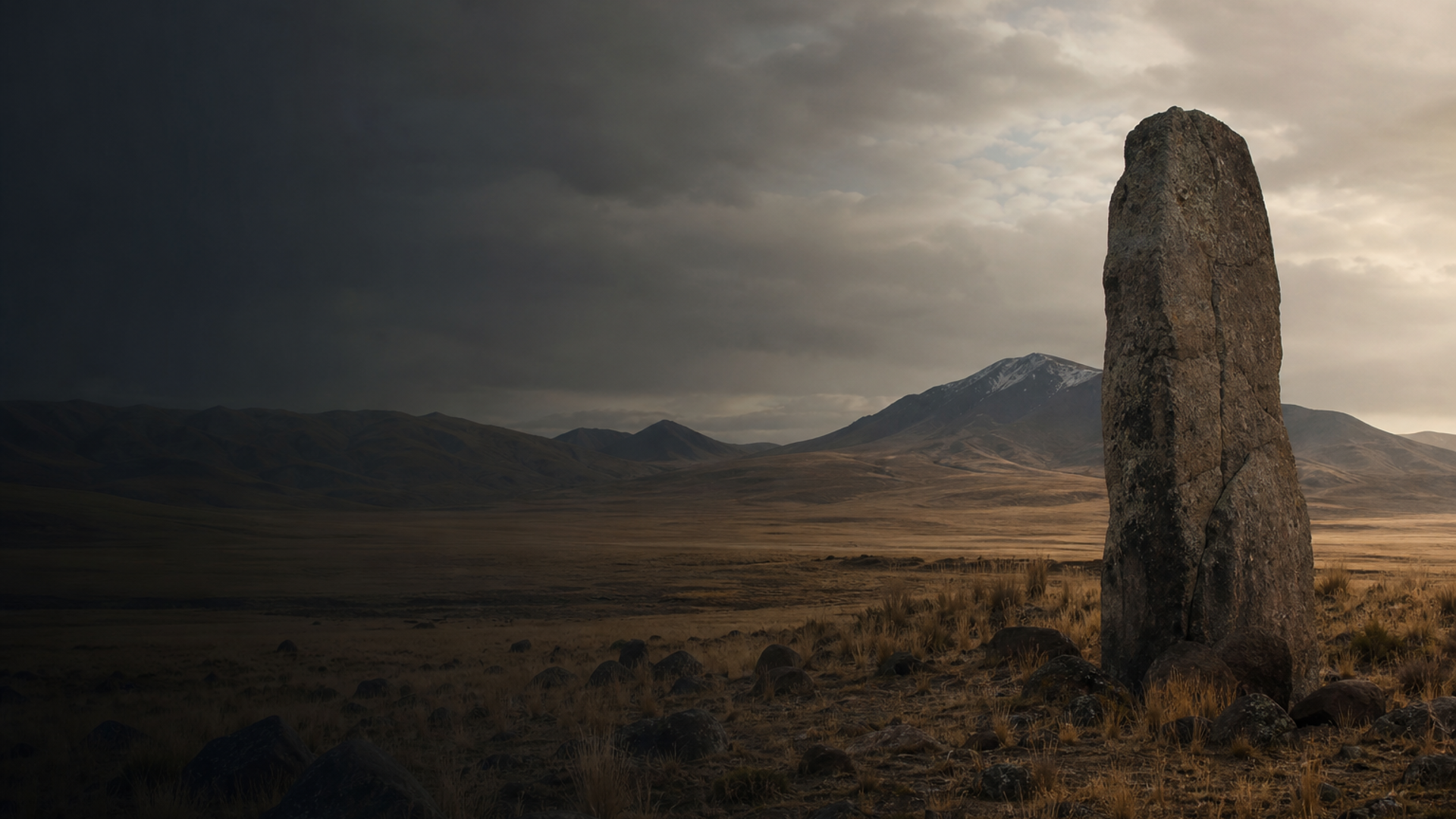
Set high on the windswept altiplano, Monolito Descabezado sits within the wider Tiwanaku cultural landscape that dominated the southern Lake Titicaca basin during the first millennium CE. Archaeological data indicates monumental stonework, carved monoliths, and ceremonial plazas clustered around core centers such as Tiwanaku (near modern-day Tiwanaku, Bolivia). The dated genomic material from Monolito Descabezado—radiocarbon-calibrated to 893–990 CE—places this individual in the late florescence or transformation of Tiwanaku society, a period marked by both architectural continuity and regional reorganization.

Material culture from the region shows long-standing traditions of stone carving, raised agricultural fields (waru-waru), and exchange networks that linked highland and lowland ecologies. Limited evidence suggests that ritual monuments and carved pillars played a role in community identity and elite display. The single ancient genome recovered at Monolito Descabezado must be read against that archaeological backdrop: it is a solitary, poignant glimpse into population history, not a population-level portrait. Broader claims about migration, demography, or political change require substantially more samples from multiple contexts across the Tiwanaku heartland and periphery.

  • Located in the southern Lake Titicaca altiplano, core Tiwanaku region
  • Archaeological evidence: carved monoliths, plazas, and raised-field agriculture
  • Single radiocarbon-dated genome (893–990 CE) — preliminary for population inference
Capítulo IV

Daily Life & Society

The living world of Tiwanaku-era people was one of altitude-hardened agriculture, camelid herding, and long-distance exchange. Archaeological excavations across Tiwanaku plazas and habitations reveal finely made pottery, textiles, and evidence of intensively managed agricultural terraces and raised fields that buffered crops against frost and water stress. Faunal remains indicate reliance on llamas and alpacas for transport, wool, and meat, while trade in obsidian, shell, and metal objects connected upland communities to distant ecological zones.

Ceremonial architecture — massive stone terraces, carved pillars, and public plazas — anchors our understanding of social life. Ritual deposition and monumentality imply complex social hierarchies and collective ceremonies. At Monolito Descabezado, the presence of a named monolith suggests the site functioned in ritual or commemorative roles within a broader polity. Funerary contexts from the region vary: bundled burials, grave goods, and isolated interments appear in different settings, but the single genetic sample here offers only a faint echo of everyday identity. Archaeological data indicates resilience and adaptation in the face of climatic and political shifts during the late 1st millennium CE.

  • Agriculture: raised fields (waru-waru) and high-altitude crop management
  • Economy: llama pastoralism, textile production, and long-distance exchange
Capítulo V

Genetic Profile

Ancient DNA recovered from one individual at Monolito Descabezado yielded mitochondrial haplogroup C. Haplogroup C is one of the founding maternal lineages widespread across the Americas; its presence here is consistent with long-term Andean maternal continuity. No Y-DNA was reported for this sample, so paternal-line insights are absent. The calibrated date range of 893–990 CE situates this genome in the late Tiwanaku era, a time when regional genetic continuity and local population structure are both plausible.

Because the dataset contains a single genome, interpretations must remain cautious. A lone mtDNA call cannot distinguish between local ancestry, short-distance migration, or kinship-specific patterns. Comparative ancient and modern Andean datasets typically show maternal haplogroups A, B, C, and D and paternal lineages often dominated by Q-derived Y haplogroups; however, regional variation and post-contact demographic shifts complicate simple comparisons. Archaeogenetic integration with context—burial treatment, associated artifacts, and stratigraphy—helps situate the sample, but broader demographic assertions require more samples from Monolito Descabezado and neighboring Tiwanaku sites. Future genomes would clarify whether this mtDNA signal reflects widespread local continuity or a narrower familial lineage.

  • mtDNA haplogroup C recovered — aligns with Native American maternal lineages
  • Only one sample; no Y-DNA reported — conclusions about population structure are preliminary
Capítulo VI

Legacy & Modern Connections

The stone monuments and agricultural landscapes of Tiwanaku continue to shape Andean identity. Ethnographic and linguistic continuity in the highlands suggests cultural threads linking ancient communities to modern Aymara and Quechua-speaking populations, though the specifics of genetic continuity are complex. The Monolito Descabezado genome adds an intimate data point to a sparse late-Tiwanaku genetic record: it hints at maternal lineages that persisted in the altiplano but cannot, on its own, prove deep ancestry to particular modern groups.

Archaeogenetics offers a path to deepen these connections by pairing genomic data with careful excavation, radiocarbon dating, and artifact analysis. Each additional sample from the Tiwanaku heartland will strengthen our ability to trace kinship, mobility, and demographic shifts. For now, the Monolito Descabezado individual serves as a solemn reminder that voices from the past survive in both stone and bone — and that fuller stories await further evidence.

  • Suggests maternal-line continuity in the altiplano but requires more data
  • Bridges archaeology and genetics to inform modern Andean identities cautiously
Con IA

Asistente de IA

Haz preguntas sobre la cultura Monolito Descabezado - Tiwanaku Echo

Asistente de IA por DNAGENICS

Desbloquear esta función
Pregunta sobre la cultura Monolito Descabezado - Tiwanaku Echo. El asistente con IA puede explicar hallazgos genéticos, contexto histórico, pruebas arqueológicas y conexiones modernas, con sus límites de interpretación.
Ejemplo de análisis con IA

La cultura Monolito Descabezado - Tiwanaku Echo representa un capítulo de la historia humana...

El análisis genético permite estudiar similitudes con poblaciones anteriores y posibles adaptaciones. Las muestras de ADN antiguo aportan información para investigar patrones migratorios y relaciones entre poblaciones, con límites que dependen del estudio y del contexto arqueológico.

Esta es una vista previa del análisis con IA. Accede al asistente completo para explorar información sobre:

  • Composición y similitud genética
  • Patrones migratorios y orígenes
  • Vida cotidiana y prácticas culturales
  • Contexto genético moderno

Explora más culturas antiguas

Descubre la historia de civilizaciones de distintas partes del mundo antiguo