Preparando el informe

Cargando la información y las referencias disponibles

Consultando el registro arqueológico...

Recopilando registros antiguos

Saltar al contenido principal
Morotai Aru Manara: North Moluccas Ancestors
Cultura destacada

Morotai Aru Manara: North Moluccas Ancestors

Maternal lineages B, Q1d and M illuminate island lifeways across 750 BCE–1156 CE

750 BCE - 1156 CE
North Moluccas, Morotai (Indonesia)
Desplázate para empezar
Capítulo I

La historia

Comprender la cultura Morotai Aru Manara: North Moluccas Ancestors

Ancient DNA from five individuals from Aru Manara (Morotai, North Moluccas) dated 750 BCE–1156 CE reveals mtDNA B, Q1d and M. Archaeological data indicates maritime lifeways and contact networks; genetic signals are preliminary because sample size is small.

Time Period

750 BCE – 1156 CE

Region

North Moluccas, Morotai (Indonesia)

Common Y-DNA

Not reported / unknown

Common mtDNA

B (2), Q1d (2), M (1)

Capítulo II

Cronología

Momentos clave de la historia de esta cultura

750 BCE

Earliest sampled interval begins

First of the dated individuals from Aru Manara falls near 750 BCE, marking the oldest sampled evidence in this set.

Capítulo III

Origins & Emergence

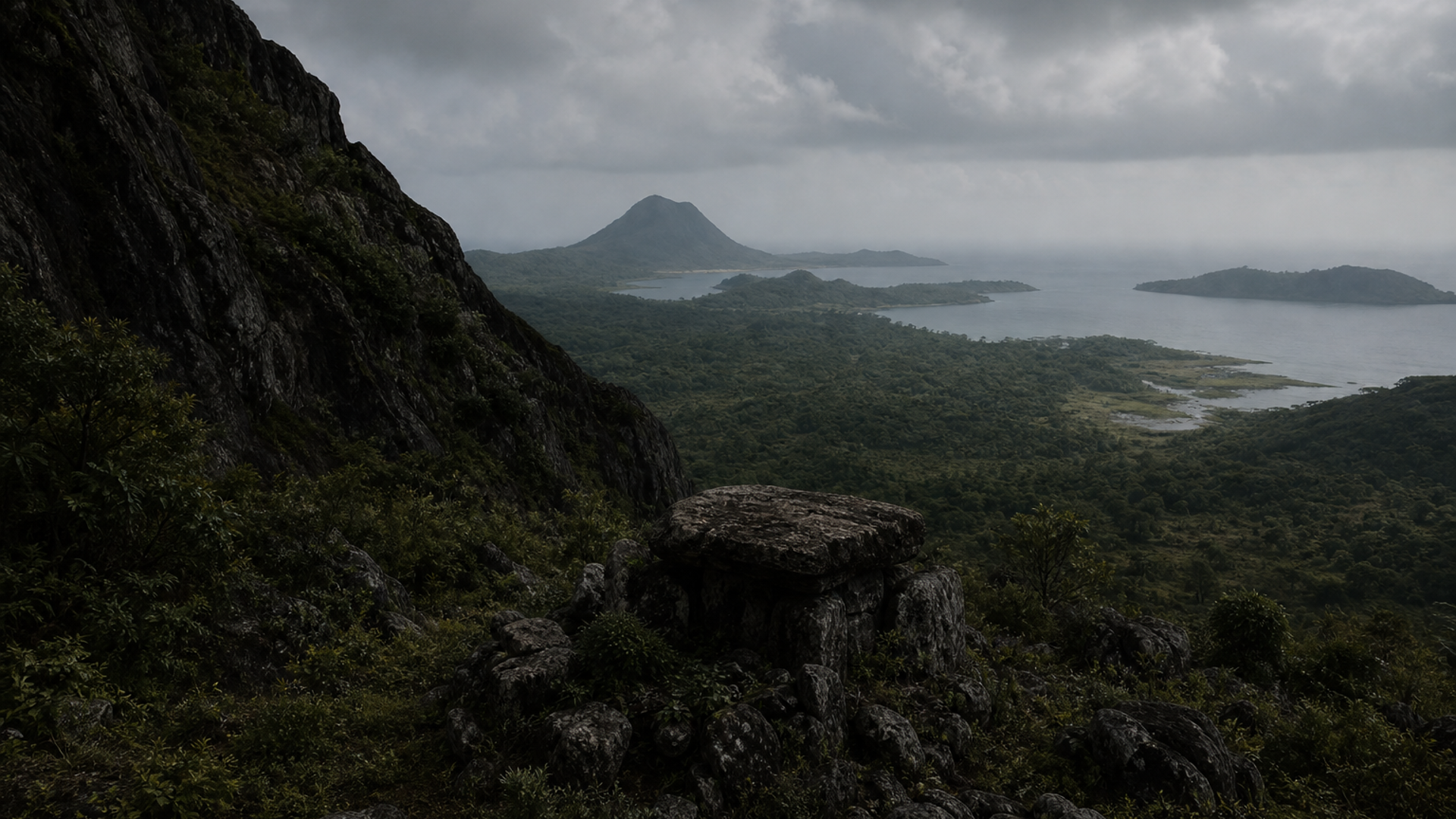
Aru Manara on Morotai sits on the edge of the vast maritime landscape of eastern Indonesia, where ocean lanes and island chains shaped human movement for millennia. Archaeological data indicates repeated coastal occupation and resource use in the North Moluccas during the first millennium BCE and into the second millennium CE. Limited evidence suggests that communities here participated in regional seafaring networks that connected island Southeast Asia, New Guinea, and the wider Pacific.

The dated individuals from Aru Manara fall between 750 BCE and 1156 CE, a long interval that may record multiple phases of occupation and contact. Material traces in the region—ceramic styles, shellfish middens, and evidence for boat-based fishing and trade—point toward a lifeway intensely tied to the sea. Genetically, the presence of mtDNA lineages associated with both Austronesian expansions (haplogroup B) and more Papuan or Near Oceanian ancestries (haplogroup Q1d and some M sublineages) suggests layered arrival histories and local interaction.

Because only five genomes are available, these patterns are best read as preliminary glimpses rather than definitive population histories. Archaeology and genetics together indicate a dynamic frontier of exchange, mobility, and cultural blending rather than a single, uniform origin story.

  • Site: Aru Manara, Morotai, North Moluccas (Indonesia)
  • Date range for samples: 750 BCE–1156 CE
  • Evidence points to maritime connections and layered population histories
Capítulo IV

Daily Life & Society

Imagine narrow reefs and open channels where canoes skim between islands, where people harvested fish, shellfish, and pandanus in a rhythm set by tides and trade winds. Archaeological indicators from the North Moluccas broadly suggest coastal settlement patterns with economies built around marine resources, horticulture suited to island interiors, and craft traditions adapted to seaborne life.

Archaeological data indicates durable ties between communities through exchange of pottery styles, raw materials, and perhaps prestige goods. Such interactions would have supported multilingual and multicultural networks: storytelling, navigational knowledge, and kinship ties crossing water. House structures, burial practices, and material culture in the wider region show variation that likely reflects both local innovation and incoming influences.

Social life on Morotai would have been shaped by mobility—seasonal fishing, inter-island marriage, and periodic long-distance voyaging. These lifeways create a landscape in which genetic signals can shift rapidly as people move, intermarry, or adopt newcomers, which is important to bear in mind when linking DNA snapshots to social organization.

  • Maritime subsistence and seafaring central to daily life
  • Inter-island exchange shaped material culture and kin networks
Capítulo V

Genetic Profile

Five individuals sampled from Aru Manara yield mitochondrial diversity that includes haplogroups B (two individuals), Q1d (two individuals), and M (one individual). Haplogroup B is frequently associated with the Austronesian expansion across island Southeast Asia and into the Pacific; its presence here is consistent with maternal lineages introduced or amplified during seafaring dispersals. Haplogroup Q1d is often reported in Near Oceanian and some island Melanesian contexts, indicating Papuan-related maternal ancestry in the sample set. The M lineage observed likely represents older Asian mitochondrial diversity that persists in island populations.

No consistent Y-chromosome signal is reported for this cohort, so paternal contributions remain unresolved. The temporal span of the samples (750 BCE–1156 CE) overlaps periods when Austronesian languages and material cultures spread and then interacted with long-established Papuan-descended populations. Archaeogenetic evidence from the region generally shows admixture between incoming Austronesian-associated groups and local Papuan groups; the Aru Manara mtDNA profile echoes that pattern, but with critical caveats.

Because the sample count is low (n = 5), any inference about population structure, migration timing, or sex-biased admixture is provisional. Additional genomes, radiocarbon precision, and comparative data from neighboring islands are needed to test whether these mitochondrial patterns reflect persistent mixed communities or episodic contact.

  • mtDNA: B (2) suggests Austronesian maternal ancestry
  • mtDNA: Q1d (2) and M (1) indicate Papuan-related and older Asian lineages
Capítulo VI

Legacy & Modern Connections

The genetic tapestry seen at Aru Manara hints at long-standing connections between the North Moluccas and both Austronesian voyagers and Papuan-descended peoples. Modern communities across eastern Indonesia often retain cultural, linguistic, and biological signals of these intertwined histories. Archaeology and genetics together suggest that ancestry in the Moluccas is not a single thread but a woven cloth of arrivals, local survival, and continual exchange.

Interpreting these links requires caution: with only five ancient genomes, we cannot map direct ancestral lines to present-day groups. Still, the mix of maternal lineages complements linguistic and archaeological evidence for sustained contact zones. Future sampling—especially of Y chromosomes, denser temporal coverage, and comparative sites—will clarify how ancient islanders contributed to the living genetic and cultural mosaic of eastern Indonesia.

  • Ancient mtDNA echoes modern regional admixture patterns
  • Current conclusions are provisional; more samples needed for firm links
Con IA

Asistente de IA

Haz preguntas sobre la cultura Morotai Aru Manara: North Moluccas Ancestors

Asistente de IA por DNAGENICS

Desbloquear esta función
Pregunta sobre la cultura Morotai Aru Manara: North Moluccas Ancestors. El asistente con IA puede explicar hallazgos genéticos, contexto histórico, pruebas arqueológicas y conexiones modernas, con sus límites de interpretación.

Ejemplo de análisis con IA

La cultura Morotai Aru Manara: North Moluccas Ancestors representa un capítulo de la historia humana...

El análisis genético permite estudiar similitudes con poblaciones anteriores y posibles adaptaciones. Las muestras de ADN antiguo aportan información para investigar patrones migratorios y relaciones entre poblaciones, con límites que dependen del estudio y del contexto arqueológico.

Esta es una vista previa del análisis con IA. Accede al asistente completo para explorar información sobre:

  • Composición y similitud genética
  • Patrones migratorios y orígenes
  • Vida cotidiana y prácticas culturales
  • Contexto genético moderno

Explora más culturas antiguas

Descubre la historia de civilizaciones de distintas partes del mundo antiguo