Preparando el informe

Cargando la información y las referencias disponibles

Consultando el registro arqueológico...

Recopilando registros antiguos

Saltar al contenido principal
Piedmont Echoes: Late Maikop Voices
Cultura destacada

Piedmont Echoes: Late Maikop Voices

Three genomes from Mar'inskaja 5 illuminate a twilight of the Late Maikop on the North Caucasus piedmont

3400 CE - 3000 BCE
North Caucasus piedmont, Russia (Mar'inskaja 5)
Desplázate para empezar
Capítulo I

La historia

Comprender la cultura Piedmont Echoes: Late Maikop Voices

Archaeogenetic and archaeological data from three individuals dated c. 3400–3000 BCE at Mar'inskaja 5 connect Late Maikop funerary traditions with gene flows from the Near East and Caucasus. Evidence is limited and conclusions remain preliminary.

Time Period

c. 3400–3000 BCE

Region

North Caucasus piedmont, Russia (Mar'inskaja 5)

Common Y-DNA

L (2), J (1)

Common mtDNA

T (2), K (1)

Capítulo II

Cronología

Momentos clave de la historia de esta cultura

2500 BCE

Late Maikop social intensification

Archaeological evidence suggests increased monumentality and long-distance exchange in the North Caucasus, reflected in tumuli and rich grave goods at sites like Mar'inskaja 5.

Capítulo III

Origins & Emergence

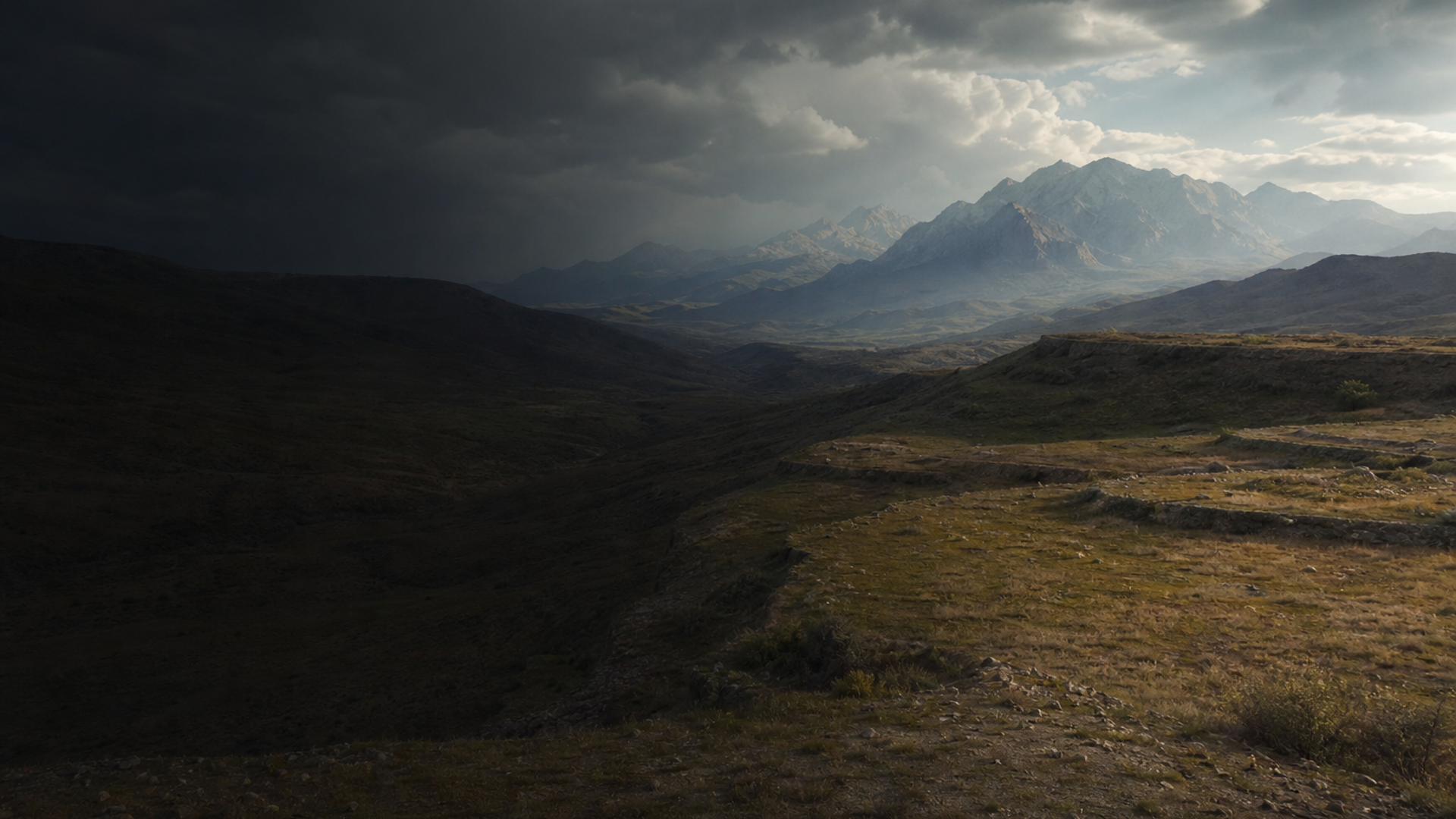
Under a low Caucasian sun, the Late Maikop left tumuli and hoards that speak of networks of wealth and ritual. Archaeological data indicates that between roughly 3400 and 3000 BCE communities on the North Caucasus piedmont — including the burial locus Mar'inskaja 5 — participated in the Maikop horizon of elaborate burial rites, metalworking, and long-distance exchange. Material culture from Late Maikop contexts shows stylistic affinities with the inner Caucasus and the Near East: stamped metal, finely made ceramics, and tumulus graves.

Genetically, the small sample from Mar'inskaja 5 hints at population threads connecting the piedmont to broader Caucasus and Near Eastern networks. Limited evidence suggests a mixture of lineages not strictly local to the steppe periphery. However, because only three individuals were sampled, population-level inferences are tentative: these genomes are evocative signposts rather than a comprehensive map. Archaeological stratigraphy and radiocarbon dates at Mar'inskaja 5 anchor these individuals to the late 4th–early 3rd millennium BCE, a period of social intensification and regional interaction.

  • Late Maikop horizon: c. 3400–3000 BCE on the North Caucasus piedmont
  • Mar'inskaja 5 provides burial contexts tied to Maikop funerary rites
  • Material links to the inner Caucasus and Near East visible in grave goods
Capítulo IV

Daily Life & Society

Archaeological traces paint a picture of communities balanced between pastoral mobility and localized craft economies. At the piedmont ecotone near Mar'inskaja 5, people exploited upland pastures and lowland fields; archaeological data indicates mixed herding, seasonal movement, and localized agriculture. The richness of some Maikop graves—ornate metalwork and imported-looking objects—suggests social differentiation and ritualized displays of status.

Workshops for metal and stone, woodworking traces, and patterned ceramics imply skilled artisanry embedded in household and funerary economies. Cemeteries and tumuli, often placed on ridgelines and terraces, served as cinematic stages for ancestral memory: ritually deposited goods, animal remains, and carefully arranged human interments articulate lineage claims. Yet everyday life for most people likely remained reliant on resilient, multi-resource subsistence: flocks, small-scale cultivation, foraging, and exchange with neighboring valleys. Given the small genetic sample, these social reconstructions remain grounded primarily in material culture rather than comprehensive biological sampling.

  • Mixed pastoral and agricultural subsistence at the piedmont ecotone
  • Artisan production and unequal access to prestige goods indicated by grave inventories
Capítulo V

Genetic Profile

The genetic dataset from Mar'inskaja 5 comprises three genomes dated within the Late Maikop span (c. 3400–3000 BCE). Two male-line haplotypes are classified as Y-DNA haplogroup L and one as J; mitochondrial lineages are predominantly T (two individuals) with one K. These signal a mixed genetic tapestry consistent with known Caucasus and Near Eastern connections, but interpretation must be conservative.

Haplogroup J is well-attested across the Near East and the Caucasus and is often interpreted as reflecting long-standing regional continuity or gene flow from southwestern Asia. Haplogroup L is rarer on the European periphery today and has stronger modern associations further south and east; its presence in two samples could indicate mobility, long-distance connections, or an underappreciated local distribution in the Eneolithic Caucasus. Maternal haplogroups T and K are widespread across Eurasia and can reflect both Neolithic farmer and later gene flows.

Because sample count is three (below 10), any population-wide claims are preliminary: these genomes suggest heterogeneity and external links but cannot alone resolve demographic processes. Future, larger sampling across Maikop cemeteries and contemporaneous sites will be essential to test hypotheses about migration, gender-biased gene flow, and the relationship between social status and biological ancestry.

  • Y-DNA: L (2) and J (1), suggesting Near Eastern/Caucasus and potentially more distant connections
  • mtDNA: T (2) and K (1), reflecting maternal lineages common across Neolithic-derived Eurasian populations
Capítulo VI

Legacy & Modern Connections

The cinematic ridgelines of the North Caucasus still carry echoes of Late Maikop life: mounded graves and isolated metal fragments anchor a story of exchange and evolving social hierarchies. Genetic footprints from Mar'inskaja 5 hint at linkages between the piedmont and broader Caucasus–Near Eastern networks that contributed to the genetic landscape of later regional groups.

Importantly, the small sample size cautions against sweeping claims about continuity to modern populations. Limited evidence suggests threads of ancestry that may persist in the region, but only deeper genomic sampling and integration with archaeology will reveal how Late Maikop communities contributed to the mosaic of later Bronze Age and historic populations. For visitors and researchers alike, Mar'inskaja 5 offers a poignant reminder: every grave is a single voice in a chorus we are only beginning to hear.

  • Genetic signals hint at Caucasus and Near Eastern connections persisting into later periods
  • Small sample sizes mean continuity with modern populations remains an open question
Con IA

Asistente de IA

Haz preguntas sobre la cultura Piedmont Echoes: Late Maikop Voices

Asistente de IA por DNAGENICS

Desbloquear esta función
Pregunta sobre la cultura Piedmont Echoes: Late Maikop Voices. El asistente con IA puede explicar hallazgos genéticos, contexto histórico, pruebas arqueológicas y conexiones modernas, con sus límites de interpretación.
Ejemplo de análisis con IA

La cultura Piedmont Echoes: Late Maikop Voices representa un capítulo de la historia humana...

El análisis genético permite estudiar similitudes con poblaciones anteriores y posibles adaptaciones. Las muestras de ADN antiguo aportan información para investigar patrones migratorios y relaciones entre poblaciones, con límites que dependen del estudio y del contexto arqueológico.

Esta es una vista previa del análisis con IA. Accede al asistente completo para explorar información sobre:

  • Composición y similitud genética
  • Patrones migratorios y orígenes
  • Vida cotidiana y prácticas culturales
  • Contexto genético moderno

Explora más culturas antiguas

Descubre la historia de civilizaciones de distintas partes del mundo antiguo