Preparando el informe

Cargando la información y las referencias disponibles

Consultando el registro arqueológico...

Recopilando registros antiguos

Saltar al contenido principal
Piedmont to Steppe: North Caucasus, 2899–2303 BCE
Cultura destacada

Piedmont to Steppe: North Caucasus, 2899–2303 BCE

Seven Bronze Age genomes reveal a strong paternal R signal and mixed maternal ancestry across the North Caucasus piedmont.

2899 CE - 2303 BCE
North Caucasus (Russia)
Desplázate para empezar
Capítulo I

La historia

Comprender la cultura Piedmont to Steppe: North Caucasus, 2899–2303 BCE

Archaeological and genetic data from seven individuals (2899–2303 BCE) from the North Caucasus piedmont and Kuban steppe reveal dominant Y haplogroup R and diverse mtDNA (U, R, H). Findings hint at steppe–Caucasus interactions but remain preliminary.

Time Period

2899–2303 BCE

Region

North Caucasus (Russia)

Common Y-DNA

R (5/7)

Common mtDNA

U (3), R (2), H (1)

Capítulo II

Cronología

Momentos clave de la historia de esta cultura

2500 BCE

Piedmont and steppe lifeways coalesce

Around 2500 BCE communities on the North Caucasus piedmont and Kuban steppe show material links and emerging genetic signals that reflect cross-zone interaction.

Capítulo III

Origins & Emergence

The archaeology of the Russia_North_Caucasus assemblage unfolds along a dramatic edge where the piedmont meets the Kuban steppe. Radiocarbon-calibrated dates for the seven samples fall between 2899 and 2303 BCE, a span that situates these individuals in the Early to Middle Bronze Age horizon associated with regional groups broadly linked to the North Caucasus cultural mosaic. Sites represented include Belij Ugol 2, Gorjačevodskij 1, Lysogarskaya, Mar'inskaja 5, Progress 2, Rasshevatskij 1 (Kuban steppe), and Goryachevadskiy.

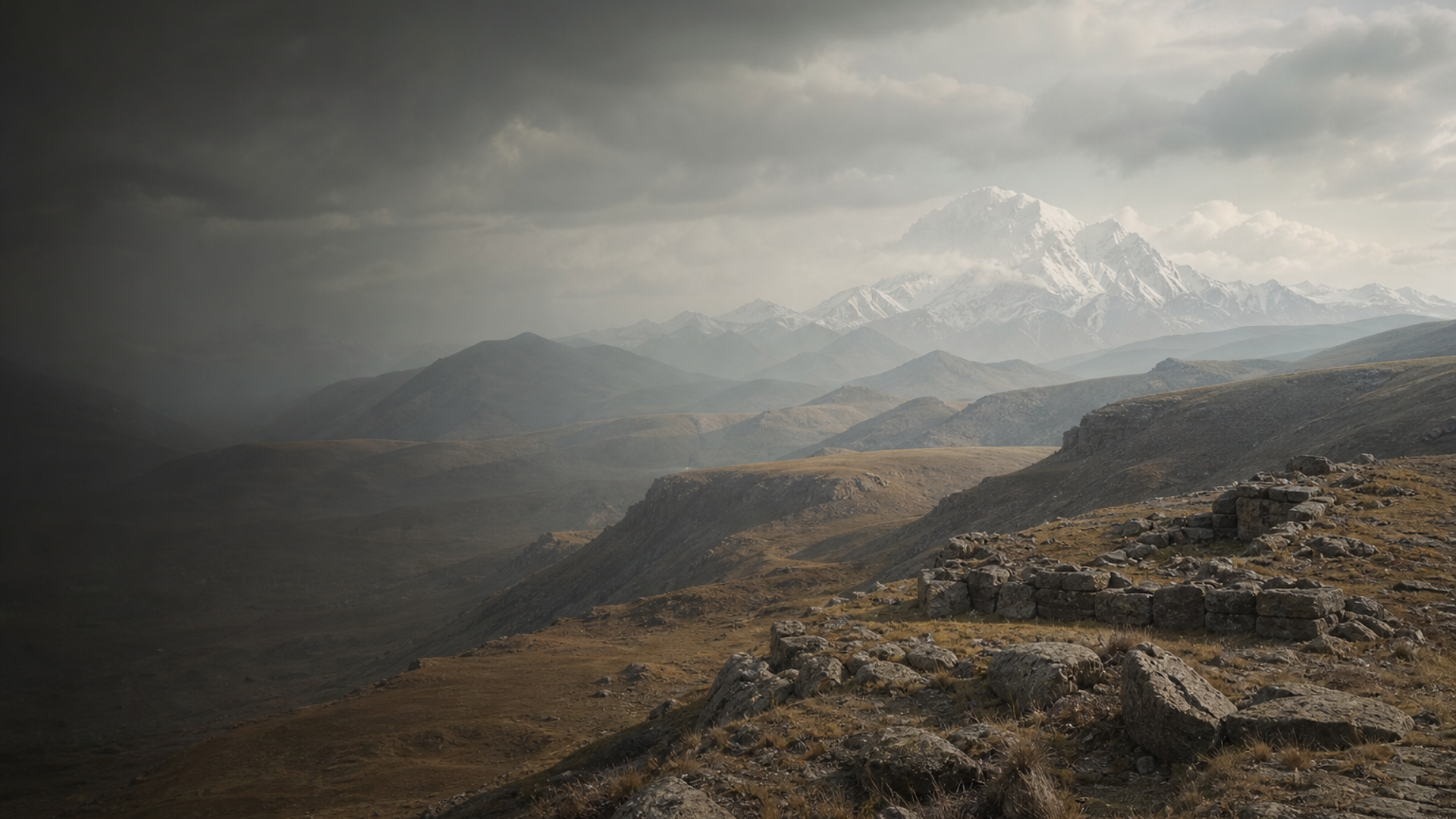
Archaeological data indicates settlement and mortuary activity on the piedmont with material traces that suggest contacts across ecological zones: upland transhumant routes, river corridors, and steppe grazing lands. Limited evidence suggests exchanges of metal, pottery styles, and burial forms with neighboring steppe communities. The cinematic image is of a landscape of wind-swept grass and folded foothills where small communities oriented to both valley agriculture and mobile herding emerged.

Caution is required: with only seven genomes, interpretations about population origins are provisional. Nonetheless, the temporal and spatial clustering of these samples provides a snapshot of a people navigating the interface between the high Caucasus and the open steppe, forming a local expression of broader North Caucasus cultural developments.

  • Samples dated 2899–2303 BCE from seven piedmont and steppe sites
  • Archaeological evidence indicates mixed subsistence and interregional contact
  • Conclusions are preliminary due to low sample count
Capítulo IV

Daily Life & Society

Excavations on the piedmont sites reveal traces of a Bronze Age lifeway shaped by seasonal rhythms and geographic thresholds. Archaeological features—house remnants, hearths, storage pits, and burials—suggest small, often kin-centered communities exploiting both cultivated plots and natural pasture. Faunal remains from nearby contexts indicate a reliance on sheep, goat and cattle, consistent with mixed herding and low-intensity agriculture. Tools and ceramic fragments point to local craft traditions supplemented by traded goods.

Burial practice varies across the region: some graves show single inhumations with simple grave goods, while others hint at curated objects that traveled across valleys. The material palette—bronze artifacts, shale or stone ornaments, and pottery with regional motifs—evokes a people tied to long-distance exchange networks as well as local lineages.

Archaeological data indicates social organization that may have emphasized patrilineal households and mobile pastoral strategies, but this remains interpretive. Ethnographic analogies and regional comparisons help imagine seasonal movement between lowland fields and upland pastures, yet direct evidence for household size, marriage patterns, or social hierarchy is limited. As always, material remains give shapes and gestures but not full biographies; genetics can help fill some of those blank spaces, especially about mobility and kinship.

  • Mixed herding and low-intensity agriculture on piedmont and steppe
  • Varied burial practices with local and exchanged grave goods
Capítulo V

Genetic Profile

The genetic dataset for Russia_North_Caucasus comprises seven individuals—small but informative. Uniparental markers show a marked pattern: five of seven males carry Y-chromosome haplogroup R, while mitochondrial haplogroups are more diverse (U: 3, R: 2, H: 1). These results suggest a strong paternal continuity of R-lineages within this funerary sample and a varied maternal pool drawn from deep West Eurasian lineages.

Interpreting these markers requires caution. Uniparental haplogroups reflect only single ancestral lines (father-to-son or mother-to-child) and can be shaped by social practices such as patrilocal residence or male-biased migration. The predominance of Y‑R might indicate patrilineal descent groups or the success of particular male lineages during this period, but autosomal data (which integrates ancestry across all lines) is needed to assess overall population structure and admixture.

Archaeological and genetic concordance point toward interactions between steppe and Caucasus zones. The mtDNA presence of haplogroup U—an ancient European lineage—coexisting with R and H lineages underscores a blended maternal heritage. Given the sample size (<10), these patterns should be viewed as preliminary: larger genomic surveys and calibrated autosomal analyses are essential to resolve the timing and direction of gene flow, possible kin networks within cemeteries, and links to later North Caucasus populations.

  • Y-chromosome dominated by haplogroup R (5 of 7 males)
  • Diverse mtDNA (U, R, H) suggests mixed maternal ancestry
Capítulo VI

Legacy & Modern Connections

The Russia_North_Caucasus assemblage sits at a crossroads in Bronze Age Eurasia, and its genetic and material traces contribute threads to later regional tapestries. Archaeological continuities in pastoral practices, metallurgy, and exchange corridors likely informed the cultural landscape of the North Caucasus through the second millennium BCE and beyond. Genetically, the prominence of Y haplogroup R in this small sample resonates with broader patterns across temperate Eurasia, though direct lines of descent to modern groups cannot be asserted from seven genomes alone.

Limited evidence suggests these communities participated in networks that later populations inherited in part—whether through shared technologies, marriage ties, or mobility traditions. For modern genetic landscapes, these ancient individuals are one early chapter: they may have contributed alleles to subsequent regional populations, but dense temporal sampling is needed to map continuity and replacement. In sum, the legacy is evocative but cautious: threads visible in both the soil and in ancient DNA, awaiting fuller resolution.

  • Contributes to the story of steppe–Caucasus interaction and Bronze Age mobility
  • Possible genetic contributions to later regional populations, but evidence is provisional
Con IA

Asistente de IA

Haz preguntas sobre la cultura Piedmont to Steppe: North Caucasus, 2899–2303 BCE

Asistente de IA por DNAGENICS

Desbloquear esta función
Pregunta sobre la cultura Piedmont to Steppe: North Caucasus, 2899–2303 BCE. El asistente con IA puede explicar hallazgos genéticos, contexto histórico, pruebas arqueológicas y conexiones modernas, con sus límites de interpretación.
Ejemplo de análisis con IA

La cultura Piedmont to Steppe: North Caucasus, 2899–2303 BCE representa un capítulo de la historia humana...

El análisis genético permite estudiar similitudes con poblaciones anteriores y posibles adaptaciones. Las muestras de ADN antiguo aportan información para investigar patrones migratorios y relaciones entre poblaciones, con límites que dependen del estudio y del contexto arqueológico.

Esta es una vista previa del análisis con IA. Accede al asistente completo para explorar información sobre:

  • Composición y similitud genética
  • Patrones migratorios y orígenes
  • Vida cotidiana y prácticas culturales
  • Contexto genético moderno

Explora más culturas antiguas

Descubre la historia de civilizaciones de distintas partes del mundo antiguo