Saltar al contenido principal
Cultura destacada

Riverine Shadows: Mesolithic Germany

Hunter-gatherer lifeways in central Germany, 7593–4622 BCE — bone, stone, and ancient DNA

7593 CE - 4622 BCE
Central/Northern Germany (Saxony-Anhalt, Brandenburg, Thüringen, Mecklenburg-Vorpommern)

La historia

Archaeological and genetic evidence from 16 Mesolithic individuals (7593–4622 BCE) in central Germany reveals riverine foragers with strong mitochondrial U lineages and Y-haplogroup diversity, preserving a Western Hunter‑Gatherer genetic signal amid shifting postglacial landscapes.

Time Period

7593–4622 BCE

Region

Central/Northern Germany (Saxony-Anhalt, Brandenburg, Thüringen, Mecklenburg-Vorpommern)

Common Y-DNA

I (4), M (4), FGC (1), P (1) — 16 samples total

Common mtDNA

U (13 of 16 samples)

Cronología

7593 BCE

Earliest dated individuals

Earliest sample in the dataset dates to about 7593 BCE, marking early postglacial occupation of riverine landscapes.

6000 BCE

Intensified riverine foraging

Archaeological layers show greater use of wetlands and specialized fish and waterfowl exploitation.

4622 BCE

Latest sampled individuals

The most recent samples date to ~4622 BCE, a time of increasing contact with Neolithic communities.

Origins & Emergence

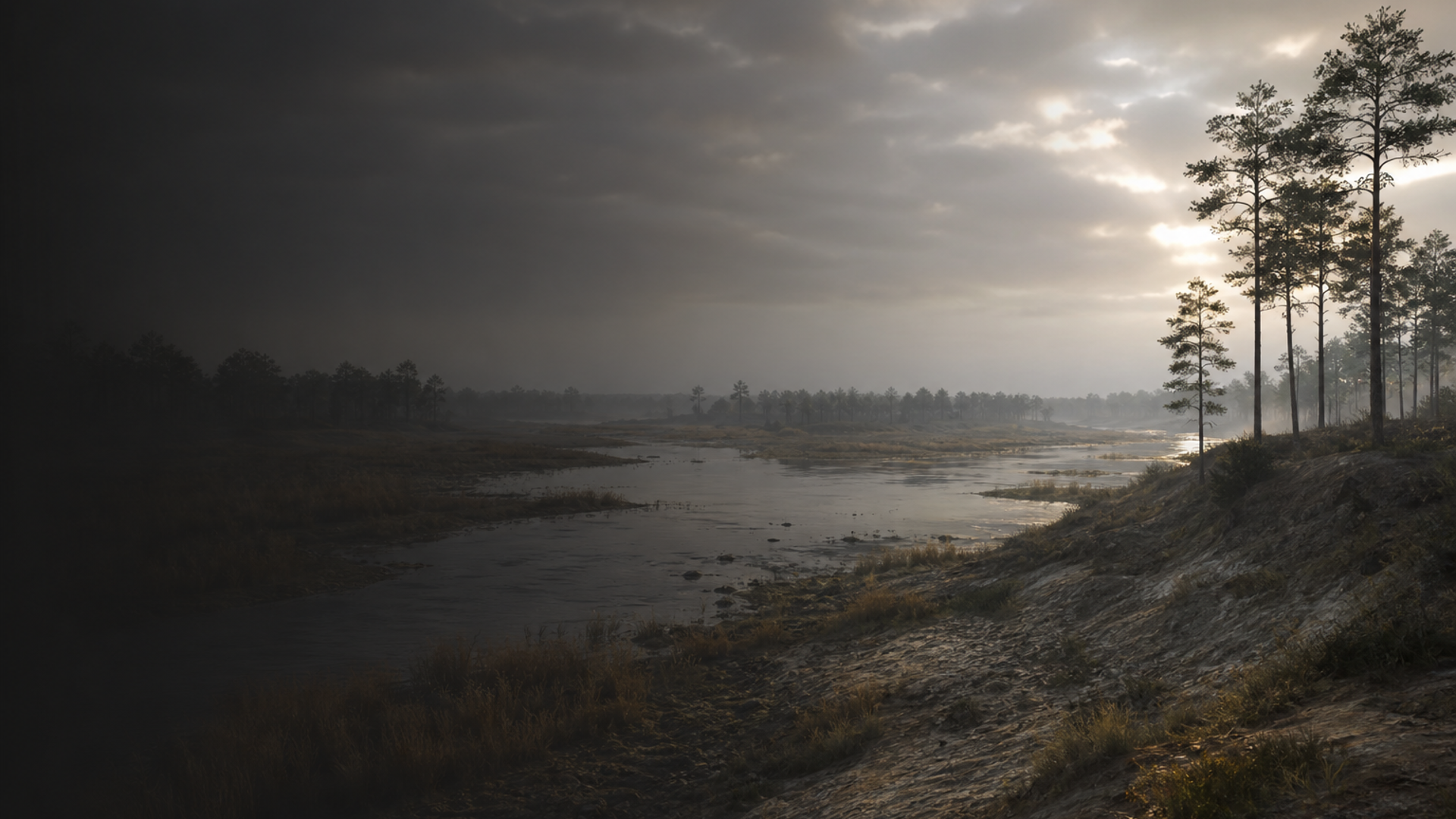
The Mesolithic communities recorded at sites such as Bad Dürrenberg and Bottendorf (Saxony‑Anhalt), Urdhöhle (Thüringen), Drigge (Mecklenburg‑Vorpommern), and Gross Fredenwalde and Criewen (Brandenburg) occupy a liminal landscape of rivers, wetlands and early postglacial woodlands. Radiocarbon dates from the dataset span roughly 7593 to 4622 BCE, placing these people in the centuries after the Last Glacial Maximum when forests expanded across northern Central Europe. Archaeological remains — flint microliths, fish and waterfowl bones, and occasional hearth features — sketch a world oriented toward rivers and marshes, where mobility and seasonal use of resources structured life.

Limited evidence suggests continuity with earlier late Pleistocene hunter‑gatherers in technological and subsistence patterns, but the Mesolithic era is not monolithic: regional adaptations to rising forests, expanding wetlands, and shifting prey species are apparent. The sampled individuals come from multiple sites across modern German states, giving a geographic window onto postglacial settlement rather than a single, unified culture. Archaeological data indicates a reliance on small game, fish, and foraged plants, combined with specialized microlith toolkits suited to flexible, mobile lifeways. As landscapes and climates stabilized, these communities anchored themselves to riverine corridors that served as highways of movement and exchange.

  • Sites include Bad Dürrenberg, Bottendorf, Urdhöhle, Drigge, Gross Fredenwalde, Criewen
  • Dates span 7593–4622 BCE, postglacial Mesolithic contexts
  • Archaeology indicates riverine, wetland-focused subsistence and mobile toolkits

Daily Life & Society

Life for Mesolithic people in these river valleys would have been intimate with water: seasonal fish runs, waterfowl migration, and reed swamps shaping calendars and technology. Archaeological assemblages show diverse small lithic tools — microliths and backed blades — likely hafted as barbs for composite projectiles, and specialised implements for processing fish and hides. Hearths and ephemeral habitation traces imply small, flexible groups moving between seasonal camps and richer resource patches.

Social structure can only be glimpsed indirectly. Burials are relatively rare in many Mesolithic contexts, but mortuary treatment where present and the distribution of grave goods hint at kin‑based groups with shared foraging territories. Exchange along rivers could have transmitted raw materials and ideas across hundreds of kilometers. Environmental reconstructions, combined with the spatial distribution of sites like Gross Fredenwalde and Criewen in the Uckermark, suggest landscapes that supported persistent, low‑density populations who balanced mobility with repeated use of favored wetlands and riverbanks.

Archaeological data indicates adaptation to ecological mosaics rather than early agriculture; these communities managed resources through seasonal rounds and technological flexibility rather than sedentary farming.

  • Seasonal rounds focused on fish, waterfowl, and wetland plants
  • Small, mobile groups using microlith toolkits and composite weapons

Genetic Profile

Ancient DNA from 16 individuals across central Germany reveals a striking mitochondrial pattern: 13 of the 16 carry haplogroup U lineages, consistent with a widespread maternal legacy among European hunter‑gatherers. On the paternal side, Y‑chromosome calls include haplogroup I (4 individuals) and other less common assignments reported here as M (4), FGC (1), and P (1). These Y‑lineage counts indicate diversity in male lines, although some assignments may be provisional because ancient DNA preservation and low coverage can complicate precise subclade resolution.

At the population level, genomic affinities place these individuals within the broader Western Hunter‑Gatherer (WHG) genetic cluster that characterizes much of Mesolithic and early postglacial Europe. This fits with the dominance of mtDNA U and the presence of Y‑haplogroup I, both hallmarks of hunter‑gatherer ancestries in northern and western Europe. The presence of additional Y‑lineages suggests regional heterogeneity and possible north–south or east–west micro‑structures in male ancestry.

Because the sample size is moderate (16 individuals), observed patterns are informative but still preliminary for resolving fine‑grained demographic events. Archaeogenetic data indicates continuity of hunter‑gatherer ancestry into the mid‑5th millennium BCE in these riverine settings, even as Neolithic farmer ancestries spread elsewhere in Europe, pointing to complex local interactions and variable adoption of new lifeways.

  • mtDNA: U lineages dominate (13 of 16), typical of European hunter‑gatherers
  • Y‑DNA shows I and several less common lineages, indicating paternal diversity

Legacy & Modern Connections

The genetic imprint of Mesolithic riverine foragers persists in the deep ancestry of many Europeans: the U‑rich maternal signature and the WHG genetic component contribute to the mosaic that later populations — including Neolithic farmers and Bronze Age groups — inherited and reshaped. Archaeologically, these Mesolithic communities remind us that the shift to farming was neither uniform nor inevitable; in central German wetlands, hunter‑gatherer lifeways endured alongside and sometimes in mixture with incoming agricultural groups.

For modern genetic studies, the Germany_Mesolithic dataset provides crucial local context: it helps calibrate models of hunter‑gatherer persistence, admixture timing, and regional demographic continuity. However, with 16 samples from a handful of sites, conclusions about broad population dynamics remain provisional. Continued excavation and sequencing will refine how these riverine shadows connect to the genetic landscape of later European populations.

  • Contributes to modern European ancestral components, especially WHG-derived signals
  • Highlights persistence of hunter‑gatherer lifeways amid Neolithic transitions

Asistente de IA

Asistente de IA por DNAGENICS

Desbloquear esta función
Pregunta sobre la cultura Riverine Shadows: Mesolithic Germany. El asistente con IA puede explicar hallazgos genéticos, contexto histórico, pruebas arqueológicas y conexiones modernas, con sus límites de interpretación.
Ejemplo de análisis con IA

La cultura Riverine Shadows: Mesolithic Germany representa un capítulo de la historia humana...

El análisis genético permite estudiar similitudes con poblaciones anteriores y posibles adaptaciones. Las muestras de ADN antiguo aportan información para investigar patrones migratorios y relaciones entre poblaciones, con límites que dependen del estudio y del contexto arqueológico.

Esta es una vista previa del análisis con IA. Accede al asistente completo para explorar información sobre:

  • Composición y similitud genética
  • Patrones migratorios y orígenes
  • Vida cotidiana y prácticas culturales
  • Contexto genético moderno