Preparando el informe

Cargando la información y las referencias disponibles

Consultando el registro arqueológico...

Recopilando registros antiguos

Saltar al contenido principal
Rossberga Echoes: Sweden's Funnel Beakers
Cultura destacada

Rossberga Echoes: Sweden's Funnel Beakers

Three Neolithic voices from Rossberga and Rössberga, heard through pottery, bones and DNA.

3331 CE - 2913 BCE
Sweden (Rossberga, Rössberga)
Desplázate para empezar
Capítulo I

La historia

Comprender la cultura Rossberga Echoes: Sweden's Funnel Beakers

Three individuals (c. 3331–2913 BCE) from Rossberga/Rössberga in Sweden, linked to the Funnel Beaker tradition. Archaeology and ancient DNA (Y: I; mt: J, K) hint at farmer lifeways blended with local lineages — a preliminary glimpse given only three samples.

Time Period

c. 3331–2913 BCE

Region

Sweden (Rossberga, Rössberga)

Common Y-DNA

I (2 of 3)

Common mtDNA

J (2), K (1)

Capítulo II

Cronología

Momentos clave de la historia de esta cultura

3331 BCE

Burials at Rossberga/Rössberga dated

Samples from Rossberga and Rössberga date to c. 3331–2913 BCE, situating them within the Funnel Beaker cultural horizon in southern Scandinavia.

Capítulo III

Origins & Emergence

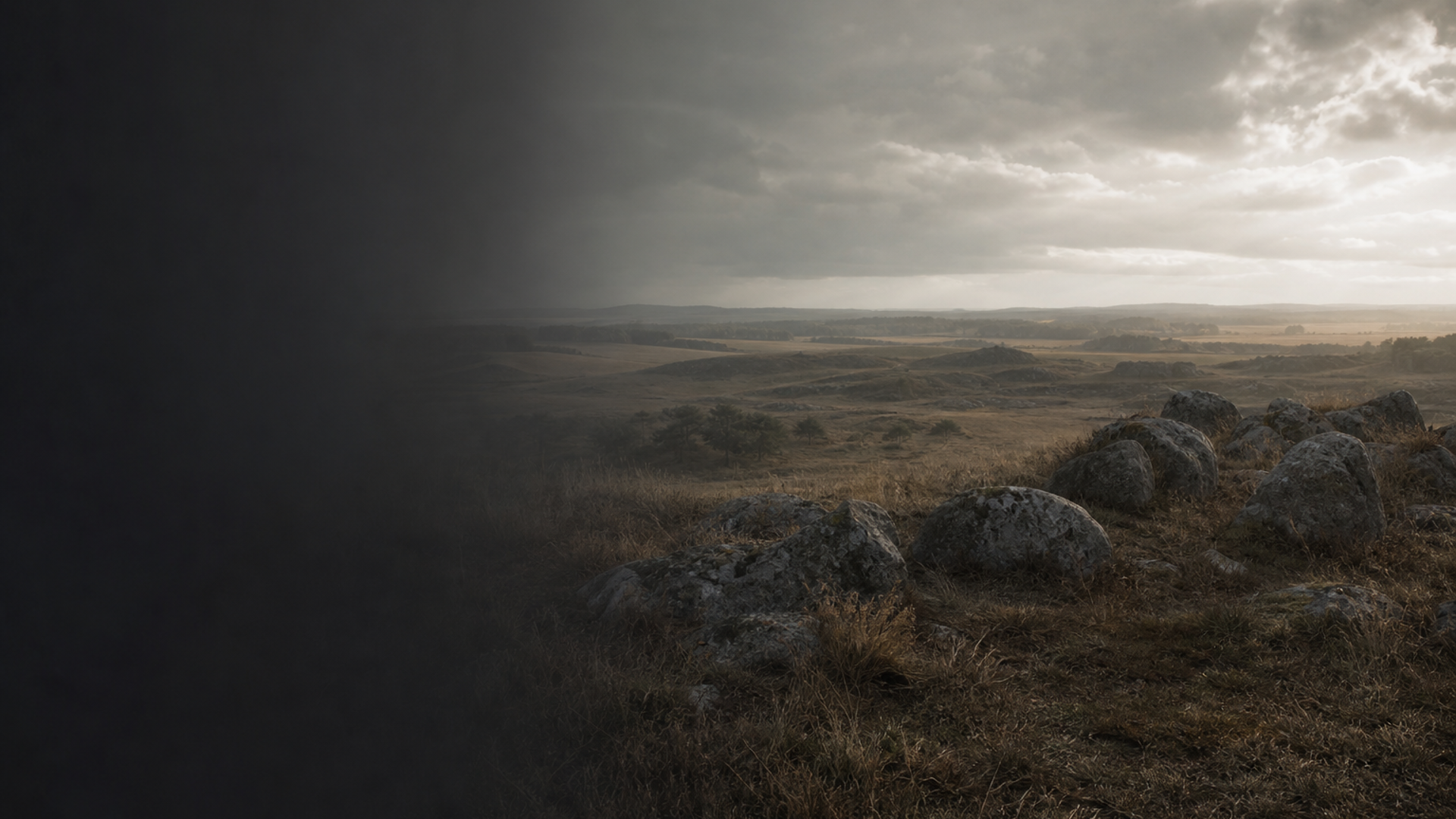
The individuals labeled Sweden_FBC come from sites at Rossberga and Rössberga in present-day Sweden and date to roughly 3331–2913 BCE, placing them within the broad Funnel Beaker (TRB) horizon that shaped Neolithic Scandinavia. Archaeological data indicates these communities adopted mixed farming economies and constructed stone settings and burial monuments that mark a new relationship with landscape. The cinematic sweep of this era — fields opening across glacial terrain and long barrows rising on the horizon — is supported by material culture: characteristic pottery forms, polished stone tools, and evidence for domesticates.

From a population perspective, the Funnel Beaker phenomenon is archaeologically visible as a cultural horizon stretching across southern Scandinavia. Genetic studies from the broader region show farmers carrying Anatolian-related ancestry arriving into northern Europe and mixing with local hunter-gatherers. Limited evidence from the three Sweden_FBC individuals is consistent with this broader pattern: their DNA and burial contexts suggest local farmer communities that were in dialogue with forager populations. Because the sample count is small, these inferences remain provisional; they illuminate possible processes rather than definitive demographic histories.

  • Dates: c. 3331–2913 BCE; sites: Rossberga, Rössberga (Sweden)
  • Material culture aligns with Funnel Beaker (TRB) pottery and burial traditions
  • Limited samples suggest farmer–forager admixture, but conclusions are preliminary
Capítulo IV

Daily Life & Society

Archaeological traces paint a tactile picture of everyday life: communities cultivating small cereal plots, tending sheep and cattle, and shaping clay into the funnel-necked vessels that define the TRB repertoire. Settlement features in contemporaneous Swedish sites show timber longhouses and activity areas for food processing; while at funerary locations like Rossberga/Rössberga, stone settings and burials anchor social memory in place.

The material record implies a mixed economy — crop cultivation alongside continued use of wild resources — and social landscapes organized around kinship and ritual. Communal monuments and shared burial customs suggest group identities reinforced through collective acts of remembrance. Tools and pottery styles indicate craft specialization and long-distance exchange networks across southern Scandinavia. Nevertheless, local variation would have been substantial: micro-regional adaptations to soil, sea access, and seasonal mobility likely shaped daily rhythms.

Because archaeological sampling is uneven, specific household organization at Rossberga remains partly speculative. The three sampled individuals offer snapshots rather than full biographies, but when combined with regional archaeology they contribute to a richer, more intimate view of Neolithic lifeways.

  • Mixed farming economy: cereals, domesticated animals, and wild resources
  • Communal tombs and pottery styles indicate shared ritual and regional connections
Capítulo V

Genetic Profile

Three genome-wide samples from Rossberga/Rössberga dated 3331–2913 BCE provide a narrowly focused genetic window into Sweden's Funnel Beaker groups. Two of the three male samples carry Y-chromosome haplogroup I. Mitochondrial haplogroups observed are J (two individuals) and K (one individual). These markers offer initial clues: haplogroup I has long associations with northern European male lineages and has been found in Mesolithic and some Neolithic contexts, while mtDNA J and K are frequently observed among early farmers in Europe.

Taken together, this profile is compatible with the broader pattern documented in northern Europe: incoming farmer ancestry (often linked to Anatolian-derived Early European Farmers) admixed with persistent local hunter-gatherer ancestry. The predominance of Y-haplogroup I in this tiny set could reflect local paternal continuity, male-biased ancestry transmission, or simple sampling chance. The presence of J and K on the maternal side aligns with farmer-associated maternal lineages but does not exclude local contributions.

Importantly, the sample count is very small (n = 3). Any demographic or social inference must be treated as tentative. Additional samples from Rossberga, neighboring cemeteries, and settlement contexts are necessary to test whether these genetic patterns are representative of regional Funnel Beaker populations or reflect individual-level variability.

  • Small sample (n = 3): preliminary but informative
  • Y: haplogroup I (2); mt: J (2), K (1) — consistent with mixed farmer–forager ancestry
Capítulo VI

Legacy & Modern Connections

The Rossberga/Rössberga individuals are threads in a long tapestry connecting Neolithic Scandinavia to later populations. Some genetic lineages present in the Neolithic (including variants of haplogroup I and maternal types like J and K) persist, to varying degrees, into later periods and modern populations in northern Europe. Archaeologically, the Funnel Beaker tradition left an enduring imprint on the landscape through its megalithic architecture and ceramic styles that influenced subsequent cultural traditions.

However, modern genetic landscapes were shaped by many later movements — Bronze Age migrations, Iron Age interactions, and historical-era mobility — so any direct line from a small Neolithic sample to contemporary individuals is complex and layered. The most productive view sees these DNA results as one piece of evidence that, together with archaeology, illuminates how people lived, moved and remembered their dead in early farming Sweden.

  • Material legacy: megaliths and regional pottery traditions shaped later rituals
  • Genetic continuity exists but was reshaped by later migrations; links are complex
Con IA

Asistente de IA

Haz preguntas sobre la cultura Rossberga Echoes: Sweden's Funnel Beakers

Asistente de IA por DNAGENICS

Desbloquear esta función
Pregunta sobre la cultura Rossberga Echoes: Sweden's Funnel Beakers. El asistente con IA puede explicar hallazgos genéticos, contexto histórico, pruebas arqueológicas y conexiones modernas, con sus límites de interpretación.
Ejemplo de análisis con IA

La cultura Rossberga Echoes: Sweden's Funnel Beakers representa un capítulo de la historia humana...

El análisis genético permite estudiar similitudes con poblaciones anteriores y posibles adaptaciones. Las muestras de ADN antiguo aportan información para investigar patrones migratorios y relaciones entre poblaciones, con límites que dependen del estudio y del contexto arqueológico.

Esta es una vista previa del análisis con IA. Accede al asistente completo para explorar información sobre:

  • Composición y similitud genética
  • Patrones migratorios y orígenes
  • Vida cotidiana y prácticas culturales
  • Contexto genético moderno

Explora más culturas antiguas

Descubre la historia de civilizaciones de distintas partes del mundo antiguo