Preparando el informe

Cargando la información y las referencias disponibles

Consultando el registro arqueológico...

Recopilando registros antiguos

Saltar al contenido principal
Selenge Voices: Xiongnu–Medieval Mongolia
Cultura destacada

Selenge Voices: Xiongnu–Medieval Mongolia

Fragments of lives from Uguumur Uul connect steppe archaeology with ancient DNA

50 BCE - 850 CE
Selenge Province, Mongolia (Uguumur-Uul)
Desplázate para empezar
Capítulo I

La historia

Comprender la cultura Selenge Voices: Xiongnu–Medieval Mongolia

Archaeological and genetic evidence from eight individuals (50 BCE–850 CE) at Uguumur Uul, Selenge, Mongolia, reveals a heterogeneous ancestry blending East Asian and West Eurasian lineages. Limited samples make conclusions preliminary but suggest dynamic contact on the northern Mongolian steppe.

Time Period

50 BCE – 850 CE

Region

Selenge Province, Mongolia (Uguumur-Uul)

Common Y-DNA

R (3), J (2)

Common mtDNA

D2, B, U3a, U, Z1a

Capítulo II

Cronología

Momentos clave de la historia de esta cultura

50 BCE

Earliest Uguumur burials in the dataset

Individuals dated to about 50 BCE link the site to the late Xiongnu horizon in northern Mongolia, marking early evidence of east–west interaction in the Selenge basin.

Capítulo III

Origins & Emergence

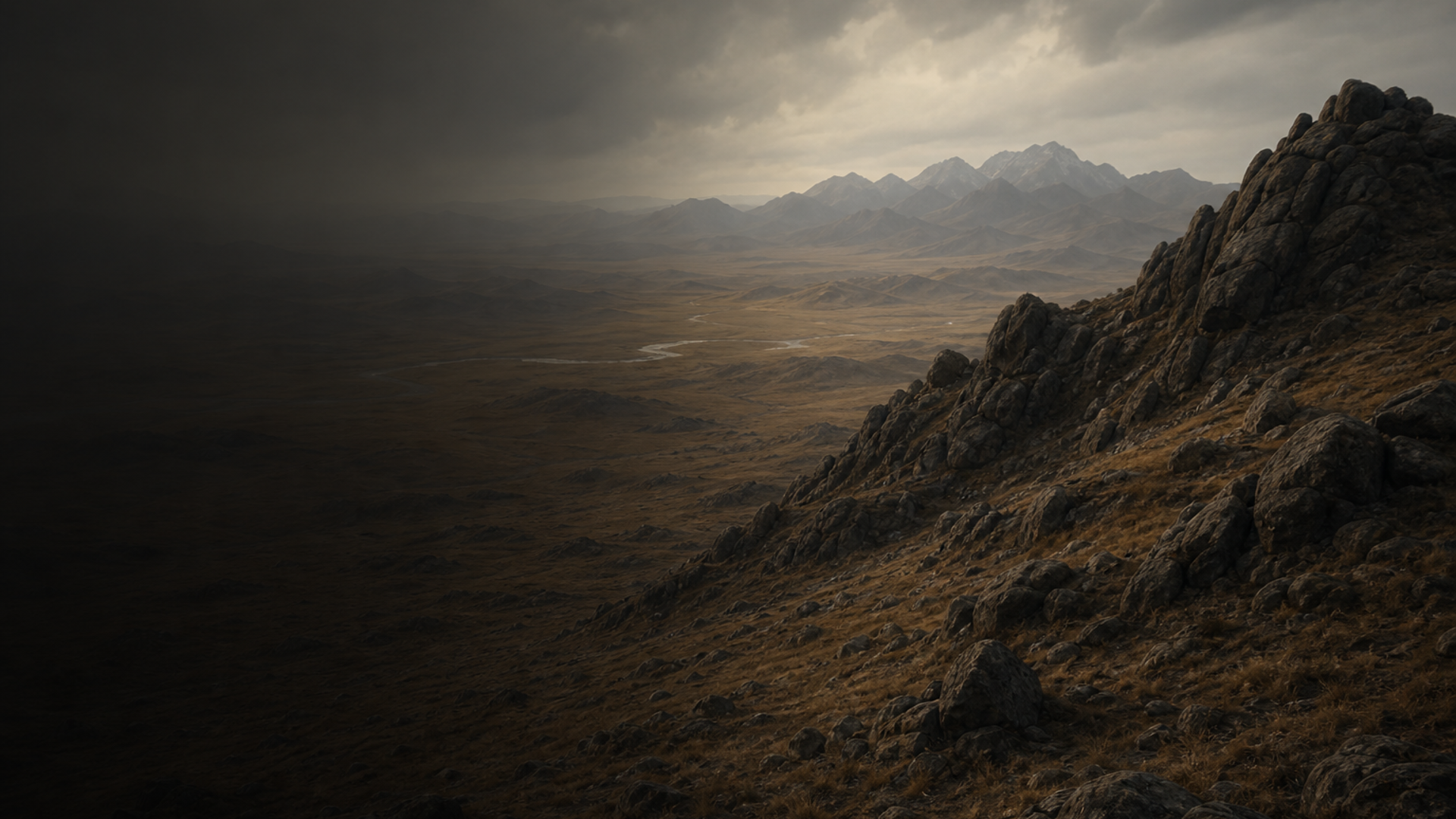
Against the wide, wind-swept horizon of northern Mongolia, the small cluster of burials at Uguumur Uul (Selenge Province) preserves a story of movement and mixture. Dated between roughly 50 BCE and 850 CE, these individuals fall in a long arc that spans the later Xiongnu world into early medieval transformations of the steppe. Archaeological data indicates that the region functioned as a crossroads where mobile pastoralist lifeways met trade routes radiating across Siberia and into the Eurasian heartland.

Material traces in the Selenge basin—burial architecture, animal remains, and seasonal camps noted in regional surveys—are consistent with a pastoral, horse-centered economy that endured across centuries. Genetic data from eight sampled individuals add color to this archaeological backdrop: they display a mixture of maternal and paternal lineages that points to recurring interaction with people from both eastern and western Eurasia.

Because the sample set is small, conclusions about population structure must remain cautious. Limited evidence suggests local continuity alongside periodic influxes of new ancestry, likely driven by long-distance mobility, trade, and the political tides of Xiongnu-era and medieval steppe polities. Uguumur Uul thus offers a cinematic but fragmentary window into how communities on the northern Mongolian frontier emerged through contact and adaptation.

  • Site: Uguumur Uul, Selenge Province (Sant District), Mongolia
  • Dates: ~50 BCE–850 CE, spanning late Xiongnu to medieval phases
  • Evidence indicates a crossroads of eastern and western Eurasian interactions
Capítulo IV

Daily Life & Society

The lives reflected in the Uguumur burials were likely shaped by mobility and seasonal rhythms. Archaeological indicators in the wider Selenge landscape—pasture use, corrals, and hearth remains recorded in surveys—point to herding of horses, sheep, goats, and cattle as the economic backbone. People moved with the herds between river valleys and higher pastures, forging social networks that could span hundreds of kilometres.

Burial evidence from the broader region suggests a blend of funerary practices, sometimes emphasizing mounted status, animal offerings, or distinctive grave goods that signal rank and identity. Such practices imply social differentiation within mobile communities and connections to wider steppe institutions of power typical of Xiongnu and later medieval polities. Archaeobotanical and faunal analyses elsewhere in northern Mongolia indicate diets dominated by animal products, supplemented by gathered plants and traded grains.

Craft activities—leatherworking, bone and metalworking—would have been performed in seasonal camps or near permanent water sources. Exchange networks, both local and long-distance, brought prestige goods and raw materials, enabling aesthetic and technological choices that linked Selenge inhabitants to a broader Eurasian web. While Uguumur Uul provides only a narrow spotlight, combined archaeological data paints a picture of resilient, mobile communities adapting to environmental and political shifts.

  • Economy centered on pastoralism and horse mobility
  • Social differentiation suggested by varied funerary practices
Capítulo V

Genetic Profile

Ancient DNA from eight individuals at Uguumur Uul reveals a heterogeneous genetic tapestry. On the paternal side, Y-chromosome haplogroups include R (observed in three individuals) and J (observed in two), both lineages with broad distributions across western Eurasia and the steppe. Mitochondrial haplogroups observed—D2, B, Z1a (often associated with East Asian/East Eurasian maternal lineages) alongside U3a and U (typically West Eurasian maternal lineages)—indicate mixed maternal ancestry.

Taken together, these patterns suggest admixture between eastern and western genetic components in the Selenge population. One plausible interpretation, conditional on small numbers, is that male-mediated gene flow from western-associated lineages (R, J) combined with substantial East Asian maternal ancestry produced a diverse local gene pool. However, with only eight samples the frequency estimates are uncertain and may not reflect broader regional demographics.

Genetic heterogeneity in these samples aligns with archaeological expectations for a frontier zone of contact—where migration, marriage alliances, and trade introduce diverse ancestries. Comparison to larger datasets from other Xiongnu and medieval steppe sites (where available) will be essential to test whether Uguumur reflects localized admixture events or broader regional trends. For now, the genetic story is compelling but preliminary: it highlights the dynamic human movements that shaped the northern Mongolian steppe.

  • Paternal: R (3 samples) and J (2 samples) suggest western-steppe connections
  • Maternal: mixture of East Asian (D2, B, Z1a) and West Eurasian (U3a, U) lineages
Capítulo VI

Legacy & Modern Connections

The Uguumur Uul individuals contribute a fragmentary yet evocative chapter to Mongolia’s deep past. Their mixed genetic signatures echo the ethnolinguistic and cultural complexity long noted in historical sources for the Xiongnu and later steppe societies. For modern genetic ancestry research, these findings illustrate how the northern Mongolian steppe functioned as both conduit and melting pot, where east–west contact left lasting traces in human genomes.

Caution remains essential: with fewer than ten samples, patterns seen here are provisional. Broader sampling across Selenge and neighboring districts, coupled with detailed archaeological context, would clarify how representative these individuals are of regional populations through time. Nevertheless, museums and ancestry platforms can use this material to show how DNA and archaeology together reveal stories of mobility, marriage, and cultural exchange that shaped the peoples of the Mongolian steppe.

  • Preliminary genetic links to both East Asian and West Eurasian ancestries
  • Highlights the need for larger, regionally distributed sample sets
Con IA

Asistente de IA

Haz preguntas sobre la cultura Selenge Voices: Xiongnu–Medieval Mongolia

Asistente de IA por DNAGENICS

Desbloquear esta función
Pregunta sobre la cultura Selenge Voices: Xiongnu–Medieval Mongolia. El asistente con IA puede explicar hallazgos genéticos, contexto histórico, pruebas arqueológicas y conexiones modernas, con sus límites de interpretación.
Ejemplo de análisis con IA

La cultura Selenge Voices: Xiongnu–Medieval Mongolia representa un capítulo de la historia humana...

El análisis genético permite estudiar similitudes con poblaciones anteriores y posibles adaptaciones. Las muestras de ADN antiguo aportan información para investigar patrones migratorios y relaciones entre poblaciones, con límites que dependen del estudio y del contexto arqueológico.

Esta es una vista previa del análisis con IA. Accede al asistente completo para explorar información sobre:

  • Composición y similitud genética
  • Patrones migratorios y orígenes
  • Vida cotidiana y prácticas culturales
  • Contexto genético moderno

Explora más culturas antiguas

Descubre la historia de civilizaciones de distintas partes del mundo antiguo