Preparando el informe

Cargando la información y las referencias disponibles

Consultando el registro arqueológico...

Recopilando registros antiguos

Saltar al contenido principal
Shengedaliang: Voices of Shimao
Cultura destacada

Shengedaliang: Voices of Shimao

Late Neolithic lives from Shenmu—stone walls, ritual centers, and early East Asian lineages

2884 CE - 1950 BCE
Shanxi province, Shenmu (Shengedaliang site), China
Desplázate para empezar
Capítulo I

La historia

Comprender la cultura Shengedaliang: Voices of Shimao

Archaeological remains from the Shengedaliang site (c. 2884–1950 BCE, Shenmu, Shanxi) connect monumental Late Neolithic Shimao horizons with early East Asian genetic lineages. Limited ancient DNA from three individuals offers preliminary insight into population ties and local continuity.

Time Period

c. 2884–1950 BCE

Region

Shanxi province, Shenmu (Shengedaliang site), China

Common Y-DNA

O, C (each observed in single individuals)

Common mtDNA

D, G, M (each observed once)

Capítulo II

Cronología

Momentos clave de la historia de esta cultura

2500 BCE

Shimao-era construction and regional prominence

Archaeological indicators point to intensified building and social organization at Shengedaliang, aligning with the broader Late Neolithic Shimao horizon in northern China.

Capítulo III

Origins & Emergence

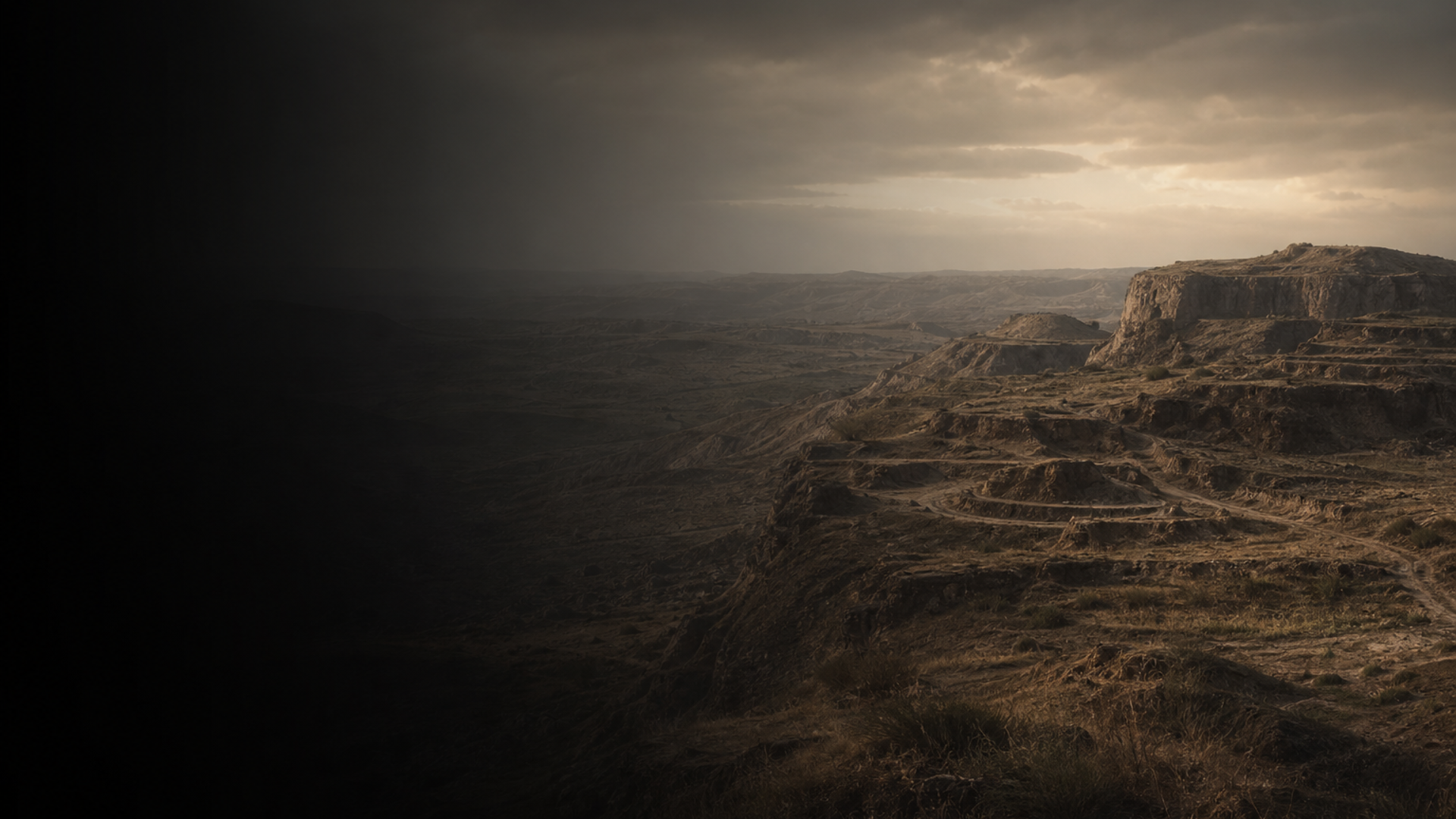
Rising from loess terraces and wind-polished ridgelines, the Shengedaliang deposits belong to the Late Neolithic horizon often associated with Shimao cultural complexity. Radiocarbon-anchored contexts spanning roughly 2884 to 1950 BCE preserve monumental architecture, defensive embankments, and dense midden layers that archaeologists interpret as the material trace of a regionally important center.

Archaeological data indicates a crescendo of social investment in large-scale construction and ritual during this time, with evidence for specialized craft production and long-distance exchange in the broader Shimao phenomenon. Limited evidence suggests that Shengedaliang functioned both as a locus of local administration and as a node in wider northern China networks. The settlement’s built environment—stone foundations, compacted earthworks, and curated deposition zones—speaks to coordinated labor and emerging social hierarchies.

While artifact assemblages (ceramic styles, stone tools, and exotic ornaments) show affinities to the Late Neolithic Shimao horizon, chronological resolution remains imperfect at the site level. Archaeologists therefore treat models of origin and expansion as provisional, integrating stratigraphy, typology, and the small but growing corpus of radiocarbon and genetic data to refine narratives of emergence.

  • Site spans c. 2884–1950 BCE within the Late Neolithic Shimao horizon
  • Monumental architecture and evidence for coordinated labor
  • Preliminary models link Shengedaliang to wider northern China exchange
Capítulo IV

Daily Life & Society

At the human scale, Shengedaliang would have been a place of craft and cadence: potters shaping grooved ceramics, flint-knappers striking blades, and households tending millet and possibly other crops adapted to loess soils. Archaeological remains—storage pits, hearths, and tool assemblages—indicate mixed subsistence strategies, combining agriculture with hunting and herding of small ungulates and domesticated animals.

The site’s built features suggest social differentiation. Larger structural foundations and curated depositional spaces imply communal or elite activities—ceremonial feasting, craft specialization, and the storage of surplus. Burials and mortuary deposits, when present, reveal varied treatment of the dead, with some interments accompanied by grave goods that signal status or ritual role.

Material culture also preserves gestures of identity: ornament styles, weaving impressions, and tool forms that both anchor local tradition and reflect incoming influences. Yet many aspects remain opaque; preservation biases and limited excavation mean interpretations of household organization, gendered labor, and the rhythms of seasonal life are provisional and best seen as working hypotheses grounded in current evidence.

  • Mixed subsistence: agriculture supplemented by hunting/herding
  • Evidence for craft specialization and social differentiation
Capítulo V

Genetic Profile

Ancient DNA from Shengedaliang currently comes from three individuals, a very small sample that requires cautious interpretation. Genetic screening recovered Y-chromosome haplogroups O (one individual) and C (one individual), and three distinct mitochondrial lineages—D, G, and M—each seen once. These lineages align broadly with patterns observed across Late Neolithic and later East Asian populations: haplogroup O is widespread in modern and ancient East Asia, often associated with northern and central plains populations, while haplogroup C has deeper roots in northern Eurasia and is periodically observed in ancient northern Chinese contexts.

Mitochondrial haplogroups D, G, and M are common components of East Asian maternal diversity; their presence at Shengedaliang suggests maternal lineages consistent with regional continuity or longstanding population structure in northern China. When archaeological patterns—monumental architecture and regional exchange—are combined with this genetic signal, a picture emerges of a community rooted in local East Asian ancestry but engaged in wider social networks.

However, with only three samples, any population-level claims are preliminary. Limited evidence suggests continuity with broader northern Chinese genetic backgrounds rather than wholesale replacement, but expanding the dataset is essential. Future sampling and high-coverage genomes will clarify migration, kinship within the site, and links to other Shimao and Yellow River basin populations.

  • Y haplogroups: O and C observed (one each); maternal D, G, M (one each)
  • Small sample (n=3): findings are preliminary and require more data
Capítulo VI

Legacy & Modern Connections

Shengedaliang’s stone echoes resonate into the present as part of a longer story of human settlement on the northern Chinese loess plains. The genetic lineages observed—common in modern East Asia—suggest threads of biological continuity that weave through millennia of cultural change. Archaeological forms and ritual behaviors from the Late Neolithic contribute to regional identities that later Bronze Age and historic societies would inherit and remodel.

For modern populations, the site offers a cinematic window onto ancestral landscapes: not a direct genealogical roadmap but a fragment of a larger demographic tapestry. As ancient DNA datasets grow, places like Shengedaliang will help chart how local communities contributed to the genetic and cultural makeup of later northern China. Until then, the site remains a powerful, evocative locus where stones, pottery, and sparse genomes together hint at lives anchored in place and connected across space.

  • Genetic lineages at the site echo patterns seen across modern East Asia
  • Site contributes to understanding long-term cultural and biological continuity
Con IA

Asistente de IA

Haz preguntas sobre la cultura Shengedaliang: Voices of Shimao

Asistente de IA por DNAGENICS

Desbloquear esta función
Pregunta sobre la cultura Shengedaliang: Voices of Shimao. El asistente con IA puede explicar hallazgos genéticos, contexto histórico, pruebas arqueológicas y conexiones modernas, con sus límites de interpretación.
Ejemplo de análisis con IA

La cultura Shengedaliang: Voices of Shimao representa un capítulo de la historia humana...

El análisis genético permite estudiar similitudes con poblaciones anteriores y posibles adaptaciones. Las muestras de ADN antiguo aportan información para investigar patrones migratorios y relaciones entre poblaciones, con límites que dependen del estudio y del contexto arqueológico.

Esta es una vista previa del análisis con IA. Accede al asistente completo para explorar información sobre:

  • Composición y similitud genética
  • Patrones migratorios y orígenes
  • Vida cotidiana y prácticas culturales
  • Contexto genético moderno

Explora más culturas antiguas

Descubre la historia de civilizaciones de distintas partes del mundo antiguo