Preparando el informe

Cargando la información y las referencias disponibles

Consultando el registro arqueológico...

Recopilando registros antiguos

Saltar al contenido principal
Teouma: Vanuatu ~2,900 BP
Cultura destacada

Teouma: Vanuatu ~2,900 BP

A coastal Lapita-era community on Efate bridging archaeology and early Pacific genomes

1160 CE - 7702900 BCE
Efate, Vanuatu (South Pacific)
Desplázate para empezar
Capítulo I

La historia

Comprender la cultura Teouma: Vanuatu ~2,900 BP

Archaeogenetic snapshot from Teouma (Efate, Vanuatu), 1160–770 BCE. Four individuals yield mtDNA B (4/4) and Y-DNA O (1/4), suggesting Austronesian maternal links and East Asian paternal signal. Limited sample size warrants cautious, preliminary interpretation.

Time Period

1160–770 BCE (≈2,900 BP)

Region

Efate, Vanuatu (South Pacific)

Common Y-DNA

O (1 of 4 samples)

Common mtDNA

B (4 of 4 samples)

Capítulo II

Cronología

Momentos clave de la historia de esta cultura

1160 BCE

Teouma cemetery established (approx.)

Excavation of a Lapita-associated cemetery on Efate reveals multiple burials dated to roughly 1160–770 BCE, providing rare skeletal and genetic material from early Remote Oceania.

Capítulo III

Origins & Emergence

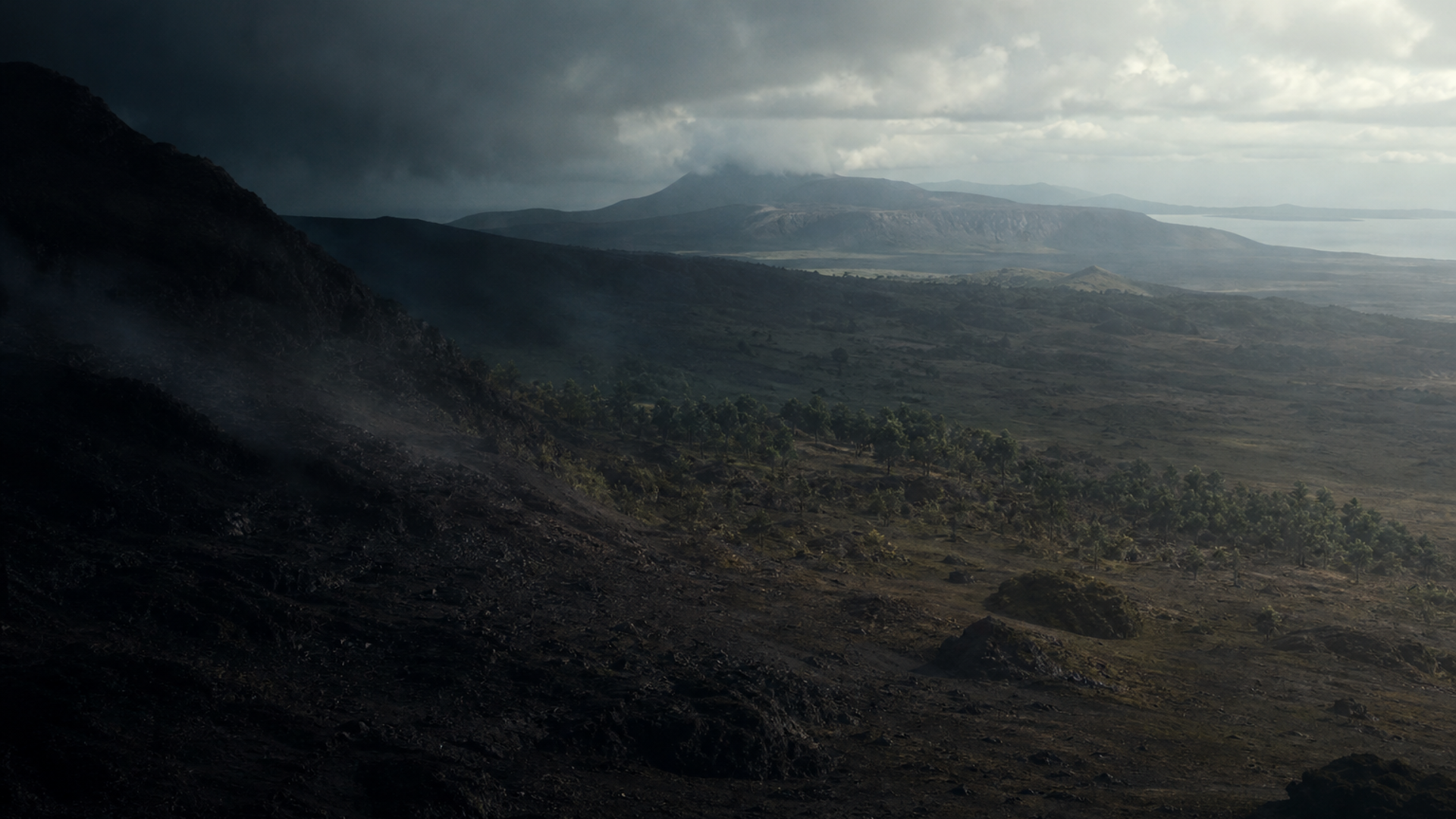
Rising from the lagoons and reef-fringed shores of Efate, the people interred at Teouma lived during a cinematic era of ocean voyaging and island founding. Archaeological excavations at Teouma (Efate, Vanuatu) have revealed a cemetery associated with the later phases of the Lapita cultural horizon, dated here to roughly 1160–770 BCE. The burial context — multiple graves, ochre traces, shell ornaments and the occasional pottery sherd with dentate-stamped decoration — places these individuals within the network of seafaring communities that spread Austronesian material culture across Remote Oceania.

Archaeological data indicates that Teouma occupied a frontier zone where incoming Austronesian voyagers encountered island Melanesian landscapes and peoples. Limited evidence from material culture and the cemetery architecture suggests sustained settlement rather than transient landings. Genetic data from the four sampled individuals offers a tantalizing, though preliminary, glimpse into this formative encounter: a uniform maternal signal (mtDNA B) consistent with Austronesian-associated lineages, and a smaller male-line signal of haplogroup O. Together with regional archaeological patterns, these strands point toward complex processes of migration, interaction, and local adaptation — but the small sample set means models of origin and admixture remain provisional.

  • Teouma cemetery on Efate dated to 1160–770 BCE
  • Material culture links to the Lapita horizon and oceangoing settlement
  • Early evidence of Austronesian-related maternal lineages; interpretations remain tentative
Capítulo IV

Daily Life & Society

Life for Teouma's inhabitants would have been shaped by the rhythm of reef and garden. Archaeological remains from Efate indicate communities practicing horticulture (taro, yam, breadfruit), fishing and shellfish gathering, and crafting pottery and ornaments from local shell and bone. The dentate-stamped ceramics associated with Lapita communities are markers of a long-distance tradition of voyaging and shared symbolic practice; their presence at or near Teouma signals participation in this pan-Pacific cultural world.

Burial practices at Teouma — articulated skeletons, deliberate placement, and grave offerings — point to social identities expressed through mortuary ritual. The concentration of burials in a cemetery suggests a settled community with place-based ties rather than purely mobile groups. Tools, beads, and carved ornaments recovered in the region hint at craft specialization and access to exchange networks that connected islands across hundreds of kilometers. However, archaeological preservation is uneven, and interpretations of household organization or social ranking remain inferential based on material distributions and comparisons with contemporaneous sites in the broader Lapita world.

  • Subsistence: horticulture, fishing, and reef foraging
  • Mortuary evidence suggests community cohesion and ritualized burial
Capítulo V

Genetic Profile

The genetic dataset from Teouma is small but informative. Four individuals dated to 1160–770 BCE were analyzed: all four carried mitochondrial haplogroup B, while a single male sample carried Y-chromosome haplogroup O. mtDNA B lineages are widely associated with Austronesian expansions across Island Southeast Asia and into the Pacific; their presence at Teouma aligns with an expectation of maternal ancestry derived from island-hopping seafarers. Y haplogroup O is likewise common in East and Southeast Asian populations and is often detected in Austronesian-speaking groups, suggesting at least some paternal ancestry tracing toward those source regions.

Importantly, the autosomal picture that emerges in broader Pacific ancient-DNA studies typically shows mixtures of Austronesian-related and Papuan-related ancestry — a complex admixture often varying by island and period. For Teouma specifically, autosomal resolution is limited by the small sample count and available coverage; therefore any claims about proportions of Papuan vs Austronesian ancestry must remain provisional. Because only four samples were analyzed, and only one Y-chromosome was recovered, these genetic signals should be treated as a preliminary snapshot that complements, rather than definitively resolves, the archaeological narrative.

  • mtDNA B in all four samples suggests Austronesian-linked maternal ancestry
  • Y-DNA O in one male points to East/Southeast Asian paternal connections; sample size is small
Capítulo VI

Legacy & Modern Connections

The echoes of Teouma reach into the living cultures of Vanuatu. Many modern ni‑Vanuatu communities retain linguistic, material and genetic threads that trace back to the island colonizations of the first millennium BCE. Maternal lineages like mtDNA B continue to be widespread across Remote Oceania, indicating a durable matrilineal signal through time even as local histories layered new cultural practices and genetic inputs.

Archaeology and genetics together offer a window into the deep past that situates modern Pacific Islanders within long chains of mobility, adaptation, and exchange. Yet continuity is not uniform: island histories are mosaics of persistence, admixture, and innovation. For Teouma, the small ancient DNA sample reminds us that the story of Vanuatu's settlement is complex and that ongoing research — more samples, better genomic coverage, and integrated archaeological study — is required to illuminate how these early communities shaped the genetic and cultural contours of the modern Pacific.

  • mtDNA B lineages persist in many Pacific populations, suggesting maternal continuity
  • Teouma contributes to understanding how early voyaging shaped modern Vanuatu; broader sampling needed
Con IA

Asistente de IA

Haz preguntas sobre la cultura Teouma: Vanuatu ~2,900 BP

Asistente de IA por DNAGENICS

Desbloquear esta función
Pregunta sobre la cultura Teouma: Vanuatu ~2,900 BP. El asistente con IA puede explicar hallazgos genéticos, contexto histórico, pruebas arqueológicas y conexiones modernas, con sus límites de interpretación.
Ejemplo de análisis con IA

La cultura Teouma: Vanuatu ~2,900 BP representa un capítulo de la historia humana...

El análisis genético permite estudiar similitudes con poblaciones anteriores y posibles adaptaciones. Las muestras de ADN antiguo aportan información para investigar patrones migratorios y relaciones entre poblaciones, con límites que dependen del estudio y del contexto arqueológico.

Esta es una vista previa del análisis con IA. Accede al asistente completo para explorar información sobre:

  • Composición y similitud genética
  • Patrones migratorios y orígenes
  • Vida cotidiana y prácticas culturales
  • Contexto genético moderno

Explora más culturas antiguas

Descubre la historia de civilizaciones de distintas partes del mundo antiguo