Preparando el informe

Cargando la información y las referencias disponibles

Consultando el registro arqueológico...

Recopilando registros antiguos

Saltar al contenido principal
Tepecik Çiftlik: Early Neolithic Anatolia
Cultura destacada

Tepecik Çiftlik: Early Neolithic Anatolia

Five genomes (6645–6072 BCE) illuminate maternal lineages at a central Anatolian farming village

6645 CE - 6072 BCE
Central Anatolia, Turkey
Desplázate para empezar
Capítulo I

La historia

Comprender la cultura Tepecik Çiftlik: Early Neolithic Anatolia

Small-series ancient DNA from Tepecik Çiftlik (Turkey, 6645–6072 BCE) shows mtDNA haplogroups N and K, linking this Neolithic community to broader Anatolian farmer ancestries. Archaeological and genetic data together hint at early farming lifeways and maternal continuity, though conclusions remain preliminary.

Time Period

6645–6072 BCE

Region

Central Anatolia, Turkey

Common Y-DNA

Undetermined / not reported

Common mtDNA

N (3), K (2)

Capítulo II

Cronología

Momentos clave de la historia de esta cultura

6645 BCE

Earliest sampled burial at Tepecik Çiftlik

One of the five individuals dates to c. 6645 BCE, anchoring the genetic series in the early Neolithic of central Anatolia.

Capítulo III

Origins & Emergence

A settlement on Anatolian plains

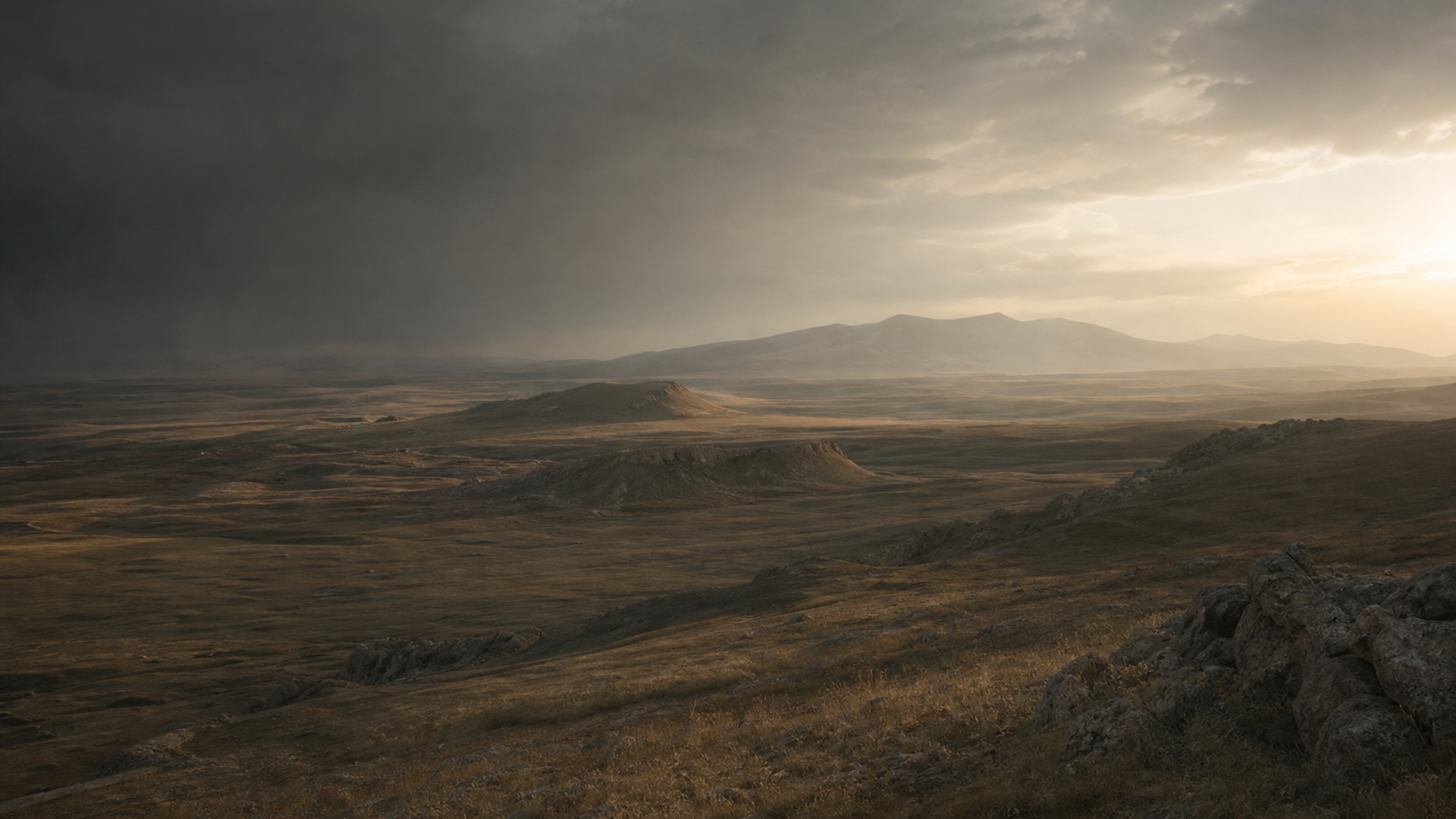
Tepecik Çiftlik sits within the tapestry of early Neolithic Central Anatolia. Archaeological data indicates occupation in the seventh millennium BCE, and the samples dated between 6645 and 6072 BCE place these individuals within the Neolithic Tepecik-Çiftlik horizon. Excavations reveal the material signature of early village life — clustered houses, lithic production, and the botanical and faunal remains typically associated with early farming economies.

The cinematic image is of a small, persistent community: sunlit courtyards, smoke from hearths, and people managing newly domesticated plants and animals. Genetically, limited evidence from five genomes suggests maternal lineages that sit comfortably within the broader Anatolian Neolithic envelope, a population instrumental in spreading farming across West Asia and into Europe. However, with only five genomes available, patterns of migration, admixture, and local continuity remain tentative. Archaeological inference and ancient DNA together paint a picture that is vivid but incomplete — each new sample can shift our story.

  • Occupation dated 6645–6072 BCE (Neolithic Tepecik-Çiftlik phase)
  • Material culture: village architecture, lithics, and farming-related remains
  • Small genetic series suggests links to Anatolian Neolithic populations
Capítulo IV

Daily Life & Society

Lives of villagers: labor, craft, and community

Archaeological data indicates that inhabitants of Tepecik Çiftlik practiced mixed farming and household-based craft production. Cereals, pulses, and managed herds would have structured seasonal work: sowing, harvesting, and herd care. Stone tool workshops and evidence for grinding imply craft specialization at a household scale. Community life likely revolved around shared spaces, hearths, and storage — social rhythms anchored to agricultural cycles.

Material traces evoke vivid scenes: hands shaping tools from obsidian or flint, grinding grain at a low stone basin, and communal exchange of goods and ideas across the Anatolian plateau. Yet these reconstructions must be cautious. The archaeological record is fragmentary, and inference about social hierarchies, ritual practices, or trade networks is provisional without larger comparative datasets. Combining the modest genetic series with archaeological context helps ground these daily-life reconstructions, suggesting that the people buried here were part of the early farming networks that knitted Anatolia into a broader Neolithic world.

  • Household-based farming and craft production
  • Material culture consistent with early village economies
Capítulo V

Genetic Profile

Maternal signatures and population context

Five individuals from Tepecik Çiftlik yielded mitochondrial DNA results: three assigned to haplogroup N and two to haplogroup K. Haplogroup K is frequently observed in early Neolithic contexts across Anatolia and Europe and is commonly interpreted as part of the maternal legacy carried by early farming groups. Haplogroup N represents an older, broad matrilineal lineage that gave rise to many later Eurasian branches. The absence of reported common Y-DNA in this set means paternal lineages for these burials remain undetermined.

Archaeogenetic patterns suggest that the Tepecik Çiftlik individuals fit within the larger cluster often described as Anatolian Neolithic farmer ancestry — the genetic profile that contributed substantially to Neolithic populations in southeast Europe and beyond. That said, the sample count is five, below the threshold where population-level statements are robust; limited evidence suggests affinities but cannot resolve finer-scale migration or kinship patterns. Future sampling, especially paired mtDNA and Y-DNA with genome-wide data, will be necessary to clarify familial structure, sex-biased migration, and connections to neighboring communities.

  • mtDNA: N (3), K (2)
  • No common Y-DNA reported; conclusions preliminary (n=5)
Capítulo VI

Legacy & Modern Connections

From Neolithic fields to modern genomes

The peoples of Tepecik Çiftlik lived at a pivotal moment when farming lifeways spread across West Eurasia. Genetic markers such as mtDNA K link these villagers to maternal lineages that reappear in later Neolithic and Bronze Age assemblages across Anatolia and Europe, implying a thread of maternal continuity in the expansion of agriculture. Haplogroup N's presence underscores deep Eurasian matrilineal connections that predate and feed into later diversity.

Caution is essential: with only five samples, claims about continuity into modern populations are speculative. Nevertheless, when combined with broader regional ancient DNA studies, these genomes contribute to a layered narrative: Central Anatolia was both a crucible of early farming and a corridor of human movement. Modern genetic landscapes of Anatolia and neighboring regions are mosaics shaped in part by Neolithic communities like Tepecik Çiftlik.

  • mtDNA links suggest maternal continuity with broader Neolithic expansions
  • Small sample size limits direct claims about modern population continuity
Con IA

Asistente de IA

Haz preguntas sobre la cultura Tepecik Çiftlik: Early Neolithic Anatolia

Asistente de IA por DNAGENICS

Desbloquear esta función
Pregunta sobre la cultura Tepecik Çiftlik: Early Neolithic Anatolia. El asistente con IA puede explicar hallazgos genéticos, contexto histórico, pruebas arqueológicas y conexiones modernas, con sus límites de interpretación.
Ejemplo de análisis con IA

La cultura Tepecik Çiftlik: Early Neolithic Anatolia representa un capítulo de la historia humana...

El análisis genético permite estudiar similitudes con poblaciones anteriores y posibles adaptaciones. Las muestras de ADN antiguo aportan información para investigar patrones migratorios y relaciones entre poblaciones, con límites que dependen del estudio y del contexto arqueológico.

Esta es una vista previa del análisis con IA. Accede al asistente completo para explorar información sobre:

  • Composición y similitud genética
  • Patrones migratorios y orígenes
  • Vida cotidiana y prácticas culturales
  • Contexto genético moderno

Explora más culturas antiguas

Descubre la historia de civilizaciones de distintas partes del mundo antiguo




