Preparando el informe

Cargando la información y las referencias disponibles

Consultando el registro arqueológico...

Recopilando registros antiguos

Saltar al contenido principal
Tianyuan Horizon: Deep Paleolithic China
Cultura destacada

Tianyuan Horizon: Deep Paleolithic China

A single Late Pleistocene individual from Tianyuan Cave links stones, bones, and DNA.

38896 CE - 36130 BCE
Tianyuan Cave, near Zhoukoudian, China
Desplázate para empezar
Capítulo I

La historia

Comprender la cultura Tianyuan Horizon: Deep Paleolithic China

Tianyuan (38,896–36,130 BCE) is a Late Pleistocene individual from Tianyuan Cave (near Zhoukoudian, China). Genetic data from one individual (Y-K, mtDNA-B) offer a tantalizing glimpse into early East Asian population structure; conclusions are highly preliminary.

Time Period

38,896–36,130 BCE

Region

Tianyuan Cave, near Zhoukoudian, China

Common Y-DNA

K (1 sample)

Common mtDNA

B (1 sample)

Capítulo II

Cronología

Momentos clave de la historia de esta cultura

38000 BCE

Tianyuan individual dated

A human skeleton from Tianyuan Cave is dated to roughly 38,900–36,100 BCE, providing a rare Late Pleistocene genomic snapshot in East Asia.

Capítulo III

Origins & Emergence

Tianyuan Cave, located near the famous Zhoukoudian karst system (northeast of present-day Beijing), yielded human remains dated to the Late Pleistocene — specifically between 38,896 and 36,130 BCE. Archaeological data indicate occupation of the cave landscape by hunter-gatherer groups in a cold, but ecologically varied environment of rivers, woodlands, and open grassland mosaics. Lithic material from the site and nearby localities shows typical Late Pleistocene technologies: flake-based reduction and tools adapted for hunting and processing animal resources.

The single individual recovered from Tianyuan Cave represents a crucial time slice during which modern human populations were spreading and diversifying across East Asia. Limited evidence suggests cultural continuity in the region but also the possibility of incoming populations or shifting lifeways as climates fluctuated. Because the dataset is based on one directly dated individual, models of population origin, migration corridors, and cultural transmission must remain provisional. Ongoing excavations in the broader North China Plain and reanalysis of sediments and tools are essential to place Tianyuan in a larger regional narrative.

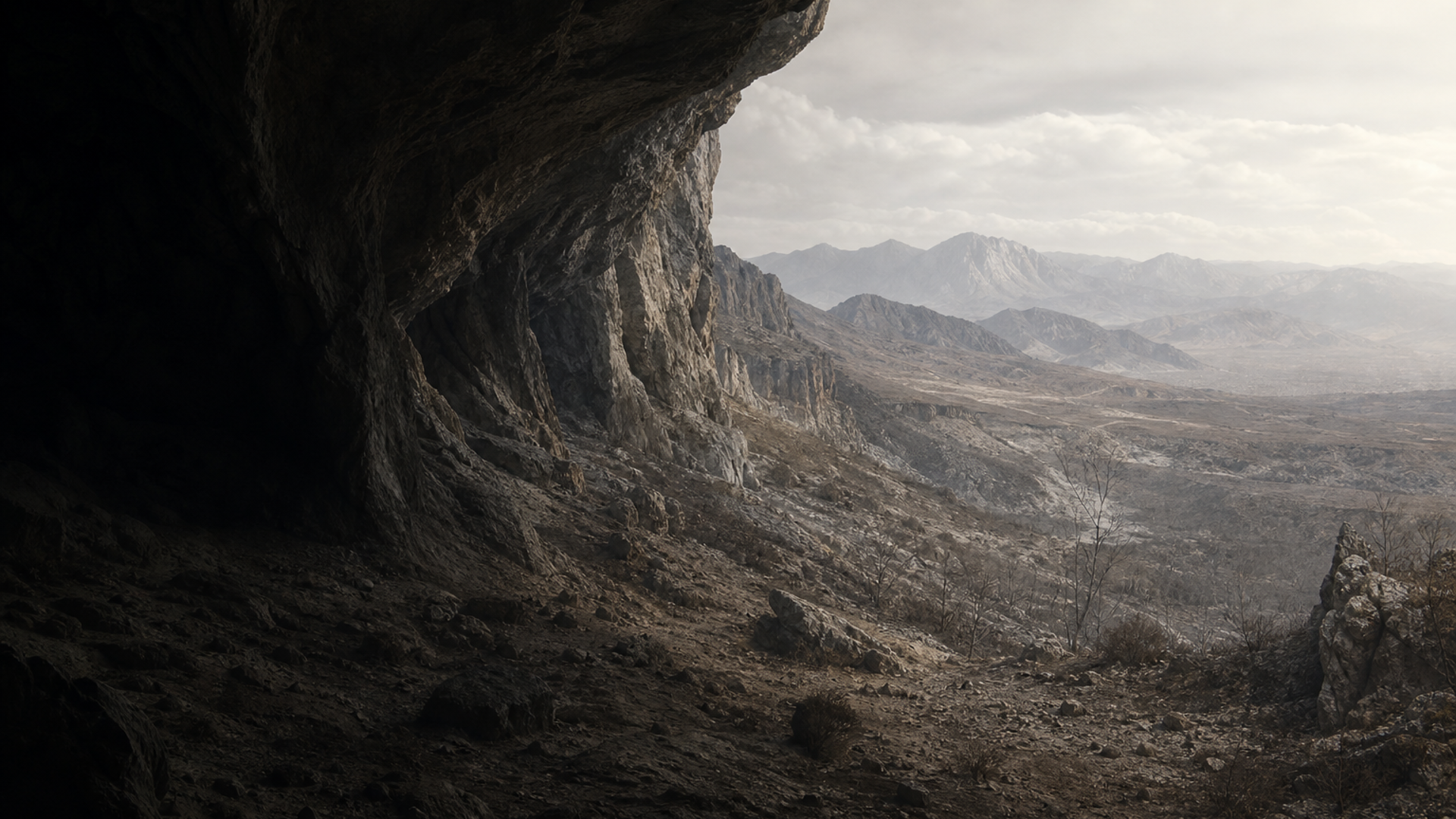
In cinematic terms, Tianyuan is a moment frozen between glaciers and the dawning complexity of regional hunter-gatherer networks — an origin point for questions about how people adapted and dispersed across East Asia.

  • Directly dated human remains: 38,896–36,130 BCE
  • Site: Tianyuan Cave, near Zhoukoudian, China
  • Evidence limited — single individual requires cautious interpretation
Capítulo IV

Daily Life & Society

Archaeological traces around Tianyuan Cave suggest a hunter-gatherer lifeway tuned to Late Pleistocene ecologies. Faunal remains indicate hunting of medium- and large-bodied mammals seasonally available in river valleys; plant exploitation and small-game foraging likely supplemented diets. Lithic implements recovered nearby show a pragmatic toolkit for cutting, scraping, and butchery rather than highly formalized blade industries, consistent with mobile residential patterns.

Social organization is inferred from burial context and comparative ethnographic analogies: small bands with flexible kin networks, seasonal mobility, and resource-sharing mechanisms. The Tianyuan individual appears in a relatively simple depositional context rather than an elaborate grave, implying practical mortuary behavior that reflects immediate community needs and environmental constraints.

Archaeobotanical and residue studies in the region remain sparse, so reconstructions of diet, seasonality, and craft are provisional. Microwear and spatial analyses are promising methods to reveal task specialization and site-use intensity but require larger assemblages. The evocative image is of a small group moving across a dramatic Pleistocene landscape, campfires against a cold sky, and tools passed between hands as both survival tools and cultural touchstones.

  • Hunter-gatherer lifeways with seasonally targeted hunting
  • Simple mortuary context suggests pragmatic social practices
Capítulo V

Genetic Profile

The genetic signal from Tianyuan is derived from a single individual whose DNA provides a rare molecular window into Late Pleistocene East Asia. This individual carries Y-chromosome haplogroup K and mitochondrial haplogroup B. Both assignments come from very limited data (one Y call, one mitochondrial genome) and should be treated as preliminary. Haplogroup K on the Y-chromosome is an early non-African lineage found in diverse descendant branches across Eurasia and Oceania; its presence in this context is consistent with deep, widespread male-line diversity among early non-African populations. Mitochondrial haplogroup B is today common in East Asia and the Americas, and its identification in Tianyuan suggests ancestral links to maternal lineages that later diversify across East and Northeast Asia.

Genomic data from this single individual also indicate affinities with later East Eurasian populations rather than with archaic hominins, yet fine-scale population structure (e.g., interactions with contemporaneous groups or contribution to later Neolithic communities) cannot be resolved without more samples. Because the sample count is one (<10), any inference about population continuity, migration routes, or demographic size is tentative. Ancient DNA here acts like a single, high-resolution photograph amid a vast family album still missing many pages.

Future genetic sampling across sites and time will test whether the Tianyuan genetic profile represents a localized lineage, a widespread population, or a point in a mixture history that shaped later East Asian diversity.

  • Y-DNA: K (observed in the single male sample; tentative)
  • mtDNA: B (maternal lineage related to later East Asian diversity)
Capítulo VI

Legacy & Modern Connections

Tianyuan occupies a pivotal symbolic and scientific place in the story of human presence in East Asia. The genetic markers observed—Y-K and mtDNA-B—link this individual, at least tentatively, to deeper branches that contribute to later East Asian and Pacific diversity. Archaeologically, the site anchors cultural behaviors and lifeways of Late Pleistocene peoples in northern China, informing models of how human groups weathered climatic fluctuations and dispersed into new environments.

However, the bridge from a single ancient genome to modern populations is provisional: genetic continuity cannot be assumed without broader sampling across time and space. The true legacy of Tianyuan is methodological as well as historical — it demonstrates how careful excavation, secure dating, and ancient DNA together can transform a lonely skeleton into a narrative thread that connects past landscapes with the genetic tapestry of living peoples.

  • Links ancient maternal and paternal lineages to later East Asian diversity
  • Highlights need for more samples to test continuity and migration models
Con IA

Asistente de IA

Haz preguntas sobre la cultura Tianyuan Horizon: Deep Paleolithic China

Asistente de IA por DNAGENICS

Desbloquear esta función
Pregunta sobre la cultura Tianyuan Horizon: Deep Paleolithic China. El asistente con IA puede explicar hallazgos genéticos, contexto histórico, pruebas arqueológicas y conexiones modernas, con sus límites de interpretación.
Ejemplo de análisis con IA

La cultura Tianyuan Horizon: Deep Paleolithic China representa un capítulo de la historia humana...

El análisis genético permite estudiar similitudes con poblaciones anteriores y posibles adaptaciones. Las muestras de ADN antiguo aportan información para investigar patrones migratorios y relaciones entre poblaciones, con límites que dependen del estudio y del contexto arqueológico.

Esta es una vista previa del análisis con IA. Accede al asistente completo para explorar información sobre:

  • Composición y similitud genética
  • Patrones migratorios y orígenes
  • Vida cotidiana y prácticas culturales
  • Contexto genético moderno

Explora más culturas antiguas

Descubre la historia de civilizaciones de distintas partes del mundo antiguo