Preparando el informe

Cargando la información y las referencias disponibles

Consultando el registro arqueológico...

Recopilando registros antiguos

Saltar al contenido principal
Tisza Avars: Riverborne Echoes
Cultura destacada

Tisza Avars: Riverborne Echoes

Small Early Avar community on Hungary’s Holt Tisza (550–650 CE) where archaeology meets maternal DNA

550 CE - 650 CE
Tisza region, Hungary (Tiszapüspöki, Holt Tisza)
Desplázate para empezar
Capítulo I

La historia

Comprender la cultura Tisza Avars: Riverborne Echoes

Archaeogenetic snapshot of an Early Avar group from Tiszapüspöki (550–650 CE, Hungary). Three individuals from Holt Tisza preserve mtDNA lineages HV, K, U. Limited sample size yields preliminary insights into maternal ancestry and regional interactions.

Time Period

550–650 CE (Early Avar period)

Region

Tisza region, Hungary (Tiszapüspöki, Holt Tisza)

Common Y-DNA

Insufficient data (no consistent Y-DNA reported)

Common mtDNA

HV (1), K (1), U (1)

Capítulo II

Cronología

Momentos clave de la historia de esta cultura

550 CE

Early Avar presence in the Tisza region

Archaeological and radiocarbon contexts place small Avar-period occupations along the Tisza floodplain from the mid-6th century onward.

Capítulo III

Origins & Emergence

The remains from Tiszapüspöki — recovered from Holt Tisza oxbow contexts dated to c. 550–650 CE — sit within the broader Early Avar horizon that reshaped the Carpathian Basin after the mid-6th century. Archaeological data indicates small, often mobile communities exploiting riverine floodplains; the Tisza corridor served as a highway for people, goods and ideas. Material culture across the region shows a mix of locally rooted traditions and elements associated with Avar-period assemblages, suggesting interactions between incoming groups and resident populations.

Genetically, the site provides a narrow but vivid window: three sequenced individuals preserve maternal lineages that are broadly West Eurasian in character (mtDNA HV, K, U). These haplogroups are widespread in Europe and parts of West Asia and do not by themselves prove a single point of origin. Limited evidence suggests a mosaic of local and non-local ancestries across the Early Avar period, but the Tiszapüspöki sample is too small to resolve migration routes or demographic impact with confidence. Ongoing regional sampling is required to link skeletal remains, artifact styles and population movements into a coherent narrative.

  • Site: Tiszapüspöki – Holt Tisza part 17/a and 17/c (Hungary)
  • Date range: ca. 550–650 CE, Early Avar period
  • Interpretation: Riverine community with mixed cultural influences; origins remain preliminary
Capítulo IV

Daily Life & Society

The Tisza floodplain shaped everyday life: seasonal flooding, rich wetlands and fertile soils encouraged fishing, small-scale agriculture and exploitation of riverine resources. Archaeological contexts from similar Tisza localities reveal organic and ceramic assemblages adapted to a riparian economy; while specific grave goods from these two Tiszapüspöki loci are limited, burial placement near watercourses points to long-standing landscape ties.

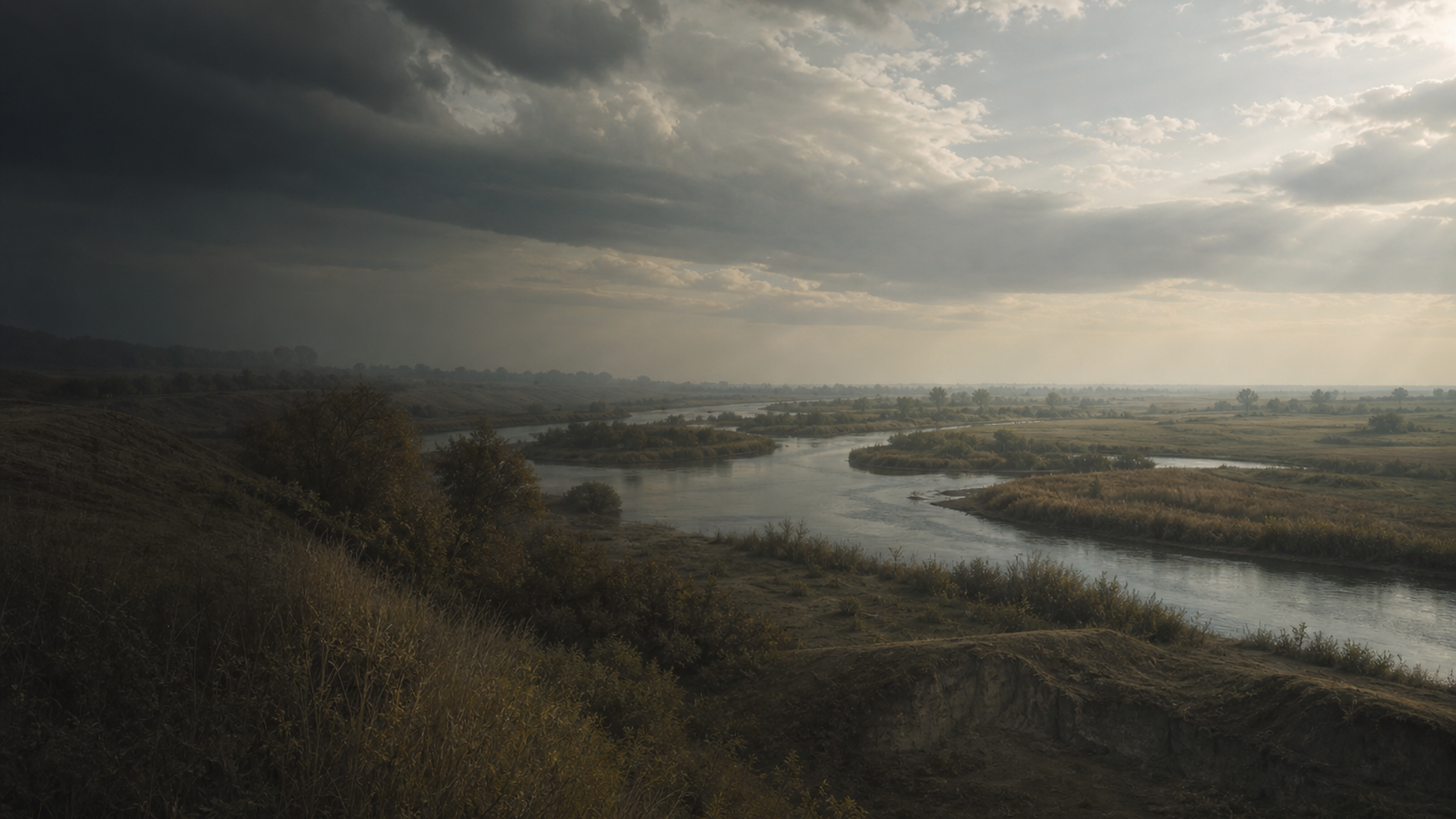
Social organization in Early Avar settings often combined pastoral mobility and settled village life. At the local scale, households would have balanced animal husbandry with cultivation, and waterways offered transport and communication across the plain. The cinematic sweep of reed beds and slow rivers would have framed seasonal movements and funerary choices alike. However, for Tiszapüspöki itself the small number of dated burials constrains firm conclusions about household structure, social ranking or ritual practice — archaeological data remains fragmentary and should be treated cautiously.

  • Economy likely centered on riverine resources, farming and herding
  • Settlement patterns combine mobility and localized occupation; evidence at the site is limited
Capítulo V

Genetic Profile

Three individuals sampled from Tiszapüspöki yield mitochondrial haplogroups HV, K and U (one individual each). These maternal lineages are common across Europe and West Eurasia and are frequently observed in medieval and modern European populations. Haplogroup U has deep Paleolithic roots in Europe; HV is a widespread West Eurasian lineage; K appears in both Neolithic farming and later contexts. Alone, these mtDNA results indicate maternal ancestries that are not exclusive to any single geographic origin.

No consistent or reportable Y-DNA pattern is available from this small dataset, so paternal ancestry remains unresolved. Given the sample count of three (well below 10), any population-level inference is preliminary: archaeological interpretation must be integrated with larger ancient DNA series from the Avar period and surrounding regions. Nevertheless, the mix of mtDNA types here is consistent with a community incorporating lineages common in the broader Carpathian Basin, compatible with local continuity, incoming diversity or both. Further sampling and autosomal data would be needed to test admixture, steppe-derived components, or direct genealogical links to Central Asian or European groups.

  • mtDNA: HV, K, U detected (one individual each)
  • Sample size (n=3) is too small for robust population-level conclusions
Capítulo VI

Legacy & Modern Connections

The human echoes from Holt Tisza remind us that early medieval Hungary was a palimpsest of peoples and paths. Maternal lineages found at Tiszapüspöki are part of a broader West Eurasian tapestry that persists in modern European gene pools. While these three genomes cannot map direct descendants, they contribute snapshots that, when added to larger datasets, help trace how the Carpathian Basin absorbed, transmitted and transformed ancestries over centuries.

For communities and museum audiences, the story is both local and expansive: river landscapes anchored daily life, while long-distance movements and cultural exchange reshaped identities. Continued archaeological excavation and expanded ancient DNA sampling will refine connections between Early Avar groups and later populations in Hungary, but current results should be seen as promising, provisional chapters rather than definitive genealogies.

  • Maternal lineages align with broad West Eurasian ancestry seen today
  • Combined archaeological and genetic work needed to clarify long-term connections
Con IA

Asistente de IA

Haz preguntas sobre la cultura Tisza Avars: Riverborne Echoes

Asistente de IA por DNAGENICS

Desbloquear esta función
Pregunta sobre la cultura Tisza Avars: Riverborne Echoes. El asistente con IA puede explicar hallazgos genéticos, contexto histórico, pruebas arqueológicas y conexiones modernas, con sus límites de interpretación.
Ejemplo de análisis con IA

La cultura Tisza Avars: Riverborne Echoes representa un capítulo de la historia humana...

El análisis genético permite estudiar similitudes con poblaciones anteriores y posibles adaptaciones. Las muestras de ADN antiguo aportan información para investigar patrones migratorios y relaciones entre poblaciones, con límites que dependen del estudio y del contexto arqueológico.

Esta es una vista previa del análisis con IA. Accede al asistente completo para explorar información sobre:

  • Composición y similitud genética
  • Patrones migratorios y orígenes
  • Vida cotidiana y prácticas culturales
  • Contexto genético moderno

Explora más culturas antiguas

Descubre la historia de civilizaciones de distintas partes del mundo antiguo