Preparando el informe

Cargando la información y las referencias disponibles

Consultando el registro arqueológico...

Recopilando registros antiguos

Saltar al contenido principal
Verteba Voices: Trypillia Eneolithic
Cultura destacada

Verteba Voices: Trypillia Eneolithic

Four ancient genomes from Verteba Cave offer a tentative glimpse into Trypillia life and ancestry.

3950 CE - 3500 BCE
Ukraine (Verteba Cave)
Desplázate para empezar
Capítulo I

La historia

Comprender la cultura Verteba Voices: Trypillia Eneolithic

Genomes dated 3950–3500 BCE from Verteba Cave, Ukraine, connect Trypillia archaeology with early farmer and local lineages. Small sample size (n=4) makes conclusions provisional, but combined material culture and DNA hint at diverse Eneolithic ancestry.

Time Period

3950–3500 BCE

Region

Ukraine (Verteba Cave)

Common Y-DNA

G (2), E (1) — limited sample

Common mtDNA

H5a, T2b, HV, U (each observed n=1)

Capítulo II

Cronología

Momentos clave de la historia de esta cultura

3600 BCE

Verteba Cave burials (c. 3600 BCE)

Ancient DNA samples from Verteba Cave, dated within 3950–3500 BCE, provide preliminary genetic insights into Trypillia population diversity (n=4).

Capítulo III

Origins & Emergence

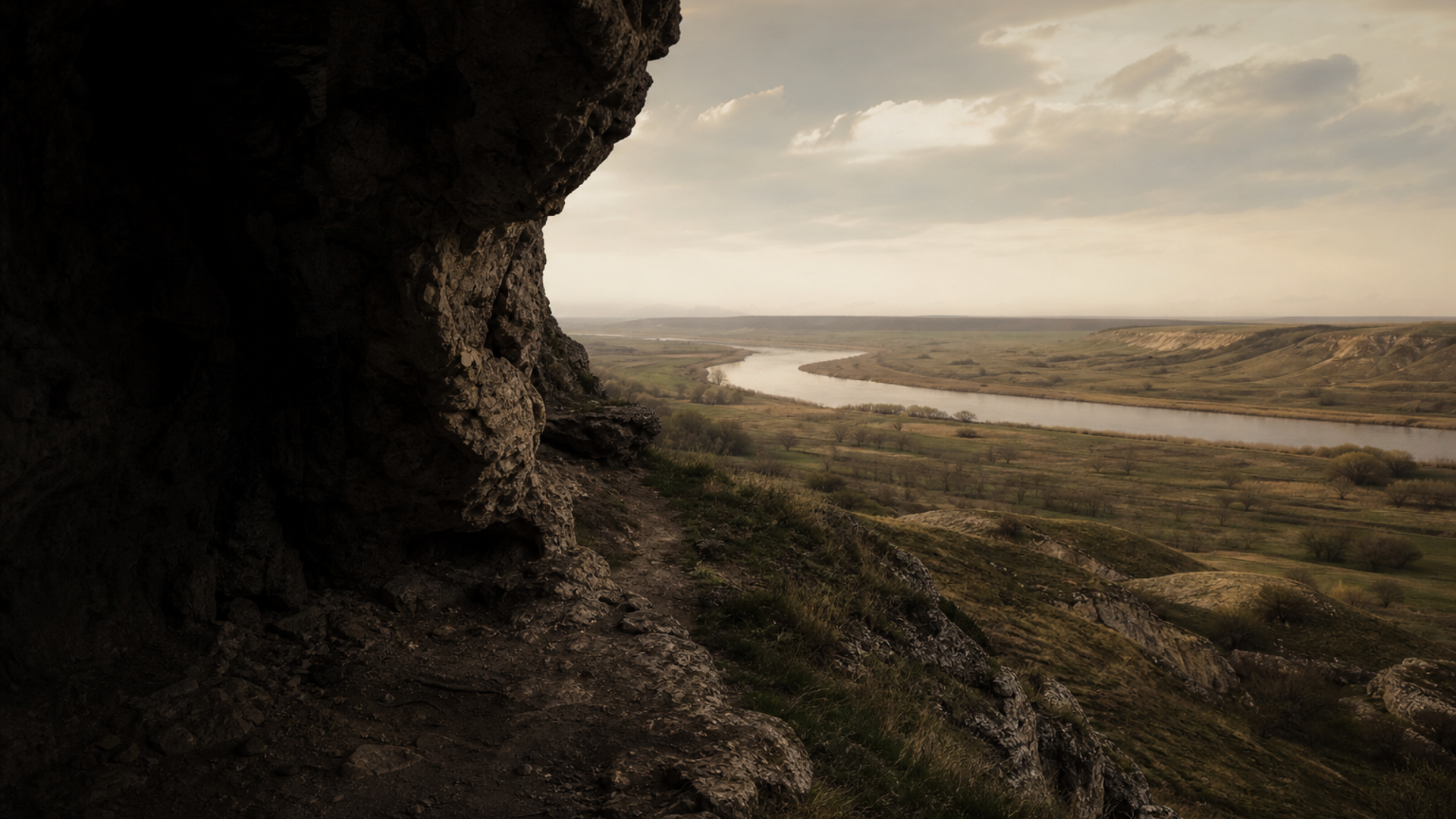
Beneath the limestone vaults of Verteba Cave and across the loess plains of central Ukraine, the Eneolithic Trypillia culture emerges in the late 5th and 4th millennia BCE as a network of dense settlements, painted pottery, and ritual practice. Archaeological data indicates a continuity of Neolithic farming traditions combined with innovations in pottery, long-distance exchange, and settlement planning. Trypillia communities built large, sometimes concentric villages and left an extraordinary material record—painted ceramics, anthropomorphic figurines, and traces of ritual hearths and refuse pits.

The genomes dated to 3950–3500 BCE come from Verteba, a site famous for its repeated use as a mortuary and ritual space. These dates place the sampled individuals squarely within the mature phase of Trypillia development, when village size and social complexity were increasing. Material culture suggests connections with neighboring Neolithic and Eneolithic groups in the Balkans and the Danubian corridor, but the archaeological picture alone cannot fully resolve origins.

Genetic data, although limited in sample size, begin to illuminate biological links: some ancestry components align with earlier European Neolithic farmers, while other signals hint at local or incoming lineages. Limited evidence suggests a mosaic of ancestries rather than a single population replacement. Where the pottery paints complex patterns on clay, the DNA paints an equally nuanced picture of movement and mixture.

  • Material culture: painted pottery, figurines, large settlements
  • Site context: Verteba Cave used for ritual and burials
  • Population emergence appears mixed—regional farmers plus additional inputs
Capítulo IV

Daily Life & Society

Trypillia communities were anchored in agriculture: fields of emmer, einkorn, and pulses supported dense villages with timber-and-clay houses. Archaeological remains from settlements and seasonal deposits indicate craft specialization—pottery painting, textile production impressions, and flint and bone tool manufacture. Verteba’s mortuary deposits, interpreted through careful stratigraphy, reveal ritualized depositional practices rather than simple household disposal.

Social life likely combined household autonomy with communal projects—construction of large houses and coordinated ceramic production point to organization beyond the nuclear family. Figurines and symbolic decoration suggest rich ritual and possibly gendered or status-related practices, though the archaeological record leaves much open to interpretation. Evidence for warfare or large-scale conflict is sparse; instead, exchange networks and shared styles link Trypillia villages across hundreds of kilometers.

Subsistence and seasonality are visible in plant and animal remains: a mixed economy of cultivation, herding, and hunting, shaped by the fertile soils of the Ukrainian plains. Archaeobotanical and zooarchaeological traces provide the practical backdrop to the genetic stories—people who tilled, stored, fashioned, and ceremonially deposited the remains that archaeologists and geneticists now study.

  • Economy: mixed farming, herding, and hunting
  • Crafts: pottery painting, textile impressions, flint and bone tools
Capítulo V

Genetic Profile

The genetic dataset from Verteba Cave is small (n=4) and must be treated as preliminary, but it offers evocative clues when combined with the archaeological context. Among the Y-chromosome results, haplogroup G occurs twice and haplogroup E once. Haplogroup G has been frequently associated in Europe with early farmer communities deriving from Anatolian and Balkan Neolithic expansions; its presence here is consistent with farmer-derived paternal ancestry persisting into the Eneolithic. The observation of haplogroup E—less common in many European prehistoric datasets—suggests additional paternal diversity and could reflect local heterogeneity or long-distance contacts; the small sample size prevents confident interpretation of its broader significance.

Mitochondrial diversity in these four individuals includes H5a, T2b, HV, and U—lineages that appear widely in European Neolithic and post-Neolithic contexts. These maternal markers are consistent with a substantial farmer-derived component in the population but also with regional continuity and admixture. Archaeological patterns of settled farming and exchange align with a genetic picture of mixed ancestry: components related to Neolithic farmers combined with local hunter-gatherer inputs or other incoming lineages.
Because fewer than ten samples are available from Verteba so far, all population-level inferences are provisional. Larger and more geographically spread sampling, combined with radiocarbon modeling, is required to resolve the timing and sources of admixture and to link biological kinship with social practices evident in the material record.

  • Y-DNA: G (2), E (1) — suggests farmer-linked paternal lineages and additional diversity
  • mtDNA: H5a, T2b, HV, U — maternal lineages common in Neolithic/Chalcolithic Europe
Capítulo VI

Legacy & Modern Connections

The stones and pigments of Trypillia pottery speak to cultural achievements; the genomes from Verteba whisper of ancestry threads woven into later European populations. Archaeological continuity in the region, combined with the types of maternal and paternal lineages observed, suggests that Trypillia-era people contributed to the genetic substrate of subsequent Eastern European groups. However, the precise pathways—how much contribution, where, and through what mechanisms—remain unclear given current sampling.

For modern populations, some mitochondrial and Y-chromosome lineages observed in these Eneolithic individuals persist in Europe today, but direct lines of descent are complex and obscured by millennia of migration. In short, the Verteba genomes provide a tantalizing bridge between painted ceramics and living DNA: they show that the colorful, communal villages of Trypillia were inhabited by biologically diverse people whose descendants, in part, continue to shape the genetic landscape of Europe. Further ancient DNA from more Trypillia sites will be needed to clarify these long echoes.

  • Contributes to the genetic background of later Eastern European populations
  • Modern connections are plausible but require far more data to confirm
Con IA

Asistente de IA

Haz preguntas sobre la cultura Verteba Voices: Trypillia Eneolithic

Asistente de IA por DNAGENICS

Desbloquear esta función
Pregunta sobre la cultura Verteba Voices: Trypillia Eneolithic. El asistente con IA puede explicar hallazgos genéticos, contexto histórico, pruebas arqueológicas y conexiones modernas, con sus límites de interpretación.
Ejemplo de análisis con IA

La cultura Verteba Voices: Trypillia Eneolithic representa un capítulo de la historia humana...

El análisis genético permite estudiar similitudes con poblaciones anteriores y posibles adaptaciones. Las muestras de ADN antiguo aportan información para investigar patrones migratorios y relaciones entre poblaciones, con límites que dependen del estudio y del contexto arqueológico.

Esta es una vista previa del análisis con IA. Accede al asistente completo para explorar información sobre:

  • Composición y similitud genética
  • Patrones migratorios y orígenes
  • Vida cotidiana y prácticas culturales
  • Contexto genético moderno

Explora más culturas antiguas

Descubre la historia de civilizaciones de distintas partes del mundo antiguo




