Preparando el informe

Cargando la información y las referencias disponibles

Consultando el registro arqueológico...

Recopilando registros antiguos

Saltar al contenido principal
Wallonia's Early Mesolithic Hunters
Cultura destacada

Wallonia's Early Mesolithic Hunters

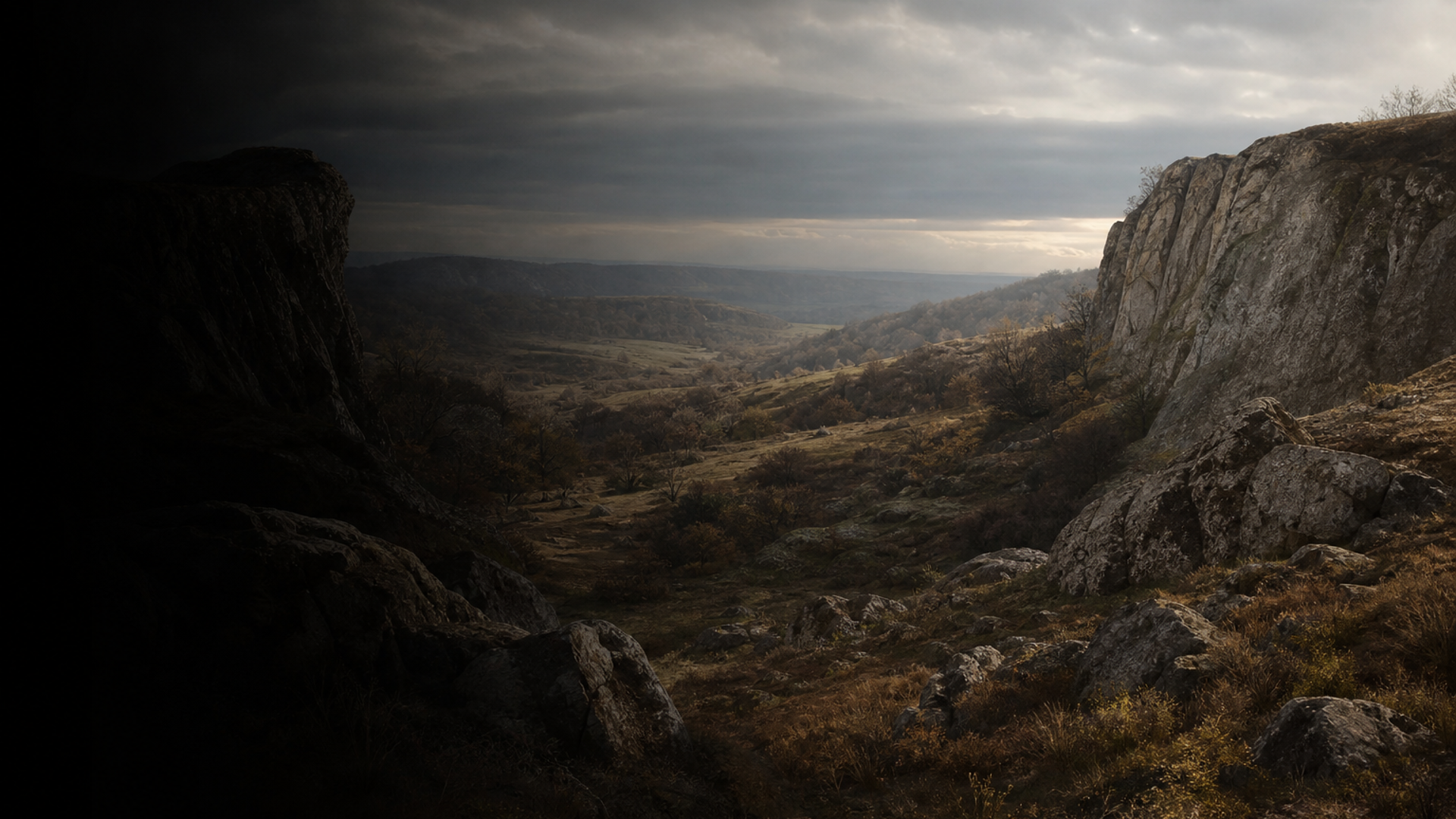
Cave and rock-shelter remains in Namur (c. 9160–8294 BCE) illuminate hunter-gatherer lifeways and maternal lineages

9160 CE - 8294 BCE
Wallonia, Namur province, Belgium
Desplázate para empezar
Capítulo I

La historia

Comprender la cultura Wallonia's Early Mesolithic Hunters

Early Mesolithic communities in Wallonia (Belgium) are preserved in caves at Abri des Autours, Malonne Petit Ri, and Waulsort Caverne X (c. 9160–8294 BCE). Four ancient DNA samples show mtDNA U haplogroups; Y-chromosome data remain limited. Interpretations are preliminary.

Time Period

c. 9160–8294 BCE (Early Mesolithic)

Region

Wallonia, Namur province, Belgium

Common Y-DNA

Undetermined / limited data

Common mtDNA

U (observed in 2 of 4 samples)

Capítulo II

Cronología

Momentos clave de la historia de esta cultura

9160 BCE

Earliest dated occupation (Abri des Autours)

Radiocarbon dates from Abri des Autours mark human activity in Wallonia around 9160 BCE, representing early post-glacial Mesolithic use of riverine caves.

Capítulo III

Origins & Emergence

A cool, post-glacial landscape opened across northern Europe as the last Ice Age waned, and within that thaw the earliest Mesolithic occupants of what is now Wallonia took shape. Archaeological deposits at Abri des Autours, Malonne Petit Ri and Waulsort Caverne X preserve sequences of hearths, chipped stone tools and faunal remains dated between roughly 9160 and 8294 BCE. These sites lie within riverine and karst settings along the Meuse valley, environments that focused movement, foraging and seasonal occupation.

Material culture is typical of Early Mesolithic hunter-gatherer adaptations: microlithic bladelets, flint reduction debris, and occasional bone tools interpreted as hunting and processing implements. Sediment stratigraphy and radiocarbon dates indicate intermittent use rather than permanent village life, suggesting fluid mobility and a deep knowledge of river corridors and forest margins. Archaeological data indicate cultural continuity with broader North-West European Mesolithic traditions, yet local patterns of site use and raw material procurement show distinct regional signatures.

Limited evidence suggests these groups exploited mixed environments—riparian fishing, forest hunting and plant gathering—capitalizing on the rich mosaic left by retreating glaciers. The small number of securely dated sites means any narrative about origins is provisional and should be treated with caution.

  • Sites: Abri des Autours, Malonne Petit Ri, Waulsort Caverne X (Namur, Wallonia)
  • Dates: ca. 9160–8294 BCE, Early Mesolithic
  • Environment: river valleys, karst caves, seasonal occupation
Capítulo IV

Daily Life & Society

In the quiet drama of Mesolithic life, everyday tasks framed long-term survival. Hearths and burnt bone fragments at the Namur sites paint a picture of small bands lighting fires within protective rock overhangs, where smoke and season dictated stay and movement. Lithic assemblages dominated by microliths and core reduction debris indicate focused toolkits optimized for hunting with composite projectiles, processing hides and woodworking.

Faunal remains—fragmentary but telling—point to a diet combining medium-sized ungulates, fish from nearby waterways, and gathered plants and shellfish where available. Spatial patterns within shelters suggest task areas for butchery, tool production and temporary sleeping areas. Artefacts of exotic flint hint at mobility and exchange along river corridors, while the absence of large structured dwellings indicates flexible social units and logistical mobility.

Archaeological data indicate social organization centered on small cooperative groups with knowledge of seasonal rounds. However, the sites' intermittent use and the small sample set mean reconstructions of social complexity remain tentative. Ethnographic analogy helps illuminate possibilities, but direct archaeological evidence for ritual, long-distance networks, or social hierarchies in this region at this time is sparse.

  • Small, mobile bands with seasonal shelter use
  • Economy: hunting, fishing, plant gathering; microlith-dominated toolkits
Capítulo V

Genetic Profile

Ancient DNA recovered from four individuals associated with the Belgium_Mesolithic dataset provides an initial glimpse into maternal lineages and population affinities, but the sample count is low and conclusions are provisional. Two of the four samples carry mitochondrial haplogroup U, a lineage widely associated with European hunter-gatherer populations in the Late Pleistocene and Early Holocene. This continuity of mtDNA U aligns with archaeological expectations for Mesolithic groups across northwestern Europe.

Y-chromosome results are not consistently observed in this small dataset and so cannot yet define male-line patterns for the region. Genome-wide analyses (where available from comparable northwest European Mesolithic contexts) often show deep hunter-gatherer ancestry components distinct from later Neolithic farming populations; if future Belgian samples follow that pattern, they will contribute to mapping how Mesolithic genetic landscapes were structured along river corridors and coastal zones.

Because only four samples inform this profile, and with just two mtDNA U observations, any population-genetic statements must be cautious. Further sampling from the Namur caves and surrounding sites is required to test whether these initial signals reflect local continuity, small founder groups, or transient bands moving through the Meuse valley.

  • mtDNA: U observed in 2 of 4 samples — aligns with European hunter-gatherers
  • Y-DNA: Insufficient data to draw firm conclusions; more samples needed
Capítulo VI

Legacy & Modern Connections

The Wallonian Mesolithic leaves a subtle but enduring signature in Europe's deep human story. Genetically, maternal lineages like mtDNA U link these early inhabitants to a broader tapestry of post-glacial hunter-gatherers across the continent. Archaeologically, the lifeways preserved in Namur's caves illuminate resilience and adaptability in the first centuries of Holocene landscapes.

Modern genetic landscapes in Belgium are palimpsests of many migrations and cultural shifts—Neolithic farmers, Bronze Age movements, and later historical events overlay Mesolithic contributions. While some genetic fragments of Mesolithic ancestry persist in modern populations, disentangling them requires dense sampling and careful modeling. Given the small ancient sample count here, any direct modern connections should be viewed as preliminary. Nonetheless, these early genomes anchor regional narratives: they are touchstones for exploring how deep-time hunter-gatherer groups contributed to Europe's genetic and cultural mosaic.

  • mtDNA U connects Wallonian Mesolithic people to wider European hunter-gatherers
  • Modern genetic links are complex and require larger ancient sample sets to clarify
Con IA

Asistente de IA

Haz preguntas sobre la cultura Wallonia's Early Mesolithic Hunters

Asistente de IA por DNAGENICS

Desbloquear esta función
Pregunta sobre la cultura Wallonia's Early Mesolithic Hunters. El asistente con IA puede explicar hallazgos genéticos, contexto histórico, pruebas arqueológicas y conexiones modernas, con sus límites de interpretación.

Ejemplo de análisis con IA

La cultura Wallonia's Early Mesolithic Hunters representa un capítulo de la historia humana...

El análisis genético permite estudiar similitudes con poblaciones anteriores y posibles adaptaciones. Las muestras de ADN antiguo aportan información para investigar patrones migratorios y relaciones entre poblaciones, con límites que dependen del estudio y del contexto arqueológico.

Esta es una vista previa del análisis con IA. Accede al asistente completo para explorar información sobre:

  • Composición y similitud genética
  • Patrones migratorios y orígenes
  • Vida cotidiana y prácticas culturales
  • Contexto genético moderno

Explora más culturas antiguas

Descubre la historia de civilizaciones de distintas partes del mundo antiguo