Aller au contenu principal
Y-DNA · lignée Paternelle

I2A1A1B

Y-DNA Haplogroup I2A1A1B

Profil de référence pour une branche de lignée. Des haplogroupes partagés n'établissent pas de lien familial ni d'identité culturelle.

Profil de référence

Contexte de la branche

Contexte historique de la branche de lignée Y-DNA I2A1A1B

Origins and Evolution

Y-DNA haplogroup I2A1A1B is a downstream branch of I2A1A1, itself part of the broader I2 paternal lineage that is strongly associated with European hunter-gatherer ancestry. Because it sits below a parent clade centered in the Balkans and southeastern Europe, the most likely origin for I2A1A1B is in or near the Balkan refugial zone after the Last Glacial Maximum, during the early Holocene. Its age is likely younger than its parent clade, probably on the order of ~10–12 thousand years ago, though the exact coalescence time depends on the density of available phylogenetic sampling.

This lineage likely formed in populations that retained substantial local continuity from late Pleistocene and Mesolithic male lines, later interacting with incoming Neolithic farmers and subsequent Bronze Age groups. Like many subclades of I2, I2A1A1B is most plausibly interpreted as part of a complex Balkan genetic landscape shaped by post-glacial recolonization, Neolithic admixture, and repeated regional demographic reshuffling.

Subclades

As an intermediate downstream clade, I2A1A1B is genealogically important because it connects broader ancestral branches to more derived modern lineages. In many haplogroup trees, such intermediate branches help identify population structure and migration corridors even when the number of known tested samples remains limited.

Because public phylogenetic sampling for this specific subclade may still be sparse, the best-supported interpretation is that it belongs to a regional cluster within the broader Balkan I2 continuum. Additional downstream SNP resolution would be needed to determine whether it is primarily associated with a particular micro-region, ethnolinguistic group, or historical population.

Geographical Distribution

The distribution of I2A1A1B is expected to overlap strongly with the distribution of its parent clade I2A1A1, with the highest likely frequencies in southeastern Europe, especially the Balkans. From that core area, it may also appear at lower frequencies in Central Europe, Eastern Europe, Northern Europe, and the British Isles, reflecting later movements such as medieval expansions, military migrations, urbanization, and modern diaspora dispersal.

In practical genealogical datasets, lineages descending from Balkan I2 branches are often observed in populations such as Bosnians, Croatians, Serbians, Montenegrins, Albanians, Macedonians, Bulgarians, Romanians, Greeks, and in lower frequencies among Hungarians, Austrians, Germans, Poles, Ukrainians, Scandinavians, and British/Irish samples.

Historical and Cultural Significance

The broader I2 haplogroup is a major paternal signature of European Mesolithic hunter-gatherers, and its subclades are often used to study continuity between pre-farming and post-farming populations in Europe. For I2A1A1B specifically, the historical significance is best understood as part of the persistence of indigenous European male lineages in southeastern Europe, a region that acted as a long-term refugium and contact zone.

This lineage may have experienced later expansions during the Neolithic, when local hunter-gatherer populations mixed with incoming farmers, and again during the Bronze Age and Iron Age, when mobility across the Balkans and the Danubian corridor increased. In later historical periods, Balkan paternal lineages were further redistributed by Roman, Byzantine, Slavic, Ottoman, and modern-era demographic processes.

Population Genetics Context

Although specific ancient DNA assignments for I2A1A1B may be limited, related I2 subclades are repeatedly encountered in ancient and modern genomes from southeastern and central Europe. This makes the lineage a useful marker for reconstructing the deep paternal structure of Europe, especially where it intersects with the ancestry of Balkan hunter-gatherers, early farmers, and post-Neolithic regional populations.

Because the lineage is downstream of a strongly regional parent clade, its present-day pattern is expected to show moderate to low frequency outside the Balkans, with scattered appearances in populations linked to migration, conquest, or diaspora.

Conclusion

I2A1A1B is a relatively deep but regionally rooted European Y-DNA lineage whose likely origin lies in southeastern Europe during the early Holocene. It represents one branch of the long-lived I2 hunter-gatherer paternal legacy, with its modern relevance centered on Balkan population history and its downstream dispersal across Europe through later demographic events.

Points clés

  • Origins and Evolution
  • Subclades
  • Geographical Distribution
  • Historical and Cultural Significance
  • Population Genetics Context
Profil de référence

Arbre et relations

Contexte phylogénétique et sous-clades

Voie évolutive

Suivez les branches parentes consignées jusqu'à I2A1A1B. Les dates sont des estimations et peuvent évoluer lorsque les données de référence sont révisées.

Étapes Haplogroupe Âge estimé Époque archéologique Temps écoulé Descendants immédiats Descendants modernes testés Liens anciens
1 I2A1A1B Actuel ~12,000 years ago Neolithic 12,000 ans 2 0 8
2 I2A1A1 ~14,000 years ago Mesolithic 14,000 ans 2 240 0
3 I2A1A ~14,000 years ago Mesolithic 14,000 ans 2 720 39
4 I2A1 ~16,000 years ago Mesolithic 16,000 ans 2 933 0
5 I2A ~18,000 years ago Mesolithic 18,000 ans 2 1,551 24
6 I2 ~20,000 years ago Mesolithic 20,000 ans 2 1,785 10
7 I ~25,000 years ago Paleolithic 25,000 ans 4 3,486 79

Branches sœurs (1)

Autres branches issues du même haplogroupe parent

Profil de référence

Dans le monde

Distribution géographique et présence moderne

Origine consignée

Southeastern Europe

Distribution moderne

The populations where Y-DNA haplogroup I2A1A1B is found include:

  1. Balkan populations
  2. East Slavic populations
  3. Central European populations
  4. Scandinavian populations
  5. German and Austrian populations
  6. British and Irish populations
  7. Baltic populations
  8. Recent diaspora populations in the Americas and Australia

Présence régionale

Southern Europe (Balkans/Adriatic) High
Central Europe (adjacent to Balkans) Moderate
Eastern Europe Low
Western Europe Low
Near East / Anatolia (spillover) Low
Southeastern Europe High
Northern Europe Low
Contexte historique

Une branche dans le temps

Formation estimée sur une chronologie historique large. Les repères de période servent de contexte et n'impliquent pas de lien avec des cultures particulières.

  1. Il y a ~12k ans

    Haplogroupe I2A1A1B

    Formation estimée de cette branche Y-DNA ; les dates et les lieux sont des estimations de référence.

    Cette branche
  2. Il y a ~10k ans

    Révolution néolithique

    Début de l'agriculture et émergence de communautés sédentaires

  3. Il y a ~5k ans

    Âge du bronze

    Travail des métaux, écriture et premières civilisations

  4. Il y a ~3k ans

    Âge du fer

    Outils en fer, réseaux d'échanges élargis

  5. Il y a ~2.5k ans

    Antiquité classique

    Floraison des civilisations grecque et romaine

  6. Aujourd'hui

    Aujourd'hui

    Époque moderne

Profil de référence

Contexte archéologique

Associations archéologiques consignées pour la branche Y-DNA I2A1A1B

Associations consignées

Ces libellés décrivent des contextes archéologiques consignés pour des échantillons de référence liés à I2A1A1B. Une association n'établit pas que tous les porteurs appartenaient à une culture ni qu'ils ont suivi une route migratoire précise.

Alföld Linear Pottery Danish Early Neolithic Doggerland Ertebølle Iberian Mesolithic Körös Culture Mesolithic Ukrainian Rochedane Culture Russia_Samara_Eneolithic-o Scandinavian Mesolithic Ukrainian Epipaleolithic Volosovo Culture
Les attributions culturelles reposent sur le contexte archéologique des échantillons d'ADN ancien et peuvent refléter des associations régionales à certaines périodes.
Profil de référence

Catalogue d'échantillons

8 porteurs directs de l'haplogroupe I2A1A1B

8 affiché(s) · 8 échantillons correspondants

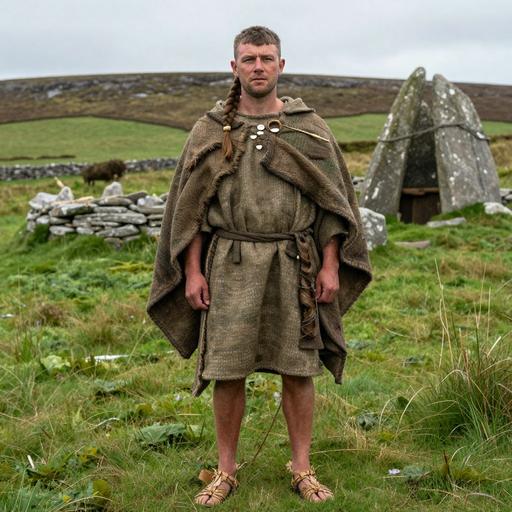
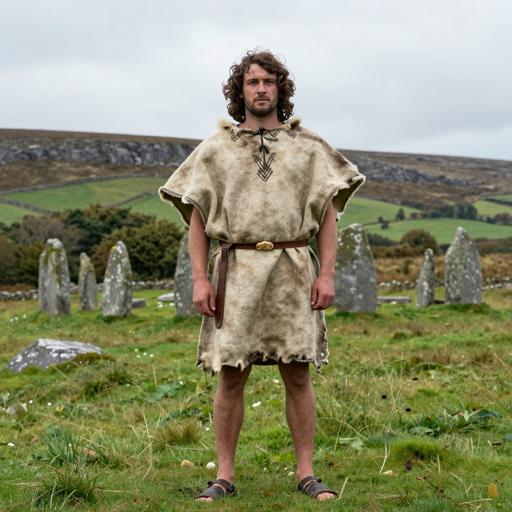
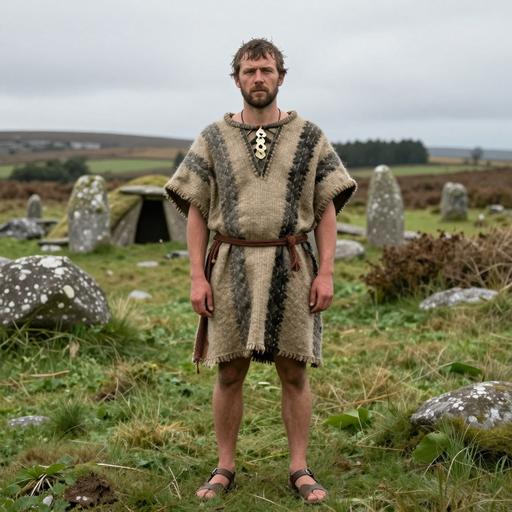
Les portraits sont des illustrations générées par IA. Les libellés d'échantillon et identifiants d'accès désignent les enregistrements de référence.

Portrait Échantillon Pays Époque Date Culture Y-DNA Correspondance
Portrait illustratif généré par IA de MN individual, Ireland. Clare. Parknabinnia, Ireland (3,362-3,102 BCE)
Identifiant d'échantillon : PB675
Ireland Ireland MN 3362-3102 calBCE (4527±27 BP) [R_Combine: (4394±35 BP, UBA-35064;), (4707±42 BP, UBA-39194)] Irish Middle Neolithic I2a1a1b Direct
Portrait illustratif généré par IA de MN individual, Ireland. Clare. Parknabinnia, Ireland (3,516-3,359 BCE)
Identifiant d'échantillon : PB186
Ireland Ireland MN 3516-3359 calBCE (4638±36 BP, UBA-35072) Irish Middle Neolithic I2a1a1b Direct
Portrait illustratif généré par IA de MN individual, Ireland. Clare. Parknabinnia, Ireland (3,628-3,373 BCE)
Identifiant d'échantillon : PB2031
Ireland Ireland MN 3628-3373 calBCE (4712±35 BP, UBA-38304) Irish Middle Neolithic I2a1a1b Direct
Portrait illustratif généré par IA de MN individual, Ireland. Clare. Parknabinnia, Ireland (3,628-3,376 BCE)
Identifiant d'échantillon : PB672
Ireland Ireland MN 3628-3376 calBCE (4722±27 BP) [R_Combine: (4765±32 BP, UBA-35067;), (4636±45 BP, UBA-39193)] Irish Middle Neolithic I2a1a1b Direct
Portrait illustratif généré par IA de MN individual, Ireland. Clare. Poulnabrone, Ireland (3,633-3,376 BCE)
Identifiant d'échantillon : PN06
Ireland Ireland MN 3633-3376 calBCE (4731±42 BP, UBA-38311) Irish Middle Neolithic I2a1a1b Direct
Portrait illustratif généré par IA de MN individual, Ireland. Clare. Parknabinnia, Ireland (3,639-3,376 BCE)
Identifiant d'échantillon : PB768
Ireland Ireland MN 3639-3376 calBCE (4751±55 BP, UBA-38309) Irish Middle Neolithic I2a1a1b Direct
Portrait illustratif généré par IA de Celtic individual, Wales. Brechnockshire. Hay-on-Wye. Little Lodge, United Kingdom (3,750-2,950 BCE)
Identifiant d'échantillon : I3023
United Kingdom Wales N 3750 BCE - 2950 BCE Welsh Neolithic I2a1a1b Direct
Portrait illustratif généré par IA de EN MN individual, Ireland. Tipperary. Ashleypark, Ireland (3,764-3,534 BCE)
Identifiant d'échantillon : ASH3
Ireland Ireland EN MN 3764-3534 calBCE (4876±34 BP, UBA-38310) Irish Neolithic I2a1a1b Direct
LIGNÉE PATERNELLE · ADN ANTIQUE

Carte des preuves de lignées antiques

Suivez les clades parents jusqu'à cette branche et explorez où des porteurs antiques ont été identifiés.

Chargement des observations antiques…

Les marqueurs indiquent des lieux de découvertes archéologiques. Un trait pointillé représente une transition géographique proposée et incertaine entre branches consécutives, appuyée sur plusieurs observations datées ; ce n'est pas un itinéraire exact, un lieu de naissance ni une preuve de descendance directe. Des échantillons de clades parents peuvent appartenir à d'autres branches descendantes. Des lacunes subsistent lorsque les preuves sont insuffisantes. Les dates d'échantillon diffèrent des dates de formation des haplogroupes.

Profil de référence

Carte de répartition des porteurs

Répartition géographique de 8 échantillons d'ADN ancien (porteurs directs et de sous-clade de I2A1A1B)

Porteur direct
Filtre de période
Toutes les périodes
Affichage de tous les échantillons
Profil de référence

Répartition temporelle

Répartition des porteurs selon les périodes archéologiques

Profil de référence

Répartition géographique

Effectifs par pays d'échantillon consigné. Ils reflètent la sélection de référence disponible, pas des fréquences de population.

Profil de référence

Répartition pays × époque

Comparez les effectifs d'échantillons consignés selon les pays et les périodes archéologiques. Sélectionnez une cellule renseignée pour examiner un échantillon.

Données

Données et provenance

Informations sur les sources et qualité des données

Dernière mise à jour 2026-06-17
Score de confiance 50/100
Couverture Low

Source des données

La classification, les dates estimées et le contexte géographique reflètent les données de référence consignées et peuvent évoluer lorsque les éléments sont révisés. La couverture d'échantillons est inégale ; les lieux consignés et les associations archéologiques n'établissent pas une origine personnelle ni une identité culturelle.