The Story
The journey of Y-DNA haplogroup I2A1A1B
Origins and Evolution
Y-DNA haplogroup I2A1A1B is a downstream branch of I2A1A1, itself part of the broader I2 paternal lineage that is strongly associated with European hunter-gatherer ancestry. Because it sits below a parent clade centered in the Balkans and southeastern Europe, the most likely origin for I2A1A1B is in or near the Balkan refugial zone after the Last Glacial Maximum, during the early Holocene. Its age is likely younger than its parent clade, probably on the order of ~10–12 thousand years ago, though the exact coalescence time depends on the density of available phylogenetic sampling.
This lineage likely formed in populations that retained substantial local continuity from late Pleistocene and Mesolithic male lines, later interacting with incoming Neolithic farmers and subsequent Bronze Age groups. Like many subclades of I2, I2A1A1B is most plausibly interpreted as part of a complex Balkan genetic landscape shaped by post-glacial recolonization, Neolithic admixture, and repeated regional demographic reshuffling.
Subclades
As an intermediate downstream clade, I2A1A1B is genealogically important because it connects broader ancestral branches to more derived modern lineages. In many haplogroup trees, such intermediate branches help identify population structure and migration corridors even when the number of known tested samples remains limited.
Because public phylogenetic sampling for this specific subclade may still be sparse, the best-supported interpretation is that it belongs to a regional cluster within the broader Balkan I2 continuum. Additional downstream SNP resolution would be needed to determine whether it is primarily associated with a particular micro-region, ethnolinguistic group, or historical population.
Geographical Distribution
The distribution of I2A1A1B is expected to overlap strongly with the distribution of its parent clade I2A1A1, with the highest likely frequencies in southeastern Europe, especially the Balkans. From that core area, it may also appear at lower frequencies in Central Europe, Eastern Europe, Northern Europe, and the British Isles, reflecting later movements such as medieval expansions, military migrations, urbanization, and modern diaspora dispersal.
In practical genealogical datasets, lineages descending from Balkan I2 branches are often observed in populations such as Bosnians, Croatians, Serbians, Montenegrins, Albanians, Macedonians, Bulgarians, Romanians, Greeks, and in lower frequencies among Hungarians, Austrians, Germans, Poles, Ukrainians, Scandinavians, and British/Irish samples.
Historical and Cultural Significance
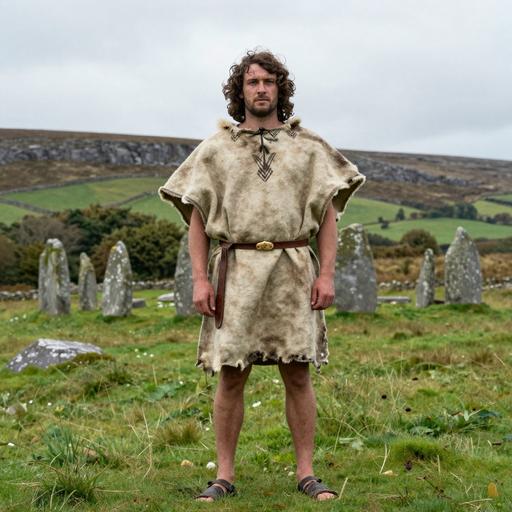
The broader I2 haplogroup is a major paternal signature of European Mesolithic hunter-gatherers, and its subclades are often used to study continuity between pre-farming and post-farming populations in Europe. For I2A1A1B specifically, the historical significance is best understood as part of the persistence of indigenous European male lineages in southeastern Europe, a region that acted as a long-term refugium and contact zone.
This lineage may have experienced later expansions during the Neolithic, when local hunter-gatherer populations mixed with incoming farmers, and again during the Bronze Age and Iron Age, when mobility across the Balkans and the Danubian corridor increased. In later historical periods, Balkan paternal lineages were further redistributed by Roman, Byzantine, Slavic, Ottoman, and modern-era demographic processes.
Population Genetics Context
Although specific ancient DNA assignments for I2A1A1B may be limited, related I2 subclades are repeatedly encountered in ancient and modern genomes from southeastern and central Europe. This makes the lineage a useful marker for reconstructing the deep paternal structure of Europe, especially where it intersects with the ancestry of Balkan hunter-gatherers, early farmers, and post-Neolithic regional populations.
Because the lineage is downstream of a strongly regional parent clade, its present-day pattern is expected to show moderate to low frequency outside the Balkans, with scattered appearances in populations linked to migration, conquest, or diaspora.
Conclusion
I2A1A1B is a relatively deep but regionally rooted European Y-DNA lineage whose likely origin lies in southeastern Europe during the early Holocene. It represents one branch of the long-lived I2 hunter-gatherer paternal legacy, with its modern relevance centered on Balkan population history and its downstream dispersal across Europe through later demographic events.
Key Points
- Origins and Evolution
- Subclades
- Geographical Distribution
- Historical and Cultural Significance
- Population Genetics Context